
Molí den Carreres Watermill Ruin near Son Ferrandell
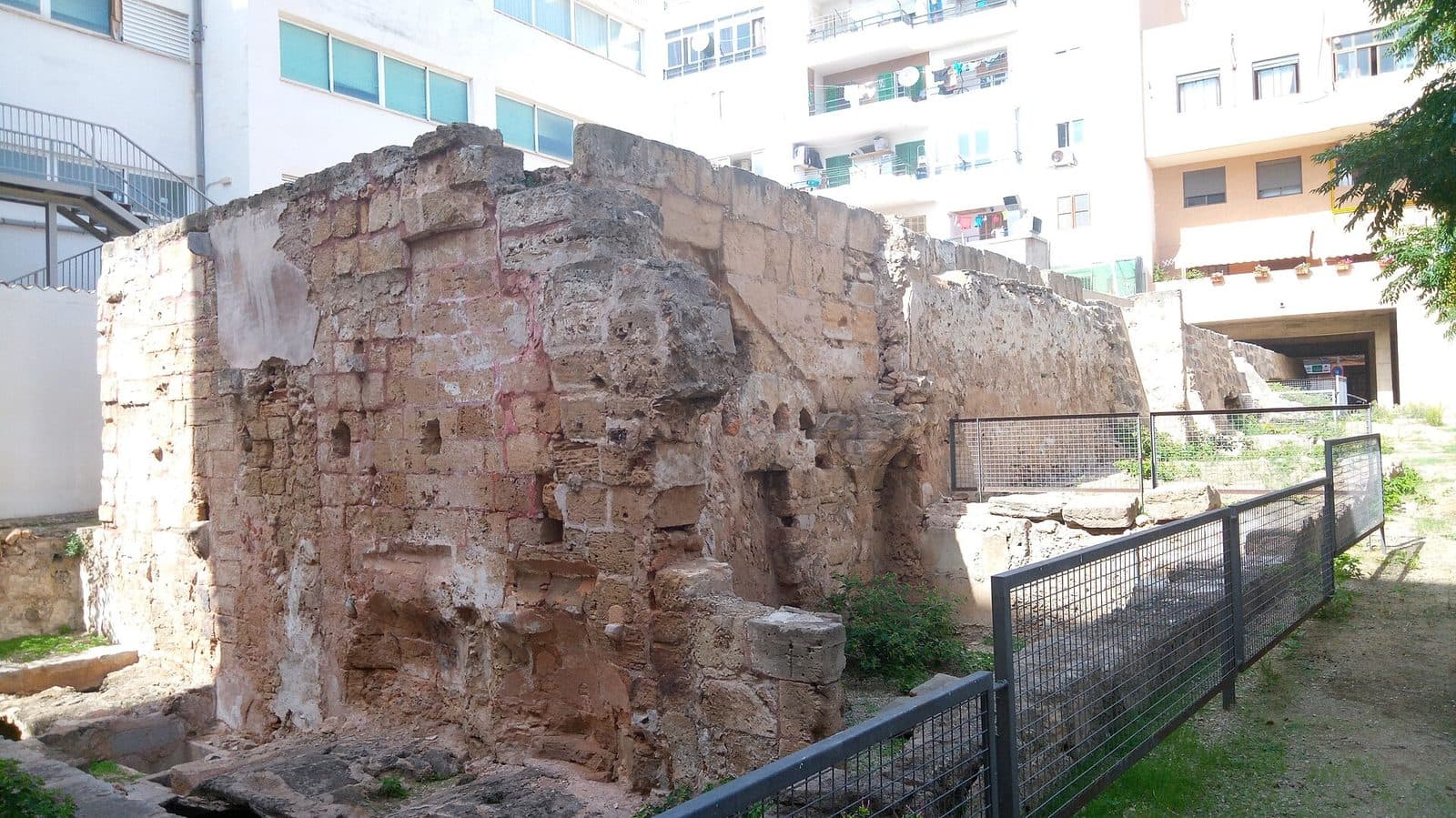

Molí den Carreres preserves an inconspicuous but revealing piece of Mallorca's working history. The ruin near Son Ferrandell is a former watermill where grain was ground into flour. It is precisely this practical purpose that makes the site interesting: it was not about prestige, but about producing a staple food.
A visit is aimed primarily at people who enjoy discovering Mallorca through its old utilitarian buildings. The appeal lies in the surviving site and its ruined state, which encourages a closer look: Which parts were working areas, where might the water have flowed, and how did the mill fit into its surroundings at the time?
It is important to identify the location correctly. This refers exclusively to the Molí den Carreres ruin near Son Ferrandell in the Palma area. Mills, country houses and hiking destinations with similar names in other parts of Mallorca are not part of this attraction. In particular, descriptions of mill trails near Valldemossa do not apply to Molí den Carreres.
As an excursion destination, the ruin is better suited to deliberate historical exploration than to an extensive sightseeing program. Anyone wishing to understand how closely landscape, water and everyday supplies were once connected in Mallorca will find here a rarely noticed gateway into the island's history.
History and significance
Flour was an everyday product, but for a long time its production required specialized buildings. Molí den Carreres served as a water-powered grain mill. This fundamentally distinguishes the site from the highly visible windmills that shape the popular image of Mallorca: the mechanism was driven not by wind, but by flowing or deliberately channeled water, which supplied the power needed for milling.
The mill was therefore part of an infrastructure whose importance is easily underestimated. Grain had to be processed before it could become flour and eventually bread or other foods. Operating the mill combined practical expertise with close observation of local water conditions.
No premature stories should be told about the exact construction date, individual owners or possible phases of alteration at Molí den Carreres. The reliable identification goes further than many freely accessible descriptions online: it is a flour watermill that survives today as a ruin. However, this does not allow for a precise date or a complete chronology. General accounts of other Mallorcan mills are likewise no substitute for the history of this specific structure.
The site's present condition is precisely what gives it historical significance. Its former work is therefore more important to understanding it than any famous episode. Molí den Carreres represents a form of energy production in which natural movement was converted directly into mechanical power. The site tells a story of flour production and local supplies, but also of how dependent a business was on its location. A watermill could not simply be built anywhere; its purpose depended on the availability and channeling of water.
The ruinous state also sets a limit on any reconstruction. Without verified evidence, neither the complete technical process nor the form of every component of this structure can be reconstructed reliably. An attentive visit therefore distinguishes what is visible from what is merely known from other mills. This restraint is exactly what protects Molí den Carreres from being confused with better-documented namesakes or unrelated sites.
What to see
The first thing that stands out is not a restored machine, but the loss of its function. Molí den Carreres survives as a ruin. Its walls and structural remains are therefore not the backdrop to a furnished museum, but the historical object itself. Their condition reveals that people once worked here without presenting the former operation as a complete display.
The mill building
The most important point of reference is its original use as a flour watermill. When viewing the ruin, it is therefore worth avoiding any search for the typical sails of a windmill. The building belonged to a different technical family: its energy came from water, and its purpose was to grind grain. These two facts alone change how the site is viewed and help place the surviving fabric in the correct context.
The ruin should be read as a unified workplace, not merely as picturesque old masonry. A mill required space for technical processes and for handling grain and flour. Without a documented architectural survey, however, it is not possible to identify reliably which individual areas remain clearly legible at Molí den Carreres today. Terms such as milling room, storeroom or living quarters would only be appropriate for specific sections of the surviving walls if they were marked on site or unmistakably identifiable from the structure itself.
Water power as the key
At a watermill, the crucial connection lay both outside and inside the building itself: water had to reach the drive mechanism, release its power and then be channeled onward. Understanding its former use as a flour watermill therefore remains essential.
This cautious approach is more rewarding than an imaginative reconstruction. At a ruined technical monument, the location and spatial relationships often reveal as much as any individual component. Where could water have been brought to the building? Which areas are offset from one another? Where does historical fabric end and a later alteration begin? Questions like these make a visit interesting, even if not all of them can be answered conclusively.
The ruin as a historical document
Molí den Carreres was not preserved as an operational mill and therefore does not present a fully narrated story. The attraction calls for a slower look: first at the ruin as a whole, then at its visible components and finally at the question of its former water-powered drive. Anyone who follows this order will recognize more than someone searching only for a classic Mallorcan windmill tower.
Visiting Molí den Carreres
A visit is best begun with the right expectations: Molí den Carreres is a historical ruin. The experience consists of viewing a former workplace and understanding its function through the surviving context.
No reliable arrangements for opening hours or admission have been recorded. Both should be checked for current information immediately before the excursion. This is particularly important because access, property boundaries or safety measures at a ruin may change. A location marked on a map does not automatically mean that every access road, path and part of the structure may be entered by the public.
The length of a visit depends greatly on personal interest. Those who merely wish to see the building will keep the visit correspondingly brief. Those interested in historical milling technology who examine the location and photographically document the visible remains will need more time. A fixed visit duration would be misleading given the lack of a standardized visitor experience.
Information about typical peak times or a verified quietest time of day is not reliably documented. The timing of a visit should therefore depend primarily on good visibility, the weather and currently confirmed accessibility.
For photography, it is worth avoiding any confusion between the ruin and a windmill or using angles that artificially make it look like one. Its defining characteristic is precisely its water-powered history. Where possible, a good image should therefore show the location as well, rather than only a tightly cropped section of wall. This preserves the sense that the building was part of a former technical landscape.
Getting there and parking
The stated routes lead as far as Son Ferrandell, not directly to the ruin. The road distance from Palma Airport to Son Ferrandell is 12 kilometers; the drive takes around 16 minutes and follows the Ma-20. From the center of Palma, the road distance is 4 kilometers, with a journey time of around 15 minutes. The small difference between distance and journey time shows that the actual duration is influenced more by the urban road network than by the number of kilometers alone.
For navigation, “Molí den Carreres” should be used together with “Son Ferrandell.” The name Molí occurs frequently in Mallorca, and similarly named mills or accommodations may also appear in search results. A route toward Valldemossa or another mill destination is not a substitute for directions to this ruin.
The final section from Son Ferrandell should be checked on an up-to-date map before departure. The stated driving times explicitly end in Son Ferrandell and must not be understood as a guaranteed arrival time directly at the structure. Depending on the exact access route, the final meters may require separate navigation. Gates, fences and private roads must be respected, even if a navigation app suggests an apparently direct line to the ruin.
The vehicle should therefore be parked only where signs and local conditions clearly permit it. A farm track, property entrance or the edge of a narrow access road is not automatically an authorized parking area. It is especially important to keep agricultural and private access points clear.
For travel by public transport, the nearest stops are displayed separately on the page. Before traveling, check which service actually operates on the day of the visit and how the walking route runs from the chosen stop to the destination. Proximity to a stop alone says nothing about the presence of a continuously suitable footpath or the public accessibility of the final section.
Visitors coming from Palma can incorporate Molí den Carreres into an excursion on the outskirts of the city instead of building a long island tour around it. The short road distance is an advantage, but it does not replace careful confirmation of the destination. With small historical ruins in particular, setting the correct navigation point saves more time than taking a supposed shortcut along uncertain side roads.
Bus lines to Molí den Carreres at a glance
| Line | Route | Departures/day | First | Last |
|---|---|---|---|---|
| 203 | Valldemossa / Deià | 94 | 07:12 | 22:07 |
| 202 | Estellencs - Palma | 62 | 06:24 | 22:13 |
| 107 | Es Capdellà - Palma | 42 | 00:32 | 23:22 |
| 201 | Galilea - Palma | 25 | 07:13 | 21:17 |
| 20 | Portopí - Son Espases | 2 | 07:18 | 07:18 |
| 39 | Son Espases - Palau de Congressos | 2 | 07:22 | 07:26 |
From the official GTFS feeds (TIB/SFM), no real-time data. The figures cover all stops in the town; weekend and holiday services differ — check with the operator before travelling.
Getting there by bus
741-Valldemossa - es Camp Redó · 0.1 km as the crow flies
- 12Sa Garriga - Nou Llevant · 08:00–08:00 · Daily
- 20Portopí - Son Espases · 06:06–22:40 · Daily
- 24Antiga Presó - Nou Llevant · 06:33–21:18 · Daily
- 39Son Espases - Palau de Congressos · 06:31–22:22 · Daily
- N2Can Blau - Can Valero · 08:00–08:00 · Daily
498-General Riera - es Camp Redó · 0.2 km as the crow flies
- 16Es Muntant - Mercat de Pere Garau · 06:36–21:55 · Mon-Sat
- 19UIB i Parc Bit - Porta des Camp · 05:46–22:12 · Daily
- 29Son Espases - Pl. Progrés · 08:00–08:00 · Daily
- 33Son Espases - Son Fuster · 07:12–19:32 · Daily
539-General Riera - es Camp Redó · 0.2 km as the crow flies
- 16Es Muntant - Mercat de Pere Garau · 06:36–21:55 · Mon-Sat
- 19UIB i Parc Bit - Porta des Camp · 05:46–22:12 · Daily
- 29Son Espases - Pl. Progrés · 08:00–08:00 · Daily
- 33Son Espases - Son Fuster · 07:12–19:32 · Daily
738-Valldemossa - es Camp Redó · 0.2 km as the crow flies
- 12Sa Garriga - Nou Llevant · 08:00–08:00 · Daily
- 20Portopí - Son Espases · 06:06–22:40 · Daily
- 24Antiga Presó - Nou Llevant · 06:33–21:18 · Daily
- 39Son Espases - Palau de Congressos · 06:31–22:22 · Daily
- N2Can Blau - Can Valero · 08:00–08:00 · Daily
740-Àrea d'intercanvi Ocimax · 0.2 km as the crow flies
- 12Sa Garriga - Nou Llevant · 08:00–08:00 · Daily
- 20Portopí - Son Espases · 06:06–22:40 · Daily
- 24Antiga Presó - Nou Llevant · 06:33–21:18 · Daily
- N2Can Blau - Can Valero · 08:00–08:00 · Daily
739-Àrea d'intercanvi Ocimax · 0.2 km as the crow flies
- 12Sa Garriga - Nou Llevant · 08:00–08:00 · Daily
- 24Antiga Presó - Nou Llevant · 06:33–21:18 · Daily
- N2Can Blau - Can Valero · 08:00–08:00 · Daily
Ctra. Valldemossa 1 (40047) · 0.2 km as the crow flies
- 107Es Capdellà - Palma · Daily
- 201Galilea - Palma · Daily
- 202Estellencs - Palma · Daily
- 203Valldemossa / Deià · Daily
Ctra. Valldemossa 2 (40046) · 0.3 km as the crow flies
- 107Es Capdellà - Palma · Daily
- 201Galilea - Palma · Daily
- 202Estellencs - Palma · Daily
- 203Valldemossa / Deià · Daily
551-Sant Vicenç de Paül - Cas Capiscol · 0.3 km as the crow flies
- 19UIB i Parc Bit - Porta des Camp · 05:46–22:12 · Daily
- N2Can Blau - Can Valero · 08:00–08:00 · Daily
557-Àrea d'intercanvi Ocimax · 0.3 km as the crow flies
- 19UIB i Parc Bit - Porta des Camp · 05:46–22:12 · Daily
- 39Son Espases - Palau de Congressos · 06:31–22:22 · Daily
558-Sant Vicenç de Paül - Cas Capiscol · 0.3 km as the crow flies
- 19UIB i Parc Bit - Porta des Camp · 05:46–22:12 · Daily
540-General Riera - Velodrom · 0.3 km as the crow flies
- 16Es Muntant - Mercat de Pere Garau · 06:36–21:55 · Mon-Sat
- 19UIB i Parc Bit - Porta des Camp · 05:46–22:12 · Daily
- 29Son Espases - Pl. Progrés · 08:00–08:00 · Daily
- 33Son Espases - Son Fuster · 07:12–19:32 · Daily
Timetable data: official GTFS feeds (TIB/EMT), no real-time — check with the operator before travelling.
Nearby places and attractions
Son Ferrandell is the local reference point for Molí den Carreres. For a visit, this matters more than assigning it broadly to a well-known holiday region: the ruin should be searched for as a destination near Son Ferrandell and not confused with mills of the same or a similar name in other municipalities. The place name should therefore always be included in navigation and ideally in personal notes or a saved map marker as well.
The surrounding area is closely connected to Palma. A road route of only 4 kilometers leads from the center of the island's capital to Son Ferrandell, although the journey takes around 15 minutes because of city traffic. This makes it possible to combine the ruin with a stay in Palma without turning it into an extensive day program. The combination is particularly worthwhile for travelers who wish to discover less obvious evidence of local economic and supply history alongside the famous old town.
In terms of subject matter, a comparison with other historical mills in Mallorca is worthwhile, but only after the visit and with a clear distinction between the locations. Windmills, oil mills and watermills performed different tasks or used different forms of power. As a water-powered flour mill, Molí den Carreres belongs to a clearly defined category. Anyone viewing several sites should therefore pay attention not only to their external form, but also to their energy source and the product they processed.
For further exploration of the subject, the visit can also serve as a starting point for examining the role of water in Mallorca's historic cultural landscape. This does not mean automatically connecting arbitrary water structures in the area with the ruin, but considering the general question of how water was collected, channeled and used as a source of power. Molí den Carreres provides a specific, locally rooted reason to explore this topic.
Son Ferrandell itself should not be confused with the rural area of the same name around Valldemossa. Online searches can easily lead to hiking descriptions, estates or mills in the Tramuntana that do not refer to the structure discussed here. For planning purposes, use the routes provided on this page from Palma and the airport, together with the ruin's exact map location.
The place it belongs to
Son Ferrandell in the place guidePractical visitor information
The site is the ruin of a flour watermill. Its value lies in closely examining the building site and understanding its former function. Anyone who knows the difference between water and wind power in advance will be able to place the ruin in context much more effectively.
No confirmed accessibility information has been recorded. A map entry alone does not indicate whether the final access route is step-free, paved or suitable for mobility aids. Anyone who requires an accessible route should clarify the current access situation directly in advance rather than planning solely around the road route to Son Ferrandell.
Property and access boundaries also deserve attention. Walls, gates and fences must be respected; a visible monument does not grant a general right of entry. If an area is closed or can only be viewed from outside, the exterior view remains the appropriate way to visit.
Finally, a saved map location helps ensure correct identification. The name alone is not a reliable guide in Mallorca because numerous buildings bear the Catalan word “Molí.” The crucial identifiers are the combination of Molí den Carreres, Son Ferrandell and its classification as the ruin of a water-powered grain mill near Palma.
Local insider tips
Look for traces of water
Molí den Carreres was not a windmill but a flour watermill. When viewing it, consider the contours of the terrain and the building's relationship to water without prematurely interpreting unmarked depressions as historical channels.
Save Son Ferrandell too
Save the place name Son Ferrandell together with Molí den Carreres in your navigation app. This reduces the risk of ending up at a similarly named mill or a hiking destination around Valldemossa.
Photograph the whole site first
Begin by taking an overall view from a permitted distance. At a technical ruin, the relationship between the building and the terrain often explains more than a close-up of individual stones or openings.
Combine it with Palma
The road route from central Palma to Son Ferrandell is 4 kilometers long and takes around 15 minutes. This makes the ruin more suitable as a deliberate addition to a day in Palma than as a major standalone day trip.