Breogán is a Galician kitchen in the middle of Palma, run by two brothers from Galicia: Carlos in the dining room, Marcos at the fire. The place sits on Carrer de Rubén Darío, a few steps from Passeig Mallorca, and has stayed small — about ten tables inside, a few more out front.
The name comes from Galician legend: Breogán was a mythical king of that country, and the brothers named their house after him. What is on the carta comes almost entirely from the north-west of Spain — dry-aged beef from the charcoal oven, whole fish from the Atlantic, pulpo á feira, Betanzos-style tortilla, filloas.
What Breogán puts over the coals
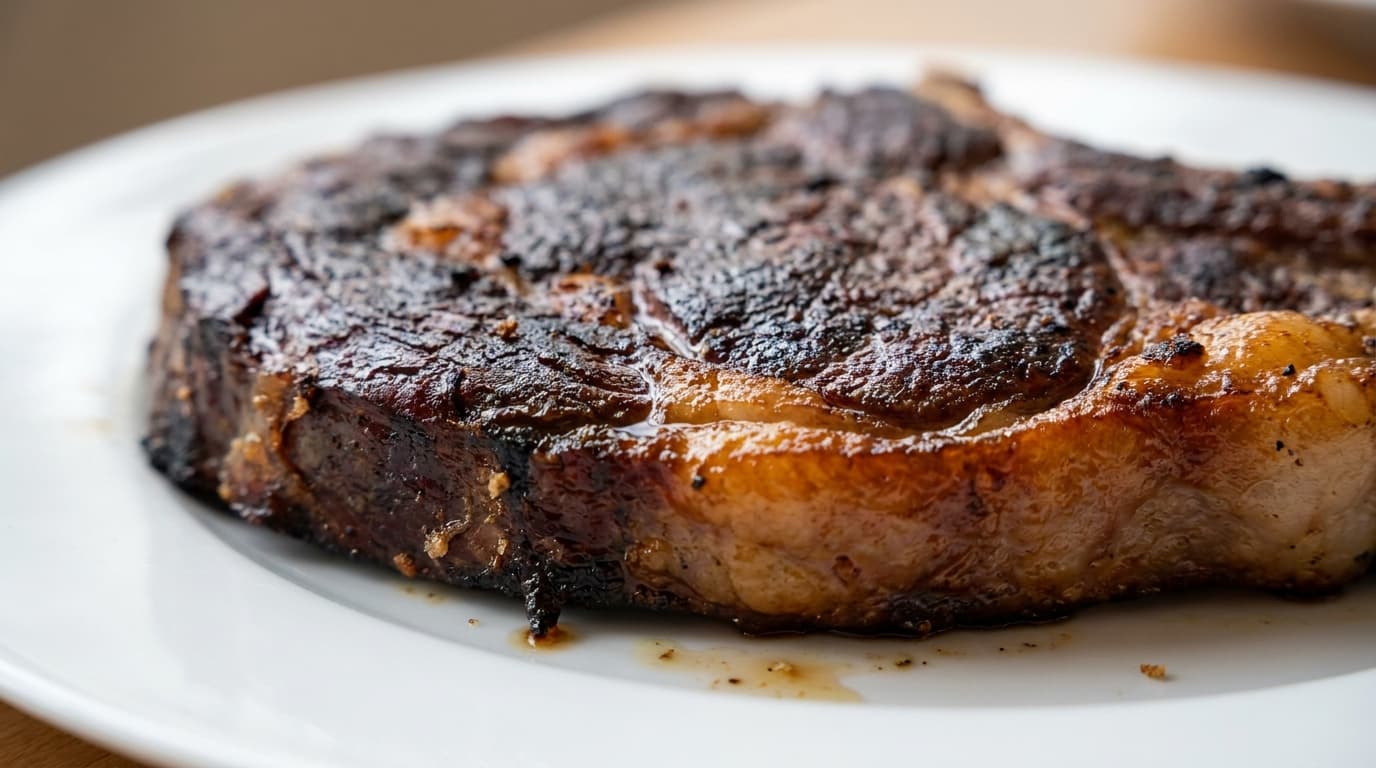
The heart of it is dry-aged loin from Galician cow and ox; Rubia Gallega and Frisona are among the breeds worked here. It is cooked in a charcoal oven fired with oak and Cuban marabú wood — hence the smoky note, the firm crust outside and the juicy centre.
Nothing is cut down small. A chuletón here usually weighs at least a kilo, and that is exactly the point: it is meant to be shared at the table. Smaller cuts are not normally offered, and fillet or ribeye turn up only occasionally, depending on what is available. The pieces are shown at the table before they go on the fire, so you can pick your own. Alongside the Galician beef, the carta lists Japanese wagyu from Miyazaki.
Whole fish, ordered ahead
The same rule applies to fish as to meat: only whole, from around a kilo upwards. Wild turbot, blackspot seabream and alfonsino are on the carta, along with European lobster, Mallorcan spiny lobster and slipper lobster — those three arrive with fried potatoes and fried eggs, the way it is eaten on the coast.
This part of the carta runs on pre-order, because what is actually to be had is decided by the market. Further shellfish is available on request; percebes and oysters are among the things the Atlantic contributes here.
From the starters to the queimada
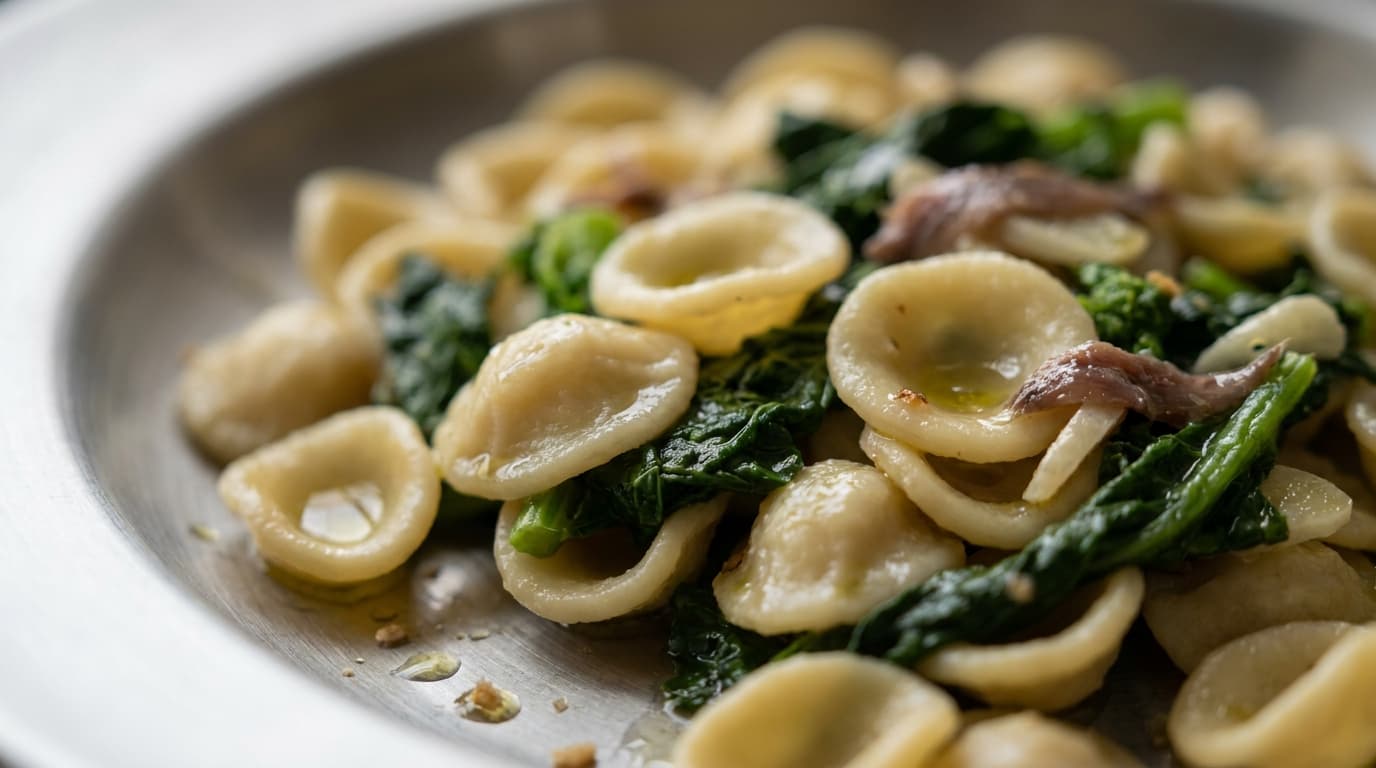
The starters are Galician standards, cleanly done: Galician bread with olive oil and salt, tomato salad with tetilla cheese and anchovies, Padrón peppers in their season, cecina with Galician hard cheese, zorza. Pulpo á feira is a fixture, and the Betanzos-style tortilla is always on the carta: potatoes only lightly fried and soaked in beaten egg, deliberately liquid inside, made with organic free-range eggs from Galicia.
On the side there are cachelos — boiled Galician potatoes — or fried potatoes with minced pork and caramelised onions. At the end come filloas with crisp chocolate, a cheesecake with quince jelly and a coulant of tarta de Santiago, and with them the queimada, the Galician pomace spirit that the house sets alight at your table.
Two brothers from Ourense
Carlos and Marcos come from a village in the province of Ourense, close to the Portuguese border. The recipes worked to here were learned from their mother, and neither brother had anything to do with the restaurant trade beforehand. This place was a decision, not the continuation of a career.
It shows in the service: Carlos explains the origin and the ageing of each piece at the table rather than simply leaving a menu, and the house wine recommendation points to the Denominación de Origen Monterrei. The kitchen works exclusively à la carte, with no set menus and no standard packages for groups. Bookings are taken for a maximum of six people per table, and there is no separate room for larger parties. And Breogán deliberately keeps no vegetarian or vegan carta — the one meat-free item is the tortilla.
Facilities & services
Parking
- Paid
- Street parking
- Free
Accessibility
- Entrance
- Restroom
- Seating
Payment
- Credit card
- Debit card
- Contactless
Service
- Dine-in
- Table service
- Counter service
Features
- Vegetarian
- Outdoor seating
- Bar on site
- Vegan
- Private dining room
Atmosphere
- Casual
- Cozy
- Trendy
- Quiet
Pets
- Dogs outside
Highlights
- Great wine list
- Great coffee
Reservations
- Reservations accepted
- Reservation recommended
Good for
- Groups