Quinta Avenida sits on Avinguda del Comte de Sallent, a few steps up from Plaça d'Espanya, and calls itself a Japanese gastrobar rather than a sushi restaurant. The distinction is not a pose. Walk in and you are almost immediately in front of the kitchen: a long counter wraps around the open cooking block, and behind it work the chefs Guillermo Guzmán and Raúl Enseñat.
The pivot of the whole operation is the robatayaki, the traditional Japanese charcoal grill. The house puts it deliberately at the centre and builds on it its claim to be doing something on Mallorca that nobody else does quite this way. Cold smoking comes with it: the kitchen works not only over embers but with smoke, and the hunt for the right wood dust is part of the craft.
The robatayaki at Quinta Avenida
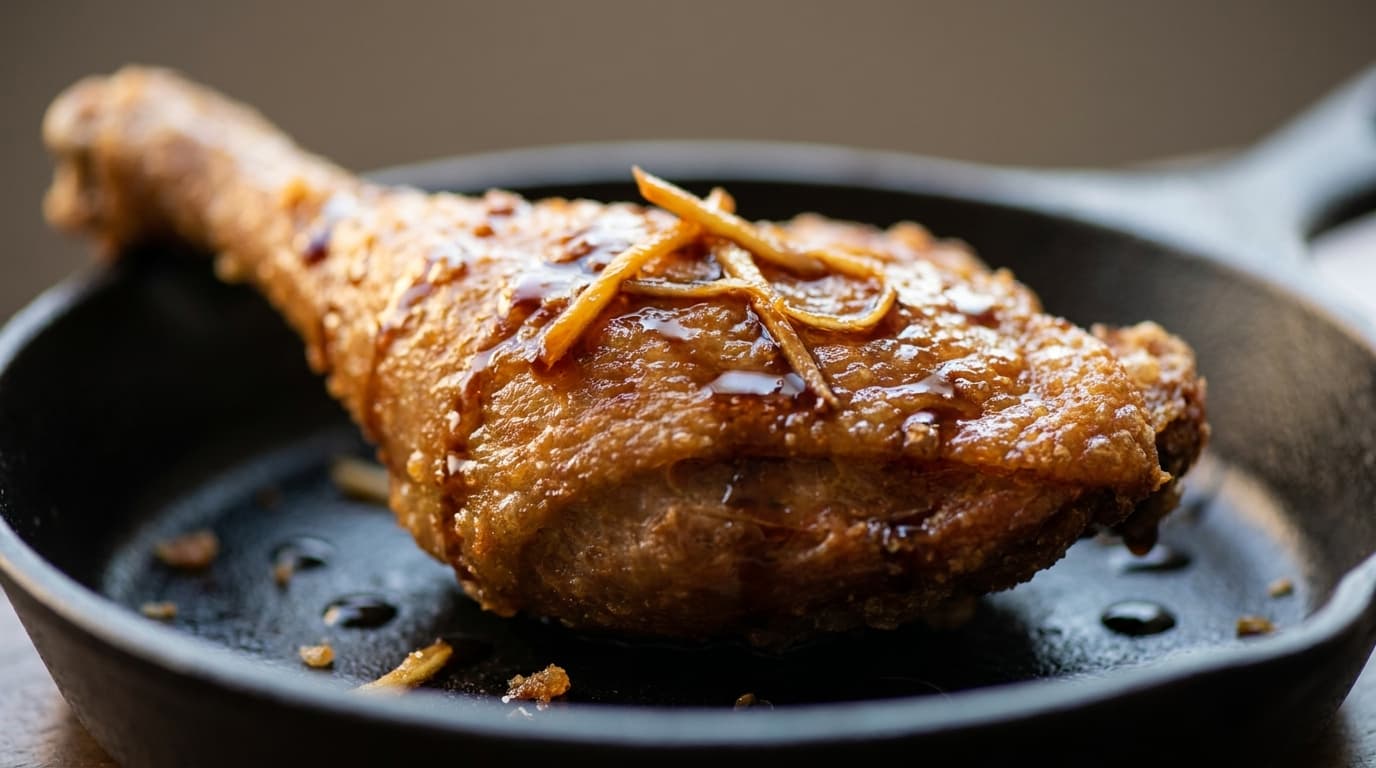
The embers produce the part of the menu that separates this house from the city's many sushi addresses. Magret de pato arrives with aubergine and a honey-soy sauce, black cod comes marinated as bacalao yuzumiso, and alongside them sit angus entrecôte, aged beef sirloin with a sweet mustard sauce, lamb ribs with yakiniku sauce, slowly glazed pork baby ribs, grilled squid and chicken breast off the coals. A section of its own carries robata-style skewers: beef with pepper and aka miso, secreto of Iberian pork with misokatsu, yakitori, octopus with shiso mayonnaise, scallops and prawns with yuzu kosho.
Guzmán and Enseñat sum up their approach in a single line: you do not subject a product to a technique, you subject the techniques to the product. The rice is where you can check that. It is made sushi-meshi style in a wooden hangiri, seasoned with rice vinegar, sugar and salt and folded through with a wooden spatula until the grains gleam without clumping.
Raw fish and the Balfegó tuna
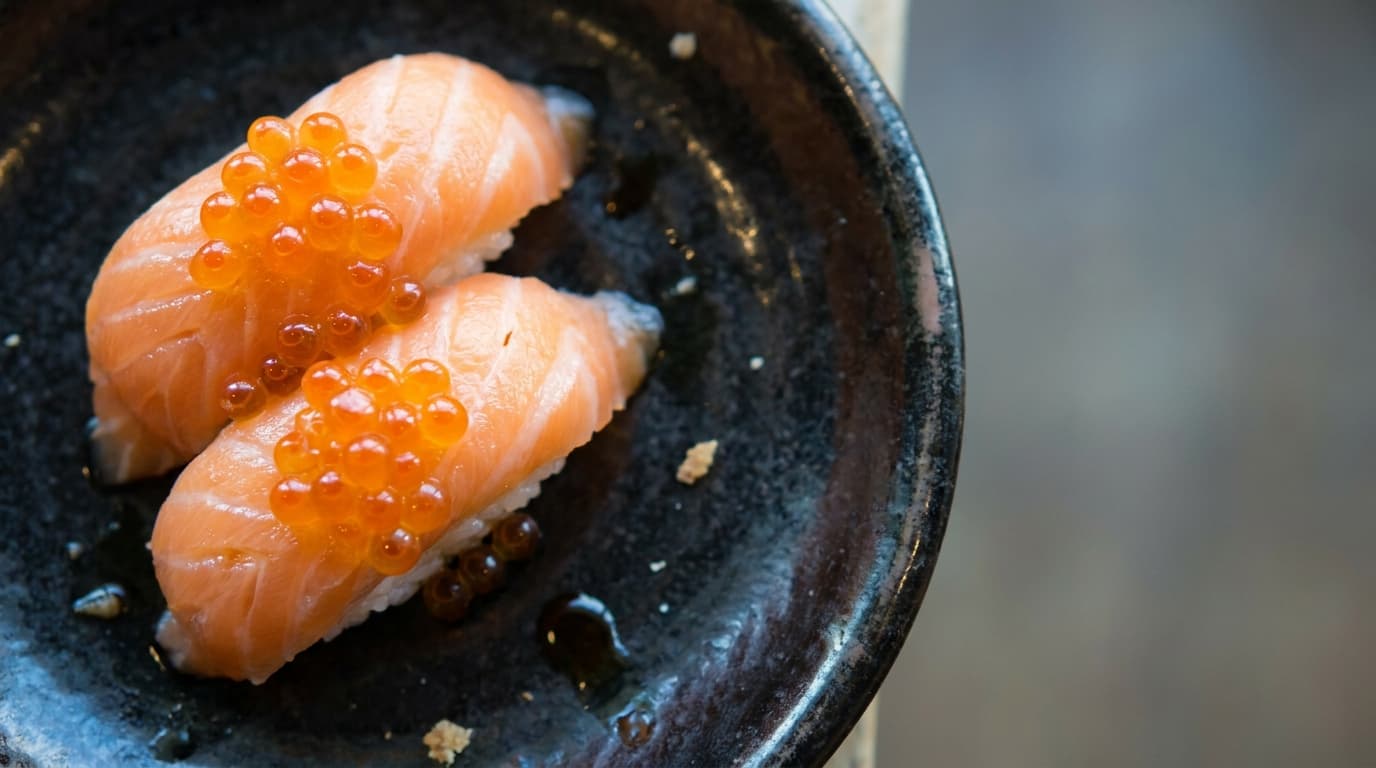
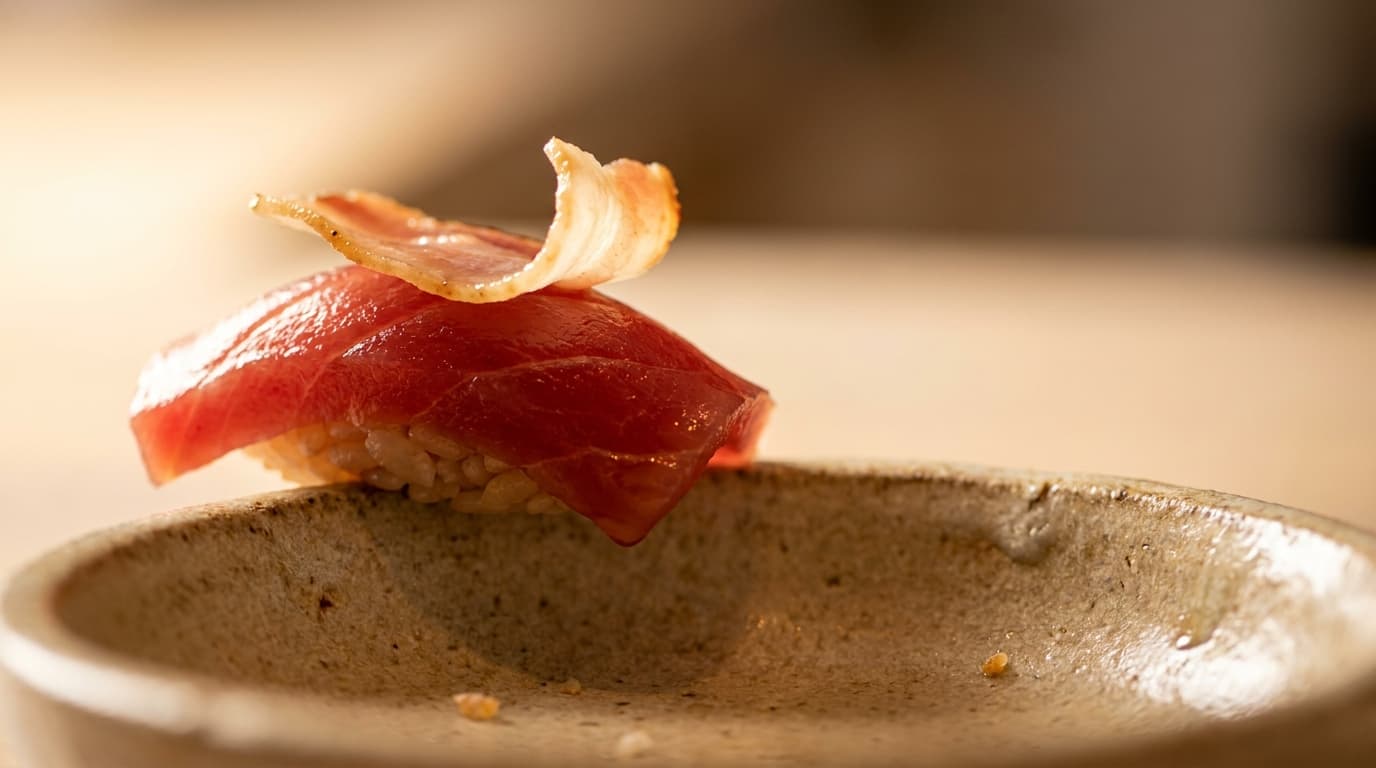
On the fish side the kitchen works with Balfegó bluefin, in more than ten preparations. The best known is a nigiri that brings tuna together with Iberian lard; both carry a lot of fat, and that is precisely what the pairing is aiming at. Beside it stand maguro, gunkan with spiced tuna, aburi with flamed salmon, unagi with eel and smoked avocado, and hotate with flamed scallops and tobikko.
Among the starters you find a tuna tartare on a crisp rice cracker, a tuna tiradito with Japanese truffle dressing and tobikko, tataki with a smoke sauce, and an uzusukuri of paper-thin wagyu and tuna with ponzu and parmesan. Then a white-fish ceviche with leche de tigre and a corvina tartare on a fried shiso leaf. Gyozas come in three versions: duck, fried in panko; oxtail filled with tuna and truffle; and pork, steamed.
The room and the location
Walls of marés, the island's porous sandstone, and vertical gardens take the chill off a room that an open kitchen would otherwise make hard; the register is metropolitan but calm. The protocol stays deliberately loose — Raúl Enseñat describes the tone as closer to friendship, with guests meant to sit as if they were at home. Beyond the à la carte menu there is a set lunch, and the house runs its own ordering service for collection and delivery.
Facilities & services
Parking
- Paid
- Street parking
Accessibility
- Entrance
- Restroom
- Seating
Payment
- Credit card
- Debit card
- Contactless
Service
- Delivery
- Takeout
- Dine-in
- Table service
Features
- Vegetarian
- Bar on site
Atmosphere
- Cozy
- Trendy
- Quiet
- Romantic
Highlights
- Great wine list
- Great coffee
Reservations
- Reservations accepted
- Reservation recommended
Good for
- Families with children
- Groups