Salitre Can Picafort is a tapas restaurant at the eastern end of the seafront promenade, where the souvenir shops give out and the town runs on towards Platja de Son Bauló. The building sits slightly raised between the promenade and Carrer Isaac Peral, and you can walk in from either side. Inside it is kept minimal; at the front it opens onto a terrace looking out to sea.
The name refers to the salt crust the sea leaves on everything standing near it. The idea behind the place is quickly told: there are no starters and no main courses. You order several plates, they arrive one after another in the middle of the table, and the table sets the pace. The house puts it drily itself — this is not a bar, it is somewhere to sit down and eat.
What sets Salitre Can Picafort apart
The room is small, and sharing here is not a marketing idea but the blueprint of the menu. Because the dishes come singly and in sequence, the table stays in motion and the meal stretches out without anyone working at it.
On top of that there is a board that changes with the market and with whatever the kitchen has been thinking about. Alongside the fixed entries there are things that are not always on — which also means two visits need not look alike.
Two menus in one: tradition and Kon-Fusion
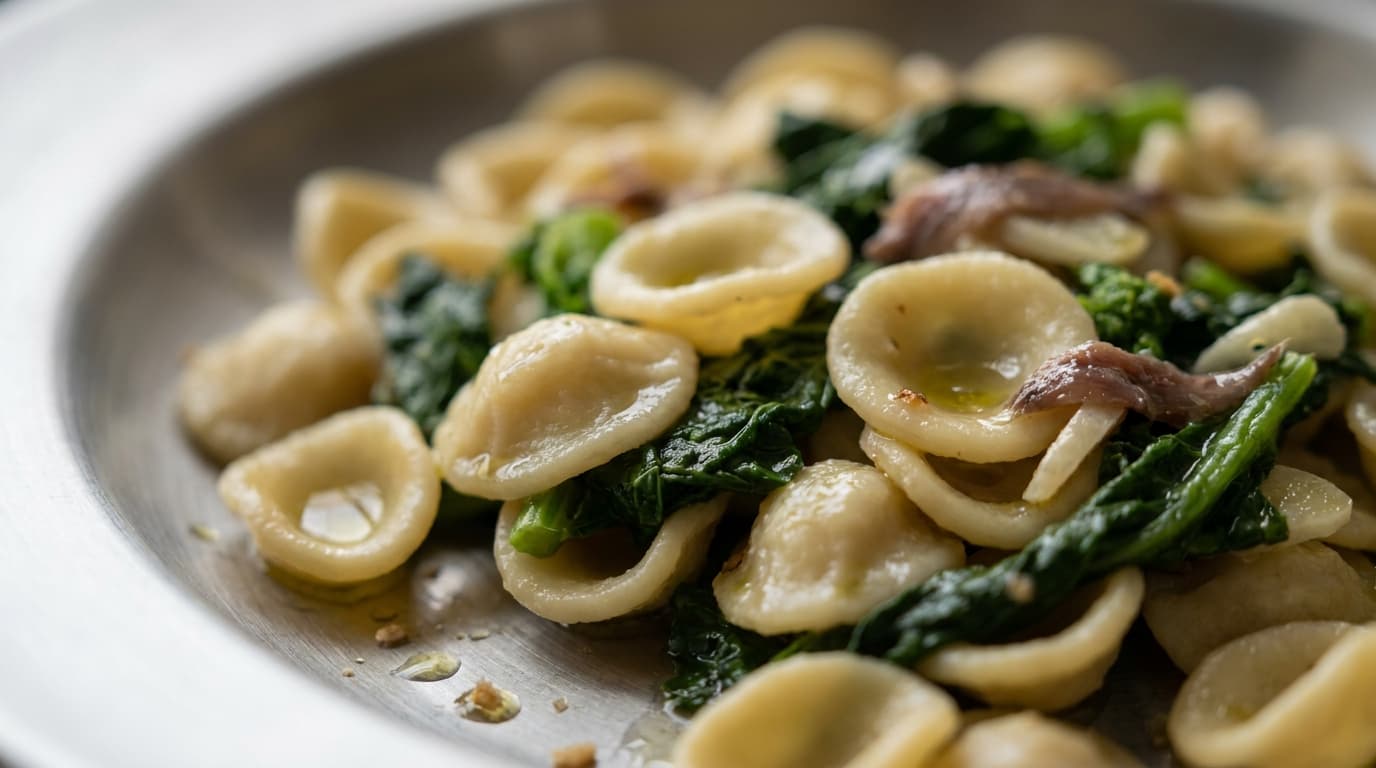
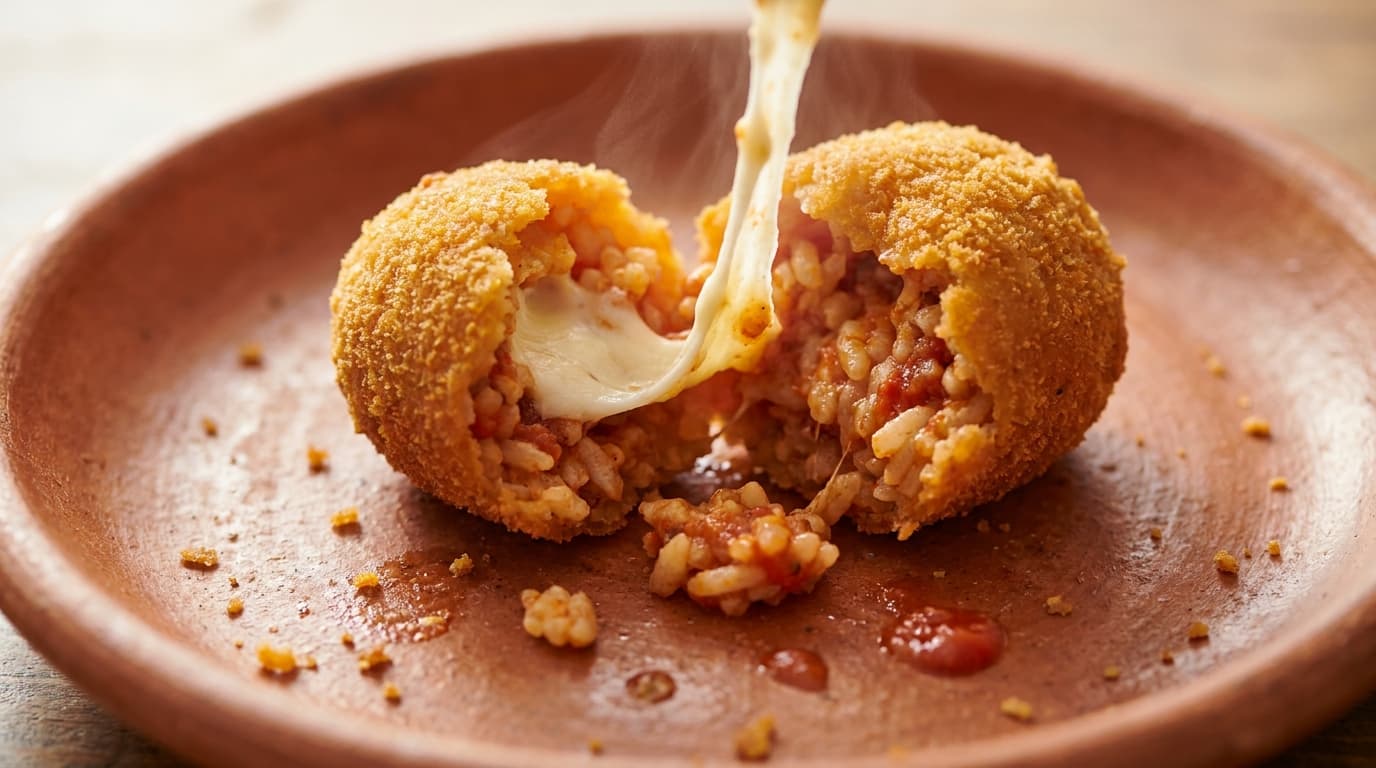
The card falls into two halves, and both are meant seriously. The first gathers the recognisable under the heading of sharing the traditional way: octopus Galician style, padrón peppers, chorizo from the Bierzo in red wine, torreznos from Soria, patatas bravas done their own way, fried boquerones and chipirones, prawns in garlic, mussels steamed in Albariño, calamares andaluza, albóndigas, mushrooms in garlic. The chicken and ham croquettes run explicitly as their mother's recipe. One plate is called Cosas del AMOR and brings together the classic Spanish marriage of vinegar-cured boquerón and Cantabrian anchovy, with a piparra alongside.
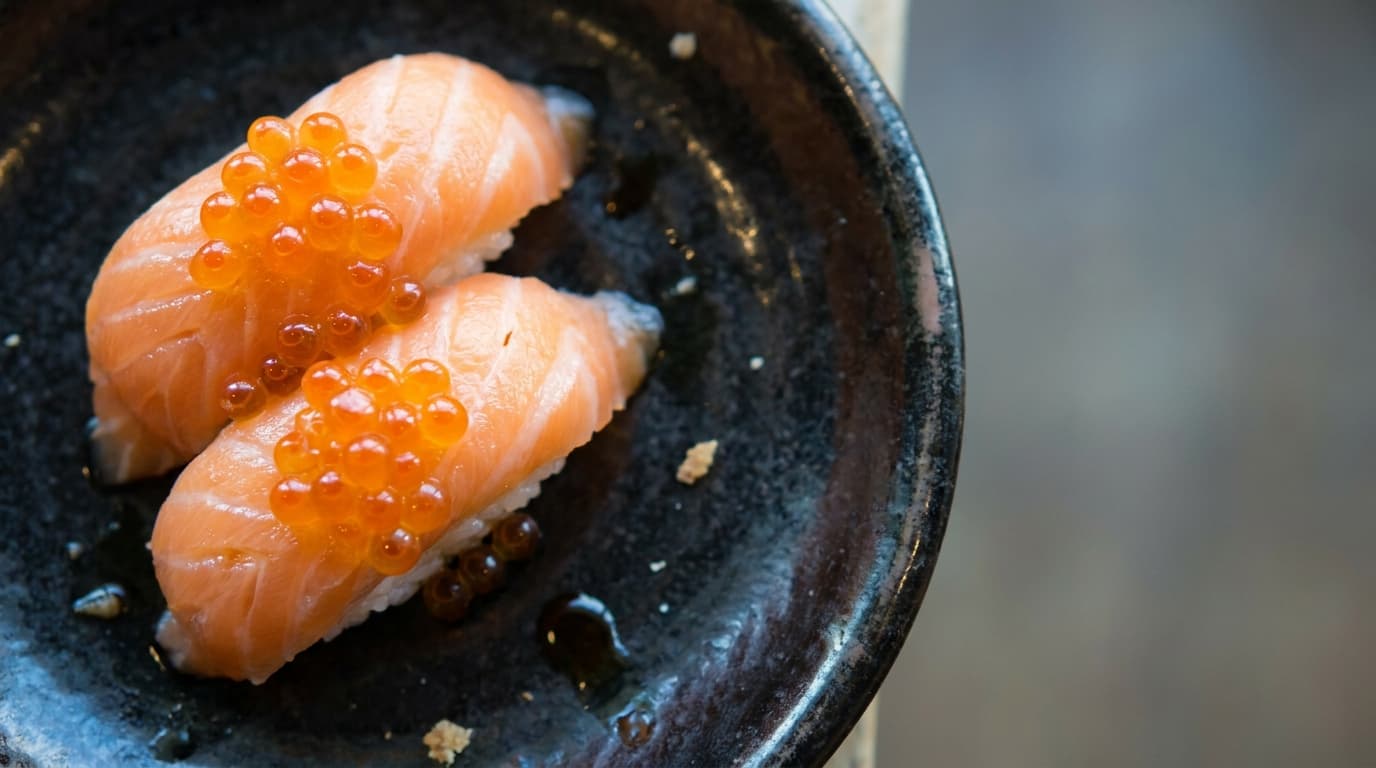
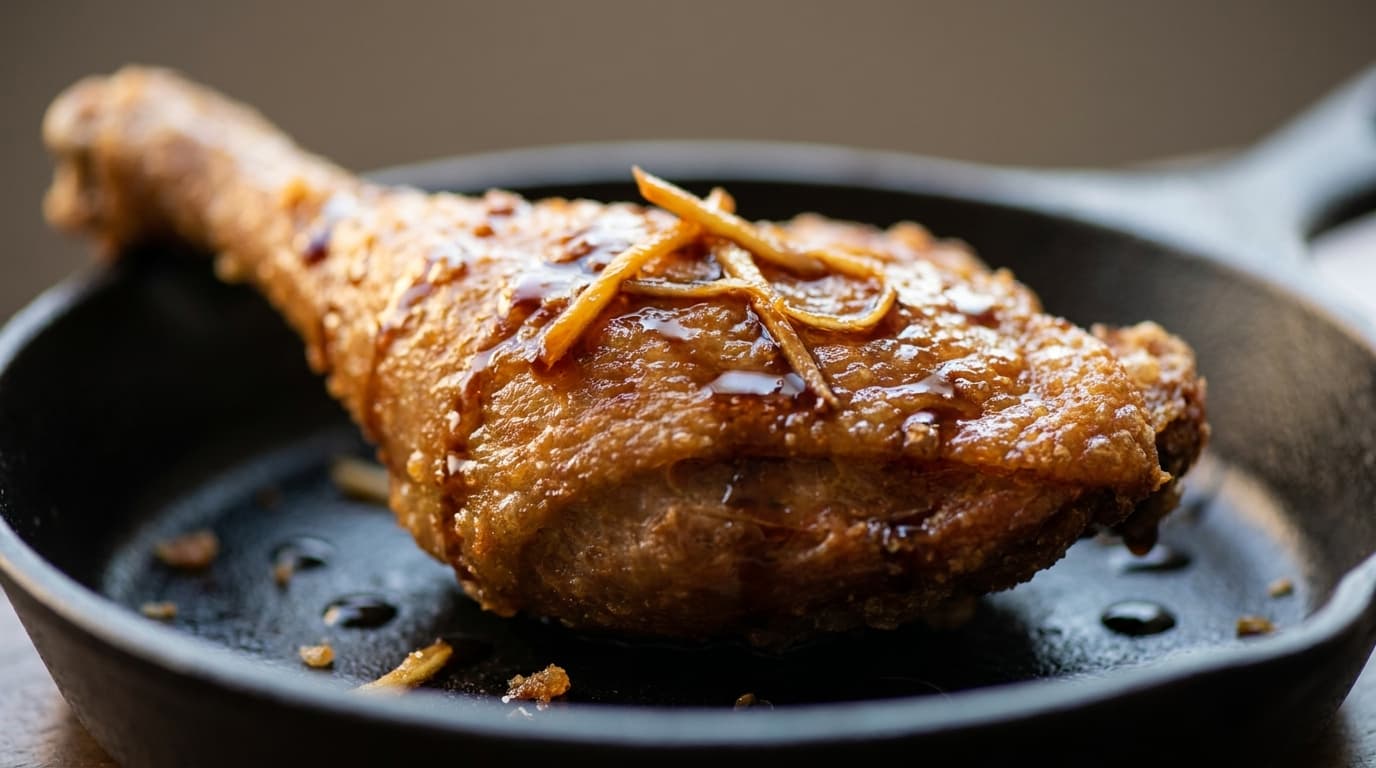
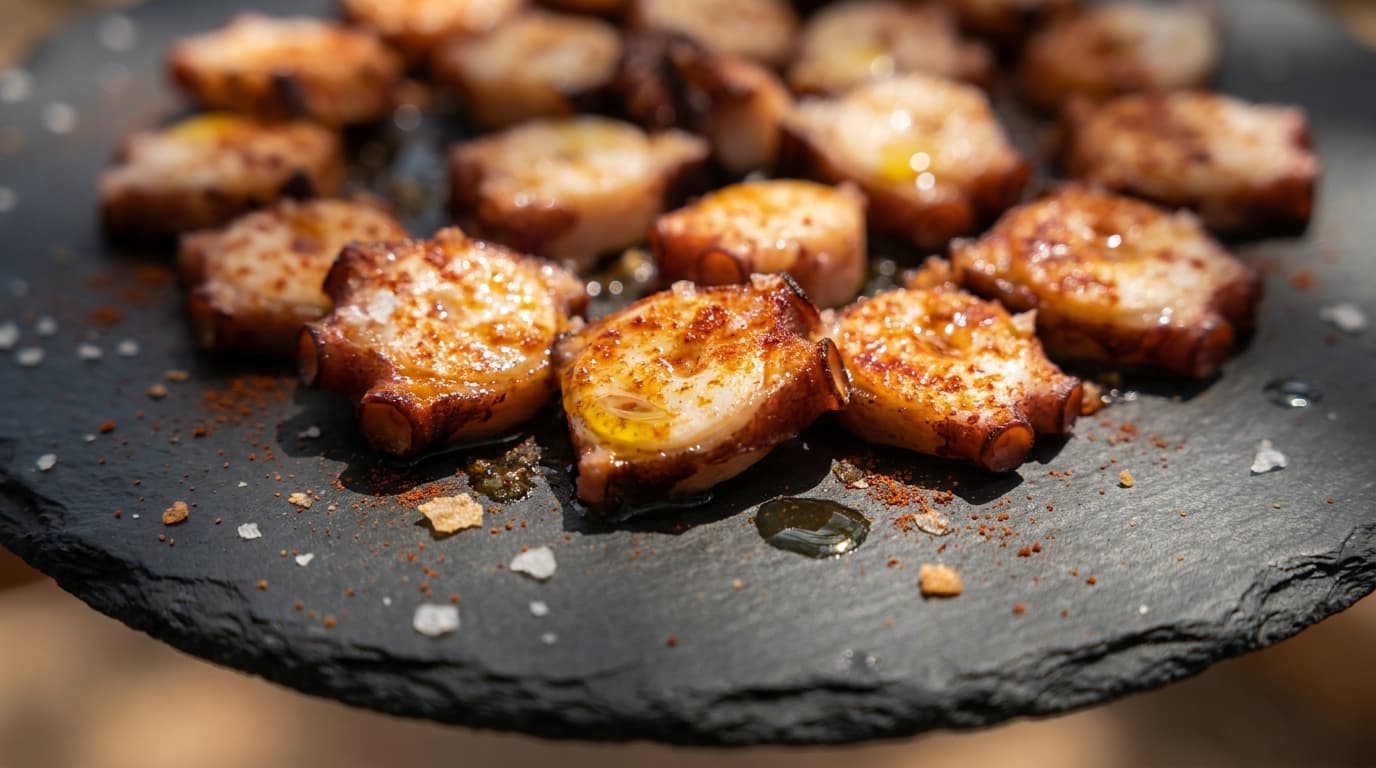
The second half carries the line about sharing too, if you dare, and works Japanese and American technique into Mediterranean produce. There are gyozas with prawn and chives or with pork and a Korean barbecue note, a sashimi of bluefin, a carpaccio of tuna belly with mango, cucumber and ponzu, crisp cones of spicy tuna, edamame with togarashi, a bao with calamares andaluza and black garlic, salmon in a plum escabeche with pickled ginger. The Pulpo Rock and Roll comes off the plancha with smoked pimentón, and the Mallorcan lechona in Peking style deliberately aims at what you would otherwise know from lacquered duck. Then there are entries you will find on almost no other menu on the island: crocodile done cajun, zebra skewers with yakiniku, and Menorcan beef twice over.
Anyone eating without meat will find something on both sides — padrón peppers, mushrooms, patatas bravas, edamame, bread with allioli.
The family behind it
A family stands behind the house. Juan cooks the traditional side and draws it from his mother's recipes; his sister Fany is in the kitchen with him. His brother Javier looks after the room and explains the dishes, whose names rarely give away what ends up on the plate. The two Nuñez Luz brothers come from northern Spain and have lived on the island since childhood.
The second, markedly more playful half of the menu comes out of travel, experience and an appetite for mixing without losing sight of the produce. That the menu carries a Groucho Marx line about principles fits the tone of the house rather exactly.
Facilities & services
Parking
- Street parking
- Free
Accessibility
- Entrance
Payment
- Debit card
- Contactless
- Credit card
Service
- Dine-in
- Table service
Features
- Restroom
- Vegetarian
- Outdoor seating
- Wi-Fi
Atmosphere
- Casual
- Cozy
- Trendy
- Romantic
Pets
- Dogs allowed
Highlights
- Great wine list
- Great coffee
- Fireplace
Reservations
- Reservations accepted
- Reservation recommended
Good for
- Families with children
- Groups