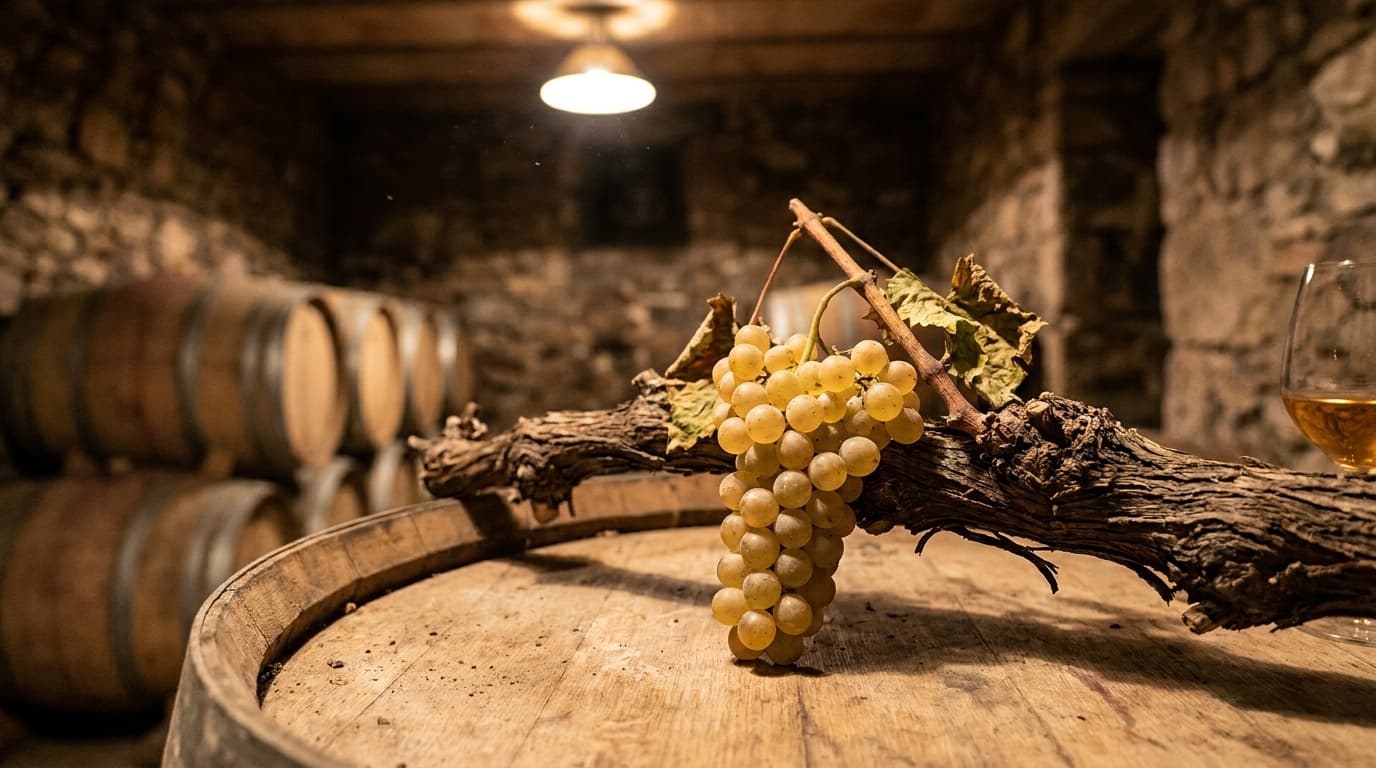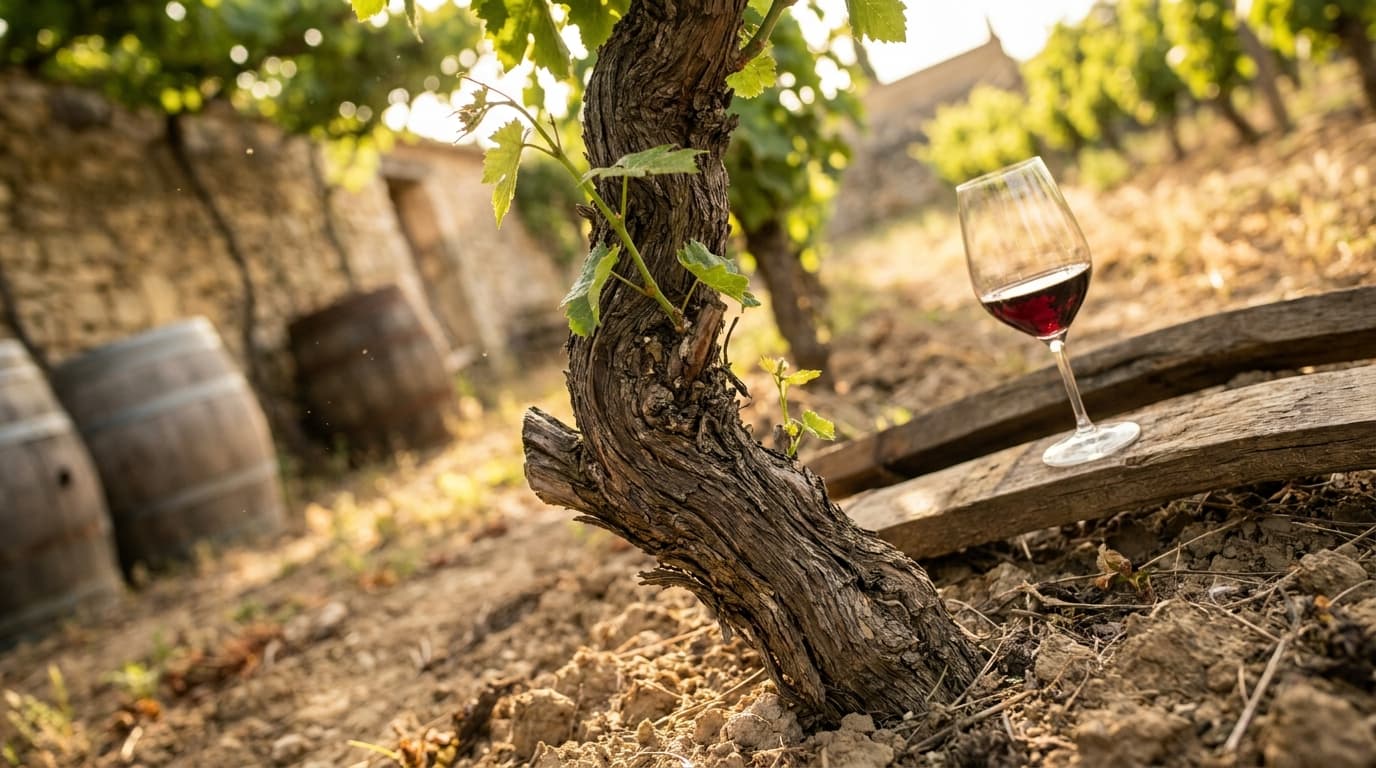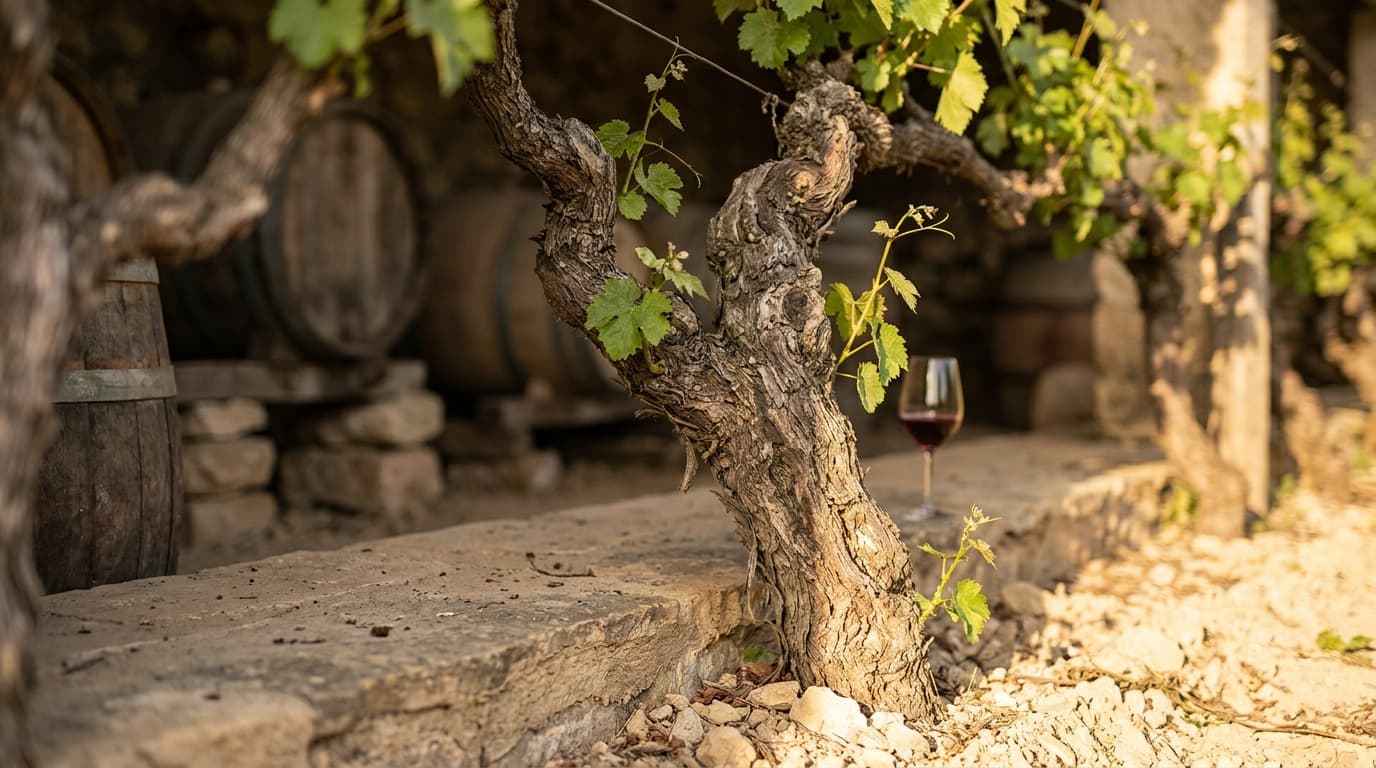
Bodegas Oliver Moragues sits near Algaida, a good twenty kilometres east of Palma, in the middle of the Pla de Mallorca. The estate is the Possessió Binicomprat, and the same family has farmed it since 1511, by now through more than fifteen generations. That is not a number for the label here, it is the reason this estate still has grape varieties in the ground that had all but disappeared from Mallorca.
At some point the family decided to go back rather than move along. Instead of international varieties and modern trellising, it returned to the old Mallorcan vines and to bush training, the low free-standing vine the island knew for centuries. What comes of it are wines with restrained alcohol, fine tannin and a salty edge that comes up out of the subsoil.
You can visit any day of the week, but only by prior arrangement. The tour takes you through the old house, the vineyards and the cellar, and ends with a tasting in the garden.
Five centuries in one family
The Possessió Binicomprat is one of the few estates on the island to have stayed in the same hands for five centuries without vineyard or cellar ever being given up. The house stands on a rise above the Pla, at the foot of the Puig de Randa and with a view as far as the Serra de Tramuntana. Pine and holm-oak woodland surrounds it, and that woodland is explicitly part of the operation: it supplies plants for the vineyard work and habitat for birds, bats and the estate's donkeys.
The direction the house takes today is avowedly a way back. The family brought the native varieties back and took up the old training systems in the vineyard again, in order to reconnect with the wines Mallorca grew before the era of international varieties.
The grape varieties of Bodegas Oliver Moragues
The whites here are Prensal Blanc, known on the island as Moll, and Giró Ros. The reds are Callet, Manto Negro, Gorgollassa and Escursach, which is to say precisely the varieties hardly anyone off Mallorca knows. The estate describes them in clear distinctions of its own: Callet brings finesse, Manto Negro red fruit and polished tannin, Gorgollassa an almost wild tannic structure.
The wines carry that origin in their names. OM Prensal and OM Giró Ros each put one of the two white island varieties at the centre, OM Blanc blends both with Viognier, El Galgo is a Callet, the rosé comes from Gorgollassa, and OM 500 is named for the five centuries the family counts here. Bottling is under Vi de la Terra Mallorca. The British magazine Decanter has singled out the OM Prensal Blanc and the OM Gorgollassa in its blind tastings.
Vineyard, soil and biodynamic work
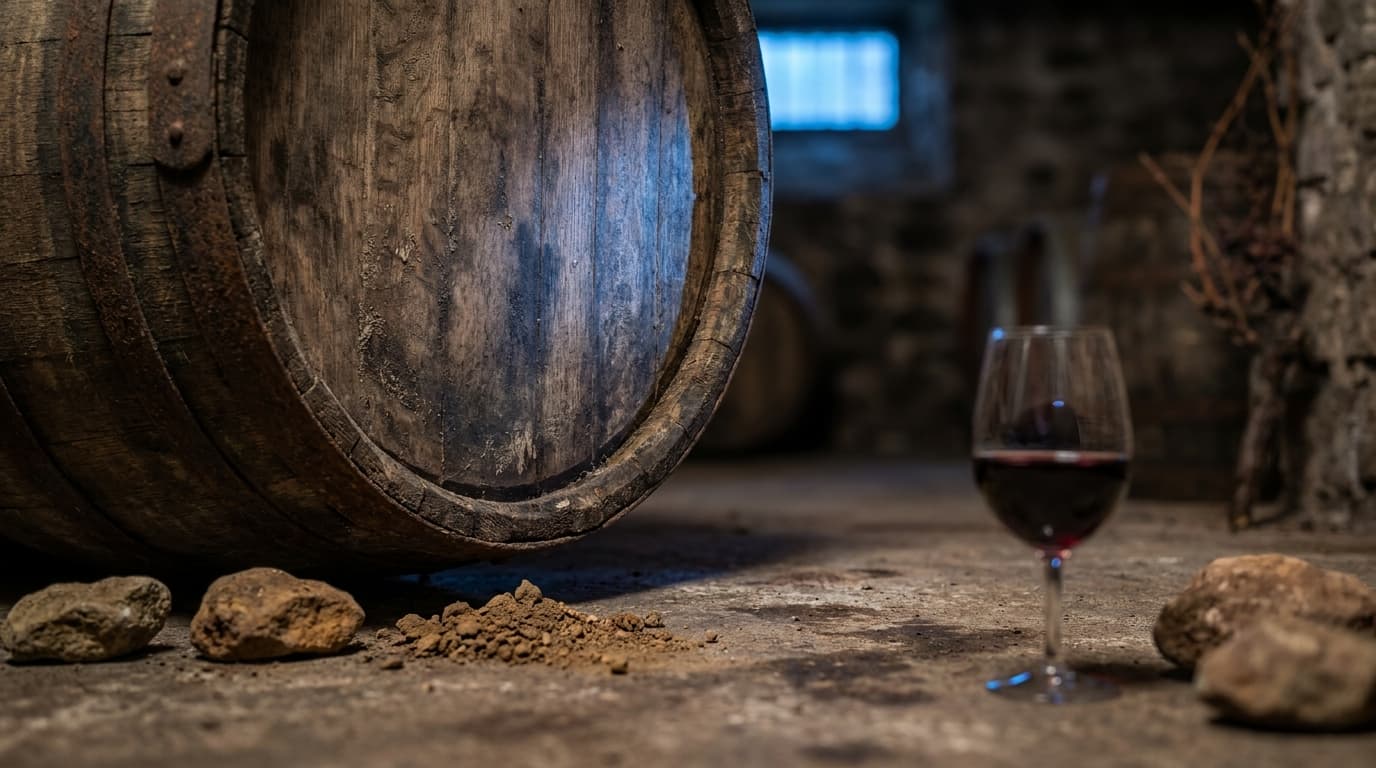
The vineyard is divided into named parcels. S'Era lies right at the top by the woodland edge, Castellitx equally high and with the lowest-trained vines, Sa Figuera carries the red varieties, Es Ullastres at the bottom has the deepest soils. Beneath them lie three layers the estate names itself: humus on top, below that calcareous clay material of marine origin, to which the wines owe their saline note, and at the bottom very old red clay that holds the moisture.
The work is organic and follows biodynamic practice. After the harvest, cover crops are sown between the rows, preparations such as the nettle infusion are made on the estate, and the donkeys' manure goes back into the soil. From early summer into autumn the embat draws across the rise, the island's sea breeze: warm days, cool nights, and it is exactly that difference that keeps the freshness in the fruit. Picking is by hand, each variety is raised separately and only then brought together.
The visit, the tasting and what comes with it
The tour goes through the old house, into the vines and into the cellar. At the end you sit in the garden at tables of wrought iron and marble, among old shrubs, the old well and historic foudres. With it come Mallorcan small plates that the estate prepares together with the Forn de Can Salem: coca, empanada, bread with sobrassada made on the estate itself, cremadillo. Vegetarian, vegan and gluten-free are possible, as is a version with no alcohol at all.
For groups the house lays a table in a room of its own overlooking the vines and cooks paella or porcella. And if you want to stay: there are guest rooms on the estate.
Facilities & services
Parking
- Free
Accessibility
- Entrance
- Parking
Payment
- Credit card
- Debit card
- Contactless
Pets
- Dogs allowed