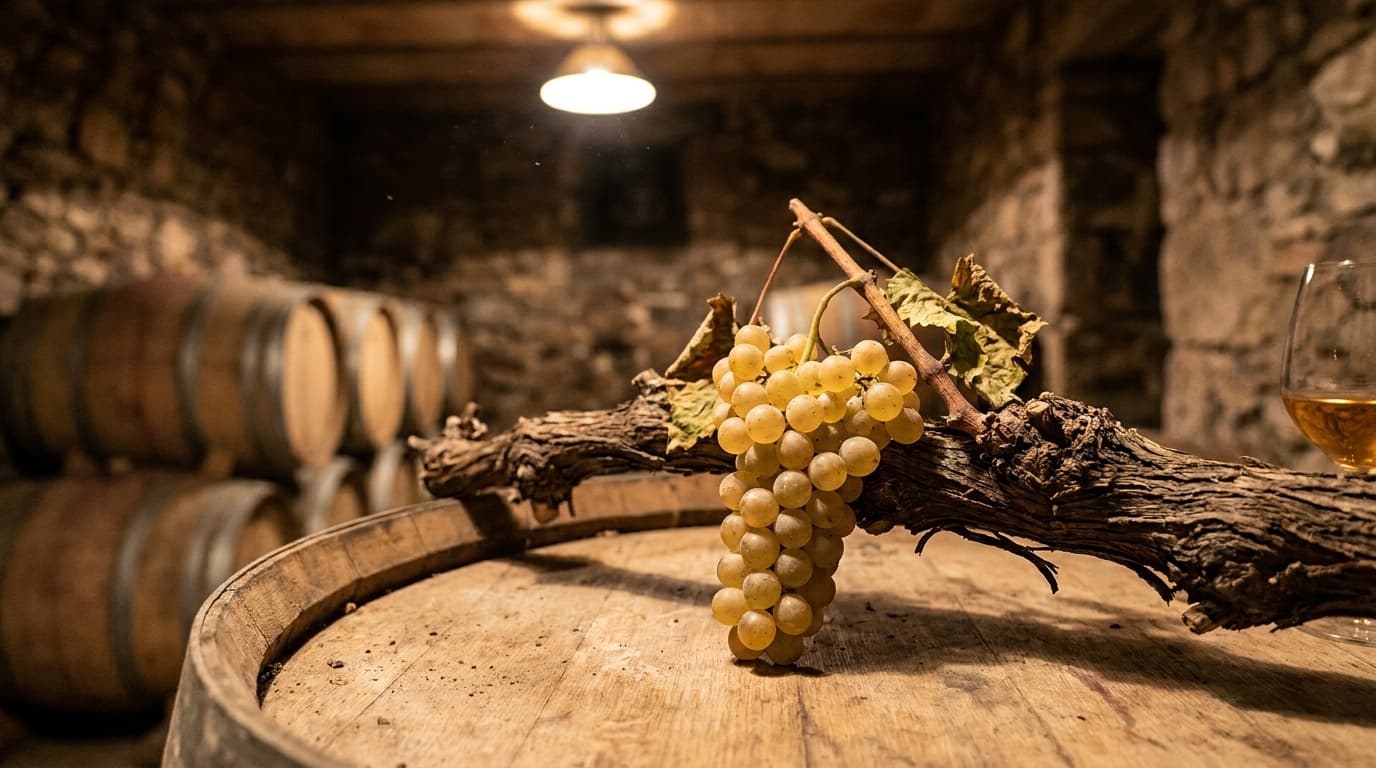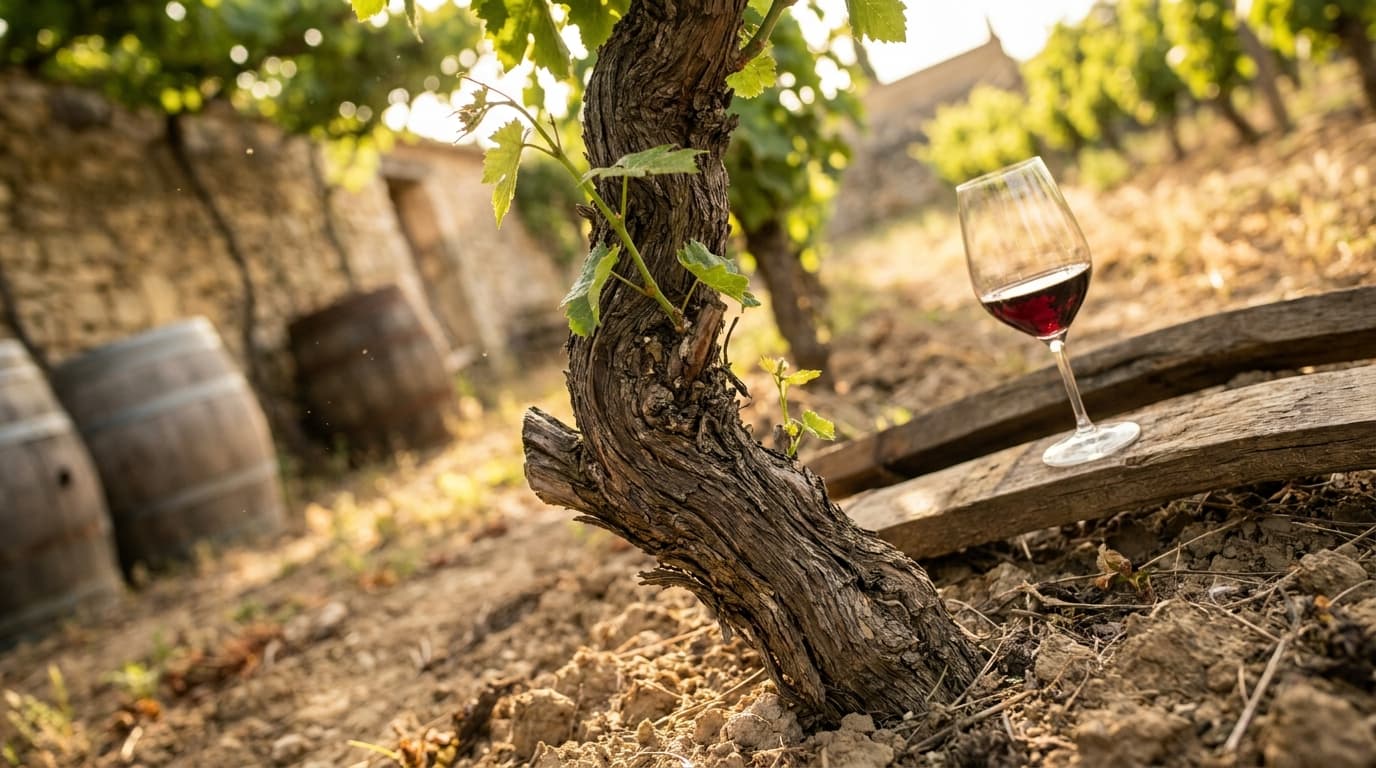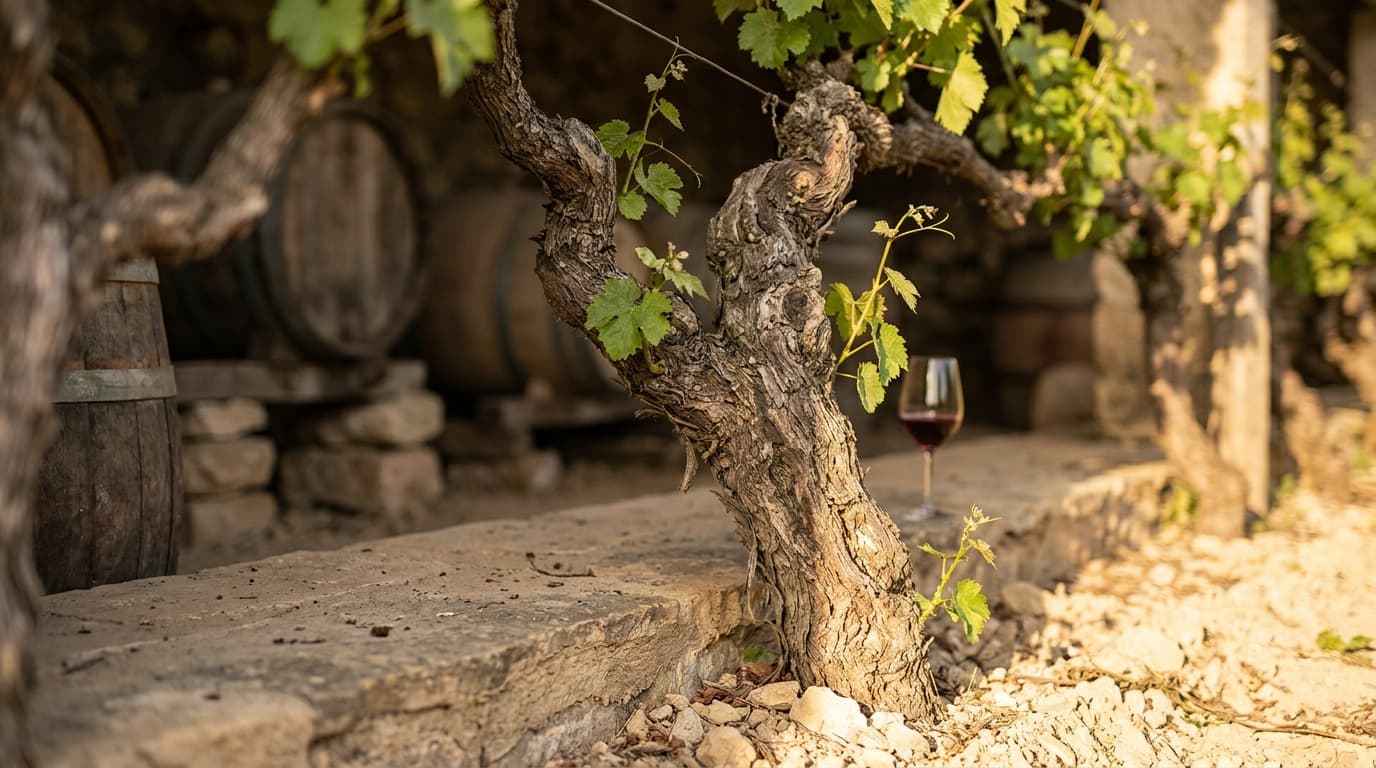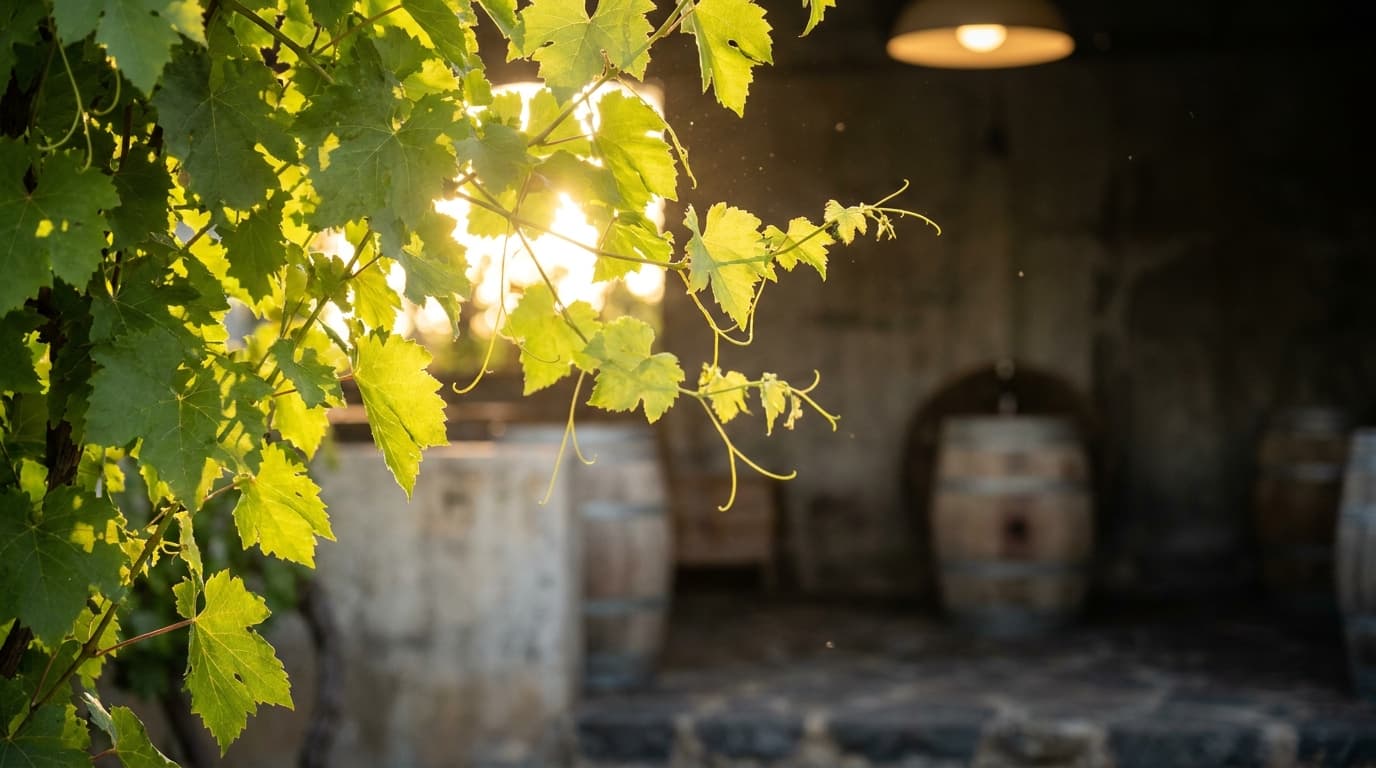
Bodega Es Fangar Vins does not stand among the vines but on the south-western edge of Felanitx, in the Son Colom industrial estate — and that is the first surprise about this house. A plain shed from the outside, inside a cellar across four levels, built around a single principle. The vines whose fruit is pressed here grow several kilometres further out, on the hills of the Es Fangar estate, which stretches across the municipalities of Felanitx and Manacor.
The owners have researched the history of their property thoroughly: it reaches back to Roman antiquity, and the estate becomes documented in the fourteenth century, when grain and wine were the basis of supply and trade on the islands. In the nineteenth century phylloxera destroyed almost every vineyard on Mallorca; on the estate, only the remains of an old cellar were left standing.
When the current owners took the land on, they found a nature reserve, along with wide fields and wild forests of pine, olive and carob trees. The fresh start in the vineyard was then a deliberate decision: the first vines were replanted on the estate's hills, native varieties such as Giró Ros and Prensal Blanc alongside international ones.
Grape varieties, soil and origin
Es Fangar Vins is a registered bodega of the D.O. Pla i Llevant, the appellation of the centre and east of the island. The predominant varieties in the vineyard are Chardonnay, Prensal Blanc, Cabernet Sauvignon and Callet, joined by Giró Ros, Manto Negro, Merlot, Syrah, Viognier and Moscatel. The warm climate and the salty breeze shape the grapes, and the estate credits its clay-loam soil with the ripe, round tannins of its reds.
How differently that turns out is clear from the range itself. Sa Sivina is a white from the two native varieties Giró Ros and Prensal Blanc, Sa Fita combines Chardonnay, Viognier and Prensal, Lo Cortinel·lo sets Chardonnay beside Giró Ros and Viognier. Among the reds, Callet and Manto Negro lead in Son P, while N'Amarat spends a long time in barrel. The white TwentyTwelve is pure Moscatel from a parcel that benefits from the cooling breeze off the sea. Every wine is certified organic, vegan and vegetarian — nothing is fined with animal gelatin or egg white.
Métode Gravetat: gravity instead of pumps
The method this house is built around sounds simpler than it was to build. Grapes and wine are never pumped anywhere in the process; they move under their own weight. The grapes that arrive are hand-sorted and pressed or filled into large containers; a purpose-built crane lifts those and carries them along ceiling rails to the stainless steel tanks where fermentation begins.
The reason is not a taste for machinery but a fear of premature oxidation: the more gently the berries are handled, the clearer the aromatics stay in the end. The production room is cut to match — generous, spread over several levels, with separate areas for the individual grape varieties so that nothing mixes.
Visiting and tasting at Bodega Es Fangar Vins
The house receives guests, and does so properly. Five different tastings are on offer, each with a short introduction to the history of the wines and a tour of the cellar. The wines come with water and traditional Mallorcan biscuits; the guiding is done in English, Italian, Romanian and Spanish.
One of the tastings goes out to the finca itself. At harvest there is an experience on top of that, where you join the picking, see the winemaking up close and then taste with a guide, with tapas and freshly made paella. Booking ahead is the safe route for all of these formats. Wine can also be bought at the cellar and ordered through the estate's own shipping within the EU.
More than wine: the estate behind the bodega
Wine is only one part of what grows at Es Fangar. The fertile ground and the favourable microclimate also carry a harvest of organic almonds, olives and figs, which the estate turns into almonds, olive oils and fig jam under its own name. They are sold in the farm shop at the entrance to the finca, in selected shops in Palma and in organic food shops in Germany.
As little as possible is wasted, and a considerable part of the land remains a nature reserve: watering points spread across it keep the wildlife alive.
Facilities & services
Accessibility
- Entrance
Payment
- Credit card
- Debit card
- Contactless