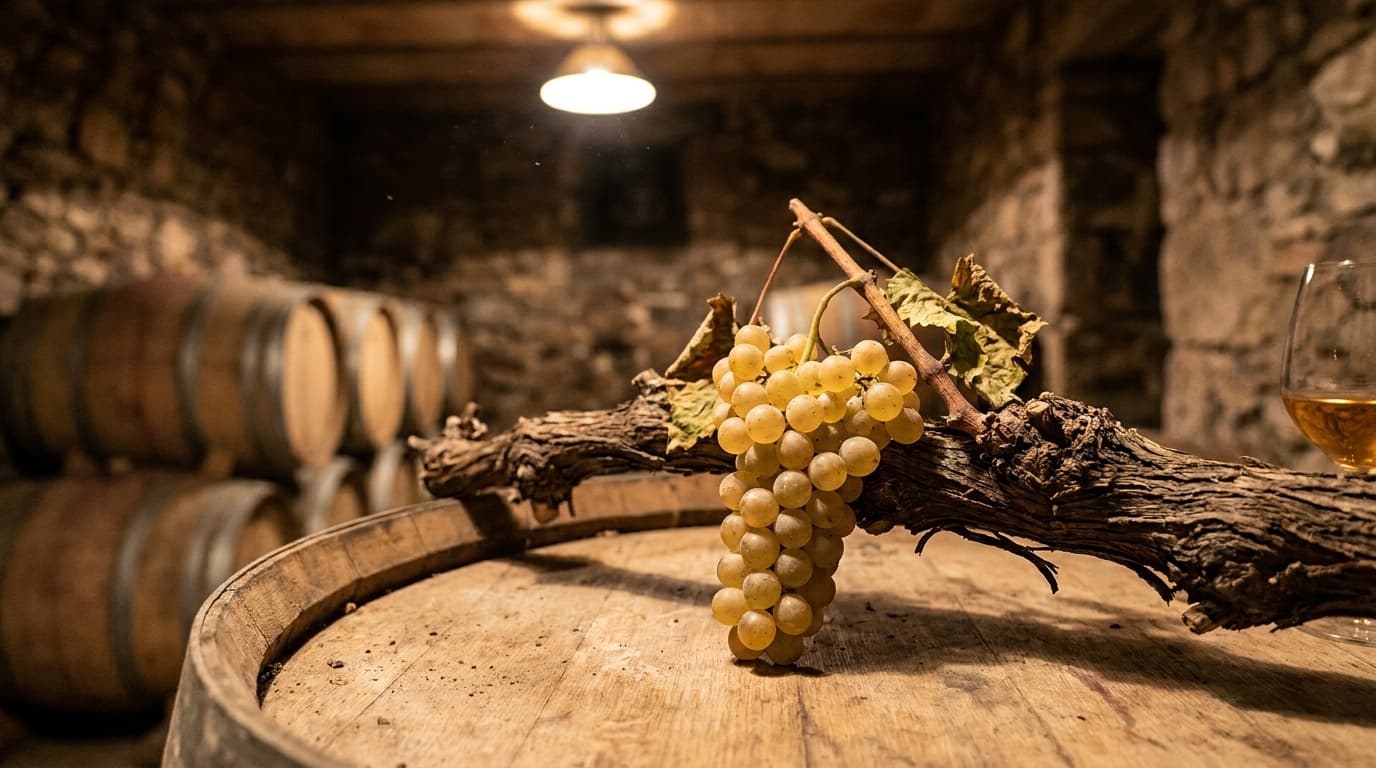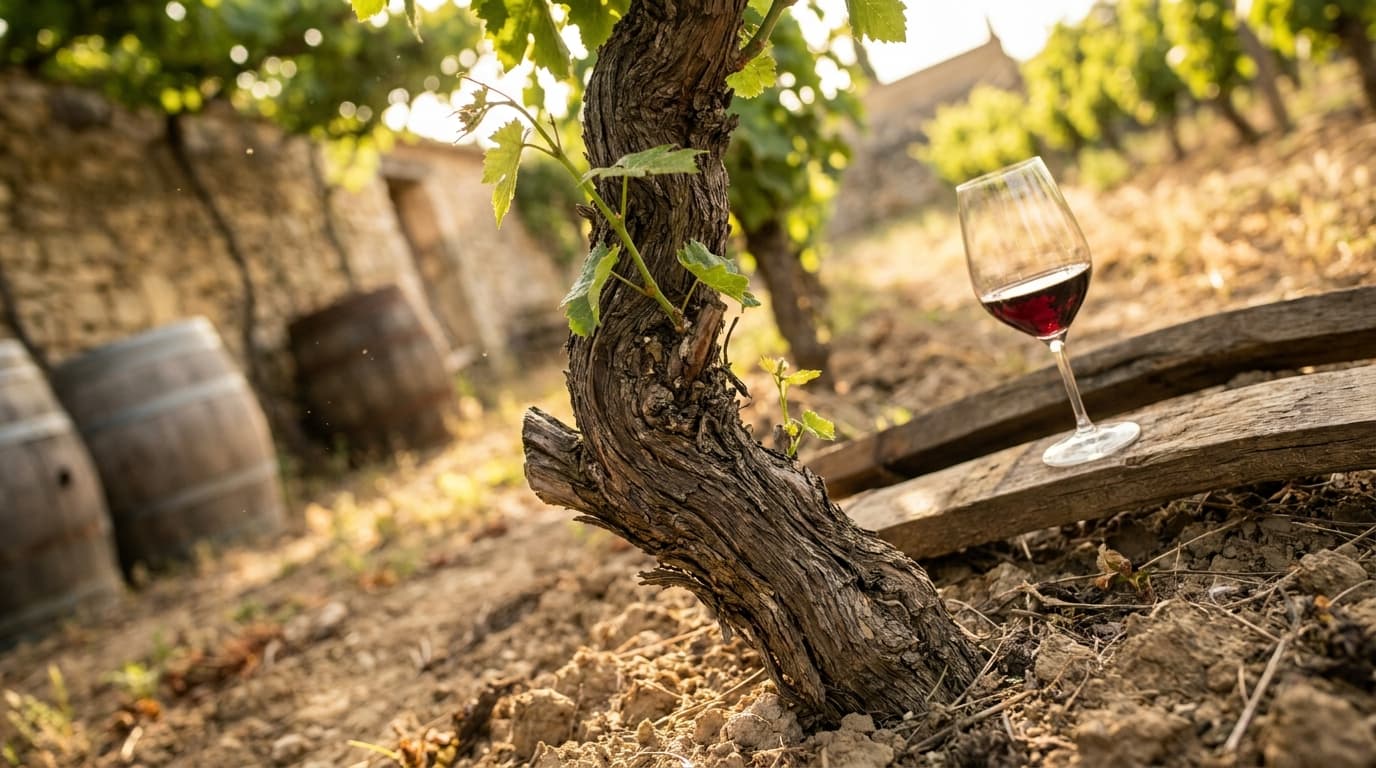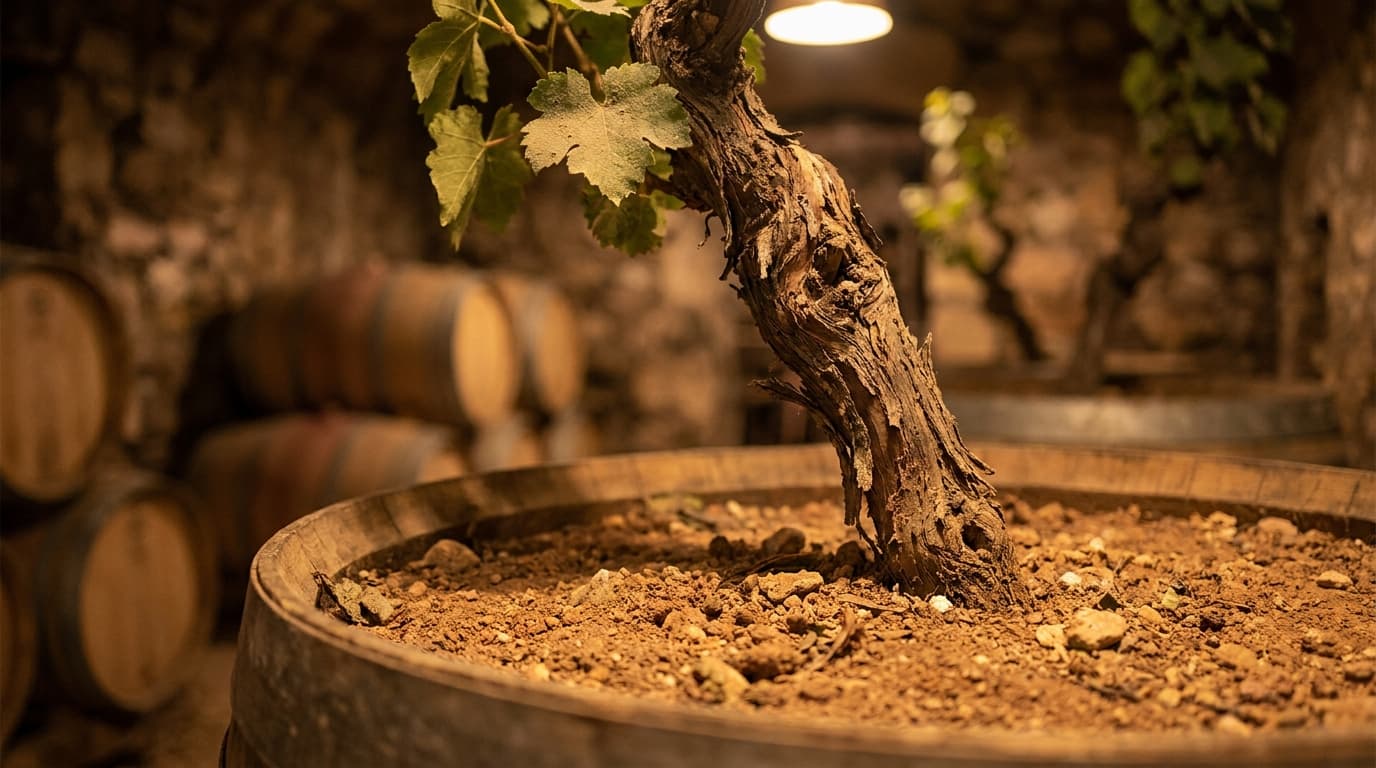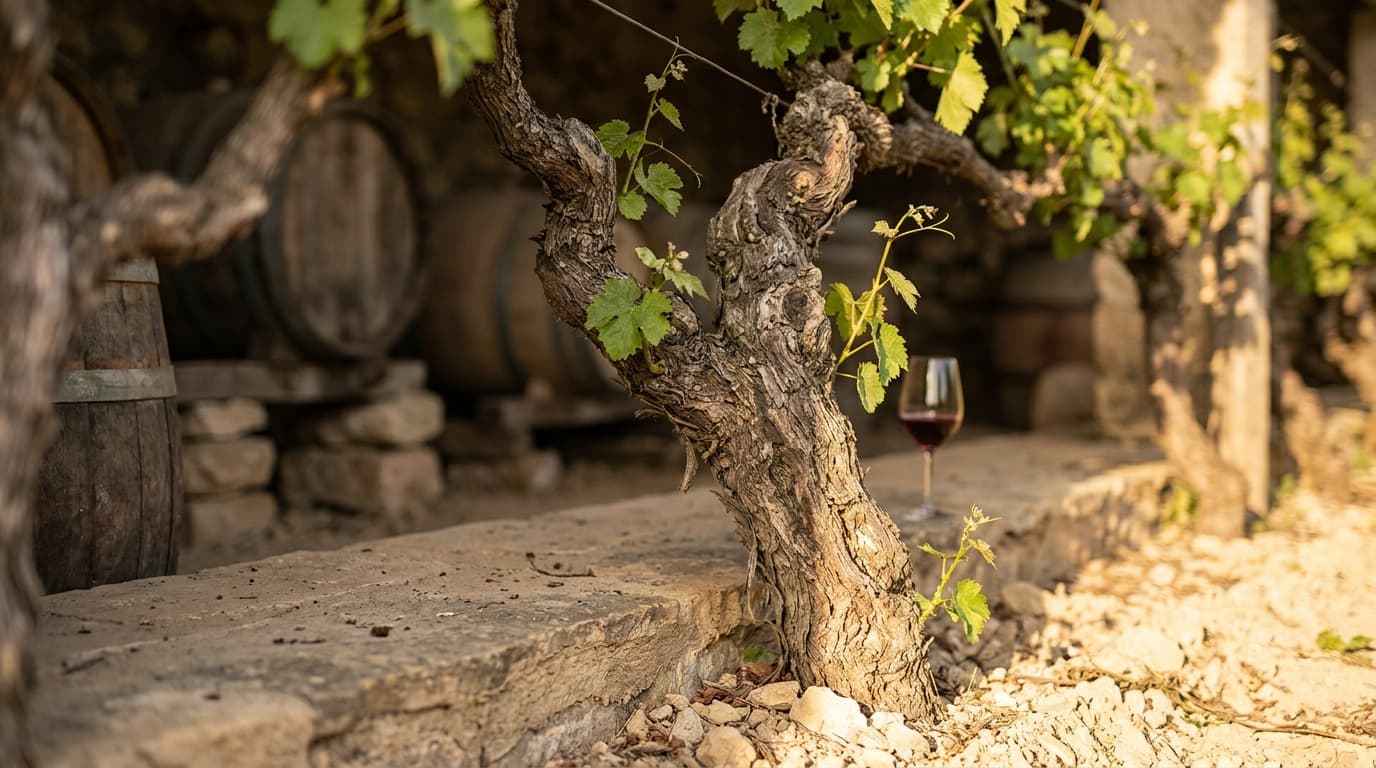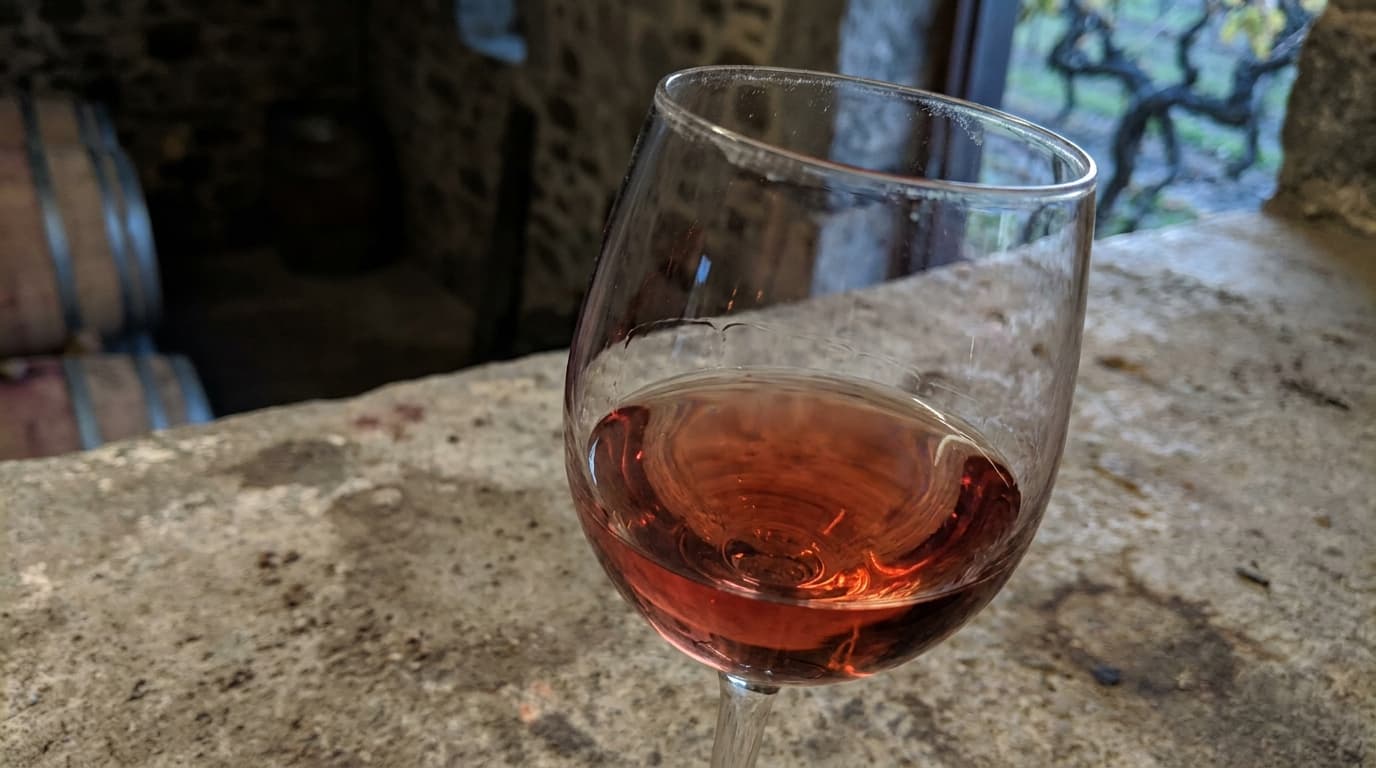
On the corner of Carrer del Rei Jaume I and Camí D'Es Cós, between the inland villages of Costitx and Sencelles, sits one of Mallorca's smallest and most singular wine estates: Petit Celler es Cós. Its story begins with a search rather than a business plan — the ambition to track down a native grape variety that had survived on the island before the phylloxera plague. That search led to old Manto Negro vines in the Pla de Mallorca region, whose wood was later used to produce thousands of grafted cuttings at Vitis de Navarra, a company specialised in grafting with American rootstock. A portion of these were eventually planted on a deliberately chosen plot: the Es Cós estate, land that had carried vines until it was abandoned in the 1950s as tourism began reshaping the island's economy.
The site itself was not picked at random. The owners were looking for soil with iron and limestone content and very little clay — the type historically associated with the variety, known locally as "Call Vermell". Es Cós sits in a transitional zone where the soil is shallower and stonier, encouraging deeper rooting, better drainage and natural mineralisation in the vines. Over five years, the hardiest plants were selected and irrigated only with groundwater, calibrated to mirror the area's original rainfall — a deliberately restrained, terroir-driven approach that several independent visitors describe as organic, with minimal use of sulphites.
Visiting the estate almost always means meeting Miguel (Miguel Ángel Ferrer), the owner, who personally guides tours through the vineyard and cellar. Independent accounts consistently mention the same things: the time he takes to explain the growing and winemaking process, his evident passion for the project, and tastings that can include a vertical comparison of several vintages of the same variety. Some visitors mention being able to buy the bottles they tasted directly on site; while this cannot be confirmed as a standing offer, it is echoed closely enough across accounts to note as a recurring experience.
The result of this care is a single wine made from the native Manto Negro grape, described independently by multiple visitors as light, aromatic and easy to drink, with a directness and sense of place unusual for the island. The estate itself frames its work as "vino de la tierra de la isla de Mallorca" — a wine built around origin and an old local variety rather than the international grapes that would have brought cross-breeding with them.
Petit Celler es Cós is not a show-winery built for coach parties or a large tasting room; it is a very small, personally run estate where the entire journey from vine to glass is explained in one place, by one person. For anyone curious about Mallorcan wine outside the established D.O. zones, and about the story of a nearly lost grape variety, this is one of the most direct ways to get close to it.