
Sant Llàtzer near Marratxí: Church and Local History
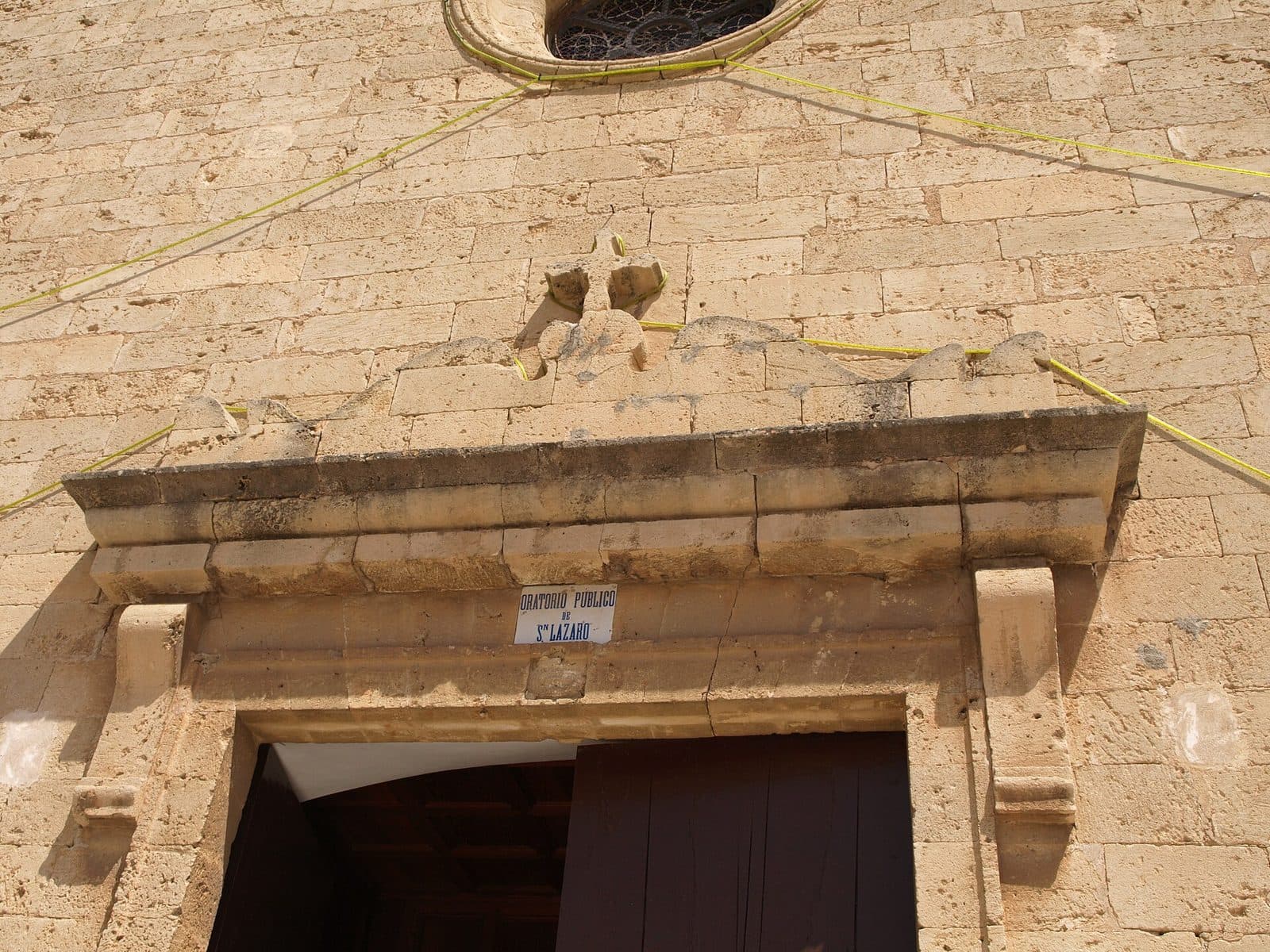

Sant Llàtzer is one of those Mallorcan churches that reveals not only the story of a religious building, but also the origins of an entire village. The church stands in Pla de na Tesa, a settlement within the municipality of Marratxí near Palma. Visitors will not find a secluded mountain monastery here, but a place of worship that became the focal point of a new village as the local area grew.
It is precisely this close connection between church and settlement that makes a visit interesting. First the site was provided, then the church was built, followed later by the sacristy and bell tower. Streets, country houses, and inns developed around the new religious center. Sant Llàtzer therefore vividly illustrates how Mallorca beyond the old towns changed over the course of the 19th century.
Architecturally, it is worth taking a close look at the different construction phases. The main church building, the sacristy added on the left, and the bell tower begun later were not built at the same time. The tower is particularly striking for its combination of Neo-Gothic and classical forms. Two bells, one from Barcelona and one from Palma, completed the project.
Sant Llàtzer is especially suitable for visitors who enjoy exploring local history through a specific building. The church can easily be included in a tour of Pla de na Tesa and other parts of Marratxí. As no reliable general visiting hours are available, check before traveling whether the interior is accessible.
History and Significance
The Site Between Two Roads
In 1857, the leading landowners of Pla de na Tesa decided to purchase a plot of land and transfer it to the diocese. It lay between the roads Muntanya and Son Alegre. This created a site for a local religious center.
This decision can only be understood in the context of Marratxí’s distinctive structure. The municipality does not consist of a single, densely built-up main town, but of several historic and more recent settlements. Pla de na Tesa was one of them. Having its own church therefore meant more than a new place for worship: it gave the emerging community a visible focal point.
The place name also reflects the area’s rural character. “Pla” denotes a plain. According to local tradition, “Na Tesa” derives from a landowner named Teresa, whose name is said to have been shortened to Tesa. The name Pla de na Tesa first appears in writing in 1816, although it was probably already in use before then. By the time the church was built, the name was therefore already associated with this part of Marratxí.
Foundation Stone and Completion
The foundation stone of the church was laid in early 1858. The work continued until 27 October 1864. Several years of construction therefore passed between the provision of the site and the completion of a permanent church building based on the local initiative.
Sant Llàtzer was built in a landscape where patterns of land ownership reached far back into history. Since the Christian conquest of Mallorca, the lands of Pla de na Tesa had belonged to the feudal estate of the bishops of Barcelona. The new 19th-century building, however, was not a medieval remnant from that period. It was a deliberately created place of worship for a newly forming settlement and historically belongs to the development of modern Pla de na Tesa.
The construction story did not end with the church’s completion. In 1874, the sacristy was built on the left side of the church. Work to consolidate the entire church building followed between 1874 and 1876. This sequence is important for understanding the structure: Sant Llàtzer was not completed in a single phase, but expanded and strengthened over several decades.
The Bell Tower and Its Bells
Construction of the bell tower began in 1889. It gave the church the feature that made its presence in the village especially clear. The design combined Neo-Gothic and classical forms. This combination alone shows that the tower does not follow a strictly uniform historical style, but brings together different forms of architectural expression.
The tower was completed with two bells from different places. The smaller came from Barcelona, while the larger came from Ciutat, as Palma is traditionally known on Mallorca. This reflects the village’s historical connections on a small scale: one bell points beyond the island to Barcelona, while the other refers to Mallorca’s nearby capital.
How the Church Became the Village Center
Perhaps the most remarkable chapter began only after the church was built. The village developed around the new place of worship and along its streets. Sant Llàtzer was the first street to be created. Wealthy residents of Palma had houses built there as places of retreat. The church therefore did not simply stand in an already fully developed settlement; it became the starting point for its physical growth.
Everyday meeting places appeared alongside the homes. Names such as Ca’n Membre, Ca’n Vador, Ca’n Coll, Son Ametler, Ca’s Garriguer, Ca’n Curt, Ca’n Mas, and Son Llebre have been recorded. Behind this sequence of local house and inn names, a village community takes shape around Sant Llàtzer. The church was simultaneously a religious center, a landmark, and the nucleus of new neighborhoods.
This remains the true significance of Sant Llàtzer today. The church is not an isolated monument visited only for individual works of art. Its value emerges from the relationship between building, street, and settlement. Looking from the church toward the surrounding houses reveals a piece of local history: first came the church, then Pla de na Tesa grew around it.
What to See
The Church Building of 1864
The main building is the oldest part of the surviving ensemble. Its construction extended from the laying of the foundation stone in early 1858 to the completion of work on 27 October 1864. When viewing the church, this period is more helpful than searching for a single stylistic label: the church belongs to the ecclesiastical architecture of the 19th century and was subsequently expanded in clearly identifiable stages.
Sant Llàtzer is therefore best viewed not as a monument planned in a completely uniform way. Its individual parts tell a chronological story. First came the main worship space, followed by the sacristy, and only later by the bell tower. Even a walk around the church makes this development easier to understand than a brief glance at the entrance alone.
Inside, provided the church is accessible, the character of a local place of worship takes center stage. The documented construction history concerns a church for Pla de na Tesa, its sacristy, and its bell tower. This compact structure focuses attention on the building’s role in community life.
The Sacristy on the Left
The sacristy was added to the left side of the church in 1874. It therefore does not belong to the initial construction phase, but to an extension completed a decade after the church itself. Anyone viewing the building from outside should make a point of visiting this side rather than overlooking the addition as a minor feature.
Another important phase followed immediately after the sacristy was built. Between 1874 and 1876, the entire church was consolidated. The sacristy and the reinforcement work therefore belong to the same historical context: the church was expanded while also being strengthened as a whole. This makes the left side of the building essential to understanding the second construction phase.
The Bell Tower
The bell tower, begun in 1889, is the most recent of the main architectural components explicitly documented. Its design is described as combining Neo-Gothic and classical elements. This is more than a minor art-historical detail. The contrast of styles makes clear that the tower is not simply a repetition of the older church building, but introduces an architectural accent of its own.
When viewing it, look for both architectural languages rather than hastily classifying the tower as merely “Gothic.” At Sant Llàtzer, these styles meet in a structure that served both practical and symbolic purposes.
The tower made the church recognizable beyond the immediate outline of its main building. This was particularly important for the emerging Pla de na Tesa: the church had initiated the settlement’s development, and its tower became the visible symbol of the new village center. The architecture therefore cannot be meaningfully separated from the history of the surrounding streets.
The Two Bells
The installation of two bells marked the completion of the tower. The smaller bell came from Barcelona, while the larger came from Palma. They are particularly revealing in the history of Sant Llàtzer.
Barcelona was already present in the area’s earlier history of land ownership, since the lands of Pla de na Tesa had been under the feudal authority of its bishops since the Christian conquest. Palma, in turn, was the nearby island capital from which owners of retreat houses on the new street Sant Llàtzer also came. The bells’ different origins thus connect the small village with two cities that influenced its history in different ways.
When visiting, it is worth seeing the tower and bells as more than church decoration. They mark the last major construction phase after the main church and the sacristy. Keeping the sequence of main building, left-side addition, consolidation, and tower in mind reveals Sant Llàtzer as an ensemble that developed over decades rather than a building created on a single date.
Church, Street, and Village Setting
Another sight worth exploring is the transition from the sacred building into the village. Sant Llàtzer was the first street to develop around the new church. Wealthy residents of Palma built houses there for stays outside the city. Local inns and additional homes followed later.
This urban relationship can be understood without a museum display. A glance from the church toward the street is enough to arrange the historical narrative spatially: Sant Llàtzer came first, and the surrounding development followed. This distinguishes the church from places of worship that were later inserted into long-established village centers.
The most rewarding walk therefore does not end at the church door. Only the immediate neighborhood reveals why Sant Llàtzer was so influential for Pla de na Tesa. The church is the architectural focal point, but its history continues along the street that bears its name.
Visiting Sant Llàtzer
Check Access First
No reliable general opening hours or confirmed admission price are available for Sant Llàtzer. Before making a special journey, check whether the church is currently open to visitors. This is especially important if the aim is to see not only the exterior but also the worship space.
A visit is defined by close observation of the building and its location in Pla de na Tesa.
A Walk Through the Construction Phases
The main building is a good place to begin. From there, continue to the left side, where the sacristy was added in 1874. Next, look at the bell tower begun in 1889, with its blend of Neo-Gothic and classical forms. This order follows the church’s actual development and makes its construction history easier to understand.
Afterward, it is worth walking a short distance along Sant Llàtzer. Here it becomes clear that the church is more than an isolated monument. This was the first street created around the new church, and residents of Palma had retreat houses built along it. Moving between church and street is therefore an essential part of the visitor experience.
It is not useful to specify a fixed length of stay. Anyone viewing only the exterior and tower will need considerably less time than someone who also enters the church when it is open and then explores the historic surroundings. Rather than allowing a narrow time slot, visit without rushing and consciously look for the individual construction phases.
When the Detour Is Most Worthwhile
There is no documented information about regular visitor numbers or particularly quiet times of day. The timing of a visit should therefore depend primarily on confirmed access. A supposedly convenient time is of little benefit if the interior is closed. The exterior of Sant Llàtzer, however, remains interesting even as a short cultural and historical stop.
The visit makes most sense as part of an exploration of Marratxí. Sant Llàtzer alone conveys the history of Pla de na Tesa; combined with other parts of the municipality, it reveals the different faces of Marratxí. This gives the church its proper context.
Getting There and Parking
From Palma
The road distance from central Palma to Marratxí is 13 kilometers. The drive takes around 28 minutes via the Ma-13. These figures apply specifically to Marratxí, not directly to Sant Llàtzer. For the final section, continue navigation to the church in Pla de na Tesa or to Sant Llàtzer.
Its location near Palma makes the church an easy destination for a cultural and historical detour from the capital. Nevertheless, Marratxí should not be mistaken for a single compact town. The municipality consists of several settlements, including Pla de na Tesa, Sa Cabaneta, Pòrtol, Marratxinet, and Pont d’Inca. Selecting Pla de na Tesa correctly is therefore more important than simply entering the municipality’s name.
From Palma Airport
The road distance from Palma Airport to Marratxí is 12 kilometers, and the drive takes around 20 minutes. This measurement also ends in Marratxí rather than directly at the church entrance. After reaching the municipality, the final section leads into the settlement of Pla de na Tesa.
Because Sant Llàtzer is not an isolated monastery complex, visitors approach the church within an inhabited area. For orientation, the name Pla de na Tesa is therefore just as important as Sant Llàtzer. Before setting out, check the full destination carefully in the navigation system.
By Bus
Nearby stops include Pla de na Tesa centre 1, Pla de na Tesa centre 2, Pla de na Tesa sud 1, and Cas Capità 2. For practical planning, check before traveling which service operates on the day of the visit and which stop is most convenient for the chosen approach.
The two stops that include “centre” in their names already identify the key reference point: the center of Pla de na Tesa. From there, continue to the church within the village. As timetables can change, current travel information is more reliable than a permanently stated departure time.
Parking in the Village
Sant Llàtzer is not located on spacious excursion grounds, but within an established settlement. When arriving by car, pay attention to local signs and marked parking spaces. A visit is best planned so that the final walk through Pla de na Tesa also serves as an introduction to its local history.
After parking, it is especially worthwhile not to walk directly to the church and back. Sant Llàtzer forms part of the building’s historical narrative. A short walk through the surrounding area shows how development spread outward from the church and why the place of worship is regarded as the starting point of the modern village center.
Bus lines to Sant Llàtzer at a glance
| Line | Route | Departures/day | First | Last |
|---|---|---|---|---|
| 341 | Pòrtol - Son Llàtzer - FAN | 658 | 06:35 | 21:49 |
| T3 | Palma - Manacor | 77 | 06:15 | 23:30 |
| T2 | Palma - sa Pobla | 73 | 05:55 | 22:54 |
| T1 | Palma - Inca | 64 | 06:05 | 22:08 |
From the official GTFS feeds (TIB/SFM), no real-time data. The figures cover all stops in the town; weekend and holiday services differ — check with the operator before travelling.
Getting there by bus
Pla de na Tesa centre 1 (36104) · 0.1 km as the crow flies
- 341Pòrtol - Son Llàtzer - FAN · Daily
Pla de na Tesa centre 2 (36103) · 0.1 km as the crow flies
- 341Pòrtol - Son Llàtzer - FAN · Daily
Pla de na Tesa sud 1 (36106) · 0.5 km as the crow flies
- 341Pòrtol - Son Llàtzer - FAN · Daily
Cas Capità 2 (36101) · 0.7 km as the crow flies
- 341Pòrtol - Son Llàtzer - FAN · Daily
Pla de na Tesa sud 2 (36105) · 0.7 km as the crow flies
- 341Pòrtol - Son Llàtzer - FAN · Daily
1143-es Pla de na Tesa · 0.8 km as the crow flies
- 14Sant Jordi / S'Hostalot - Pl. Espanya · 08:00–08:00 · Daily
Pont d'Inca Nou 2 (36098) · 0.8 km as the crow flies
- 341Pòrtol - Son Llàtzer - FAN · Daily
Pont d'Inca Nou 1 (36097) · 0.8 km as the crow flies
- 341Pòrtol - Son Llàtzer - FAN · Daily
Pont d'Inca Nou Estació (207) · 0.9 km as the crow flies
- T1Palma - Inca · Mon-Fri
- T2Palma - sa Pobla · Daily
- T3Palma - Manacor · Daily
Cas Capità 1 (36102) · 0.9 km as the crow flies
- 341Pòrtol - Son Llàtzer - FAN · Daily
Cas Miot (36100) · 1.0 km as the crow flies
- 341Pòrtol - Son Llàtzer - FAN · Daily
Pont d'Inca - Son Bonet (36099) · 1.0 km as the crow flies
- 341Pòrtol - Son Llàtzer - FAN · Daily
Timetable data: official GTFS feeds (TIB/EMT), no real-time — check with the operator before travelling.
Nearby Places
Pla de na Tesa
Pla de na Tesa is more than simply the address of Sant Llàtzer. The village explains why the church was built and what effect it had. The term “Pla” refers to the level setting, while local tradition associates “Na Tesa” with a landowner named Teresa. The name has been documented in writing since 1816.
The decisive phase of development followed with the church. After its completion, the settlement grew in streets around the church. Sant Llàtzer was the first, and wealthy residents of Palma had retreat houses built there. More houses and inns appeared afterward. For visitors taking a walk, this means that not only the church but also the route through the adjoining streets forms part of the historical exploration.
Pla de na Tesa preserves a local history that can be linked to one building with unusual clarity. Sant Llàtzer was not merely an addition to the village. The church provided the reference point for all further development. Understanding this connection changes how the immediate surroundings are perceived: street names and houses become parts of the same story.
Marratxí
Marratxí lies in the transitional area between the Raiguer, the Pla plain, and the greater Palma area. The municipality consists of several places, each with its own character. A visit to Sant Llàtzer can therefore be combined easily with a drive through other settlements without turning into a long tour.
Pòrtol is particularly associated with traditional pottery. Sa Cabaneta stands on a gentle rise and is linked to the church of Sant Marçal, whose priest was involved in the decision to purchase the site for Sant Llàtzer. Marratxinet retains more of the appearance of a traditional village, while Pont d’Inca directly borders Palma’s urban area.
These differences help place Sant Llàtzer in the correct context. The church does not belong to one centralized main town, but to a municipality made up of several historically developed settlements. This is precisely why a local place of worship was so important for Pla de na Tesa. It created a focal point that gave the village religious and spatial independence.
Pottery and Local Culture
Marratxí is closely associated with clay and ceramics on Mallorca. Pòrtol is particularly well known for its potteries. Combining Sant Llàtzer with this center of craftsmanship makes sense because the two destinations show different aspects of the same municipality: here, the development of a village around its church; there, a craft tradition that continues to shape local identity.
Those more interested in religious history can turn their attention to Sant Marçal. In 1857, its priest was involved in the decision by the leading landowners to purchase a site for the new church in Pla de na Tesa. The two churches do not therefore merely happen to stand in the same municipality. They share a specific connection dating from the founding of Sant Llàtzer.
This combination is particularly suitable for an excursion from Palma. Rather than simply driving through Marratxí, visitors can discover the municipality through its individual villages, churches, and craft traditions. Sant Llàtzer is an ideal starting point because its origins tell directly of local initiative and the creation of a new community.
Local insider tips
Notice Where the Bells Came From
The tower begun in 1889 contains two bells from different places: the smaller came from Barcelona, while the larger came from Palma. This easily overlooked detail connects Pla de na Tesa with two cities in its history.
Walk Along Sant Llàtzer
The visit should not end at the church door. Sant Llàtzer was the first street created around the new church; it is an especially good place to understand how the village grew outward from the church.
Walk Around the Left Side
The sacristy added in 1874 stands on the left side. It was not part of the original building completed in 1864 and makes the church’s gradual development particularly easy to see.
Combine It With Pòrtol
Anyone wishing to see more of Marratxí can combine Sant Llàtzer with Pòrtol. The village is known for its potteries and, alongside the church history of Pla de na Tesa, reveals another defining side of the municipality.
Enter Pla de na Tesa
Do not select only Marratxí when using navigation: the municipality consists of several settlements. The specific destination is Sant Llàtzer in Pla de na Tesa, which helps avoid confusion with similarly named places.