
Son Bosc near Platja de Muro: Views of Mallorca's Wetlands
.jpg)
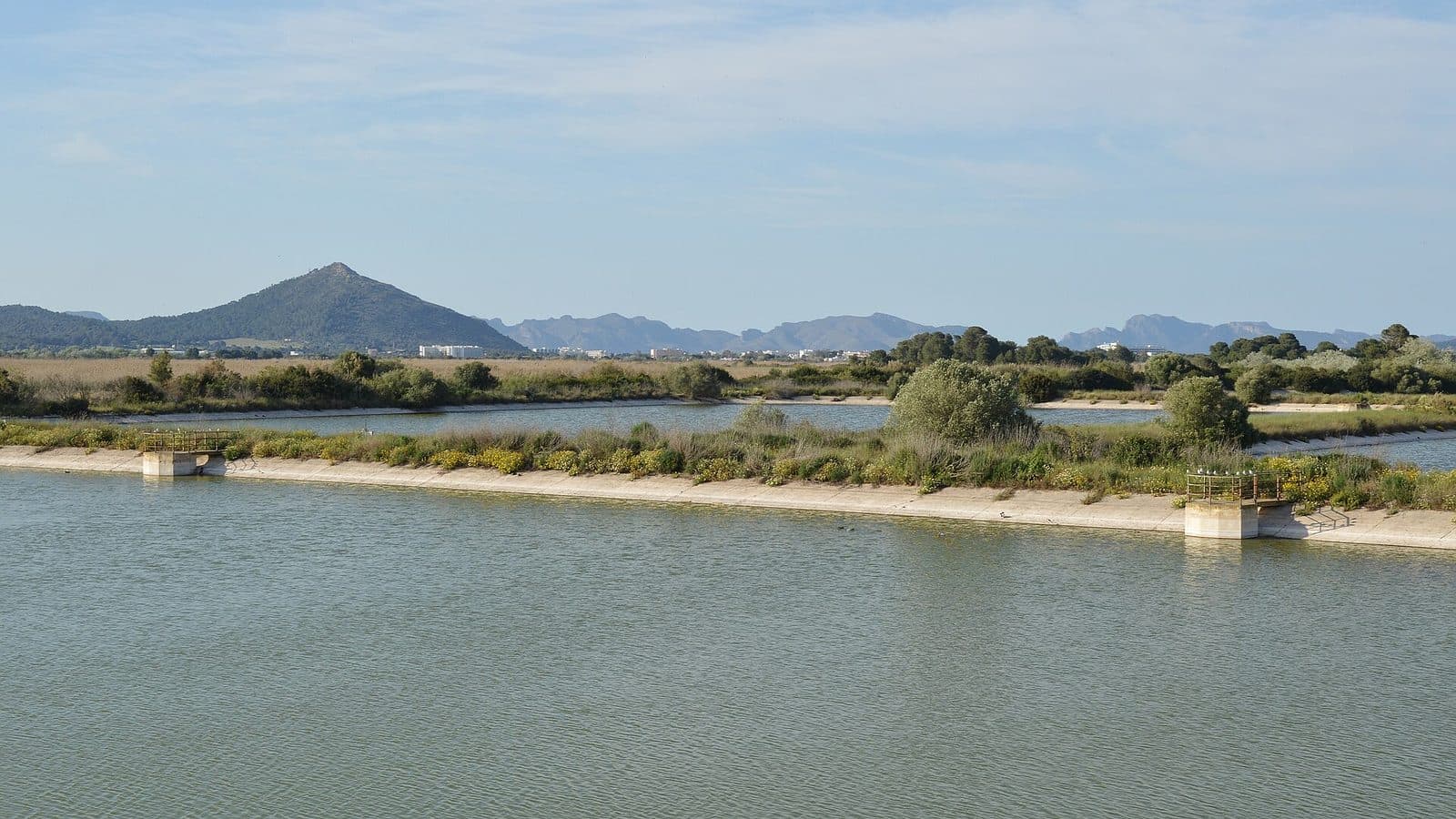
Son Bosc reveals a side of Platja de Muro that is easily overlooked beside the long sandy beach. The viewpoint lies in the Son Bosc wetlands within the Parc Natural de s’Albufera de Mallorca. The focus is not on sweeping mountain panoramas but on open water, flat terrain, and good opportunities to observe birds in their natural habitat.
It is precisely this low elevation that gives the place its appeal. The view remains close to the landscape and follows its subtle transitions: water, vegetated banks, open areas, and wetland vegetation form a mosaic that cannot be grasped in a single panoramic glance. Son Bosc requires a little patience. Those who pause and scan individual areas will discover more than those who pass by quickly.
The viewpoint is particularly suitable for nature enthusiasts, walkers, and visitors who want to experience the tourist-oriented coastal strip from a different perspective. Son Bosc also makes sense as a peaceful counterpoint to a beach day: just a short distance away, fine sand and transparent water define the scene, while here ponds and birds draw attention inland.
Son Bosc should not be confused with country houses or accommodation of the same name elsewhere on Mallorca. This refers exclusively to the observation point in the wetlands near Platja de Muro. No one should expect a monumental structure, a historic cave, or a conventional viewing platform here; the landscape itself is the true destination.
What to See
The Open Water
The view across the open ponds is the defining feature of Son Bosc. In a landscape that can easily look like a uniform green plain from a distance, these clear stretches of water create unobstructed sightlines. They make it possible to perceive the wetland not merely as an area of vegetation but as a habitat in which water levels, banks, and open spaces interact closely.
When observing, it is worth resisting the urge to look straight into the distance. The edges of the water are often more interesting. Open areas and cover meet there, making birds easier to recognize as moving silhouettes. Some stand on the banks, while others move between vegetated zones and open water. Binoculars make these differences clearer, but even with the naked eye, it is possible to follow the constant appearances and disappearances.
The ponds also provide a useful sense of scale for the expanse of the terrain. Son Bosc offers no dramatic feeling of height; instead, the landscape spreads out horizontally. This is precisely what makes small changes visible: a bird above the water, movement along the edge, or a bright strip between darker stands of vegetation. The viewpoint therefore works less as a photo stop and more as a place for careful observation.
The Birdlife
Son Bosc is described as a place with good observation opportunities and abundant birdlife. This fits its location in the s’Albufera wetlands, which rank among the important habitats of the Balearic Islands. The nature park includes marshes, canals, reed beds, dunes, and pine areas; more than three hundred bird species have been recorded across this landscape. However, that figure is no guarantee that a particular species will appear during any single visit.
What is more fascinating is how observation works here. At first, the plain often seems quiet. Only after looking for longer do individual movements begin to separate from the background. Birds fly low over open areas, appear along a shoreline, or disappear again into denser vegetation. The place rewards calm behavior: those who do not constantly change position are more likely to recognize patterns of movement and scan the same section several times.
Son Bosc is therefore accessible even without prior ornithological knowledge. For a first impression, species lists matter less than distinguishing size, flight pattern, and location. Simply asking whether a bird remains by the water, circles above the open ground, or seeks cover in the vegetation changes how the landscape is perceived. Anyone wishing to identify species should bring binoculars and an up-to-date bird guide.
The Flat Wetland Landscape
The viewpoint is part of a broader geographical setting. S’Albufera extends between the coast of the Bay of Alcúdia and the flat hinterland. A strip of dunes separates the wetland from the sea; freshwater and saline influences contribute to the diversity of its habitats. Son Bosc offers a glimpse of this landscape and is therefore no substitute for a longer exploration of the nature park.
The contrast with nearby Platja de Muro particularly sharpens this perception. Along the coast, pale sand, open sea, and tourist infrastructure dominate the scene. A short distance inland, water and low vegetation define the view. This transition explains why Son Bosc works as a viewpoint despite its lack of elevation: it is not distance but the unusually open view into a sensitive wetland that makes the place worth seeing.
Visiting Son Bosc
Get Oriented Before Observing
A visit is best begun with a calm overview. Instead of immediately searching for individual birds, first note where the open water lies and where vegetation conceals its edges. These transitional areas can then be scanned one after another. This prevents the eye from wandering across the plain without a fixed point of reference and missing conspicuous movements.
Son Bosc does not follow the format of a museum or an architectural attraction. There is no sequence of rooms and no climax toward which a tour inevitably leads. How long visitors stay therefore depends directly on their own interests. A brief stop is enough for an initial impression of the landscape; birdwatchers can remain along the same sightline considerably longer without the place ever feeling “completed.”
Alternating between looking and listening is helpful. Even when a bird remains hidden in the vegetation, a call can indicate activity in a particular section. Attention can then be directed more deliberately toward the banks, water surface, or sky. Conversation and hurried movements, by contrast, diminish some of the place's quality, because Son Bosc is defined by small, easily overlooked events.
Visiting Times and Current Conditions
There is no established best time of day for reliably avoiding crowds at Son Bosc. The experience depends more on weather, visibility, and wildlife activity than on a fixed sightseeing schedule. Anyone hoping to observe with maximum concentration should choose a time that allows enough peace for an extended stop rather than fitting the viewpoint between two tightly scheduled activities.
Opening hours and admission details have not been recorded for Son Bosc. Before traveling, visitors should therefore check whether any special rules currently apply to access to the viewpoint or the relevant part of the nature park. This is more important in a protected wetland than at an ordinary viewpoint, as temporary restrictions may serve conservation needs or reflect local conditions.
Anyone wishing to combine Son Bosc with a longer tour through s’Albufera should check the nature park's respective rules separately. The park has marked routes, including Camí des Senyals, Camí d’Enmig, and Camí des Polls. However, this does not mean that every one of these routes passes directly by the viewpoint. An up-to-date map is useful for confirming the exact connection.
Getting There and Parking
From Palma Airport
The stated route details lead as far as Platja de Muro, not directly to the Son Bosc viewpoint. From Palma Airport, the road distance to the resort is 62 kilometers, and the drive takes around 53 minutes. The route initially follows the Ma-30, then the Ma-13, and finally the Ma-3470 northward.
The Ma-13 covers the long section through the island's interior. Only in the north does the Ma-3470 continue toward the Bay of Alcúdia and Platja de Muro. For the final stretch to Son Bosc, the specific viewpoint should be set as the navigation destination. The name “Son Bosc” is also used for other places and accommodation on Mallorca, so navigating by name alone may lead to the wrong destination.
From Central Palma
From central Palma, the road distance to Platja de Muro is 59 kilometers. The drive takes around 56 minutes and follows the Ma-13 and Ma-3470. These details also end at Platja de Muro itself. The additional access route to the viewpoint and any possible walk are not included.
When checking the destination, look for the reference to Platja de Muro or the location within the Son Bosc wetlands of the Parc Natural de s’Albufera de Mallorca. This helps avoid confusion with Villa Son Bosc near Inca and other places with the same name. For natural destinations in particular, an up-to-date map view is also more useful than simply entering a name.
The Final Stretch
Son Bosc is not a city viewing platform situated in a central square. It is therefore advisable to check the exact route for the final stretch before departure. Vehicles should be left only in designated areas; verges, access routes, and sensitive vegetation zones are part of the landscape and must not be used as alternative parking spaces.
Public transport stops are available in the Platja de Muro area. Because the viewpoint lies within the wetlands, visitors should check in advance which walking route from their chosen stop actually leads to the correct observation point. An offline map is helpful if navigating between coastal development, the nature park, and minor roads becomes confusing.
Bus lines to Son Bosc at a glance
| Line | Route | Departures/day | First | Last |
|---|---|---|---|---|
| 324 | Can Picafort - Alcúdia | 152 | 00:02 | 23:50 |
| 302 | Can Picafort - Palma | 92 | 00:15 | 23:53 |
| 315 | Sa Pobla - Badia d'Alcúdia | 42 | 06:41 | 23:39 |
| A32 | Can Picafort - Aeroport | 42 | 00:22 | 23:32 |
| 325 | Alcúdia - Cala Rajada | 26 | 08:39 | 22:23 |
From the official GTFS feeds (TIB/SFM), no real-time data. The figures cover all stops in the town; weekend and holiday services differ — check with the operator before travelling.
Getting there by bus
Els Pins 2 (39004) · 1.7 km as the crow flies
- 302Can Picafort - Palma · Daily
- 315Sa Pobla - Badia d'Alcúdia · Daily
- 324Can Picafort - Alcúdia · Daily
- 325Alcúdia - Cala Rajada · Daily
- A32Can Picafort - Aeroport · Daily
Els Pins 1 (39005) · 1.7 km as the crow flies
- 302Can Picafort - Palma · Daily
- 315Sa Pobla - Badia d'Alcúdia · Daily
- 324Can Picafort - Alcúdia · Daily
- 325Alcúdia - Cala Rajada · Daily
- A32Can Picafort - Aeroport · Daily
Timetable data: official GTFS feeds (TIB/EMT), no real-time — check with the operator before travelling.
Nearby Places
Platja de Muro
Platja de Muro is the main tourist base for visiting Son Bosc. The coastal resort is best known for its long beach of fine, golden sand. The water is described as transparent, and the waves are often moderate to calm. After the quiet view across the wetlands, the open Bay of Alcúdia feels particularly expansive; conversely, Son Bosc becomes more distinctive after experiencing the heavily used coastal strip.
This combination is not limited to a conventional beach day. A walk along the beach and a stop at Son Bosc reveal two landscapes that lie geographically close together but offer completely different impressions. By the sea, the view extends across water and horizon; in the wetland, it focuses on ponds, banks, and low vegetation. For photographers and nature observers, this contrast is more interesting than a succession of similar viewpoints.
Es Comú and Es Capellans
Different beach sections continue along the coast. Es Comú represents the more natural part of Platja de Muro, while Es Capellans, also known as Ses Casetes des Capellans, stands out for its small houses and sandy streets. The name recalls modest summer houses, some of which were used by priests from the parish of Muro.
Both areas can be seen as landscape complements to Son Bosc without turning the day into an overloaded itinerary. Es Comú illustrates the role of the dunes and coastal strip separating the sea from the wetland. Es Capellans, by contrast, shows a small-scale form of settlement at the edge of the coast. Son Bosc itself remains the place for looking into the wetlands.
Parc Natural de s’Albufera de Mallorca
Anyone wishing to explore the landscape more deeply after visiting the viewpoint can combine the stop with a tour of the nature park. S’Albufera was designated as a protected area in 1988 and covers around 1.700 hectares. It is the largest wetland in the Balearic Islands and lies between Alcúdia and Can Picafort, behind the coastal strip and dunes.
The nature park offers marked routes and further opportunities for birdwatching. Son Bosc should be understood as a single observation point, not a condensed version of the entire park. A longer circuit requires more time, an up-to-date trail map, and knowledge of the applicable access rules. Those looking only for a compact nature stop can deliberately remain at Son Bosc and focus on the open ponds.
The place it belongs to
Platja de Muro in the place guidePractical Information for Your Visit
Binoculars and Camera
Binoculars are more useful at Son Bosc than extensive photography equipment. They bridge the flat distance to the water and help distinguish movements along the banks. An optical zoom is also recommended for photography, as animals should not be pursued or driven from cover for the sake of a better picture. In any case, the subject is larger than a single bird: the water, vegetation, and horizon also convey the distinctive character of the place.
Anyone traveling only with a smartphone can concentrate on landscape photographs. The open areas and the way the ponds divide the terrain are easier to capture than distant animals. An up-to-date guide or suitable app is helpful for identifying bird species, but it should not result in visitors spending their entire stay looking at a screen.
Clothing, Sun, and Ground Conditions
Son Bosc is a natural destination, not an equipped city-center viewpoint. Sturdy, comfortable footwear is therefore a more sensible choice than beachwear alone. For a combined day at Platja de Muro, an additional pair of closed shoes should be packed so that any walking route does not have to be completed in beach sandals.
In an open, flat landscape, exposure to the sun can continue for extended periods. Headwear, water, and sun protection are therefore sensible essentials. After rain, paths in wetlands may differ from their condition on dry days; checking current conditions prevents a short observation stop from turning into an unplanned retreat.
Visiting with Children
Son Bosc can be exciting for children when the visit is turned into a search activity: Where is something moving along the water's edge, which bird is flying over the open ground, and which areas remain hidden at first glance? Binoculars make the experience more accessible. Without such small observation goals, younger visitors may find the flat landscape less immediately engaging than a beach or playground.
Adults should keep children close in the protected area and ensure that they do not leave the paths or observation zones. Son Bosc is neither an adventure playground nor a facility with staged animal encounters. Sightings cannot be ordered; this unpredictability is, however, an essential part of genuine nature observation.
What Son Bosc Is Not
There is neither a historic tower nor a summit panorama waiting at the destination. Son Bosc is also not a wildlife park where certain species reliably appear at close range. The viewpoint opens onto one section of the wetlands and requires a slower way of looking. Visitors arriving with this expectation will experience the place not as an attraction that is somehow lacking, but as an observation site within a protected landscape.
Clear identification of the name is equally important. The prehistoric cave of Son Caulelles, Villa Son Bosc near Inca, and other places on Mallorca with similar names have nothing to do with this viewpoint. The correct destination lies near Platja de Muro in the Son Bosc wetlands of s’Albufera.
Local insider tips
Scan the Pond Edges First
Do not look only at the open water straight away: movement is easier to detect along the transitions between open water and vegetation. Binoculars help you scan each section of the banks calmly and methodically.
Use the Full Name
When navigating, check for “Son Bosc Wetlands” and Platja de Muro or s’Albufera. The name Son Bosc is also used for other destinations on Mallorca, including accommodation near Inca.
Combine the Coast and Wetlands
A visit combines well with Platja de Muro or the more natural beach section of Es Comú. This makes the immediate transition between open bay, dunes, and wetlands especially clear.
Choose Patience Over a Species List
Son Bosc rewards calm observation. First survey the water, then scan the banks and sky separately. Sightings are not guaranteed, but even small movements reveal the character of the place.