
Son Caulelles – Prehistoric Cave near Ses Cases Noves
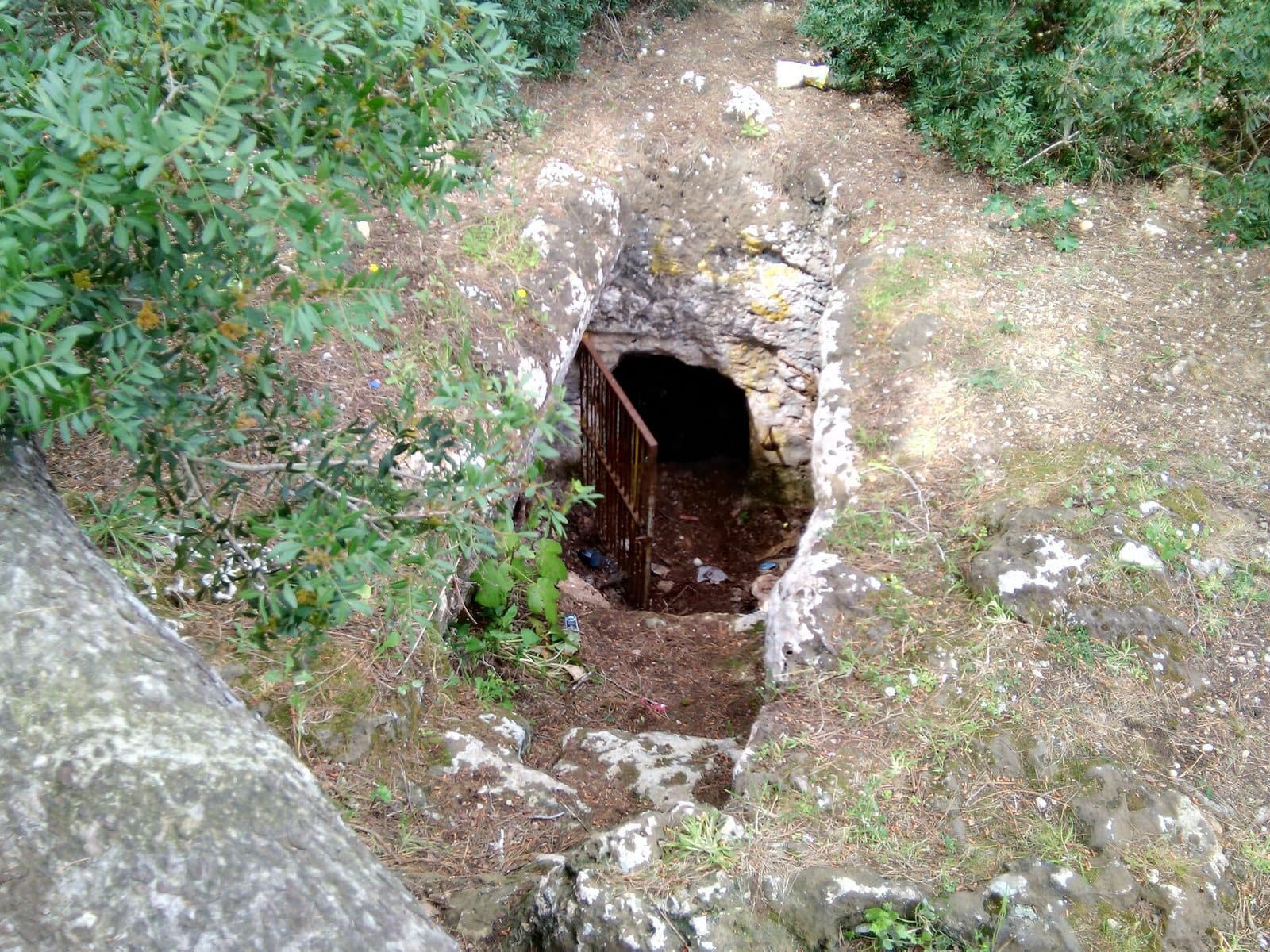

Son Caulelles takes you far back into Mallorca’s past. The archaeological site near Ses Cases Noves preserves a cave from the pre-Talayotic period, bearing witness to the era that preceded the island’s famous talayots. Here, attention focuses on a single site whose modest scale is precisely what makes it appealing. The cave forms part of an archaeological site, where the cavity itself and the relationship between rock and vegetation are key.
The visit is ideal for travelers who want to understand Mallorca beyond its beaches, as well as architecture enthusiasts interested in the archaeological site designed by Montis Sastre Arquitectura and ACN Arquitectura. The site is therefore particularly suitable as a cultural stop in Marratxí or on the way between Palma and the island’s interior. Those who take time to examine the cave will notice more than they would from a quick photo.
History and Significance
People were already using caves before the Talayotic period. Marratxí’s municipal history explicitly dates the Cova de Son Caulelles to the pre-Talayotic period. This makes it one of the municipality’s early archaeological traces, predating the Talayotic sites preserved elsewhere in Marratxí.
The Pre-Talayotic Period
Here, “pre-Talayotic” primarily indicates a chronological classification: Son Caulelles dates from a period before the development of the Talayotic culture after which many of Mallorca’s prehistoric monuments are named. This distinction is important because the cave could otherwise easily be mistaken for a talayot or a later settlement. What you see is not a talayot but a cave site whose significance lies in the preserved form of the rock and its archaeological context.
Son Caulelles has particular documentary value for Marratxí. Alongside this cave, the municipality identifies further traces of various prehistoric cultures, including the likewise pre-Talayotic caves of Son Cós and Talayotic sites such as Els Pujols de Son Sureda and Talaiot de Can Vic. Son Caulelles can therefore be understood as part of a landscape that was not first settled because of its proximity to Palma, but had already been used and shaped by people in prehistoric times.
From Archaeological Site to Architectural Project
ArchDaily presents Son Caulelles as an archaeological site and a project by Montis Sastre Arquitectura and ACN Arquitectura. The published views show the ancient rock together with contemporary elements: an enclosure and a handrail are recognizable as modern additions, while the rock remains the historical evidence.
Son Caulelles Today
Today, visitors encounter Son Caulelles as an archaeological site. This is important because of the name, as other establishments and properties in Marratxí also bear the name Son Caulelles. The archaeological attraction near Ses Cases Noves is the pre-Talayotic cave.
Its significance lies in the direct encounter with the place itself. The cavity, its entrance, and its setting cannot be replaced by a display case. Son Caulelles preserves a piece of the island’s early history exactly where it survived and is also documented by ArchDaily as a contemporary architectural project.
What to See
The first impression is not shaped by a monumental façade. The cave itself is the archaeological heart of the site. Published views also show an enclosure, a handrail, and vegetation in the outdoor area.
The Cova de Son Caulelles
The pre-Talayotic cave is the main focus. Its entrance is the most important detail of the entire site, as this is where the open surroundings meet the darker cavity in the rock. Those looking only for a spectacular interior may easily overlook the fact that this transition is already archaeologically significant. Its form, rocky edge, and opening directly convey the preserved shape of the cave site, whose appeal comes from its rough, ancient fabric.
The Enclosure
In the published views of the site, an enclosure appears as a clearly contemporary element that does not present itself as part of prehistory and therefore remains visually distinguishable from the ancient rock. The images document the cave and the modern enclosure as components of the same archaeological site.
Enclosure and Handrail
The published views of the project show a handrail alongside the enclosure. Both are contemporary elements of the site designed by Montis Sastre Arquitectura and ACN Arquitectura. No further details about a defined visitor route, its sequence, or its protective function can be inferred from these views.
The Landscape Setting
Son Caulelles is not located in a neutral exhibition hall. Vegetation and outdoor space form part of the site’s visible surroundings, and the published images show the cave site in this setting. Son Caulelles therefore appears as an outdoor archaeological site rather than an exhibit in a museum gallery. The site itself remains the main focus.
Old and New in the Same View
Published views show the cave and contemporary elements at the same time. The ancient rock provides irregular forms and depth, while the enclosure and handrail remain recognizable as modern additions. The two layers are distinguishable.
Architecture enthusiasts can therefore examine not only the cave but also the documented contemporary components. ArchDaily lists Montis Sastre Arquitectura and ACN Arquitectura as the architectural firms involved in the archaeological project.
Visiting Son Caulelles
The cave, the rock formations, and the archaeological site are the main focus of a visit.
Exploring the Site
Because Son Caulelles is a single, concentrated site, the length of a visit depends greatly on personal interest. You should not assume a fixed tour duration or predetermined schedule, as no information about a defined visitor route is available.
Opening and Access
It is advisable to check current access before setting out. This is especially important if Son Caulelles is the main reason for the excursion rather than simply a stop on a route through Marratxí. Any notices and restrictions in force at the site must be observed.
A Quiet Archaeological Stop
The focus is a pre-Talayotic cave. The archaeological core and the contemporary elements documented by ArchDaily can be viewed as distinct components of the site.
Getting There and Parking
Son Caulelles is located near Ses Cases Noves in the municipality of Marratxí. For navigation, explicitly select the archaeological site or the Cova de Son Caulelles. The name is also used locally by a finca and an agritourism property, so searching only for “Son Caulelles” may lead to the wrong destination.
From Palma Airport
From Palma Airport, the drive initially follows the road network of the wider capital area. Ses Cases Noves is 17 road kilometers away via the Ma-30, and the journey takes around 28 minutes. These details apply only as far as Ses Cases Noves and not to a guaranteed parking space immediately beside the cave. For the final section, consult the exact map location of the archaeological site. Navigating to the correct archaeological destination is more important than relying solely on the name Son Caulelles.
From Palma
From the center of Palma, the distance to Ses Cases Noves is 18 road kilometers. The route follows the Ma-13, and the journey takes around 34 minutes. Here too, the measured route ends in Ses Cases Noves; the final section to the cave is not included in this time and distance estimate.
For your visit, it is therefore advisable to save not only the name but also the location of the Cova de Son Caulelles as your destination. This keeps the route separate from businesses with the same name in Marratxí.
By Bus
Nearby stops include Son Caulelles (36108), CEIP Costa i Llobera 1 (36029), CEIP Costa i Llobera 2 (36030), and Carrer Major (36028). Before departure, check the current connection, direction of travel, and location of the selected stop. The similarly named stops by the school are particularly easy to confuse. The archaeological site itself is the destination; the country hotel with the same name is not a useful landmark.
Parking
No dedicated archaeological visitor parking area is documented. The route details from Palma Airport and central Palma both end in Ses Cases Noves and do not include a guaranteed parking space immediately beside the cave. Saving the exact map location in advance will help avoid confusion with one of the businesses sharing the same name.
Bus lines to Son Caulelles at a glance
| Line | Route | Departures/day | First | Last |
|---|---|---|---|---|
| 341 | Pòrtol - Son Llàtzer - FAN | 562 | 06:36 | 22:12 |
From the official GTFS feeds (TIB/SFM), no real-time data. The figures cover all stops in the town; weekend and holiday services differ — check with the operator before travelling.
Getting there by bus
Son Caulelles (36108) · 0.1 km as the crow flies
- 341Pòrtol - Son Llàtzer - FAN · Daily
CEIP Costa i Llobera 1 (36029) · 0.2 km as the crow flies
- 341Pòrtol - Son Llàtzer - FAN · Daily
CEIP Costa i Llobera 2 (36030) · 0.2 km as the crow flies
- 341Pòrtol - Son Llàtzer - FAN · Daily
Carrer Major (36028) · 0.4 km as the crow flies
- 341Pòrtol - Son Llàtzer - FAN · Daily
Constitució (36071) · 0.5 km as the crow flies
- 341Pòrtol - Son Llàtzer - FAN · Daily
Can Domingo (36033) · 0.6 km as the crow flies
- 341Pòrtol - Son Llàtzer - FAN · Daily
Olesa 3 (36040) · 0.7 km as the crow flies
- 341Pòrtol - Son Llàtzer - FAN · Daily
Pòrtol 1 (36070) · 0.8 km as the crow flies
- 341Pòrtol - Son Llàtzer - FAN · Daily
Jaume I (36073) · 0.8 km as the crow flies
- 341Pòrtol - Son Llàtzer - FAN · Daily
Pòrtol 2 (36044) · 0.9 km as the crow flies
- 341Pòrtol - Son Llàtzer - FAN · Daily
Major - Can Pericàs 2 (36094) · 1.1 km as the crow flies
- 341Pòrtol - Son Llàtzer - FAN · Daily
Major - Can Pericàs 1 (36093) · 1.1 km as the crow flies
- 341Pòrtol - Son Llàtzer - FAN · Daily
Timetable data: official GTFS feeds (TIB/EMT), no real-time — check with the operator before travelling.
Nearby
Ses Cases Noves is primarily the local reference point for this excursion. Son Caulelles can be visited as a dedicated cultural stop in Marratxí. This makes the cave a good addition to a day spent discovering other aspects of the municipality.
Ses Cases Noves and Marratxí
Marratxí belongs to the Raiguer, the region of the island that extends parallel to the Serra de Tramuntana. The municipality contains archaeological traces from several periods. Son Caulelles represents the pre-Talayotic past, while other sites in Marratxí are attributed to different prehistoric phases. Anyone wishing to combine several stops should not regard them as a continuous circuit, however, but should check each location and its access conditions separately.
In addition to archaeology, Marratxí is known for its pottery tradition. Workshops and an exploration of local ceramics provide a fitting thematic continuation: after viewing prehistoric rock, attention turns to a craft culture that continues to use earth and fire today. A detailed portrait of these destinations would stray from the subject of Son Caulelles; for planning the day, it is enough to see them as a cultural counterpoint.
Combining It with Palma
Thanks to road connections via Ma-13 and Ma-30, Son Caulelles can also be combined with a stay in Palma. Allowing a little extra time is sensible because the measured driving times only extend as far as Ses Cases Noves.
In terms of subject matter, Son Caulelles offers an appealing contrast to the capital. Palma is the capital of Mallorca; near Ses Cases Noves, everything centers on an early cavity in the rock. This contrast in particular illustrates how many historical layers exist side by side within a small area.
The place it belongs to
Ses Cases Noves in the place guidePractical Information for Your Visit
At Son Caulelles, the rock and archaeological details take center stage.
Clothing and Weather
As the cave lies within an outdoor site, personal equipment should include protection from the sun and weather. Delicate belongings and cameras should be protected according to current weather conditions.
Visiting with Children
Children may find the site more engaging than a simple information panel because the cave opening and rock are directly visible. Nevertheless, the visit remains an archaeological experience.
A simple explanation beforehand can help: Son Caulelles dates from the period before Mallorca’s talayots. The cave is the actual archaeological evidence; the enclosure and handrail are contemporary elements visible in published views of the site.
Photography and Looking Closely
The published views of the project show the cave opening together with vegetation and contemporary elements such as the enclosure and handrail. Consideration for the site is more important than an unusual perspective, however. Any notices and restrictions in force should be respected when taking photographs.
What Not to Expect
Son Caulelles is not the agritourism hotel with the same name. The pre-Talayotic cave is the central feature. Visitors can discover the darker cave entrance, the irregular rock formation, and the site’s visible contemporary elements. The visit works best as a focused encounter with Mallorca’s early past.
Local insider tips
Choose the Right Son Caulelles
When navigating, explicitly search for the Cova or the archaeological site of Son Caulelles. In Marratxí, the name also refers to a finca and an agritourism property, neither of which is the visitor destination.
Published Views
The published views show the cave together with the enclosure, handrail, and vegetation. No defined route, specific viewpoints, or guaranteed opportunity to examine the modern elements up close can be inferred from them.
Combine It with Marratxí’s Pottery
After visiting the pre-Talayotic site, Marratxí’s pottery tradition offers a natural thematic continuation. Both tell stories about the use of local materials without requiring Son Caulelles to become a lengthy day trip.