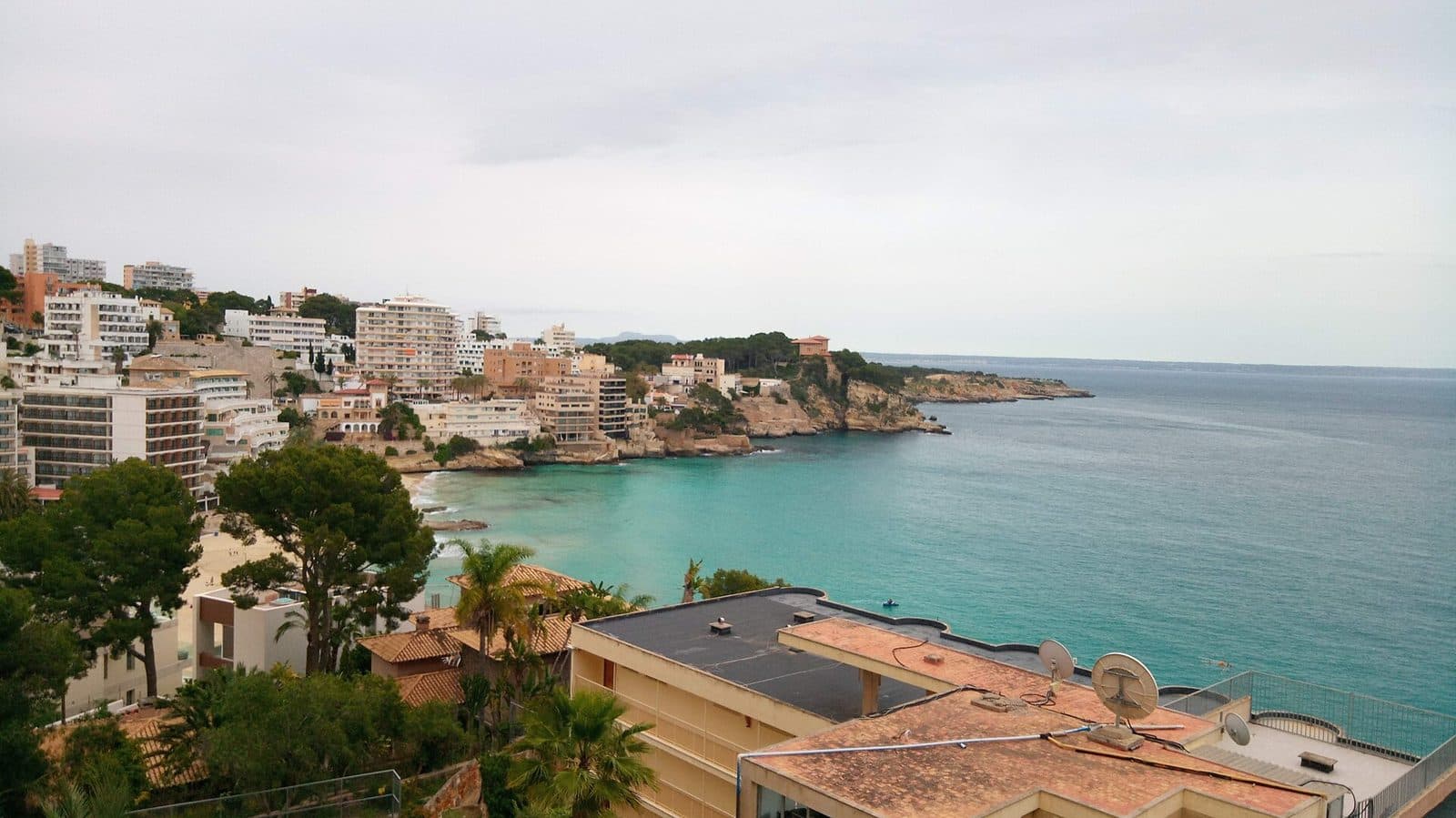
Roques Cala Major
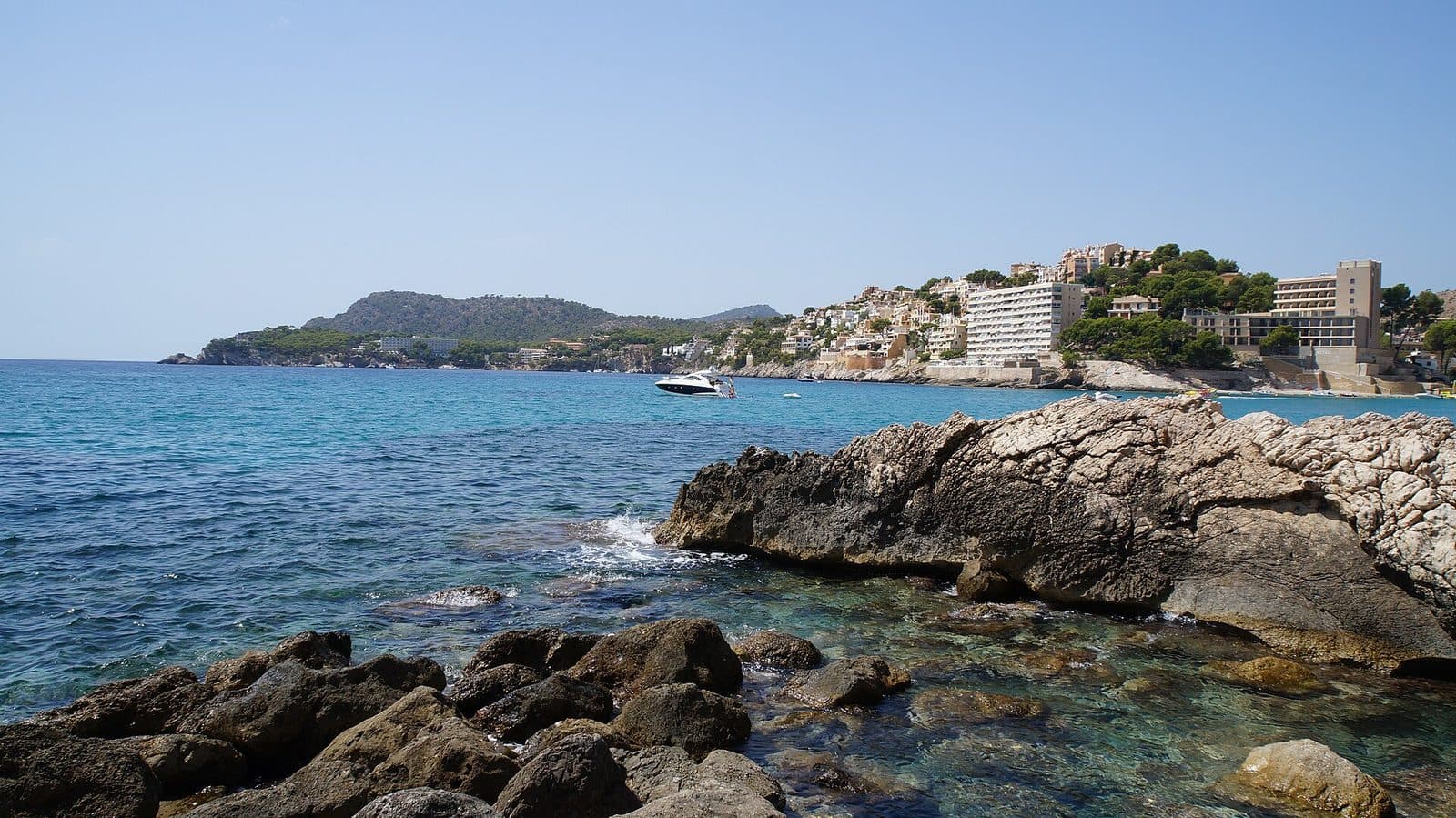
.jpg)
Places to stay near Roques Cala Major
AdTo load the accommodation map by our partner Stay22, we need your consent for marketing cookies. Your consent applies to all marketing content on mallorca.com.
Roques Cala Major is not a classic holiday beach, but a heavily urbanized stretch of coast with small swimming spots among the rocks. It lies between Cala Guix and the large Platja de Cala Major on the western edge of Palma. This contrast is precisely what makes the place interesting: behind you, buildings extend almost to the shoreline, while in front of you, rock formations and individual access points divide up the sea. The Balearic beach catalog lists Roques Cala Major as a sandy beach 300 meters long and 30 meters wide. Vacalia, by contrast, explicitly characterizes the place as a rocky swimming spot. You should therefore not expect a continuous, wide expanse of sand.
Roques Cala Major is particularly suitable if you prefer swimming, taking photographs or looking out to sea from a less conventional coastal spot. Access is available, among other routes, via steps from Avinguda de Joan Miró near house number 305; alternatively, you can reach the coastal strip from Cala Guix or Cala Major. You will find greater comfort, dining options and supervised swimming areas at the neighboring main beach. Roques itself requires more independence—and, because of the steep or step-filled access, some sure-footedness.
Where is Roques Cala Major beach and what is this stretch of coast like?
Roques Cala Major lies between Cala Guix and Cala Major within the city of Palma, around three kilometers from Palma. The Balearic beach catalog assigns this stretch of coast both to the Sant Agustí district and to the locality of Gènova. At first glance, these details may seem contradictory; for finding your way locally, its coastal location between Cala Guix and Cala Major and Avinguda de Joan Miró are what matter.
Roques is part of a series of small swimming spots along the transition between the old beach of Cala Nova and Cala Major. In addition to Cala Guix, these include Cova Roja and Illa de Pujolar. According to the Balearic beach catalog, the latter forms a natural boundary with Platja de Cala Major, the largest and most visited beach in this part of the city.
The coast here is heavily developed. Even the rocky promontory is urbanized almost to the shoreline. Nevertheless, there are still individual corners where you can reach the water or find a place on the rocks. Vacalia describes the formations as sandstone that has taken on different shapes and surfaces through erosion.
| Feature | Information from the Balearic beach catalog |
|---|---|
| Name | Roques Cala Major |
| Locality | Gènova |
| Beach type | Sand |
| Length | 300 m |
| Width | 30 m |
| Seasonal occupancy | high |
| Protected natural area | yes |
| Distance from Palma | 3 km |
Its classification as a sandy beach only partially matches the visible character of the swimming spots: Vacalia describes Roques as an entirely rocky location. You can therefore expect a mixture of rocky coastal access and individual sections suitable for swimming, rather than necessarily finding a continuous sandy beach.
How do you get to Roques Cala Major?
You can reach Roques Cala Major via Cala Guix, via Cala Major or directly by steps from Avinguda de Joan Miró near house number 305. The direct access is particularly helpful if you specifically want to visit the rocks rather than heading first to the neighboring main beach.
Vacalia describes the path to the rocky area at the eastern end of Cala Major as short but steep. The Balearic beach catalog also mentions the steps from Joan Miró. You should therefore not expect step-free access to Roques. If you are traveling with a stroller, have limited mobility or are carrying a lot of beach gear, the well-developed Platja de Cala Major is likely to be the easier choice. Ramps or more accessible routes are available there.
Bus routes 3, 20 and 46 run from central Palma toward Cala Major. These routes serve the neighboring city beach; from there, you continue on foot to the eastern rocky area. You should therefore allow for a short walk if you arrive by public transport.
Note: Use Avinguda de Joan Miró and the two neighboring beaches, Cala Guix and Cala Major, as reference points when traveling there. Roques is more a section of coastline than a clearly separated beach with a large entrance.
Where can you park?
You should not expect to find a reliably available parking space directly at Roques Cala Major. There are only a few spaces in the streets around Cala Major, and available spaces quickly become scarce during the high season.
Paid on-street parking is available along Avinguda de Joan Miró. There is also a somewhat larger parking lot on Carrer de Miquel Codola. According to PalmaParkingInfo, it is approximately a five-minute walk from Platja de Cala Major; the walk to the Roques access point may therefore be correspondingly longer. Another designated parking lot is located by Fundació Pilar i Joan Miró.
Finding a parking space is particularly difficult in summer and on weekends. Demand also rises on Sundays, when many local residents visit the neighboring Cala Major beach as well. If you come by car, arriving early is advisable. The bus connections from Palma save you the search for parking, although there is still a walk from the bus stop to the rocks.
Warning: The access near house number 305 involves steps. Before unloading, check whether this route is suitable for your luggage and everyone traveling with you.
What can you expect from the sand, rocks and water access?
Despite its official classification as a sandy beach, Roques Cala Major is primarily known as a rocky swimming spot. The Balearic beach catalog lists sand and dimensions of 300 by 30 meters, while Vacalia describes only rocks. For planning purposes, it is therefore sensible to expect uneven ground and limited areas for lying down.
The rocks shape the landscape and, according to Vacalia, are suitable for walking, photography and spending time by the coast. Access is steep in places, however. Where you can comfortably sit, lie down or enter the water depends on the particular section. You should not expect a wide, level area like the one at the immediately adjacent Platja de Cala Major.
Water shoes and footwear with a good grip are a sensible choice for a coastal spot with rocks and steps. Light luggage makes the descent easier. For towels or bags, a compact mat may be more practical than extensive beach equipment, as the available space can be limited.
You should also take the nearby buildings into account: Roques does not feel like a secluded natural cove. Instead, its appeal lies in the remaining swimming corners within a densely developed stretch of coast.
What are the water and swimming conditions like?
At Roques Cala Major, you should not assume that the entry is consistently shallow or that there is a supervised swimming area. Unlike the neighboring Cala Major sandy beach, there is no reliable information for the rocks about a gentle entry, wave conditions or seasonal lifeguards directly at Roques.
According to several beach descriptions, the water at Platja de Cala Major deepens gradually, and high waves are relatively rare there. However, this information cannot automatically be applied to every rocky entry point at Roques. Rock edges, steps and local irregularities can make entering and leaving the water considerably more challenging than at the sandy beach.
You should therefore inspect the water at the exact spot where you want to swim. If the entry is difficult to assess or you cannot identify a safe route back onto the rocks, it is better to go to the adjoining Cala Major. During the summer months, it has lifeguards, showers, toilets and ramps.
There are several anchorages between Cala Guix and Cala Major, but their number is limited. This is due to the security zone around Marivent Palace, which has served as the summer residence of the Spanish royal family since 1973.
Warning: Do not jump into the water from unfamiliar rocks. No water depths or official jumping spots are designated at Roques.
What facilities are available?
At Roques Cala Major itself, you should not rely on finding sun loungers, parasols, showers, toilets, dining options or lifeguard supervision. The more comprehensive beach infrastructure belongs to the neighboring Platja de Cala Major and is not automatically available at the rocky swimming spots of Roques.
Sun loungers and parasols are available for rent at the main Cala Major beach during the summer season. There are also public showers and toilets, ramps and lifeguards. Restaurants and beach bars are located directly behind or along the beachfront, and there is also a small supermarket in the beach area. Availability may depend on the season, particularly for the beach bars and their opening hours.
Water sports are also concentrated around Cala Major and the wider surrounding area. Depending on the operator, pedal boats and, in summer, paddleboards and kayaks are available at the main beach. Nearby Port Cala Nova offers a wider range of water sports. No rental service is designated for Roques itself.
You should therefore bring your own water, sun protection and everything else you need for your stay at Roques. At the same time, the steps and limited space mean you will need to consider how much luggage you want to carry.
No permanent shade is designated at Roques. You should therefore not rely on finding a shady spot there. You should also not plan on changing rooms or lockers being available.
When is the best time to visit and how crowded does it get?
If you want to experience Roques Cala Major when it is as quiet as possible, times outside the summer peaks and busy weekends are the better choice. The Balearic beach catalog classifies seasonal occupancy along this stretch of coast as high.
The picture is more nuanced, however: Vacalia describes the rocky location as quieter than the neighboring main beach because of its more difficult access. Both can be true at the same time. Cala Major is very busy in summer, while visitors at Roques are spread across several smaller rocky spots. However, the number of comfortably usable places is limited, so even comparatively few people can make the area feel crowded.
The main beach becomes particularly busy during the high season. Weekends, especially Sundays, are considered times of high demand. At those times, not only the areas for lying down but also parking spaces in the surrounding streets fill up.
In winter, Cala Major receives significantly fewer visitors than in summer. Roques does not require seasonal opening hours, but the weather, sea conditions and state of the access routes can affect your visit. Beach bars at neighboring Cala Major sometimes operate with reduced hours in winter.
If you want to take photographs or look at the rock formations in peace, a visit outside the busiest swimming times is advisable. If, on the other hand, you want to use Cala Major’s seasonal infrastructure as well, summer is more practical—but also considerably busier.
What can you see nearby?
Cala Guix and Platja de Cala Major are directly adjacent, while Cala Nova, Cova Roja and Illa de Pujolar also form part of this varied stretch of coast. This allows you to change swimming spots without leaving the wider Palma area.
Platja de Cala Major is the obvious alternative if you are looking for sand, a shallower entry and more infrastructure. It is surrounded by hotels and other urban development. Behind the beach, you will find restaurants, bars and shops; Avinguda de Joan Miró also has dining establishments and tourist-oriented stores.
Marivent Palace stands near the coast. The building was constructed in 1923 at the request of the Greek patron Juan de Saridakis. Architect Guillem Forteza designed it in the regionalist style. Since 1973, the palace has served as the summer residence of the Spanish royal family. Its associated security zone limits the number of anchorages between Cala Guix and Cala Major.
Fundació Pilar i Joan Miró is also nearby. It preserves Joan Miró’s artistic legacy and includes his studio in Son Abrines, designed by Josep Lluís Sert. The exhibition building was designed by Rafael Moneo. The foundation lies approximately 400 meters northeast of Platja de Cala Major.
This combination is unusually convenient for a beach day with a cultural program: you can plan to visit the small rocky spots at Roques, the equipped Cala Major sandy beach and the Miró foundation within the same part of the city.
What practical advice should you keep in mind?
For Roques Cala Major, you primarily need light luggage, sure footing and a plan for access. The steps from Avinguda de Joan Miró and the path described as steep make this spot less convenient than a developed sandy beach.
Bring enough drinking water and sun protection. Sturdy shoes for the route and water shoes by the sea are sensible precautions for the rocks. As no reliable natural or permanent shade is designated, you should plan your stay accordingly. Use the facilities at Cala Major if you need toilets, showers, dining options or a supervised swimming area.
Roques is only suitable for small children to a limited extent: the key issues are not the distance, but the steps, rocks and entry into the water, which is not consistently secured. The neighboring Cala Major sandy beach offers a more gradually sloping entry and ramps, although it can become very crowded in midsummer.
Whether dogs are allowed at Roques is not clearly regulated. Dogs are said to be permitted on Cala Major sandy beach outside the season; however, this information cannot be reliably applied to Roques or to every time of year. You should therefore pay attention to current signs at the relevant access point.
Also bear in mind that information about access and facilities can change. Local signs, barriers and safety instructions take precedence—especially around the security zone at Marivent Palace.
How do I get to Roques Cala Major?
Can I park at Roques Cala Major?
Is Roques Cala Major suitable for children?
Is there shade at Roques Cala Major?
Are dogs allowed at Roques Cala Major?
How crowded does Roques Cala Major get?
Are there sun loungers, showers and toilets at Roques Cala Major?
What alternatives are there to Roques Cala Major?
Weather
Currently in Gènova: 22°C · Partly cloudy
Getting there by bus
784-Joan Miró - Centre de Salut de Sant Agustí · 0.5 km as the crow flies
- 4Ses Illetes - Pl. Columnes · 08:00–08:00 · Daily
- 20Portopí - Son Espases · 06:06–22:40 · Daily
- 47Gènova - la Bonanova - Sindicat (esquerra) · 08:00–08:00 · Daily
787-Joan Miró - Centre de Salut de Sant Agustí · 0.5 km as the crow flies
- 4Ses Illetes - Pl. Columnes · 08:00–08:00 · Daily
- 20Portopí - Son Espases · 06:06–22:40 · Daily
- 46la Bonanova - Gènova - Sindicat (dreta) · 08:00–08:00 · Daily
1090-Sant Agustí - Cala Nova · 0.6 km as the crow flies
- 20Portopí - Son Espases · 06:06–22:40 · Daily
Timetable data: official GTFS feeds (TIB/EMT), no real-time — check with the operator before travelling.
Food & drink nearby
Cafe Jaime's
Café· 444 m
Kokomo Cala Major
Restaurant· 472 m· 4.0(342)
Il Mediterraneo
Restaurant· 484 m· 4.7(360)
Restaurante La Casita
Restaurant· 494 m· 4.4(348)
star girls mallorca
Bar· 494 m· 3.8(23)
Café bar la Gitana
Restaurant· 503 m· 4.4(207)
Run a business near this beach?
Add your business to the directory for free and reach visitors right on this page.