
Ca Ses Monges near Lloret de Vistalegre
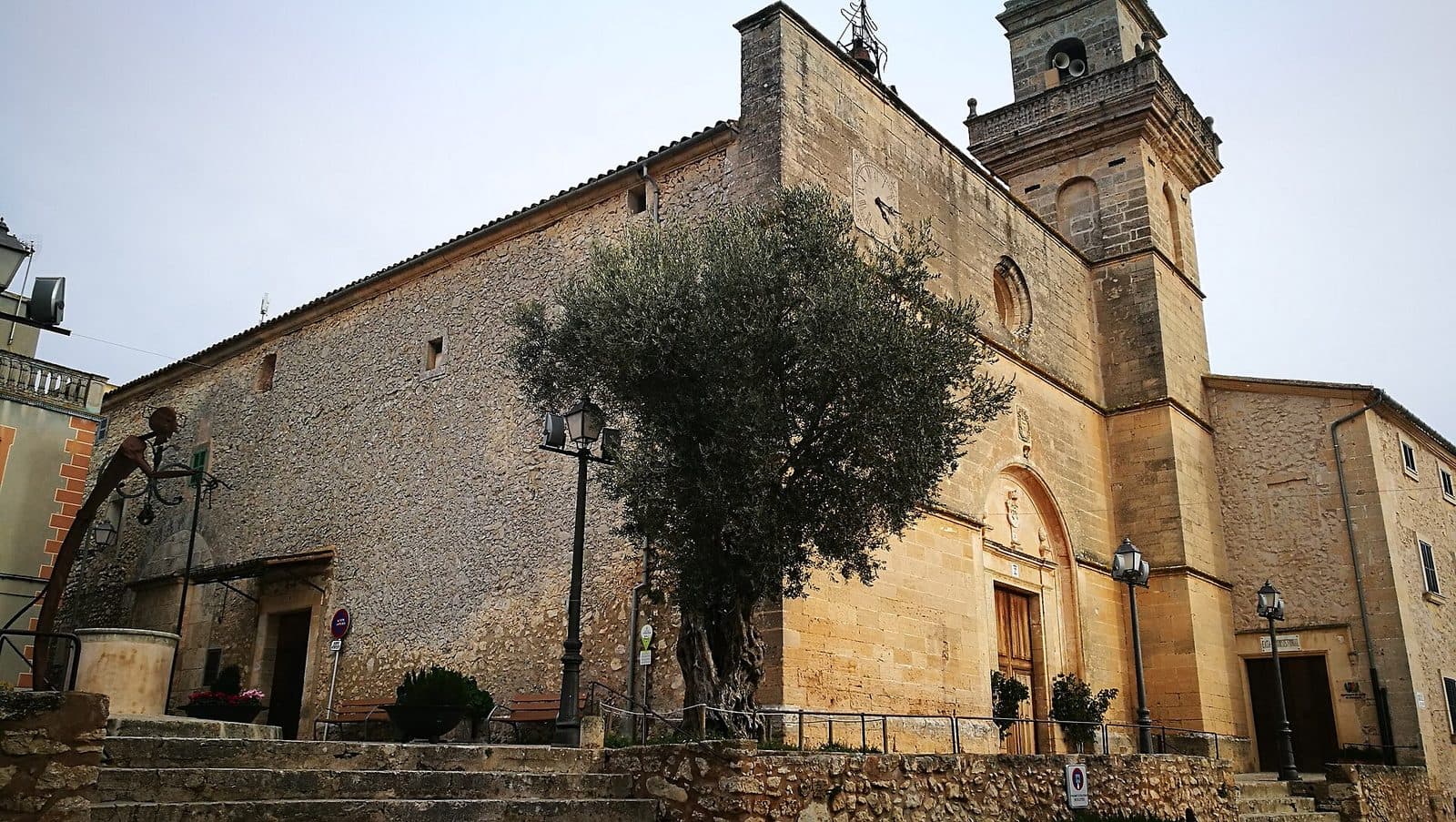

Ca Ses Monges is one of the quiet ecclesiastical and monastic sites in Mallorca’s interior. The attraction is located near Lloret de Vistalegre, a small municipality in Pla de Mallorca, far from the major coastal holiday resorts. This setting shapes the experience: it is less an elaborately presented attraction than a religious site in rural surroundings.
Ca Ses Monges is especially interesting for travelers who want to discover Mallorca’s villages and their ecclesiastical culture. The name refers to the nuns—“ses monges”—but it should not be used to infer a history involving a particular religious order, a foundation date, or a confirmed former use. Such details are not reliably documented for the building near Lloret de Vistalegre. What is established is its classification as a church or convent and its association with this location in the center of the island.
The detour is therefore particularly well suited to a day that is not planned as a succession of major attractions. Ca Ses Monges can be combined with a walk through Lloret de Vistalegre and a drive through the agricultural landscape of the Pla. Fields, almond trees, historic stone country houses, and individual windmills shape the appearance of this area. Travelers who prefer to explore Mallorca’s history through organically developed village scenes rather than exhibition halls will find the right setting here.
The precise location is important: the name Ca Ses Monges appears several times on Mallorca and elsewhere refers to other convent buildings, houses, or institutions. The attraction described here is exclusively the church or convent near Lloret de Vistalegre. Information about buildings of the same name in Vilafranca de Bonany, Pòrtol, Petra, or Puigpunyent does not relate to this site.
Visiting Ca Ses Monges
A quiet stop along the way
Ca Ses Monges should be understood as a small, deliberately chosen cultural stop. Its appeal comes from its ecclesiastical and monastic character and its location in a traditional village area of Pla de Mallorca. An elaborate visitor center, museum-style presentation, or long signposted route are not features that can be assumed from the nature of the attraction. It makes more sense to explore the site attentively and without rushing as part of a visit to Lloret.
As no reliable general opening hours are available, the current possibility of visiting the interior should be checked before traveling. Access to ecclesiastical buildings can also vary temporarily because of services, parish events, or other local uses. Anyone traveling specifically to see the interior should therefore not rely solely on a map listing. No reliable admission price is available either; specific older information from travel portals would not be suitable for planning.
Setting the right expectations
Ca Ses Monges is not an alternative to Mallorca’s major cathedrals, castles, or extensive monasteries. The site is more likely to appeal to visitors interested in small religious buildings and everyday life in the island’s interior. Lloret de Vistalegre in particular illustrates how closely church, village, and rural surroundings have traditionally existed side by side on Mallorca. The visit is rewarding because of this context, not because of a long list of individual furnishings or exhibits.
Photographers should act with restraint, especially if an ecclesiastical interior is accessible or a religious ceremony is taking place. Even if the door is closed, Ca Ses Monges remains a worthwhile point of reference during a village visit. However, the journey should not be planned solely around a guaranteed interior visit; checking in advance helps prevent false expectations.
Flexible timing rather than a rigid schedule
No reliable average visit duration is documented. The time required mainly depends on whether the building can only be viewed from outside, whether an interior is accessible, or whether the visit is combined with a walk through Lloret. A flexible stay is therefore more practical than a tightly scheduled appointment between two more distant destinations.
There is also no generally documented time of day with particularly few visitors. Lloret de Vistalegre, however, is not one of the island’s major tourist centers. Rather than relying on supposed secret times, visitors should plan around current accessibility. In a religious setting, consideration and quiet take priority over the desire to have a space entirely to oneself as quickly as possible.
Getting There and Parking
From Palma Airport
The stated route information leads from Palma Airport to Lloret de Vistalegre, not directly to the entrance of Ca Ses Monges. The road journey covers 31 kilometers and takes around 33 minutes. The route initially follows the Ma-15 toward the island’s interior, after which the Ma-3131 leads to Lloret de Vistalegre. These two road numbers are more important for orientation than search results that mention only the name Ca Ses Monges without the municipality.
After arriving in Lloret, the final local section begins. The navigation destination should explicitly be checked for “Lloret de Vistalegre,” as the name alone is not unique on Mallorca. A result in Vilafranca de Bonany, Pòrtol, Petra, or Puigpunyent leads to a different building and therefore the wrong destination.
From central Palma
From central Palma, the road distance to Lloret de Vistalegre is 34 kilometers. The journey takes around 40 minutes and also follows the Ma-15 before continuing on the Ma-3131. The slightly longer travel time compared with the airport is explained by the starting point within the city. Here too, the measured route ends in Lloret de Vistalegre; the short local approach within the village must be added for final orientation.
The route leads from the urban area into the open landscape of Pla de Mallorca. This changes the character of the excursion while still on the road: instead of coastal promenades and dense hotel developments, the surroundings are shaped by farmland and smaller communities. Navigation should nevertheless be guided by the roads rather than by the impression of the landscape.
Finding your way and parking in the village
No separate, reliably documented parking arrangements are available for Ca Ses Monges. Within the village, vehicles should therefore be left only in clearly permitted spaces; driveways, narrow passageways, and entrances to ecclesiastical or private buildings must remain clear. Particularly around a small religious building, a seemingly vacant space is not automatically intended as visitor parking.
It is practical to decide on the final approach only after checking the local signs. Those who park a little farther away can combine the visit with a walk through Lloret. The island’s interior is also popular with cyclists. Bicycles should therefore be expected on the approach roads and in narrow village areas, even when motorized traffic appears light.
By bus
The recorded stops in and near Lloret de Vistalegre are Lloret 1, Lloret 2, Sa Comuna 1, and Sa Comuna 2. Which one is most convenient for a particular journey depends on the current route, direction of travel, and the access route actually used for Ca Ses Monges. Both the timetable and the walk from the selected stop should therefore be checked before departure.
The stop codes help identify them clearly: Lloret 1 has the code 28001, Lloret 2 the code 28004, Sa Comuna 1 the code 28002, and Sa Comuna 2 the code 28003. Especially with similarly named stops, the code is more useful than the place name alone. It also prevents selecting a connection to another destination with the same name.
Bus lines to Ca Ses Monges at a glance
| Line | Route | Departures/day | First | Last |
|---|---|---|---|---|
| 432 | Sineu - Algaida | 144 | 06:30 | 22:10 |
From the official GTFS feeds (TIB/SFM), no real-time data. The figures cover all stops in the town; weekend and holiday services differ — check with the operator before travelling.
Getting there by bus
Lloret 1 (28001) · 0.1 km as the crow flies
- 432Sineu - Algaida · Daily
Lloret 2 (28004) · 0.1 km as the crow flies
- 432Sineu - Algaida · Daily
Sa Comuna 1 (28002) · 1.0 km as the crow flies
- 432Sineu - Algaida · Daily
Sa Comuna 2 (28003) · 1.0 km as the crow flies
- 432Sineu - Algaida · Daily
Timetable data: official GTFS feeds (TIB/EMT), no real-time — check with the operator before travelling.
Nearby Attractions
Lloret de Vistalegre
Lloret de Vistalegre lies in the geographical heart of Mallorca and is also traditionally called Llorito. The village belongs to Pla de Mallorca, the broad landscape in the island’s interior shaped by agriculture and small communities. Ca Ses Monges cannot meaningfully be separated from the village here, because only a walk through the settlement conveys the scale on which religious buildings became part of local life.
Lloret is not suited to a sightseeing marathon but instead offers a contrast to the heavily visited coastal resorts. Historic stone buildings, the parish church of the Virgin of Loreto, and the quiet village scene give direction to a walk. Ca Ses Monges can be included as a specific ecclesiastical and monastic stop without reducing the rest of the village to a mere backdrop.
Rural Pla de Mallorca
The landscape around Lloret consists of cultivated fields, almond and fig groves, windmills, and old stone country houses. Many of these features do not represent individual attractions but rather the island’s interior, which has been shaped by agriculture over a long period. A visit to Ca Ses Monges becomes more rewarding when time is also allowed for this broader context.
The area is popular with cyclists and is often chosen by travelers staying in rural accommodation and agroturismos. The excursion therefore appeals less to beach vacationers looking for a quick photo stop than to people who want to discover another side of Mallorca. The landscape should be experienced from public roads and permitted paths; fields and farm entrances are not freely accessible viewpoints.
Further traces of local history
Anyone wishing to extend the visit can explore the parish church and the municipality’s historical traces. Human activity in the Lloret area has been documented since the Bronze Age. The archaeological sites mentioned include Cova d’en Dainat and the remains near sa Pleta de Son Gelabert d’Alt. These are separate destinations and should not be equated with the history of Ca Ses Monges.
The Islamic period also left traces in the municipality, particularly in the use and distribution of water. Such connections show that Lloret has far more history than its understated modern appearance might suggest. For an excursion, however, it is enough to keep the individual sites clearly separate: Ca Ses Monges remains the ecclesiastical and monastic attraction, while caves, settlement remains, and water systems tell other chapters of the local past.
Sineu and the villages of the island’s interior
For a longer excursion, Lloret can be combined with other places in the Pla. Sineu is a good choice for a historic village stop; the country roads through the island’s interior also reveal a Mallorca shaped by fields and small village centers rather than coves. Such a day trip works best with a small number of deliberately chosen stops.
Ca Ses Monges should not be treated merely as a waypoint on a hurried tour. The name may appear inconspicuous, but its precise association with Lloret is essential. Travelers who respect this local identity can place the visit meaningfully within the religious and rural cultural landscape of the Pla without adopting stories from other convents with the same name.
The place it belongs to
Lloret de Vistalegre in the place guidePractical Visitor Information
Enter the full place name
The most important practical advice applies even before departure: navigation should always show “Ca Ses Monges, Lloret de Vistalegre.” Several buildings and institutions on Mallorca have similar or identical names. The former or ecclesiastical property in Vilafranca de Bonany in particular is described more extensively online, but it does not belong to this attraction. Results from Pòrtol, Petra, Puigpunyent, or Port de Pollença are also misleading.
This also establishes a rule for preparation: photographs, historical dates, and architectural descriptions are useful only if Lloret de Vistalegre is explicitly named as the location. A Neo-Gothic chapel, a particular coat of arms, or the history of a named religious order must not be attributed to Ca Ses Monges near Lloret solely because of the name.
Clothing and behavior
As this is a church or convent, modest clothing is an appropriate choice. If a religious interior is accessible, conversations should be kept quiet and ongoing ceremonies must not be disturbed. Photography is not automatically permitted; local notices and the privacy of other visitors take priority.
Comfortable everyday footwear is sufficient for a walk through the village. Anyone combining the visit with paths through the rural surroundings should choose shoes that remain comfortable on uneven ground. Public paths must not be confused with private farm entrances or agricultural land.
Sun protection and supplies
Lloret lies in the open interior of the island. Sun protection and drinking water should therefore be included in plans for a longer village or countryside walk, especially if Ca Ses Monges is only one stop on an extended excursion. The ecclesiastical and monastic site itself should not be regarded as a tourist complex with comprehensive facilities.
Flexible planning is helpful: if the doors are closed, the visit can be extended to include Lloret and the landscape of the Pla. Anyone determined to see the interior should clarify current accessibility in advance. This ensures that the excursion remains worthwhile even if ecclesiastical use and travel plans do not align.
Visiting with children
For families, Ca Ses Monges is better suited as a short cultural element than as a stand-alone entertainment destination. Play facilities or an exhibition designed specifically for children should not be expected. Instead, combining it with the village can make the visit interesting: the difference between a small religious site, the parish church, and the surrounding agricultural landscape can also be explained clearly to younger visitors.
Whether a stroller can comfortably reach all desired areas is not reliably documented. Families should therefore assess the actual access conditions and not rely on general information about other buildings called Ca Ses Monges. The same rules apply to children during an interior visit as to adults: quiet, consideration, and distance from religious ceremonies.