
Museu Arqueològic de Son Fornés near Lloret de Vistalegre

The Museu Arqueològic de Son Fornés presents Mallorca’s early history not as a distant sequence of anonymous eras, but as the story of a specific community. Tools, vessels and other finds come from the settlement of Son Fornés, whose inhabitants built their homes around monumental talayots, raised animals, cultivated fields and made decisions collectively. It is precisely this focus on a single archaeological site that makes the museum so unusually vivid.
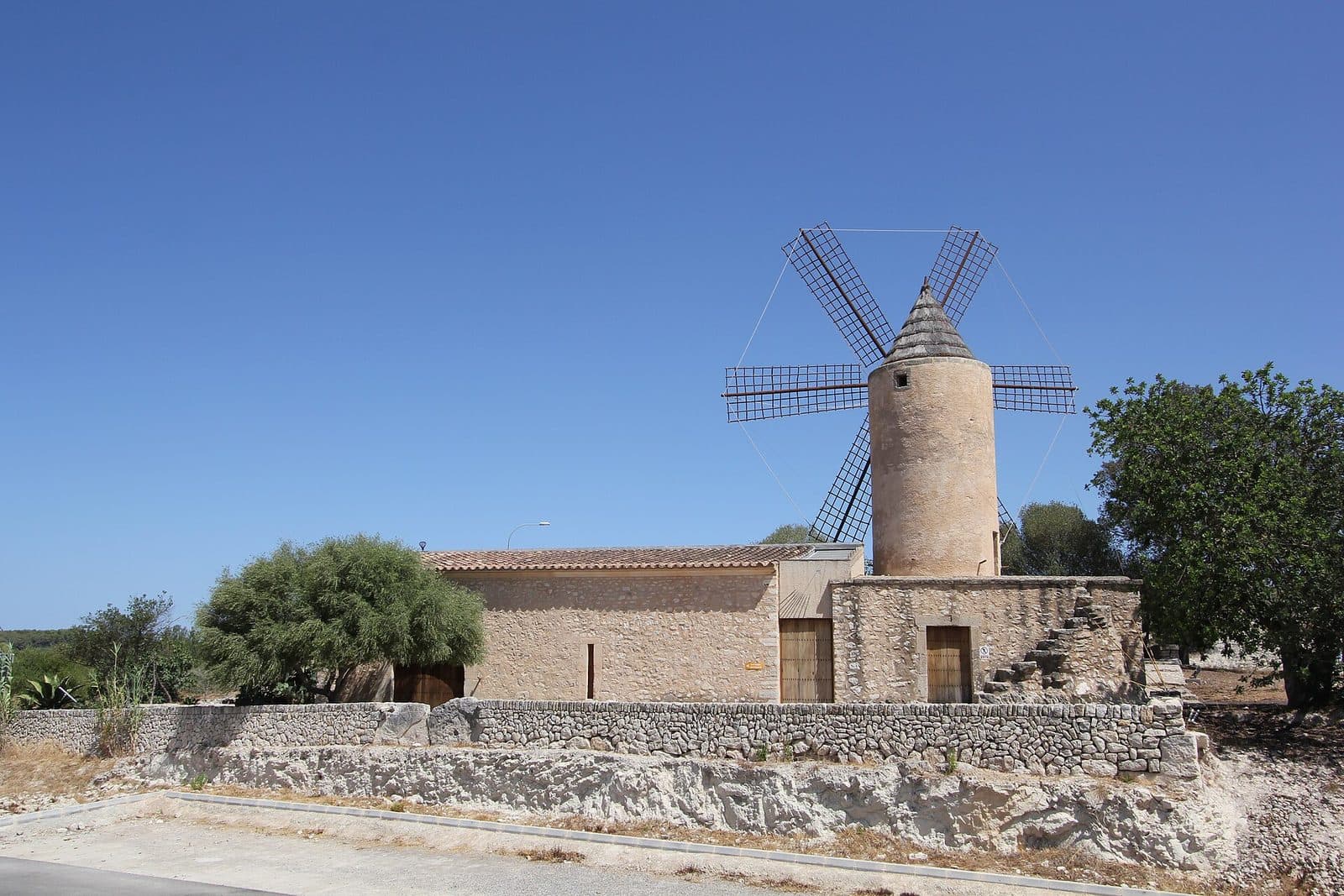
The museum is housed in the Molí des Fraret in Montuïri, not far from Lloret de Vistalegre in the centre of the island. The building itself deserves a closer look: a restored grain mill provides the setting for an exhibition about societies that lived long before today’s villages of the Pla de Mallorca. Historic working architecture and archaeological research meet under one roof.
The exhibition is particularly suitable for visitors who want to understand what happened between the walls visible at the excavation site before walking around it. It presents talayots as large circular structures made of cyclopean stone blocks and asks about their function: Where was meat butchered and distributed? Where did adults gather for deliberations? How did religious spaces change under the influence of Carthage and Rome?
Son Fornés is not a closed chapter. The museum brings together field research, laboratory work, conservation and restoration; new excavation results are incorporated into its interpretation. Anyone wishing to discover Mallorca’s interior beyond markets and village squares will find here a precise introduction to more than two millennia of settlement history.
History and significance
It began not with the museum, but with an archaeological site whose walls had long survived underground and in the landscape of Son Fornés. The visible remains belong to several eras. They document how an indigenous community changed from the Talayot culture through the so-called Balearic period and into Roman times. The museum was created to present this long development not as a collection of separate, attractive finds, but as one coherent story.
The Talayot community
During the Talayot period, three large circular structures made of massive stone blocks dominated the settlement. Such talayots were more than feats of engineering. They formed social centres and made communal organisation visible. The people of Son Fornés lived from farming and livestock husbandry; the surrounding area provided the conditions for largely self-sufficient subsistence.
Research indicates that the structures served different purposes. In the largest talayot, meat was butchered and stored before being distributed within the community. Communal banquets were occasionally held there. A smaller talayot probably served as a meeting place where adults discussed political issues and may also have performed ritual acts. Later alterations make the third structure more difficult to interpret. These differences are crucial: the talayots were evidently not interchangeable towers, but spaces with their own distinct social functions.
Balearic and Roman changes
During the Balearic period, Son Fornés increasingly came under the influence of greater powers. Carthage and Rome changed the political and economic conditions of the western Mediterranean. New sacred spaces were created within the settlement, while older structures were remodelled and sometimes used differently. The exhibition interprets this development as an expression of an increasingly stratified society in which power and religious responsibilities were distributed differently than before.
Life at the site did not end abruptly with Roman rule. The inhabitants adopted new forms of economic activity and construction while also retaining older traditions. These material transitions are precisely what make Son Fornés valuable: rather than showing a simple shift from one culture to the next, the site reveals adaptation, continuity and reorganisation.
Research since 1975
Systematic research began in 1975 under the direction of archaeologist Vicenç Lull. The excavations developed into a long-term research project affiliated with the Universitat Autònoma de Barcelona. The museum does far more than present completed findings. It brings together fieldwork and laboratory work, oversees the conservation of finds and supports the restoration of the excavated structures.
The collection has been housed in the Molí des Fraret since 2001. This gave Son Fornés a permanent place where finds, excavation records and scholarly interpretation could be presented together. It is regarded as the only archaeological museum in the Balearic Islands devoted monographically to a single major Talayot site. Its subject is therefore not “Mallorca’s prehistory” in general, but life in this exact place and the changes it underwent during the first millennium before the Common Era and beyond.
The Molí des Fraret
Before display cases and information panels were installed, grain was processed in the Molí des Fraret. The mill belonged to Montuïri’s historic milling district and remained associated with the Fraret family for a long time. It passed to the municipality in 1990 and was restored. Its conversion preserved a piece of local working history and gave the archaeological collection a building that itself tells the story of the agricultural heart of the island.
What to see
A visit begins with two scales expressed in stone. The Molí des Fraret represents modern-era Montuïri, its grain economy and the milling landscape of the Pla. Inside the exhibition rooms, the view broadens to encompass cyclopean blocks, monumental circular structures and houses built centuries before the mill. The exhibition combines original finds with plans, photographs, explanations and audiovisual elements.
Son Fornés in its landscape
At the beginning, the museum places the site within the history of the island. Mallorca was not always inhabited; the first communities reached the Balearic Islands only in prehistoric times. Maps and chronological displays help visitors view Son Fornés in context rather than in isolation. Its location in the fertile interior, contacts across the sea and the growing influence of Mediterranean powers explain why the settlement changed repeatedly.
This introduction is important because the later rooms do more than identify objects. They show what questions archaeologists derive from find locations, pottery and architecture. A fragment thus becomes evidence of food storage, the distribution of remains provides clues to communal meals, and a remodelled room becomes a sign of social reorganisation.
The three talayots
The most striking subject is the settlement’s three talayots. The exhibition presents their massive walls as the result of collective labour: large stone blocks had to be quarried, moved and carefully positioned. One of the museum texts describes this monumentality as an encounter with 2.000 tonnes of stone. Behind the figure lies a social question: What kind of community could plan and construct such buildings, and for what purpose did it deploy this workforce?
Talayot 1, the largest of the three, was closely connected with supplying the inhabitants. Meat was butchered, stored and then distributed here; on certain occasions, people gathered for communal banquets. The building thus emerges as a place where food was not merely stored but socially organised.
The smaller talayot offered less interior space. Adult members of the community probably gathered there for deliberations and possibly also for religious acts. The documented access through the roof is particularly unusual: a staircase built from large stone blocks led down into the interior. The third talayot cannot be interpreted with equal certainty because of later alterations. Rather than treating this uncertainty as a shortcoming, the museum shows where archaeological conclusions are reliable and where questions remain open.
The Talayot houses
Alongside the monumental structures, the exhibition focuses on everyday life. The houses had sturdy stone foundations, with walls of compacted earth above them. Large cyclopean blocks often framed the entrances. This construction method explains why mainly the lower sections of the walls have survived at the site and why a floor plan alone shows only part of the original house.
Tools, everyday objects and pottery bring visitors closer to the inhabitants. Their significance lies less in individual decorative pieces than in their combination: together they provide evidence of food preparation and storage, craft activities and household organisation. Coins, weapons and bronze objects reflect later contacts and changes.
New sanctuaries and older traditions
The exhibition presents the Balearic period as a time of upheaval. New sanctuaries became important sacred spaces, while talayots were altered or reinterpreted. The influence of war, trade and major Mediterranean powers intensified social differences. This development can be traced through the new spaces that were created and the older structures that continued to be used.
This process continued during the Roman period. Son Fornés became part of larger political and economic structures without all indigenous customs disappearing. The comparison between eras is one of the museum’s strengths: instead of presenting the Talayot culture as a static image of enormous stones, it shows a society in motion.
Original finds and research
The display cases contain significant objects from the excavations, including pottery, coins, tools, weapons and other items from everyday life. Information panels, photographs and audiovisual interpretation establish the context in which they were found. German-speaking visitors can use supplementary materials and digital information, ensuring that the specialist content is not limited to recognising individual objects.
Equally important is the look behind the scenes of knowledge production. The museum is a research centre, a place of interpretation and a base for conservation work. The exhibition therefore avoids suggesting that archaeology consists solely of spectacular discoveries. Surveying, documentation, comparison, restoration and the careful interpretation of traces are just as much a part of the story of Son Fornés.
Visiting the museum
The most sensible place to begin an encounter with Son Fornés is the museum. Its chronological presentation provides a framework before visitors encounter only low walls, entrances and massive stonework outdoors. The introduction to the landscape and research is followed by the Talayot community, the Balearic changes and the Roman phase. Step by step, this reveals why the same space could serve very different purposes at different times.
Tour of the exhibition
The site deserves more than a quick glance at a few display cases. The crucial information lies in the relationships between architecture, finds and excavation evidence. Visitors who study the settlement plan, compare the functions of the talayots and pause at the photographs, explanations or audiovisual elements will gain more than by simply walking through the rooms. No universally applicable visit duration can be derived from this: it depends primarily on whether visitors see only the museum or combine it with the archaeological site afterwards.
Photographs, audiovisual elements and explanatory texts make the exhibition accessible without prior archaeological knowledge. Additional information is available for German-speaking guests. During special events and announced guided tours, interpretation may focus more closely on current excavation results; such dates should be checked in advance against the museum’s current programme.
Museum and excavation site
The museum and archaeological site are two separate places to visit. The Molí des Fraret contains the original finds, explanations and chronological context; at the excavation area outside Montuïri, visitors can experience the dimensions of the settlement and its talayots. Those who see only the museum will understand the objects but miss the landscape and architectural scale. Those who visit only the excavation will recognise the monumental stonework but must largely imagine its functions for themselves.
The sequence of museum first, archaeological site afterwards is therefore particularly logical. Details such as the distribution of meat in Talayot 1, the possible deliberation space in a smaller talayot or the stone foundations of the houses can then be sought more deliberately outdoors. At the same time, it becomes clear which elements can be reconstructed and where later alterations prevent an unambiguous explanation.
Visiting with children
The museum is not aimed solely at specialists. Touchable elements, puzzles and learning-oriented areas help younger visitors translate vast spans of time into concrete activities. Questions such as how heavy stones were moved or why meat was distributed communally often work better than a long sequence of archaeological terms.
Families can also combine their visit with the archaeological site. The museum provides the images and tasks, followed outdoors by a search for walls, entrances and talayot floor plans.
Current opening hours should be checked before travelling, as they cannot be treated as a permanently reliable schedule. Admission is charged for the museum; the current price should also be checked in advance.
Getting there and parking
The route details on this page initially lead to Lloret de Vistalegre. The museum itself is located in the Molí des Fraret in Montuïri, near the old road to Sant Joan. This distinction is important when planning: the stated distances and driving times end in Lloret, not directly outside the museum. The final section follows local roads through the centre of the island towards Montuïri, where signs lead through the town to the Museu Arqueològic de Son Fornés.
From Palma Airport
The recorded road distance from Palma Airport to Lloret de Vistalegre is 31 kilometres. The drive takes around 33 minutes and follows the Ma-15, then the Ma-3131. From Lloret, the journey continues via the local road network to Montuïri. For this section, the navigation system should be set specifically to the museum or the Molí des Fraret, not to the Son Fornés excavation site.
From Palma
From the centre of Palma, the recorded route to Lloret de Vistalegre covers 34 kilometres by road. The drive takes around 40 minutes; here too, the main section follows the Ma-15 and then the Ma-3131. Within the town, follow the signs to the museum.
Museum or archaeological site
The additional wording matters when entering the destination. The museum is located in the Molí des Fraret in Montuïri. The archaeological site lies outside the town and is a separate driving destination. There are no continuous museum rooms or shared entrance connecting the two. Anyone wishing to visit both should therefore plan two stops and check the address or destination name before each stage.
Free parking is indicated at the museum. The bus stops recorded for this page are called Montuïri 1 and Montuïri 2. From there, the remaining route leads through or alongside the town; connections and walking routes should be checked against the current timetable before travelling.
Bus lines to Museu Arqueològic de Son Fornés at a glance
| Line | Route | Departures/day | First | Last |
|---|---|---|---|---|
| A42 | Cala Bona - Aeroport | 84 | 00:20 | 23:30 |
| 403 | Campos - Algaida - Palma | 48 | 06:35 | 22:00 |
| 401 | Cala Millor - Palma | 42 | 01:00 | 23:45 |
From the official GTFS feeds (TIB/SFM), no real-time data. The figures cover all stops in the town; weekend and holiday services differ — check with the operator before travelling.
Getting there by bus
Montuïri 1 (38003) · 1.3 km as the crow flies
- 401Cala Millor - Palma · Daily
- 403Campos - Algaida - Palma · Daily
- A42Cala Bona - Aeroport · Daily
Montuïri 2 (38010) · 1.3 km as the crow flies
- 401Cala Millor - Palma · Daily
- 403Campos - Algaida - Palma · Daily
- A42Cala Bona - Aeroport · Daily
Timetable data: official GTFS feeds (TIB/EMT), no real-time — check with the operator before travelling.
Nearby
Between Lloret de Vistalegre and Montuïri, Mallorca reveals a side with little in common with the coast. Fields, historic country houses and mills characterise the Pla de Mallorca. Here in particular, it becomes clear why farming and livestock husbandry were such an important foundation for the inhabitants of Son Fornés. The museum visit consequently gains a landscape context without requiring a long driving tour.
Montuïri
Montuïri is directly connected to the museum’s history. The Molí des Fraret was part of a well-known milling district that also included other grain mills. A short walk through the town makes it clear that the museum building is not an invented historic setting, but once belonged to a local economic landscape. The town centre offers a peaceful break between the exhibition and the outdoor site.
The Son Fornés excavation site is the most obvious continuation. It lies outside the town centre and displays the walls, talayots and residential areas from which the museum’s finds originated. No other combination is so closely connected thematically: the museum provides the explanations, while the site reveals the scale, materials and setting.
Lloret de Vistalegre
Lloret de Vistalegre lies at the geographical heart of Mallorca and retains the character of a small town in the island’s interior. Windmills, almond groves and stone country houses are part of the surrounding landscape. Anyone planning to approach via Lloret can include the town centre as a brief stop, but should not confuse it with the museum’s actual location.
Combining Lloret, Montuïri and Son Fornés is particularly suitable for a day devoted to cultural history in the Pla. Instead of ticking off numerous widely scattered sights, the route follows a common theme: the use of the fertile interior from prehistoric communities and grain mills to today’s villages.
Other destinations in the Pla
Sant Joan and Pina can also be included in a journey through the island’s interior. Both lie within the cultural landscape to which Son Fornés belongs, but should be regarded only as additional village stops. The museum and its associated excavation require attention; an overly packed driving tour would shorten precisely the connections that make the visit worthwhile.
The place it belongs to
Lloret de Vistalegre in the place guidePractical information for your visit
The name Son Fornés refers both to the museum and to the archaeological site. This can easily cause confusion when using navigation. For the exhibition, the correct destination is the Molí des Fraret in Montuïri; to see the monumental stone structures, visitors must then travel to the excavation site outside the town. Anyone who visits only one of the two places experiences only half of the story.
Order and preparation
Museum first, archaeological site afterwards: this sequence makes the ruins considerably easier to interpret. In particular, the different functions of the three talayots, the construction of the houses and the later alterations remain memorable after touring the exhibition. A photograph of the settlement plan or the available digital information can help visitors find the explained features again outdoors.
The exhibition requires no specialist knowledge, but it does call for some time to read texts and study plans. Anyone expecting only spectacular gold finds or fully furnished prehistoric rooms will misunderstand the character of the collection. Its value lies in the well-documented everyday finds and in the way their locations provide evidence about diet, work, assemblies and social change.
Language and interpretation
Information in German makes the specialist terminology easier to understand. Supplementary handouts and digital content should ideally be used from the beginning of the tour rather than only at the final display case. With the talayots in particular, it is worth distinguishing between a confirmed function, a probable interpretation and a deliberately open question.
Puzzles, learning areas and touchable elements give children their own point of access. It is helpful to structure the tour around a few specific questions: How was a house built from a stone foundation and compacted earth? Why was meat distributed in a central location? Why did a community build several talayots with different functions?
Check before departure
Current opening hours should be checked immediately before visiting, especially if the museum and archaeological site are to be combined in one day. Admission is charged for the museum; the current amount should also be checked in advance. Announced guided tours, excavation campaigns or special events can make a visit particularly rewarding, as they may explain new findings and features that are otherwise difficult to recognise.
Local insider tips
Museum first, ruins afterwards
The talayots at the archaeological site are much easier to interpret once the museum has explained their different functions, the house-building methods and the later alterations.
Look for the roof access
An unusual entrance through the roof has been documented in the smallest talayot. A staircase made from large stone blocks led into the interior—a detail that is easy to overlook when comparing the three structures.
See Talayot 1 differently
The largest talayot was not simply a defensive tower. Meat was butchered, stored and distributed to the community there; communal banquets were also held occasionally.
Read the mill too
The Molí des Fraret is more than a shell for display cases. As a former grain mill, it connects the archaeological narrative with Montuïri’s later history of farming and milling.
Choose German at the beginning
German-language handouts and additional digital information are especially useful when accessed at the beginning of the tour. This makes the functions of the rooms and talayots easier to follow.