
Creu de Terme near Pollença – Protected Cultural Monument
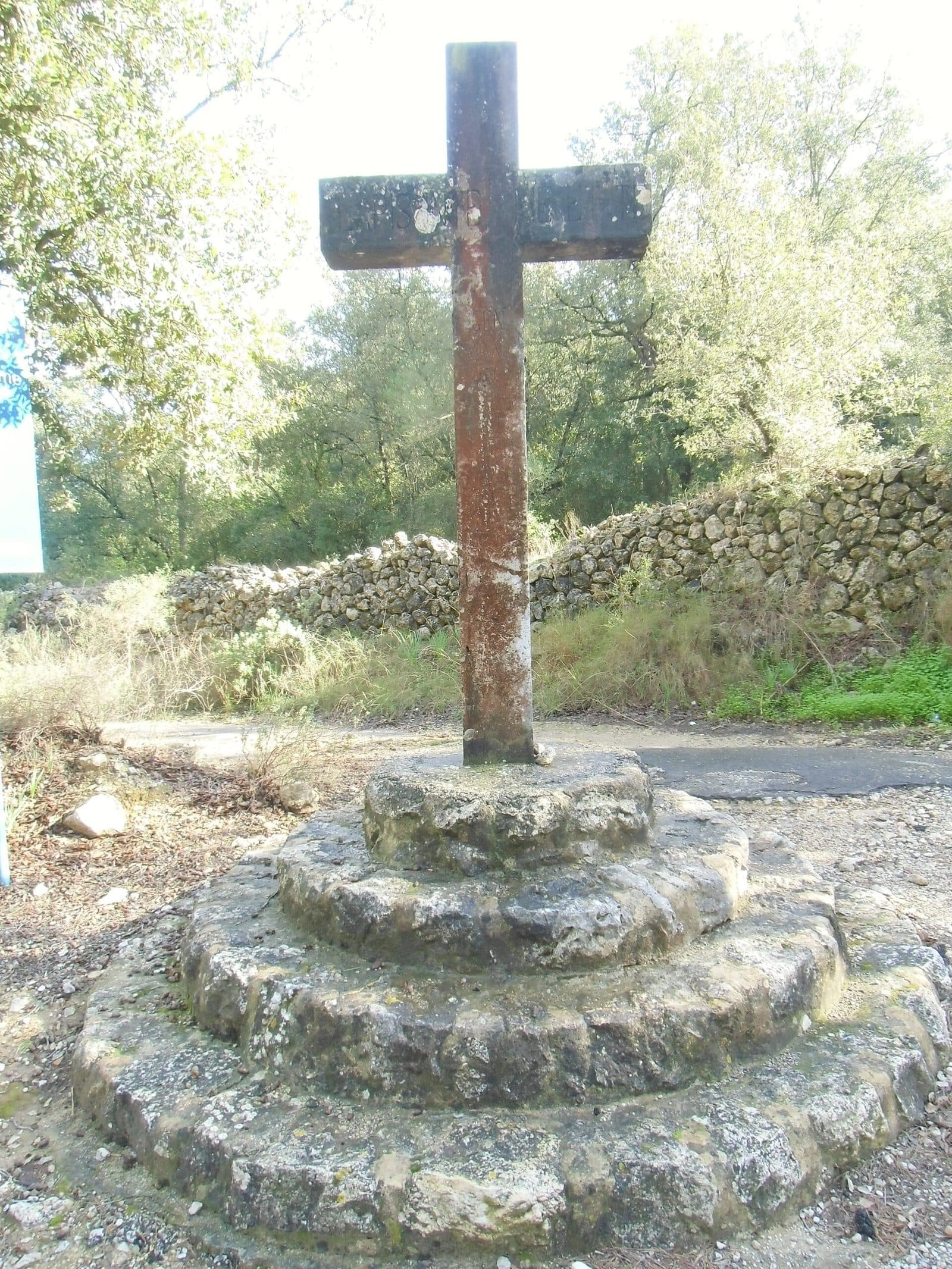

The Creu de Terme near Pollença is one of those historic landmarks where Mallorca’s past is revealed not in grand halls or extensive collections, but directly beside the road. The cultural monument is protected as a Bien de Interés Cultural. Anyone exploring Pollença will therefore encounter not just an ordinary landmark, but an officially recognized part of its historic heritage.
Its appeal lies precisely in its small scale. The Creu de Terme is not a museum with a prescribed route, nor is it a sight that requires half a day of your vacation. Instead, it draws attention to the town’s surviving historic features and adds a cultural and historical dimension to an exploration of Pollença. The stop is particularly suitable for travelers who see Pollença as more than merely a starting point for the coast and mountains. Among the better-known attractions, such a quiet trace of the past often leaves a more lasting impression than another scheduled stop with an entrance and a fixed route.
It is important to identify the location clearly: this refers exclusively to the Creu de Terme in Pollença in northern Mallorca. Crosses with the same or similar names elsewhere in Mallorca, the Roman city of Pollentia near Alcúdia, and the Creu de Tau in Capdepera are different places.
Visiting the Monument
A Monument Worth a Closer Look
The visit focuses on a historic landmark in Pollença. It is best not to view the Creu de Terme from just one angle. Changing position helps reveal how it relates to its surroundings rather than treating it as an isolated object. Its significance becomes clear through the connection between the monument and its setting: the cross belongs to Pollença and is protected as a historic cultural asset.
It is therefore worth doing more than taking a quick photograph. Pause briefly and begin by considering its overall form. Details about the date of creation, artist, material, or iconographic program are not reliably documented for this particular cross, so no seemingly certain art-historical conclusions should be drawn on site.
No Prescribed Visitor Route
No dedicated visitor route is recorded for the Creu de Terme. It is therefore best planned as part of a walk through Pollença. The length of the visit depends less on the size of the site than on personal interest: those who simply want to identify the monument will stay only briefly, while visitors photographing historic traces or examining the cross’s place in the townscape will need more time.
There is no reliable information about what time of day particularly large numbers of visitors gather at the monument. It would therefore be misleading to name a supposedly guaranteed quiet hour. More important for planning is which other places in Pollença are on the itinerary and whether the walk should take place in pleasant light and weather conditions.
Check Before Setting Out
Specific opening hours have not been recorded, nor have reliable admission conditions. As access and conditions around historic monuments can change, it is advisable to check current information with local information services before visiting.
The nature of the visit nevertheless remains clear: expect not a large tourist complex, but a single historic cultural monument. This is precisely why the Creu de Terme fits well into a day spent exploring Pollença on foot. It is less the focus of a lengthy sightseeing program than an opportunity to notice the town’s historic details more carefully.
Getting There and Parking
From Palma Airport to Pollença
From Palma Airport, the road route follows the Ma-30, then the Ma-13, and finally the Ma-2200 to Pollença. The distance to Pollença is 57 kilometers by road, and the journey takes around 45 minutes. These figures expressly refer to the town of Pollença and not to a parking space immediately beside the monument.
A separate final section to the Creu de Terme must therefore be planned after arrival. As no verified detailed route leading directly to the cultural monument is available, current navigation using the full name and the location Pollença should be used for this part. The Creu de Terme must not be confused with monuments of the same name outside Mallorca or similarly named destinations in other municipalities on the island.
From Central Palma to Pollença
From central Palma, the route follows the Ma-13 and the Ma-2200. The journey to Pollença covers 54 kilometers by road and takes around 50 minutes. Here too, the verified route information ends in Pollença. The precise access route or subsequent walk to the monument depends on the chosen starting point within the town.
The same main connection via the Ma-2200 and the Ma-13 applies to the return journey. The lower mileage compared with the route from the airport does not automatically mean a shorter travel time: the journey from central Palma takes around 50 minutes, making it longer than the airport route estimated at around 45 minutes.
Parking and the Final Section
No dedicated parking area immediately beside the Creu de Terme is documented. Visitors should therefore not assume that parking spaces will be available directly at the monument. It is more practical to consider the parking situation in Pollença as a whole and then include the cultural monument in a walk through the town.
No bus stop in the immediate vicinity of the Creu de Terme has been recorded either. Anyone traveling to Pollença by public transport should separately check the route from their chosen stop to the monument in advance. Arriving in Pollença and reaching the Creu de Terme are two distinct planning stages; visitors with limited mobility in particular should not leave the final section to chance.
Nearby Places
Pollença
Pollença provides the natural setting for the visit. Rather than approaching the Creu de Terme as an isolated photo stop, it is worth making the town itself the focus of the outing. A walk allows visitors to move between everyday street scenes and historic heritage. The protected cross then becomes a landmark within an established community rather than merely another item on a list.
This is precisely where the value lies for those interested in cultural history: a small monument demands more attention than one visible from afar. Anyone exploring Pollença slowly can discover how strongly individual historic landmarks can alter the perception of a road or square. No invented construction stories are needed for such a tour; the confirmed designation of the Creu de Terme as a Bien de Interés Cultural already gives the stop clear significance.
Calvari
Calvari is one of Pollença’s well-known historic attractions and makes a suitable additional stop on a walking tour. It should, however, be viewed as an attraction in its own right. Its connection with the Creu de Terme lies primarily in exploring Pollença as a whole: one is a small protected roadside landmark, while the other is a more prominent local destination.
Combining both stops provides a more varied experience than a simple photo stop, while allowing the duration to remain flexible. The Creu de Terme does not require a long prescribed route, whereas more time and physical exertion may need to be allowed for Calvari.
Port de Pollença and the North Coast
After the historic walk through town, the excursion can continue toward Port de Pollença and the north coast. This is particularly worthwhile when combining culture and coastal scenery in a single day. The Creu de Terme remains the quiet historic introduction, not a pretext for a detailed portrait of the coastal destinations.
The distinction is also important when using navigation: Pollença and Port de Pollença are not the same destination. The stated travel figures from Palma and the airport apply only as far as Pollença. Anyone continuing to the coast must allow for additional distance and travel time.
The place it belongs to
Pollença in the place guidePractical Visitor Information
What Not to Expect
The Creu de Terme is not a museum, a Roman archaeological site, or a building complex with several rooms. The visit should therefore not be judged by the number of exhibits or the length of a tour. Its value lies in encountering an individual protected historic monument in the surroundings of Pollença.
Detailed explanations on site should not be taken for granted either. Anyone interested in small historic monuments will benefit from knowing the name and confirmed protected status before beginning the walk. This turns an easily overlooked object into a consciously appreciated stop.
Avoiding Confusion
The name Creu de Terme is not unique. Other crosses bearing this name can be found in Catalonia and Mallorca, including a documented example from Manacor. Its date, material, figures, and ornaments must not be attributed to the monument in Pollença. Nor is this page about the Creu de Terme in Abrera or Ordis.
Another common source of confusion is Pollentia. The Roman city of Pollentia lies near Alcúdia and is an archaeological site with its own history. It is neither the same as Pollença nor identical to the Creu de Terme. When searching maps, it is therefore advisable always to check both the monument’s name and Pollença on Mallorca.
Check Rather Than Assume
As no specific opening hours or admission conditions have been recorded, current information should be checked shortly before visiting. The same applies to the final section of the route, possible closures, and the local parking situation. Direct vehicle access or parking at the monument has not been confirmed.
The same principle applies when arriving by bus. No stop in the immediate vicinity has been recorded, so the route within Pollença should be planned in advance. Visitors who treat the Creu de Terme as part of a broader walk through the town will have the greatest flexibility and avoid expecting tourist infrastructure that has not been documented for this small historic monument.
Local insider tips
Add the Location to Your Search
When using navigation, always enter “Creu de Terme, Pollença, Mallorca.” Crosses with the same name exist elsewhere, and Pollença must not be confused with the Roman site of Pollentia near Alcúdia.
Include It in a Walk Through Town
The Creu de Terme is a historic cultural monument in Pollença. Its designation as a Bien de Interés Cultural makes it a worthwhile stop for visitors interested in cultural history.
Plan the Journey in Two Stages
The travel information applies only as far as Pollença. After arrival, there is a separate final section to the monument, so check its exact location and the current parking situation separately before departure.
Keep Its Protected Status in Mind
Its modest size can be deceptive: the Creu de Terme is recognized as a Bien de Interés Cultural. This status makes it a protected testimony to historic heritage rather than merely a roadside landmark.