
Es Baluard Museu d'Art: Contemporary Art in Palma's Bastion
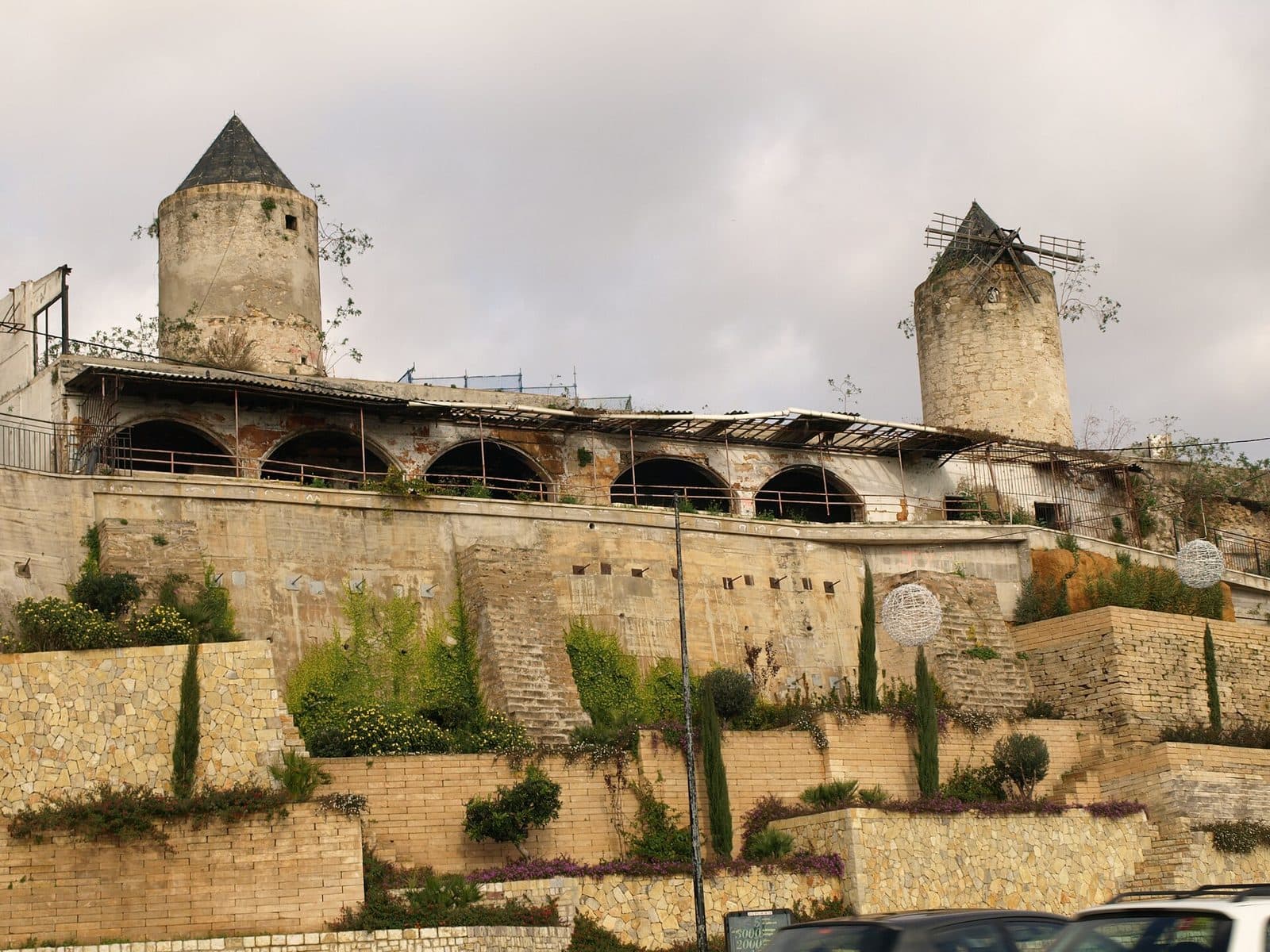

Even the approach through the walls makes it clear that Es Baluard Museu d'Art is no ordinary exhibition building. The museum of modern and contemporary art stands on the edge of Baluard de Sant Pere, a mighty Renaissance bastion in Palma's former city fortifications. Beyond the historic stone, ramps, sightlines, bright concrete surfaces, and galleries begin, repeatedly opening onto the city and the bay. Art is only one dimension of the visit. Just as fascinating is the question of how a museum can be integrated into a centuries-old defensive structure without reducing its walls to mere scenery. Es Baluard answers it with a clearly recognizable new building that maintains its distance from the historic fabric and deliberately places old and new side by side.
Its scope extends from modern art to contemporary work from the Balearic Islands, the Mediterranean region, and the international scene. The presentation is not static: works from the collection meet changing exhibitions, installations, and a program of educational and community projects. This makes the museum particularly interesting for art lovers, architecture enthusiasts, and anyone who wants to discover Palma beyond its classic monuments. The site remains accessible even without extensive prior knowledge. The sequence of exhibition rooms, historic walls, patios, and upper terraces creates pauses between the works. Visitors do not simply view pictures and objects; through stone, concrete, and open sightlines, they can also trace Palma's development from a fortified urban boundary to the cultural destination it is today.
History and Significance
The most dramatic moment in the recent history of Baluard de Sant Pere did not occur during a siege. Long after its military use had ended and the site belonged to private owners, the wall was to make way for development. An attempt to demolish it with explosives sparked public opposition. The bastion was subsequently protected as a historic and artistic ensemble, and preparations began for its restoration. Without that response, today's museum site would probably not exist in its preserved form.
Baluard de Sant Pere
The bastion was built in the last quarter of the 16th century. At the time, Palma was reinforcing its medieval fortifications with new walls based on designs by the Italian engineer Giacomo Palearo Fratín. Baluard de Sant Pere stood out for its size and strategic position on the western edge of the fortified city. An artillery school was established within the complex and was considered one of the most prestigious in Europe. The museum's name directly recalls this origin. The Catalan word “baluard” means bulwark or bastion, so here it is not a poetic invention but a precise description of the site.
Changes to the Fortifications
The structure visible today is not the result of a single construction phase. In 1646, under Vicenç Mut, the height of the neighboring Baluard de Santa Catalina was altered. This brought it level with the Moranta and Sitjar bastions and connected it to them through the line of walls. In the 18th century, the fortification complex finally acquired the lasting form that continues to define its appearance today.
The walls also mark a much older urban boundary. The origins of the Sant Pere district reach back to Palma's Islamic period. The area outside the Almudaina of that time was probably partly undeveloped and may have been used for gardens and burial grounds. The museum therefore brings together not only the Renaissance and the present: the site points to several layers of urban history, even if not all of them are visible as standing masonry.
Saved from Demolition
After more than three centuries, the military use of Baluard de Sant Pere ended in 1952. Shortly afterward, the site passed into private ownership. The new owners wanted to develop the land and attempted to destroy parts of the wall in 1963. Public protest prevented the loss. The bastion received protected status, and its immediate restoration was planned in 1965.
At the end of the eighties, the site was designated for public use, after which expropriation began. At first, however, the area remained abandoned. It was not until 1997 that the city of Palma made the property available for the construction of a museum of modern and contemporary art. This decision solved two problems at once: an important section of the city fortifications gained a permanent use, and Palma acquired a place for art collections, exhibitions, and cultural work.
The Museum Since 2004
Es Baluard Museu d'Art opened on 30 January 2004. The new building was designed by Lluís García-Ruiz, Jaume García-Ruiz, Vicente Tomás, and Ángel Sánchez Cantalejo. The architects did not treat the bastion as a shell that could simply be filled with galleries. Instead, they inserted an independent structure into the historic fabric and created spatial tension between the new and old walls.
Today, the museum sees itself as more than a place for storing a collection. Its operator describes it as a center of contemporary production and a space for critical, educational, and community experimentation. Its changing exhibitions, workshops, talks, guided tours, audiovisual formats, and projects with schools, families, and cultural practitioners reflect this approach. The historic bastion therefore no longer protects the city but provides a setting in which the present is explored and debated.
What to See
The strongest impressions emerge at the transitions. A rough stone wall runs beside a smooth white concrete surface; a ramp rises between enclosed walls and suddenly ends with a view of the harbor or the bay. Es Baluard is not a building that visitors simply cross from room to room. Indoor and outdoor spaces interlock, and the route itself forms part of the presentation.
Renaissance Bastion and New Building
The historic fortification provides the heavy, irregular framework. Parallel walls of pale concrete were inserted within it without visually imitating the old stone. The new building stands apart from the fortress wall. This makes the different periods clearly distinguishable while also creating narrow intermediate spaces, courtyards, and passageways where the scale of the bastion becomes especially tangible.
Glass surfaces and carefully positioned openings keep the building open despite its location within massive walls. The sea does not appear as an uninterrupted panorama but often only as a fragment at the end of an axis. These restricted views resemble framed pictures. Elsewhere, the openings face Palma, the harbor, or the preserved sections of the fortifications.
Ramps, Stairs, and Galleries
The museum extends across several levels. Ramps, stairs, balconies, walkways, and galleries connect the exhibition areas with the outdoor spaces. These routes do more than provide access: from above, visitors look down into patios; from a side passage, they see old masonry; and from a ramp, they look back at the part of the building they have just crossed.
Skylights bring daylight into areas that could otherwise feel enclosed within the bastion. At the same time, the exhibition galleries remain controlled spaces suited to painting, photography, sculpture, video, and installation. The alternation between focused viewing and open passageways ensures that the architecture does not disappear from awareness after the entrance.
Collection Gallery
The collection is devoted to modern and contemporary art, with a clear emphasis on artists connected to the Balearic Islands or the Mediterranean region. At the same time, its scope extends into international art history. Artists associated with the museum include Joan Miró, Pablo Picasso, René Magritte, and Miquel Barceló. Which works are actually displayed, however, depends on the current presentation.
This is important when setting expectations: Es Baluard does not operate as an unchanging sequence of famous masterpieces. The collection is reinterpreted through curatorial approaches, linked to contemporary questions, and shown alongside temporary projects. The presence of a particular artist's name in the holdings therefore does not guarantee that one of their works will be on display during a given visit. Anyone coming to see a specific artist should check the current program in advance.
Temporary Exhibitions
Temporary exhibitions are central to the museum. International artists appear alongside figures from Mallorca and the other Balearic Islands, while historic works may meet newly produced installations or thematic presentations. Because the program changes, the spatial experience is also different each time. A large-scale installation may occupy almost an entire gallery, while another exhibition directs attention toward individual pictures or documentary material.
The museum explicitly describes its program as dynamic. It includes not only completed exhibitions but also educational work, discussions, publications, and artistic experiments. It is therefore worth checking more than just the exhibition titles in advance. Guided tours, workshops, or presentations listed on the agenda may offer perspectives that would remain hidden during a quiet self-guided visit.
Aljub
The Aljub is one of the museum's named spaces. Within the museum today, this room forms part of the cultural route and creates a distinctly different spatial impression from the regular galleries. The Aljub should therefore not be treated as an incidental side room. Where the white surfaces of the new building create neutrality for art, this room visibly retains its own character. This contrast is one of the strongest experiences at Es Baluard.
Patios and Terraces
Patios, gathering areas, and terraces open between the building sections. They serve as places for encounters and cultural events while also giving the route a natural rhythm. After a concentrated exhibition gallery, the view expands, the fortress wall becomes legible again as part of the urban landscape, and orientation becomes easier.
From the upper terraces, the view extends across the Bay of Palma, the harbor, and parts of the old town; the cathedral also comes into sight. The panorama is not merely a decorative addition. It explains the strategic choice of the bastion's location: from here, the maritime approach to the city could be monitored. Today, the same view connects the art inside with Palma's contemporary urban space.
Visiting the Museum
It is worth resisting the temptation to begin with a quick walk to the first exhibition. The approach through the fortifications and the relationship between the old wall and the new building are already part of the museum. Visitors who pause briefly at the transitions will better understand why the ramps, patios, and terraces are just as important as the enclosed galleries.
A Route Through the Levels
A rewarding visit combines the collection gallery and current temporary exhibitions with the Aljub and the upper terraces. The exact order matters less than a willingness to follow both indoor and outdoor routes. Side paths leading to galleries and viewpoints are particularly easy to miss when the visit is focused only on individual artists' names.
The amount of time required depends greatly on the current program. An architectural walk through selected exhibition spaces takes considerably less time than reading all wall texts and exploring video works and several temporary exhibitions in full. It is therefore advisable to visit without a tightly scheduled appointment immediately afterward. The routes across different levels and pauses on the terraces make rushing especially inappropriate.
Current Program
Because the exhibitions change, visitors should check what is actually open and on view before arriving. The museum's agenda also lists guided tours, workshops, talks, book presentations, and other events. Some activities are intended for the general public, while others are designed for families, teachers, or specialist groups.
Current opening hours and admission conditions should also be checked immediately before the visit. They are displayed in separate data fields on this page and may change. Older information from travel guides is not a reliable basis. This is especially important when the visit is linked to an event or a work that is only on display temporarily.
Time of Day and Visitor Flow
It is difficult to identify a universally quiet time of day for a museum with a changing events program. Openings, guided tours, school activities, and special event days can alter the usual rhythm. Anyone hoping for a focused visit should check the daily agenda and choose a period without an event beginning at the same time.
Weather also matters on the terraces. Clear light makes it easier to understand the city panorama, while strong sunshine can make the open areas more demanding. The interior spaces remain largely unaffected. The visit can therefore be rearranged if necessary: outdoor routes first and galleries later, or the other way around.
Getting There and Parking
The museum stands on the western edge of Palma's historic center, at Porta de Santa Catalina and above Passeig Marítim. The massive walls of Baluard de Sant Pere are far more conspicuous in the cityscape than a freestanding museum building would be. The entrance, however, is not down on the waterfront road but on the city side of the bastion.
From the Airport to Son Serra Perera
The journey recorded in the travel data from Palma Airport to Son Serra Perera covers 10 kilometers by road and takes around 18 minutes. No road number is specified for this recorded route.
Parking at the Edge of the Old Town
The operator lists public parking options at Passeig Mallorca, Via Roma, and Parc de la Mar. From there, the route continues on foot through the edge of the city center to the museum. Passeig Mallorca is particularly convenient when approaching from the west; Parc de la Mar is more suitable if Es Baluard forms part of a longer walk through the old town.
Drivers should remember that the entrance is at Porta de Santa Catalina. The bastion extends across several heights and sides, so a navigation point on Passeig Marítim does not automatically lead to the entrance. The final section on foot passes through an urban area rather than isolated grounds.
By Bus
Several stops are located nearby along Argentina, Sa Feixina, and Es Jonquet. They include 8-es Jonquet, 129-Argentina – sa Feixina, Argentina – Sa Feixina 1, and 33-Es Jonquet. From there, the museum can be reached on foot through the area around Parc de Sa Feixina and Porta de Santa Catalina.
Exact routes may change and are therefore best checked using current public transportation information. For orientation on site, “Es Jonquet,” “Argentina,” “Sa Feixina,” and “Porta de Santa Catalina” are the key names. The historic bastion stands above the maritime roadway, at the transition between the old town, Santa Catalina, and the harbor area.
Bus lines to Es Baluard Museu d'Art at a glance
| Line | Route | Departures/day | First | Last |
|---|---|---|---|---|
| 104 | Magaluf - Palma | 154 | 00:16 | 23:56 |
| 103 | Santa Ponça - Palma | 74 | 00:16 | 23:46 |
| 102 | Peguera - Palma | 63 | 07:16 | 23:56 |
| 108 | Son Caliu - Palma | 63 | 00:17 | 23:02 |
| 106 | El Toro - Palma | 21 | 07:16 | 23:31 |
| 101 | Port d'Andratx - Palma | 16 | 06:56 | 22:46 |
| 105 | Sol de Mallorca - Palma | 14 | 07:41 | 22:16 |
| N4 | Pl. Progrés - Pont d'Inca | 4 | 00:40 | 03:55 |
| 4 | Ses Illetes - Pl. Columnes | 2 | 09:56 | 10:36 |
| 5 | Es Rafal Nou - Pl. Progrés | 2 | 09:13 | 09:52 |
| 46 | la Bonanova - Gènova - Sindicat (dreta) | 2 | 08:43 | 08:44 |
| 47 | Gènova - la Bonanova - Sindicat (esquerra) | 2 | 08:24 | 08:29 |
From the official GTFS feeds (TIB/SFM), no real-time data. The figures cover all stops in the town; weekend and holiday services differ — check with the operator before travelling.
Getting there by bus
8-es Jonquet · 0.2 km as the crow flies
- 1Portopí - Sindicat · 08:00–08:00 · Daily
- 30Marivent-Palau de Congressos · 08:00–08:00 · Daily
- N1Portopí - Porta des Camp · 08:00–08:00 · Daily
129-Argentina - sa Feixina · 0.2 km as the crow flies
- 1Portopí - Sindicat · 08:00–08:00 · Daily
- N1Portopí - Porta des Camp · 08:00–08:00 · Daily
Argentina - Sa Feixina 1 (40134) · 0.2 km as the crow flies
- 108Son Caliu - Palma · Daily
33-Es Jonquet · 0.3 km as the crow flies
- 1Portopí - Sindicat · 08:00–08:00 · Daily
- 30Marivent-Palau de Congressos · 08:00–08:00 · Daily
569-Argentina - sa Feixina · 0.3 km as the crow flies
- 1Portopí - Sindicat · 08:00–08:00 · Daily
- N1Portopí - Porta des Camp · 08:00–08:00 · Daily
- N4Pl. Progrés - Pont d'Inca · 08:00–08:00 · Daily
Argentina - Sa Feixina 2 (40135) · 0.3 km as the crow flies
- 108Son Caliu - Palma · Daily
9-passeig Marítim - Monsenyor Palmer · 0.5 km as the crow flies
- 1Portopí - Sindicat · 08:00–08:00 · Daily
- 30Marivent-Palau de Congressos · 08:00–08:00 · Daily
- N1Portopí - Porta des Camp · 08:00–08:00 · Daily
929-Parc de la Mar-Catedral · 0.5 km as the crow flies
- 30Marivent-Palau de Congressos · 08:00–08:00 · Daily
Marítim - Monsenyor Palmer 2 (40025) · 0.5 km as the crow flies
- 108Son Caliu - Palma · Daily
1350-Àrea d'intercanvi pl. del Progrés · 0.5 km as the crow flies
- 29Son Espases - Pl. Progrés · 08:00–08:00 · Daily
102-Àrea d'intercanvi pl. del Progrés · 0.5 km as the crow flies
- 4Ses Illetes - Pl. Columnes · 08:00–08:00 · Daily
- 5Es Rafal Nou - Pl. Progrés · 08:00–08:00 · Daily
- 40Eixample Transversal · 00:11–22:41 · Daily
- 46la Bonanova - Gènova - Sindicat (dreta) · 08:00–08:00 · Daily
- 47Gènova - la Bonanova - Sindicat (esquerra) · 08:00–08:00 · Daily
- N4Pl. Progrés - Pont d'Inca · 08:00–08:00 · Daily
Plaça Progrés 1 (40030) · 0.5 km as the crow flies
- 101Port d'Andratx - Palma · Daily
- 102Peguera - Palma · Daily
- 103Santa Ponça - Palma · Daily
- 104Magaluf - Palma · Daily
- 105Sol de Mallorca - Palma · Daily
- 106El Toro - Palma · Daily
Timetable data: official GTFS feeds (TIB/EMT), no real-time — check with the operator before travelling.
Nearby
Parc de Sa Feixina lies outside the walls, with the streets of Santa Catalina and Es Jonquet beyond it. On the other side, Palma's historic center extends toward the cathedral and royal palace. Es Baluard is therefore well suited as a transition point between an art visit, a walk through the old town, and maritime Palma.
Son Serra Perera and the Museum Site
Son Serra Perera is the destination used to calculate the stated travel figures from the airport.
Santa Catalina and Es Jonquet
Santa Catalina and Es Jonquet lie west of the museum. Both neighborhoods can be included in a museum day without requiring a separate excursion. The combination works particularly well because Es Baluard already mediates between different parts of the city. The bastion and old town lie on one side and Santa Catalina on the other, while the harbor and Passeig Marítim extend below. The museum visit thus becomes a starting point for experiencing Palma's contrasting scales on foot.
Old Town and Cathedral
To the east, the urban landscape continues toward the old town, the cathedral, and Palau de l'Almudaina. These sights should not be treated as a brief add-on. Together with Es Baluard, they form a thematic arc from medieval and early modern architecture of power to the contemporary use of a former military structure.
Visitors who have already seen the cathedral from the museum terraces will have a better sense of spatial orientation when walking there later. Conversely, a previous tour of the old town helps explain why the bastion was built on the western edge of the historic center and which approaches it was once intended to protect.
The place it belongs to
Son Serra Perera in the place guidePractical Information for Your Visit
The historic shell makes Es Baluard appealing but requires slightly more attention than a museum arranged on a single level. Ramps, stairs, galleries, patios, and terraces form part of the route. Comfortable shoes are therefore useful even if no long walk is planned. Anyone continuing through Palma afterward should count the museum's routes as part of the day's walking distance.
Sun and Outdoor Areas
Part of the architectural experience takes place outdoors. Sun and summer heat can be clearly felt on the upper terraces and in open passageways. Sun protection and water are therefore useful when exploring the outdoor areas in detail. The enclosed galleries provide a counterpoint, but remaining exclusively inside would mean missing an essential part of the site.
In strong light, the terraces are worth visiting for more than the panorama. From there, it is particularly easy to see how the new building sits within the bastion and how close the harbor, old town, and Santa Catalina are to one another. The best viewpoint is therefore also one of the best places for understanding the architecture.
Visiting with Children
The museum works with families and schools through educational programs and may offer workshops or guided activities depending on the schedule. For children, the spatial variety is often more accessible than a long, linear sequence of galleries: ramps, courtyards, large installations, and views interrupt the observation of artworks.
Without a suitable family activity, however, the success of the visit depends greatly on careful selection. Looking attentively at a few rooms is usually more worthwhile than trying to cover every exhibition in full. Children require supervision on terraces, stairs, and open transitions. Before visiting, check whether a family program or a particularly suitable exhibition is being offered that day.
Not a Traditional Fortress Tour
Despite its mighty walls, Es Baluard is neither a military museum nor a fully reconstructed fortress. Cannons, collections of uniforms, and recreated defensive scenes are not its focus. The bastion can be experienced as a historic structure, while the exhibitions address modern and contemporary art.
Nor should visitors expect an unchanging permanent exhibition with the same famous works always on display. The collection is presented in changing contexts alongside temporary projects. This is precisely one of the museum's strengths: a second visit may reveal different artists, different spaces, and a different interpretation of the collection from the first.
Do Not Skip the Architecture
Anyone who navigates only by the exhibition signs can easily miss the museum's true character. The gaps between concrete and historic stone, the narrow passageways, the skylights, the Aljub, and the framed views at the ends of the routes all deserve attention. They show how carefully the new building was inserted into the bastion.
A useful rule for visiting is therefore to look outward briefly after every major exhibition area. Where is the old wall, on which level is the route, and which part of Palma can be seen through the next opening? In this way, Es Baluard reveals itself not as a collection of separate galleries but as a coherent place shaped by art, urban history, and contemporary architecture.
Local insider tips
Old and New in Between
Do not go straight into the first exhibition gallery. The museum's architectural concept can be seen most clearly in the narrow areas between the historic fortress wall and the pale concrete walls.
Do Not Miss the Terraces
The upper terraces connect views across the bay, harbor, and old town with the history of the bastion. From here, it becomes clear why this elevated point was once so important for military purposes.
Find the Aljub
The Aljub is identified as an accessible area of the museum. Alongside the exhibitions, the collection gallery, and the upper terraces, it is one of the spaces included in the route.
Check the Artists in Advance
Names such as Miró, Picasso, Magritte, and Barceló are associated with the collection, but not every work is permanently displayed. The current program shows which collection presentations are actually on view.
Combine It with Santa Catalina
After touring the museum, take the short walk to Santa Catalina and Es Jonquet. The shift from the monumental bastion to the smaller-scale neighborhoods reveals a different side of Palma.