
Museu Històric Militar – Military History at Castell de Sant Carles
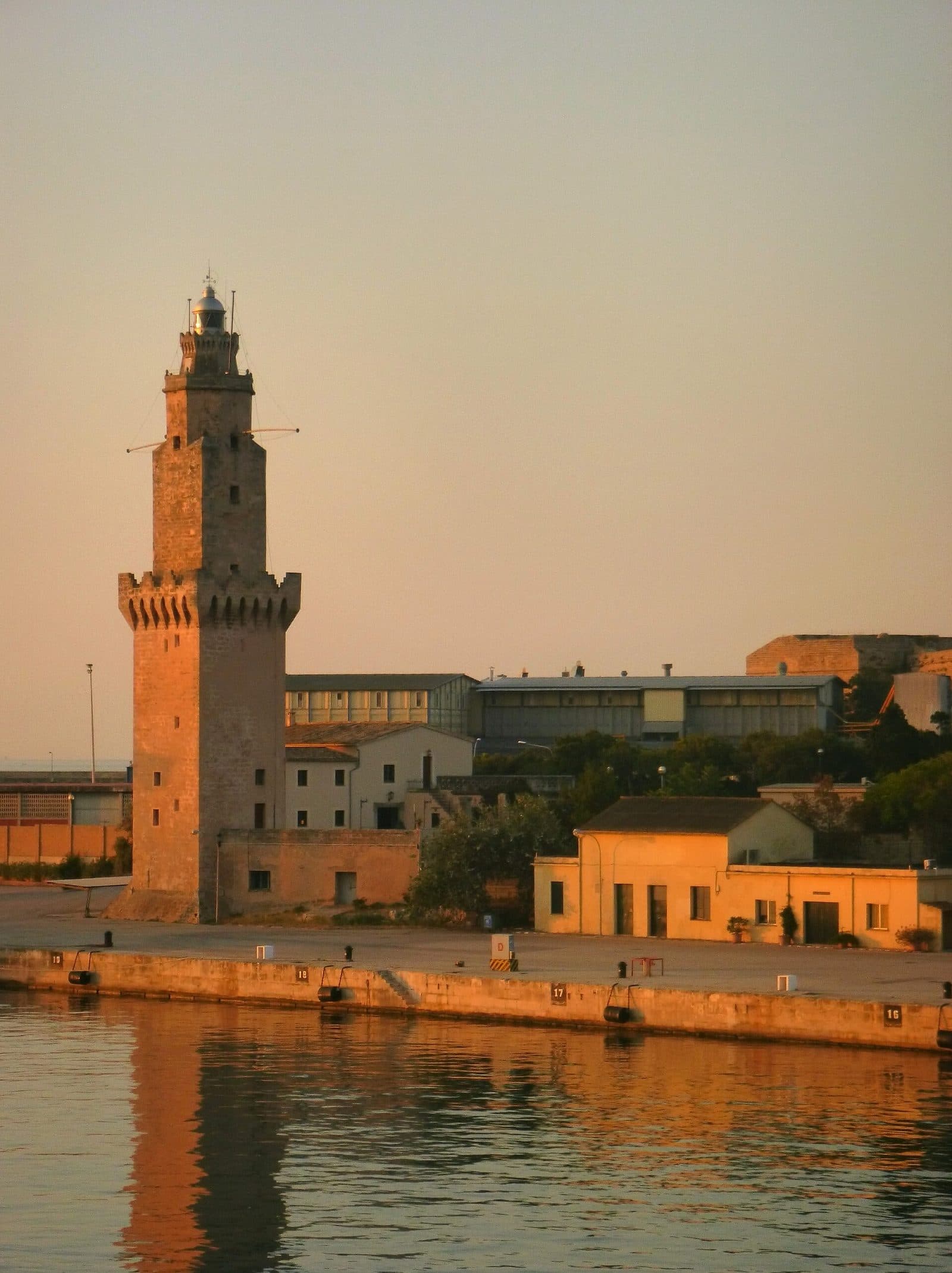

The Museu Històric Militar takes visitors not into a neutral exhibition hall, but directly inside a fortress whose walls are themselves its most important exhibit. The museum occupies the Castell de Sant Carles on Palma’s western harborfront, near the Dic de l’Oest. From the bastions, views extend across the bay, the harbor, and the maritime approach that the building was once intended to protect.
Sant Carles is therefore also worth seeing for visitors with only a passing interest in weapons. The collection presents military history through uniforms, maps, models, documents, edged weapons, and firearms; outside, artillery pieces stand where coastal defense was once anything but an abstract idea. The contrast between the old fortifications and the modern harbor makes the site’s original purpose unusually easy to understand.
Visitors interested in history will find plenty to explore in the themed rooms. Large guns and models provide families with accessible focal points, while architecture enthusiasts can trace the development from an early defensive tower to a bastioned fortress. At the same time, Sant Carles is one of those places in Palma where the museum, the building, and the view cannot be separated from one another.
History and significance
It began with a request from merchants: through the Gran i General Consell, they asked for better protection for Porto Pi, then Palma’s natural harbor and a vital port of call for merchant ships. King Philipp III. subsequently ordered the construction of a defensive tower. The fortification was intended to monitor the stretch of sea between Palma and Palma Nova and protect it from pirates and North African corsairs operating in the Mediterranean.
The first tower
The original structure was built between 1610 and 1612 on the site of the old Porto Pi lighthouse. Its basic plan was square, with a bastion element at each corner. Sandstone was used, and the marks of the stonemasons who worked on the building can still be seen on numerous blocks. The entrance was elevated and reached by a masonry staircase and drawbridge. This arrangement alone shows that the tower was intended not as a prestigious building but as a controllable military base.
The financing also reveals how important protecting the harbor was to several interest groups. Construction cost 12,000 pounds. The University of the Kingdom of Mallorca and the Crown each contributed 5,000 pounds, while the remaining 2,000 pounds came from the Colegio de la Mercadería. Some historians associate the name Sant Carles, or San Carlos, with the Viceroy of Mallorca at the time, Carlos Coloma.
The expansion of 1662
Only a few decades later, the first tower no longer provided enough space for the required garrison and armaments. During the reign of Philipp IV., a second major construction phase began in 1662 under the direction of military engineer Vicente Mut. A substantially larger fortification with a trapezoidal plan and four massive bastions was built around the older core.
This expansion continues to define the unmistakable silhouette of the Castell de Sant Carles today. The fortress can therefore be read like a three-dimensional plan during a tour: the older core was preserved but became part of a more comprehensive system for controlling the harbor entrance.
Coastal battery and new roles
The third and final major transformation followed in the 19th century. A coastal battery with four Ordóñez guns was built outside the older fortress. The focus thus shifted from a compact early modern fortification to heavy artillery capable of reaching farther across the sea and harbor.
In the 20th century, Sant Carles served several purposes: among other uses, the complex functioned as a prison for officers and as a saluting battery for warships, and it is now used as a military museum. Since 1997, the Consorcio Castillo de San Carlos has jointly managed the museum and fortress; its members include the Spanish Ministry of Defense, the Government of the Balearic Islands, the Island Council of Mallorca, and the City of Palma. An active coastal position thus became a place that preserves the military history of the Balearic Islands while also explaining its own architecture.
What to see
The strongest impression comes not from any single display case, but from moving between the exhibition rooms, courtyard, walls, and outdoor grounds. Weapons and models are not displayed in isolation inside a modern museum building; they are housed within the very defensive complex that was altered over the centuries to accommodate the garrison, supplies, and artillery of Sant Carles.
Fortress, bastions, and courtyard
Paths from the courtyard lead into the different museum rooms. The massive walls, the older tower core, and the four large bastions make the building’s development directly visible. Visitors who follow the layout carefully can see two different concepts of defense interlocking here: first the compact tower of the early 17th century, then the expansive trapezoidal fortress designed by Vicente Mut.
Stonemasons’ marks survive on many of the sandstone blocks. These inconspicuous traces deserve a closer look because they reveal the manual labor behind the fortress’s military geometry. The originally elevated entrance to the first tower, reached by stairs and a drawbridge, is another detail that demonstrates how the original structure was secured.
Llorente Collection
A central part of the museum is the Colección Llorente. It comprises 611 short and long firearms and edged weapons from Europe, Africa, Asia, and Oceania. The collection was donated by Lieutenant Colonel Antonio Llorente Alberti and has belonged to the Sant Carles consortium since 2004. Its broad geographic scope takes it well beyond a history of Mallorcan weaponry alone.
Several pieces stand out in particular: a sword attributed to Alfonso XIII., a Winchester rifle model 1866 manufactured in 1873, and a Japanese rifle from the 18th century. The most curious object is easy to overlook: a book with a concealed compartment for a handgun. This item in particular shows that the exhibition documents not only technological development but also concealment, prestige, and private weapon ownership.
The French prisoners of Cabrera
A separate room is devoted to the war against the French occupation from 1808 to 1814. Among the unusual exhibits is a model of the Llotja de Palma from the late 19th century. At the time, the Llotja de Palma was used as a workshop and factory for artillery weapons—a function that is almost impossible to imagine when viewing the building today.
The model creates a connection between military history and familiar urban architecture. It tells not only of campaigns and imprisonment, but also of how civilian buildings became part of military production and supply systems. Connections such as these make the monographic rooms more rewarding than a simple sequence of weapon types.
Weapons, uniforms, and models
Other exhibition areas explore the military history of Mallorca and the Balearic Islands through cannons, firearms, blades, daggers, uniforms, flags, maps, photographs, and dioramas. The models are especially helpful because they make buildings, coastal positions, and historical situations understandable in spatial terms. The permanent exhibition is supplemented by temporary displays.
The range extends from older edged weapons to equipment and documents from more recent eras. Moroccan muskets and Asian and African blades also illustrate that the Balearic Islands can never be viewed in isolation. Their location in the western Mediterranean closely connected trade, fleet movements, piracy, and military exchange.
Artillery and views
Historical guns and other fortification elements are displayed outdoors. Here, the collection regains its geographical context: beyond the walls lie the Bay of Palma, Porto Pi, and the modern harbor with its ferry and cruise facilities. What is explained inside about coastal defense can be understood outside with a single look at the harbor entrance.
The ramparts, terraces, and battlements offer different perspectives over the harbor and sea. The view is not merely an enjoyable extra; it explains why this particular site was fortified and why Sant Carles was expanded once again with a heavy coastal battery in the 19th century. The transformation of the harbor becomes especially clear between historical cannons and modern ships.
Visiting the museum
The official route begins with the Llorente Collection and then continues through the themed galleries. This sequence makes sense because it first provides a concentrated overview of weapons from different parts of the world before exploring individual chapters in the history of the Balearic Islands and Spain. It is worth returning repeatedly to the courtyard and outdoor areas along the way, as the fortress explains much of what is shown in the display cases.
Touring the galleries
Visitors who study every object label can spend a long time exploring the collections. For a shorter visit, clear priorities can be set: the Llorente Collection, the room about the French prisoners of Cabrera, the models, and finally the outdoor artillery. A rigid minimum duration would not be very helpful, as there is a wide range between an architectural tour and an in-depth museum visit. It is best to allow a generous amount of time so that the view is not noticed only on the way out.
The presentation benefits from the variety of objects. Large guns and dioramas are immediately accessible, while documents, maps, and smaller weapons require more time and attention. Visitors who come mainly for the fortress should still see at least some of the monographic rooms. Conversely, the visit remains incomplete if the courtyard, bastions, and coastal battery are skipped after viewing the display cases.
Admission and current opening hours
Admission to the Museu Històric Militar is free. Current opening hours should be checked before traveling, as they may change and the fortress is also used for temporary exhibitions or cultural events. Checking the latest information is particularly advisable if the museum visit is intended to be the main focus of the day’s itinerary.
No reliable general statement can be made about the busiest or quietest time of day. The atmosphere may change because of events and activity at the nearby cruise port. Visitors who want to explore the rooms without distraction should avoid announced events where possible. It is also advisable to allow sufficient daylight for the outdoor areas, as the harbor, bastions, and coastline form an essential part of the experience.
A break with harbor views
The grounds include a café and restaurant area with a terrace overlooking the sea. It makes a good final stop after tracing the function of the fortress through the exhibition rooms and the outdoor artillery. After a detailed tour of the monographic galleries in particular, the terrace provides a peaceful transition back to present-day Palma.
Getting there and parking
Sant Carles is not in the historic old town but on Palma’s western harborfront near the Dic de l’Oest. The approach therefore follows the harbor area toward Porto Pi and the western breakwater. The route to the historic fortress branches off between the shopping center, ferry facilities, and cruise port; on the final stretch, follow signs for the Castell or Museu de Sant Carles.
From Palma Airport
From Palma Airport, the recorded route follows the Ma-20. The distance to Na Taconera is 21 road kilometers, and the journey takes around 25 minutes. The Ma-20 bypasses the center and leads to the western side of Palma.
From central Palma
From central Palma, the recorded route follows the Ma-1. The distance to Na Taconera is 7 road kilometers, and the journey takes around 21 minutes. Although Sant Carles does not appear far from the center, harbor traffic should be considered when planning the trip. The road network around Porto Pi serves not only city traffic but also ferries, cruise ships, and the facilities of the western harbor.
Parking and buses
A free parking lot is located directly on the museum grounds. This is particularly convenient because the fortress lies away from the classic old-town routes and the final stretch passes through the harbor area. For visitors arriving by public transport, the stops 23-Dic de l’Oest – Museu Sant Carles and 17-Museu Sant Carles are closest to the destination. The stops 25-rotonda de Portopí – aparcament dissuasiu and 16-rotonda de Portopí – aparcament dissuasiu provide additional reference points.
Bus lines to Museu Històric Militar at a glance
| Line | Route | Departures/day | First | Last |
|---|---|---|---|---|
| 108 | Son Caliu - Palma | 21 | 00:10 | 22:55 |
| 1 | Portopí - Sindicat | 6 | 07:01 | 08:37 |
| 30 | Marivent-Palau de Congressos | 6 | 07:55 | 07:55 |
| E46 | Llançadora Bonanova | 6 | 06:30 | 06:55 |
| 4 | Ses Illetes - Pl. Columnes | 4 | 09:44 | 11:44 |
| N1 | Portopí - Porta des Camp | 4 | 00:30 | 01:45 |
| 20 | Portopí - Son Espases | 2 | 07:03 | 07:03 |
From the official GTFS feeds (TIB/SFM), no real-time data. The figures cover all stops in the town; weekend and holiday services differ — check with the operator before travelling.
Getting there by bus
23-Dic de l'Oest - Museu Sant Carles · 0.2 km as the crow flies
- 1Portopí - Sindicat · 08:00–08:00 · Daily
17-Museu Sant Carles · 0.3 km as the crow flies
- 1Portopí - Sindicat · 08:00–08:00 · Daily
25-rotonda de Portopí - aparcament dissuasiu · 0.5 km as the crow flies
- 1Portopí - Sindicat · 08:00–08:00 · Daily
16-rotonda de Portopí - aparcament dissuasiu · 0.5 km as the crow flies
- 1Portopí - Sindicat · 08:00–08:00 · Daily
15-Portopí Estacions Marítimes 1 2 3 i 4 · 0.6 km as the crow flies
- 1Portopí - Sindicat · 08:00–08:00 · Daily
- 30Marivent-Palau de Congressos · 08:00–08:00 · Daily
- N1Portopí - Porta des Camp · 08:00–08:00 · Daily
65-Àrea d'intercanvi Portopí · 0.7 km as the crow flies
- 4Ses Illetes - Pl. Columnes · 08:00–08:00 · Daily
- 20Portopí - Son Espases · 06:06–22:40 · Daily
- E46Llançadora Bonanova
1344-Àrea d'intercanvi Portopí · 0.7 km as the crow flies
- E46Llançadora Bonanova
1127-Àrea d'intercanvi Portopí · 0.7 km as the crow flies
- 20Portopí - Son Espases · 06:06–22:40 · Daily
94-Àrea d'intercanvi Portopí · 0.7 km as the crow flies
- 4Ses Illetes - Pl. Columnes · 08:00–08:00 · Daily
- N1Portopí - Porta des Camp · 08:00–08:00 · Daily
1988-Marivent-aparcament dissuasiu · 0.8 km as the crow flies
- 30Marivent-Palau de Congressos · 08:00–08:00 · Daily
26-Port - Estació Marítima · 0.8 km as the crow flies
- 1Portopí - Sindicat · 08:00–08:00 · Daily
Porto Pi 1 (40008) · 0.9 km as the crow flies
- 108Son Caliu - Palma · Daily
Timetable data: official GTFS feeds (TIB/EMT), no real-time — check with the operator before travelling.
Nearby attractions
Around Sant Carles, Palma reveals a side that has little in common with the narrow streets of the old town. Porto Pi and the Dic de l’Oest are characterized by harbor basins, access roads, ferry traffic, and cruise facilities. In this technical environment, the fortress does not seem out of place; instead, it recalls that the harbor was a strategic and economic key location long before modern terminals existed.
Porto Pi and the western harbor
Porto Pi was Palma’s natural harbor in the 17th century. The first tower of Sant Carles was built precisely because merchants demanded protection for their ships and the maritime approach. Today, modern harbor facilities and the Porto Pi shopping center occupy the same area. The transformation from a vulnerable anchorage into a transport hub is easier to understand from the fortress grounds than on a conventional city tour.
Visitors arriving from the cruise port will find that the subject of Sant Carles directly reflects its location. Ships entering the harbor today pass a coastline that was once controlled by bastions and later by heavy artillery. The view from the walls connects these two periods without requiring a lengthy explanation.
Palma and the bay
A visit can easily be combined with other attractions in Palma, but it should not be treated as a quick detour between two tightly scheduled old-town appointments. Traveling between the center and the western harborfront takes time despite the modest road distance. Visitors continuing into the city center afterward can see the Llotja, a model of which is displayed in the museum room devoted to the French prisoners of Cabrera. Its former use as a workshop and factory for artillery weapons gives the present-day building a surprising additional significance.
A visit to the Castell de Bellver also fits thematically into a day devoted to Palma’s fortifications, although the two castles have very different designs, construction periods, and present-day collections. Sant Carles primarily explains harbor and coastal defense, while Bellver represents another phase of Mallorcan history. A generous day’s itinerary should be allowed for both together.
The place it belongs to
Na Taconera in the place guidePractical visitor information
Sant Carles requires more walking than a museum with level, adjoining galleries. Stairs, historic entrances, courtyards, bastions, and outdoor exhibitions are all part of the route. Comfortable, sturdy shoes are therefore advisable, especially for visitors planning to see not only the galleries but also the viewpoints and outdoor guns.
Indoor and outdoor areas
The exhibition is spread across historic rooms and open-air areas. Planning should therefore not focus solely on touring the galleries. Sun protection and weather-appropriate clothing are useful for the exposed parts of the fortress; at the harbor, wind can make conditions on the walls and terrace feel very different from those in the city.
Visitors interested in photography will find the strongest spatial compositions where the bastions, cannons, and harbor meet. The stonemasons’ marks in the sandstone and the book with a concealed weapons compartment in the Llorente Collection are also rewarding subjects for close-up shots. These are two details that can easily be overlooked beside the large guns.
Visiting with children
Large cannons, uniforms, dioramas, and building models offer children more accessible points of entry than long chronological panels. The models in particular help them understand fortresses and historical situations as physical spaces. However, the museum remains a military history collection: weapons, war, and imprisonment are central themes, so adults should explain the content according to the child’s age.
The outdoor area adds variety to the tour but is not a conventional playground. Care is required on historic walls and stairs and around heavy exhibits. Families may therefore prefer to select a few rooms with clear visual highlights rather than trying to read every display case in full.
What to expect
Sant Carles is neither an interactive technology center nor a romantically furnished aristocratic residence. Its focus is military history, weapons, documents, uniforms, models, and the development of a genuine coastal fortress. Visitors looking only for a viewing terrace will underestimate the site’s historical depth; those expecting only display cases will miss the crucial connection between the collection and the harbor entrance.
This connection is precisely what makes the visit so rewarding. The early tower, the expansion of 1662, the later coastal battery, and the present-day museum galleries show in sequence how Palma sought to protect its western seaward side. On the walls, the story ends not with an exhibit but with the view across the harbor that once made the fortress necessary.
Local insider tips
Look for the concealed book
In the Llorente Collection, a book with a concealed compartment for a handgun stands among more conspicuous weapons. This curious object is easily overlooked beside the large rifles and blades.
Look for stonemasons’ marks
Marks left by the original stonemasons survive on numerous sandstone blocks. They reveal the construction work behind the fortress’s strict geometry and are a rewarding detail for close-up photographs.
Picture the harbor approach
The views from the bastions and outdoor grounds make more sense when the harbor approach is seen as a historic field of defense. Sant Carles was built specifically to protect Porto Pi and the coast.
See the Llotja twice
The room about the French prisoners of Cabrera contains a model of the Llotja, which was temporarily used as a workshop and factory for artillery weapons. Seeing the original in Palma afterward gives the model additional meaning.
Finish on the terrace
Do not end the tour immediately at the exit: the café and restaurant area has a terrace overlooking the sea. After visiting the galleries, it is a peaceful place to appreciate the fortress’s position on the bay once more.