
Na Gatera near Sa Coma: Discover Prehistoric Tower Remains
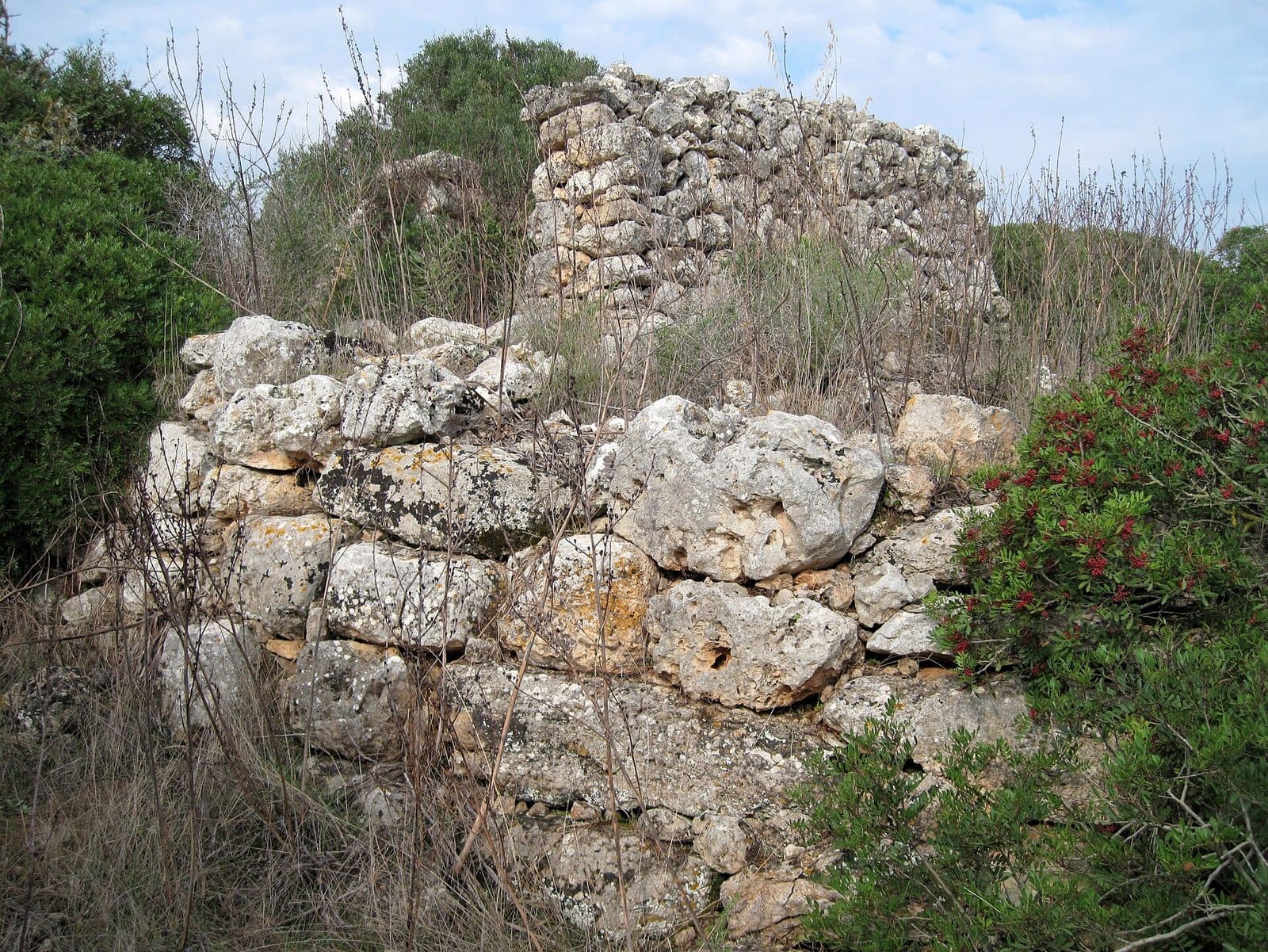

Na Gatera is an archaeological site near Sa Coma and is described as the remains of a prehistoric tower, or talaiot. Here you will find a relatively quiet testament to Mallorca's early settlement, originating from a much older world than the hotels, promenades, and residential streets of Sa Coma.
The site is especially suitable for travelers who enjoy viewing archaeological traces directly in the landscape. The key feature is the encounter with the remains of a prehistoric tower. Na Gatera can easily be included as a specific cultural stop during a day on the east coast. Those who also visit the Talaiot Na Pol or the archaeological remains of S’Illot will gain a broader picture of the prehistoric traces around Sa Coma without confusing the individual sites.
History and Significance
Long before Sa Coma emerged as a holiday resort, stone structures built by prehistoric communities stood in this area. Na Gatera has survived as the remains of such a tower and is explicitly identified as a talaiot. The site therefore belongs to Mallorca's prehistoric past.
The Prehistoric Tower
Its description as the remains of a tower is important for understanding the site: Na Gatera is described as the remains of a prehistoric tower, or talaiot, near Sa Coma. What exactly took place at this location and how the structure was used in its original setting cannot simply be read from what is visible today. Na Gatera should therefore not be given a freely reconstructed history. Its value lies in its classification as the remains of a prehistoric tower near Sa Coma.
Na Gatera and Na Pol
Travel guides to Sa Coma frequently mention the Talaiot Na Pol. However, Na Gatera is a separate archaeological site and must not be equated with this better-known location. The two names refer to different remains. This distinction is particularly useful for visitors because search results and brief place descriptions can easily confuse the prehistoric sites around Sa Coma.
The comparison also shows that the area's prehistory does not depend on a single monument. Na Gatera is one of several archaeological traces in eastern Mallorca. While the modern name Sa Coma is associated with the development of the holiday resort in more recent times, stone structures such as these show that human history in the surrounding area reaches far beyond the modern townscape.
What to See
Na Gatera is described as the remains of a prehistoric tower, or talaiot. The focus is therefore an archaeological monument near Sa Coma.
The Tower Remains
Na Gatera is documented as the remains of a prehistoric tower near Sa Coma. This classification defines the archaeological character of the site: the ruin can be understood as the archaeological remains of a talaiot and thus as evidence of Mallorca's prehistoric past.
The Talaiot
Na Gatera is documented as a talaiot and as the remains of a prehistoric tower. This designation classifies the site as an archaeological monument. For anyone interested in ruins, this is its essential appeal, as the site recalls the prehistoric past of the area around Sa Coma.
The Site in Modern Sa Coma
Na Gatera appears particularly striking against the backdrop of the modern coastal resort. Sa Coma was shaped as a holiday destination, but the remains of the talaiot belong to a much older cultural landscape. This contrast is an essential part of the visitor experience. What can be seen is the archaeological remains of a prehistoric tower near Sa Coma.
Visiting Na Gatera
Na Gatera is an archaeological site near Sa Coma. Understanding the location depends above all on its classification as the remains of a prehistoric tower, or talaiot. The place derives its appeal from its archaeological significance. It is therefore useful to remember the description “remains of a prehistoric tower” before visiting. This makes it easier to understand on site how Na Gatera is historically classified.
When planning the day, the site can be combined as a cultural stop with other destinations around Sa Coma. The location reference to Sa Coma is crucial. For a comparative visit, it is advisable not to equate Na Gatera with Na Pol but to research both names separately. This prevents visitors from accidentally ending up at the wrong talaiot. At the same time, a brief stop becomes a small archaeological exploration of the area around Sa Coma.
Getting There and Parking
From Palma Airport, the route follows the Ma-15 to Sa Coma. The road distance to the town is 68 kilometers, and the journey takes around 60 minutes. From the center of Palma, the route also follows the Ma-15. Allow for 70 kilometers by road to Sa Coma, with a journey time of around 67 minutes.
These figures expressly apply to the journey as far as Sa Coma. Several prehistoric sites are located in and around Sa Coma, including the separate Talaiot Na Pol. Na Gatera and Na Pol are different archaeological sites. Visitors arriving by car should follow local parking regulations and signs in Sa Coma.
It is also possible to travel by public transport to the Sa Coma area. Nearby stops are listed as Mare Selva 1 (51030), Mare Selva 2 (51031), Palmeres 1 (51006), and Palmeres 2 (51005). Make sure to use the full name Na Gatera so that the site is not confused with another talaiot in the surrounding area.
The road connection via the Ma-15 makes Na Gatera particularly appealing to travelers who are already spending a day on the east coast. The journey from Palma is comparatively long for a trip solely to see the ruin; combined with Sa Coma, S’Illot, or Punta de n’Amer, however, it becomes a well-structured excursion.
Bus lines to Na Gatera at a glance
| Line | Route | Departures/day | First | Last |
|---|---|---|---|---|
| A42 | Cala Bona - Aeroport | 252 | 00:13 | 23:18 |
| 401 | Cala Millor - Palma | 237 | 00:09 | 23:46 |
| 424 | Cala Rajada - Portocristo | 129 | 07:55 | 23:43 |
| 425 | Cala Bona - Portocristo | 123 | 07:53 | 22:18 |
From the official GTFS feeds (TIB/SFM), no real-time data. The figures cover all stops in the town; weekend and holiday services differ — check with the operator before travelling.
Getting there by bus
Mare Selva 1 (51030) · 1.7 km as the crow flies
- 401Cala Millor - Palma · Daily
- 424Cala Rajada - Portocristo · Daily
- 425Cala Bona - Portocristo · Daily
- A42Cala Bona - Aeroport · Daily
Mare Selva 2 (51031) · 1.7 km as the crow flies
- 401Cala Millor - Palma · Daily
- 424Cala Rajada - Portocristo · Daily
- 425Cala Bona - Portocristo · Daily
- A42Cala Bona - Aeroport · Daily
Palmeres 2 (51005) · 1.8 km as the crow flies
- 401Cala Millor - Palma · Daily
- 424Cala Rajada - Portocristo · Daily
- 425Cala Bona - Portocristo · Daily
- A42Cala Bona - Aeroport · Daily
Palmeres 1 (51006) · 1.9 km as the crow flies
- 401Cala Millor - Palma · Daily
- 424Cala Rajada - Portocristo · Daily
- 425Cala Bona - Portocristo · Daily
- A42Cala Bona - Aeroport · Daily
Savines 1 (51002) · 2.0 km as the crow flies
- 401Cala Millor - Palma · Daily
- 424Cala Rajada - Portocristo · Daily
- 425Cala Bona - Portocristo · Daily
- A42Cala Bona - Aeroport · Daily
Savines 2 (51001) · 2.0 km as the crow flies
- 401Cala Millor - Palma · Daily
- 424Cala Rajada - Portocristo · Daily
- 425Cala Bona - Portocristo · Daily
- A42Cala Bona - Aeroport · Daily
Timetable data: official GTFS feeds (TIB/EMT), no real-time — check with the operator before travelling.
Nearby Attractions
Sa Coma is now a holiday resort on Mallorca's east coast and belongs to the municipality of Sant Llorenç des Cardassar. The modern townscape stands in clear contrast to Na Gatera. This is precisely why the archaeological stop can easily be combined with the coast and landscape without turning the outing into a day devoted entirely to museums.
Sa Coma and the Beach
The sandy beach and the promenade behind it form the lively heart of the resort. After quietly viewing the prehistoric stones, moving to the coast brings visitors into a completely different present. The promenade continues south toward S’Illot and is therefore ideal for linking a brief cultural stop with a walk by the sea.
Punta de n’Amer
The protected Punta de n’Amer peninsula lies north of Sa Coma, or between Sa Coma and Cala Millor. When the weather is not too hot, it is ideal for a hike or bicycle ride. It combines particularly well with Na Gatera because the day then reveals two different sides of the surrounding area: a focused look at archaeological remains followed by a longer journey through the coastal landscape.
Talaiot Na Pol and S’Illot
Those visiting specifically for the area's prehistory can combine Na Gatera with the Talaiot Na Pol and the archaeological traces of S’Illot. Na Pol lies in the northern part of Sa Coma and should be treated as a separate site. S’Illot adjoins Sa Coma to the south. Such a combination helps visitors see the prehistoric remains not as isolated curiosities but as several separate monuments within the same coastal region.
Cala Millor
Cala Millor lies north of Sa Coma and forms part of the larger holiday area on the east coast. The resort is suitable as another starting or finishing point for an excursion without reducing Na Gatera to a mere secondary stop. A clear sequence remains advisable: first allow time for the archaeological remains, then visit the beach, promenade, or coastal walking routes. This ensures that the small ruin is not overshadowed by the area's better-known leisure attractions.