
Puerta de Toledo (reproduction) near Son Sardina
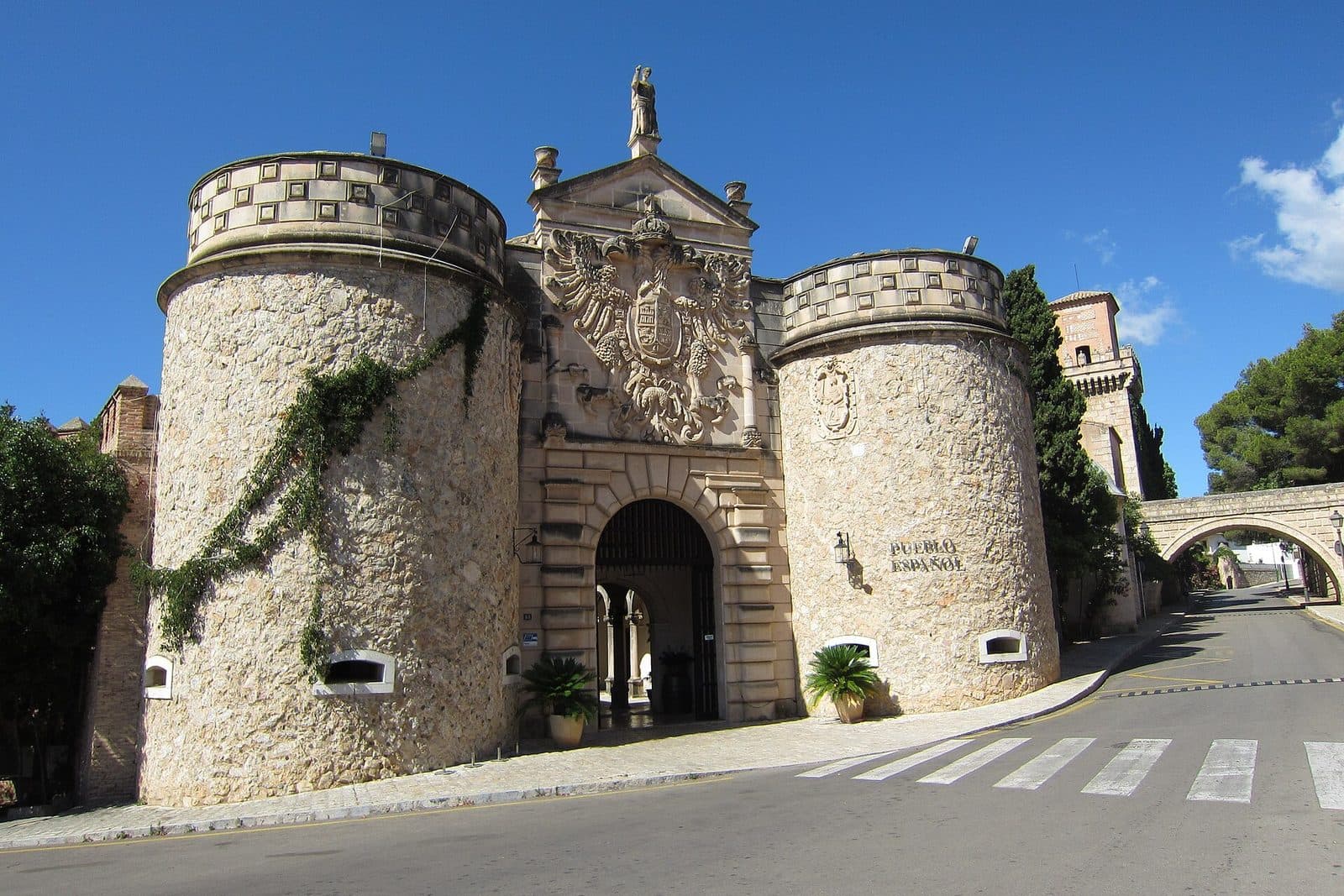

The Puerta de Toledo (reproduction) near Son Sardina is one of those small historical sights in Mallorca whose name initially raises more questions than it answers. The English addition in parentheses is crucial: this is not an original city gate from Toledo, Madrid, or Ciudad Real, but a reproduction in Mallorca.
It is precisely this clear distinction that makes the site interesting. It is not a setting tied to the history of a gate on the Spanish mainland, but a Mallorcan display piece that presents historical architecture in reproduced form. The visit therefore primarily appeals to travelers who enjoy unusual architectural references and seek noteworthy individual structures beyond Palma’s major monuments.
The Puerta is difficult to recommend as the sole reason for a long excursion across the island. It makes more sense as a planned stop near Son Sardina or as an addition to a day in the Palma area. Those who arrive with this expectation can focus on what actually stands here: a reproduction whose value lies not in original building fabric, but in the visible adaptation of a historical gate motif.
The identity of the location is important. This attraction is in Mallorca. Gates with the same name on the Spanish mainland are separate structures, each with a different history, architecture, and function; their dates and historical events do not belong to the Puerta de Toledo (reproduction) near Son Sardina.
History and significance
The word “reproduction” in the name already provides the key to understanding the Puerta. It is identified as a replica and therefore should not be interpreted as a surviving historical original. Its classification as a historical sight refers to the architectural motif and cultural reference it draws upon, not to any documented medieval or early modern function as a gate at this location.
This is particularly important because the name Puerta de Toledo occurs several times in Spain. Among other things, it refers to monuments outside Mallorca with extensively documented construction histories. Such information cannot be applied to the reproduction near Son Sardina. Neither the rulers, architects, and construction dates of other gates nor their former roles as city entrances, customs posts, or triumphal arches automatically explain the Mallorcan structure.
Instead, the reproduction represents another way of engaging with history: a historical architectural idea is removed from its original urban context and made tangible in a new location. Visitors therefore encounter not the material remains of an old fortification in Son Sardina, but a built reminder of a different architectural context. This distinction also prevents the most common misinterpretation of the site.
For a visit, this means that its appeal lies less in searching for traces of a siege, a medieval transport route, or a former city wall. The more interesting question is how a historically styled gate works as a reproduction when it no longer performs its original function. The Puerta thus becomes an example of how architecture can convey cultural images through names, forms, and repetition.
What to see
Begin by viewing the structure as a whole. With a reproduction, the overall effect matters more than searching for supposedly original components. Standing back helps reveal the gate’s form and its impact within the present-day setting. Only then is it worth looking more closely at the surfaces, transitions, and the way the historical model has been translated into architecture.
The gate architecture
The central feature is the motif of a representative gateway. However, the Puerta should not be viewed as a remnant of Son Sardina’s fortifications. Its meaning arises specifically from its status as a reproduction: a form that elsewhere may be associated with access, separation, or representation appears in Mallorca as a self-contained historicizing structure.
For photographs, two different perspectives are therefore worthwhile. A wide shot shows the Puerta in its Mallorcan setting and prevents the image from appearing to document a mainland monument. Closer shots can then capture how the reproduction creates its historical appearance. Without including the surroundings, however, an essential part of its present-day significance is lost.
Original and reproduction
The most revealing detail is not an individual ornament, but the status of the entire structure. This is not a reconstruction of an original gate through which traffic once entered a fortified city. Instead, it is a replica referring to a historical form. This distinction also changes how weathering and materials should be interpreted: they are not automatically evidence from the period evoked by the gate motif.
Visitors primarily interested in historical architecture for its documented building phases and original use should adjust their expectations accordingly. Those who enjoy architectural copies, historicizing settings, and the migration of familiar forms between different places will find a more rewarding approach here. The Puerta then tells less about the history of Son Sardina than about the effect of a reused historical image.
Visiting information
Before setting out, it is advisable to check the exact map location of the Puerta de Toledo (reproduction). The general location is given as Son Sardina, and the calculated travel information also leads only as far as that town. For the final section, use navigation that explicitly identifies the reproduction in Mallorca as the destination rather than selecting one of the gates with the same name on the mainland.
The visit works best as a deliberate architectural stop. First, view the Puerta from a short distance within its current surroundings. You can then move closer and assess how convincingly the historical form works in this new setting. This order helps prevent individual design elements from being prematurely interpreted as original historical fabric.
No fixed opening hours or confirmed admission fee have been recorded. As access conditions may change, current arrangements should be checked immediately before visiting. This is especially important if you are planning a dedicated visit rather than simply viewing the Puerta while passing by. The name alone does not indicate either unrestricted access at all times or regular museum operations.
There is also no reliable guidance regarding visitor numbers or the best time of day. Rather than trying to schedule supposedly quiet hours, it makes more sense to combine the stop flexibly with time in Son Sardina or Palma. This ensures that the journey remains worthwhile even if access on arrival differs from expectations. As part of a broader route, the reproduction can be explored much more comfortably than under the pressure of a tightly scheduled standalone appointment.
Getting there and parking
From Palma de Mallorca Airport, the calculated route follows the Ma-20 to Son Sardina. The town is 17 road kilometers away, and the drive takes around 18 minutes. These figures explicitly end in Son Sardina, not at a documented parking space directly in front of the Puerta. For the final streets leading to the structure, check the attraction’s exact destination point in your navigation system.
From central Palma, the calculated route to Son Sardina covers 4 road kilometers and takes around 13 minutes. The available travel data does not specify a particular road number for this short connection. The precise route may therefore vary depending on your starting point in the center. Here too, the distance and driving time apply only as far as Son Sardina, while the final section to the reproduction depends on the selected map point.
Do not assume that there is a confirmed parking area reserved exclusively for the attraction. Those arriving by car should allow extra time to follow local signs and find a permitted parking space near the destination. With a small historical structure in particular, parking directly beside the site cannot be taken for granted.
The page displays recorded bus stops in a separate data module. Before using public transportation, however, check which of the listed services actually reaches your selected map point for the Puerta and how far you will need to walk. When searching, use the attraction’s complete name, including the reference to the reproduction and Mallorca, to prevent the route planner from accidentally switching to Madrid, Toledo, or Ciudad Real.
Bus lines to Puerta de Toledo (reproduction) at a glance
| Line | Route | Departures/day | First | Last |
|---|---|---|---|---|
| 104 | Magaluf - Palma | 302 | 00:09 | 23:52 |
| 103 | Santa Ponça - Palma | 151 | 00:12 | 23:55 |
| 102 | Peguera - Palma | 131 | 06:20 | 23:52 |
| 106 | El Toro - Palma | 43 | 06:40 | 23:27 |
| 101 | Port d'Andratx - Palma | 33 | 06:45 | 23:10 |
| 105 | Sol de Mallorca - Palma | 29 | 06:15 | 22:12 |
| 29 | Son Espases - Pl. Progrés | 2 | 07:48 | 08:21 |
| 46 | la Bonanova - Gènova - Sindicat (dreta) | 2 | 08:36 | 08:38 |
From the official GTFS feeds (TIB/SFM), no real-time data. The figures cover all stops in the town; weekend and holiday services differ — check with the operator before travelling.
Getting there by bus
154-Andrea Doria - Picasso · 0.2 km as the crow flies
- 29Son Espases - Pl. Progrés · 08:00–08:00 · Daily
- 46la Bonanova - Gènova - Sindicat (dreta) · 08:00–08:00 · Daily
134-Andrea Doria - Picasso · 0.2 km as the crow flies
- 29Son Espases - Pl. Progrés · 08:00–08:00 · Daily
- 47Gènova - la Bonanova - Sindicat (esquerra) · 08:00–08:00 · Daily
74-Picasso - Col·legis · 0.2 km as the crow flies
- 29Son Espases - Pl. Progrés · 08:00–08:00 · Daily
982-Picasso - Col·legis · 0.2 km as the crow flies
- 29Son Espases - Pl. Progrés · 08:00–08:00 · Daily
155-Andrea Doria - Poble espanyol · 0.3 km as the crow flies
- 29Son Espases - Pl. Progrés · 08:00–08:00 · Daily
- 46la Bonanova - Gènova - Sindicat (dreta) · 08:00–08:00 · Daily
133-Andrea Doria - Poble Espanyol · 0.3 km as the crow flies
- 29Son Espases - Pl. Progrés · 08:00–08:00 · Daily
- 47Gènova - la Bonanova - Sindicat (esquerra) · 08:00–08:00 · Daily
308-Picasso - Centre d'esports · 0.3 km as the crow flies
- 29Son Espases - Pl. Progrés · 08:00–08:00 · Daily
Son Dureta 1 (40027) · 0.3 km as the crow flies
- 101Port d'Andratx - Palma · Daily
- 102Peguera - Palma · Daily
- 103Santa Ponça - Palma · Daily
- 104Magaluf - Palma · Daily
- 105Sol de Mallorca - Palma · Daily
- 106El Toro - Palma · Daily
153-Son Dureta · 0.3 km as the crow flies
- 29Son Espases - Pl. Progrés · 08:00–08:00 · Daily
- 46la Bonanova - Gènova - Sindicat (dreta) · 08:00–08:00 · Daily
1171-Fra Juníper Serra - Poble Espanyol · 0.4 km as the crow flies
- 20Portopí - Son Espases · 06:06–22:40 · Daily
135-Son Dureta · 0.4 km as the crow flies
- 29Son Espases - Pl. Progrés · 08:00–08:00 · Daily
- 47Gènova - la Bonanova - Sindicat (esquerra) · 08:00–08:00 · Daily
Son Dureta 2 (40026) · 0.4 km as the crow flies
- 101Port d'Andratx - Palma · Daily
- 102Peguera - Palma · Daily
- 103Santa Ponça - Palma · Daily
- 104Magaluf - Palma · Daily
- 105Sol de Mallorca - Palma · Daily
- 106El Toro - Palma · Daily
Timetable data: official GTFS feeds (TIB/EMT), no real-time — check with the operator before travelling.
Nearby places
Son Sardina presents a quieter side of the greater Palma area. The town is shaped more by everyday residential life and local atmosphere than by a conventional sightseeing program. At the same time, the surrounding area marks a transition between the city and the more rural-looking parts of Mallorca. This makes the Puerta particularly suitable for a route that includes not only the monumental old town but also less tourist-oriented areas around Palma.
Its proximity to the island’s capital makes combinations easy. After the architectural stop, the day can continue in Palma with its historical streets, cultural attractions, and dining options. Conversely, the Puerta works as a brief thematic contrast after spending time in the center: instead of a large, originally preserved monument, visitors encounter a single historicizing structure that raises questions precisely because of its relocation and reproduction.
Son Sardina itself should not be visited with expectations of a resort packed with attractions. Its appeal lies in the local rhythm and its position between the urban area and the island’s interior. Those already traveling through this part of the Palma region can add the Puerta to their day without a major detour. For a dedicated trip, however, combining it with other destinations in Palma or the surrounding area is recommended.
With any combination, the clear distinction from gates sharing the same name remains important. An excursion to the Puerta de Toledo (reproduction) in Mallorca is not a substitute for visiting a historical gate on the mainland. It offers a different perspective: not on the continuous history of an original structure, but on how familiar historical architecture is referenced and perceived in a new location.
Local insider tips
Search using the full name
When using navigation, always enter “Puerta de Toledo (reproduction)” together with Mallorca or Son Sardina. The shortened name can easily lead to gates with the same name on the Spanish mainland.
Include the surroundings in photos
A photograph that includes the present-day setting makes the reproduction’s distinctive character clearer than a tight crop. It also shows that this is the Mallorcan structure rather than another gate sharing the same name.
Combine it with Palma
The drive from central Palma to Son Sardina takes around 13 minutes over 4 road kilometers. This makes the Puerta a practical additional architectural stop during a day in and around Palma.