
How to book a holiday home in Mallorca safely
Booking a holiday home in Mallorca safely starts not with the star rating, but with the details behind it: who confirms the booking, exactly which property are you booking, when is each payment due – and what happens if you need to cancel? With a finca with a pool or a villa for a larger group, the deposit, additional conditions and payment dates can make a real difference. This guide shows you how to assess reviews, check the booking confirmation against payment requests and review the deposit terms in advance. You’ll also learn why “free cancellation” is not available for every finca, why there is no standard deposit amount for Fewo-direkt or other platforms, and what younger groups should look out for. At the end, you’ll have a checklist to go through before making any binding payment.

How to book a holiday home in Mallorca safely
An attractive listing is a starting point, not a substitute for checking the details. What matters is whether the description, booking confirmation and payment terms match. Follow these steps in order:

- Save the property details: Save the listing, including its location, facilities, occupancy and photos.
- Read the reviews: Look beyond the score: check how many reviews there are and whether comments about the facilities or service come up repeatedly.
- Break down the total cost: Ask for a breakdown showing which payments are due when and whether a deposit is required.
- Read the terms before paying: Check the cancellation terms, arrival and departure arrangements, and any requirements that apply to your group.
- Check the confirmation: Do the property, travel dates, amount and payment recipient match the offer?
- Keep your documents: Keep the confirmation, terms, messages and payment receipts together.
Our guide to choosing a finca in Mallorca can also help you find the right property.
Reviews: the number behind the score matters
A high rating is reassuring. It becomes more meaningful when you consider how many reviews it is based on and what they say. The following published examples show how much the evidence behind a good score can vary:
| Published example | Rating | Number of reviews |
|---|---|---|
| Villa Mar – Can Bujosa at Porta Holiday | 4.5 | 85 |
| Sa Vaquera S'Hort de Sa Begura at Porta Holiday | 4.55 | 35 |
| Ferienhaus Tanca Gran at HomeToGo | 4.8 | 10 |
| Pollença holiday home on HomeToGo | 4.8 | 48 |
Read the detailed reviews in particular: do guests describe the same features that matter most to you, such as the pool, bedrooms or location? A rating alone cannot tell you that. Reviews are also no substitute for the current booking terms or written confirmation of a feature that is especially important to you.
Fewo-direkt, Airbnb or an agent: is the booking legitimate?
Whether you search through Fewo-direkt, Airbnb or a specialist agent: The name of a platform alone tells you nothing about a particular property. Always check the individual listing, the terms and how the booking process actually works. Take the same care if you rent a holiday home directly from the provider.
So there is no blanket answer to the question, ‘Is it safe to rent a finca on Mallorca?’ A clear description, relevant reviews and transparent payment terms are more useful than a general assurance of safety. If your point of contact changes during the booking process or the payment details change, resolve the discrepancy before you pay.
A note about us: mallorca.com, which publishes this guide, also offers a directory. The providers mentioned in this article are examples, not recommendations.
Please note: Experiences with a different finca – even one offered by the same provider – do not tell you what facilities your chosen property has or what terms apply to your booking.
Deposit: clarify the amount, payment and refund
There is no general answer to ‘How much is the deposit on Fewo-direkt?’ that will tell you what applies to your booking. What matters is what is stated and confirmed for the holiday home you have chosen before you pay. Check whether the deposit is separate from the rental price, when it is due and who receives it.
A published sample contract from Mallorca Holiday Letting shows how specific these details can be: it states the deposit amount in the booking confirmation. Under those terms, the deposit is paid in cash at check-in to the owner or their representative and refunded at the end of the booking if the property is returned in accordance with the contract and without damage. This is an example from this provider, not a general rule for Mallorca.
| Question to ask before booking | What you should have in writing |
|---|---|
| How much is the deposit? | The amount for your specific property in the offer or confirmation |
| When is it due? | The agreed payment date |
| Who receives it? | The named recipient and the payment method |
| When is it refunded? | The refund terms and any deductions |
On arrival, it makes sense to inspect the property together and record anything you notice. This makes it easier to establish later what any complaint relates to.
Deposits and balance payments: how to read the examples
There is no single procedure for deposits. One provider says a deposit of 10 to 30 % immediately after booking confirmation is usual; it describes the balance as often payable four weeks before arrival or at the property. By contrast, Mallorca Holiday Letting specifies a deposit of around 10 % of the total price in its own terms.
| Published example | Deposit | Other stated condition |
|---|---|---|
| Mallorca Holiday Letting | approx. 10 % of the total price | Proof of bank transfer, according to the terms and conditions, within 5 days of the written booking declaration |
| finca-privat.de | 10–30 % described as the usual range | According to the provider, the balance is often payable four weeks before arrival or at the property |
The table is not a payment schedule for your finca. Ask for confirmation clearly stating the deposit, balance, security deposit, due dates and payee. If a later payment request differs from this, ask before transferring any money.
Can you cancel a finca booking for free?
Some listings advertise free cancellation. Fincallorca, for example, offers free cancellation up to 30 days before arrival. That does not mean every finca on Mallorca – or every offer from the same provider – can be cancelled free of charge at any time.
Before booking, check the deadline for free cancellation, which booking it applies to and what happens to any money already paid after that deadline. Save the terms shown to you when you book. A brief advertising claim is no substitute for clear terms for your stay.
Note: If flexible travel plans matter to you, compare the cancellation terms alongside the total price – not only after you have chosen your accommodation.
Booking terms and group requirements: Who can stay?
The make-up of your group may also matter for a listing. For example, a villa listed on fincamallorca.de requires a refundable security deposit of €150 per person if the group’s average age is under 25 years. This example does not, however, answer the general question of how old you must be to rent a holiday home.
So read the terms for your accommodation if you are booking for a younger group. Check in advance who can make the booking, whether you need to provide details about your group and whether an additional security deposit is required. If you are travelling with a dog or have specific pool requirements, it is also worth looking at the selection criteria for holiday homes with a pool that allow dogs.
The most common holiday home booking mistakes
- Looking only at the overall rating: A rating is hard to assess without knowing how many reviews it is based on or reading guests’ comments.
- Assuming “free cancellation” applies in all cases: What matters are the terms and the timing of your booking.
- Confusing the deposit with the rental price: Keep a separate record of both amounts and the rules for paying and refunding them.
- Paying immediately after receiving a revised payment request: Check the recipient and amount against your confirmation again.
- Discussing special requests only verbally: Get written confirmation of any important features or arrangements.
- Overlooking the terms that apply to your group: Additional security deposits may depend on the specific listing.
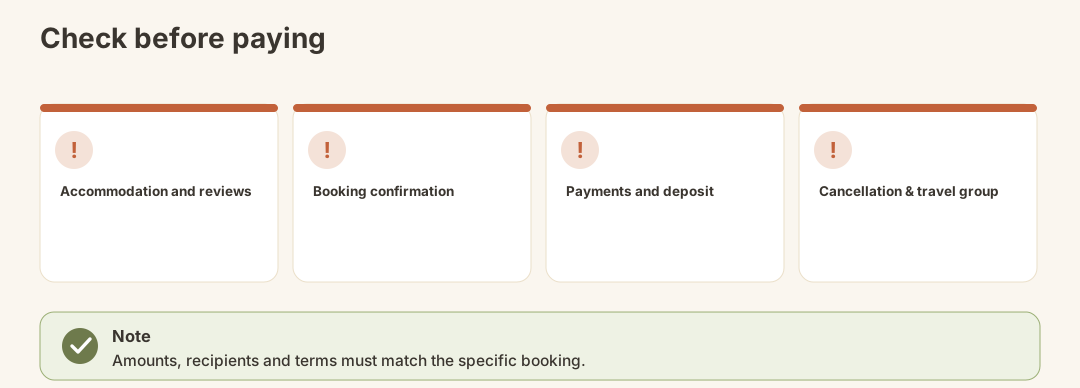
Checklist before you pay
| Item to check | Done when … |
|---|---|
| Accommodation | The description, photos, location and occupancy match what you selected |
| Reviews | You have checked the rating, the number of reviews and the comments themselves |
| Booking confirmation | The accommodation and travel dates are listed correctly |
| Payments | The total price, deposit, remaining balance and due dates are clear |
| Security deposit | The amount, recipient, payment method and return arrangements are clear |
| Cancellation | You have saved the terms that apply to your travel dates |
| Travel group | Any special requirements have been clarified |
The checklist takes less time than a later discussion about a misunderstood term. For help assessing the rental price – separately from the security deposit and payment schedule – see the guide to the cost of a finca in Mallorca.
What happens next?
After booking, keep the confirmation and terms somewhere you can access them when you arrive. Before setting off, check the agreed arrival time again and who will meet you at the house. At handover, you can compare the facilities and condition with the listing you booked and raise any issues straight away.
After you leave, keep the documents until the security deposit has been returned or any issues with it have been resolved. If a deduction is claimed, ask for a clear explanation and compare it with your notes from the handover.
Conclusion
You can book a holiday home in Mallorca more confidently if you do not rely on a platform’s name, advertising claims or a single review score. The key documents are the specific property description, your booking confirmation and the associated terms. If payments, the security deposit, cancellation and any requirements for your travel group are clear in advance, you can compare properties much more effectively – and know which questions remain unanswered.
Not legal or tax advice.