
Holiday and seasonal rental rules in Mallorca
Would you like to let your property for part of the time and use it yourself at other times? With holiday lets and seasonal lets in Mallorca, how long someone stays is not the only factor. What matters is what the property is actually used for and how it is advertised: as accommodation for holidaymakers or as a temporary home for another reason. This determines which rules you need to check before advertising and when drafting the contract.
This guide explains the differences between tourist lets and alquiler de temporada, outlines the common ETV categories and takes you through preparing an advert that meets the applicable legal requirements. You’ll also find specific examples from seasonal-let listings – not as a general rental price list, but to show how differently rental periods and offers can be described. Crucially, a heading such as ‘seasonal let’ or a contract lasting eleven months does not, by itself, turn a tourist let into a seasonal let.
Note: This article provides general guidance. It is not legal or tax advice.

Holiday lets and seasonal lets: what is the main purpose?
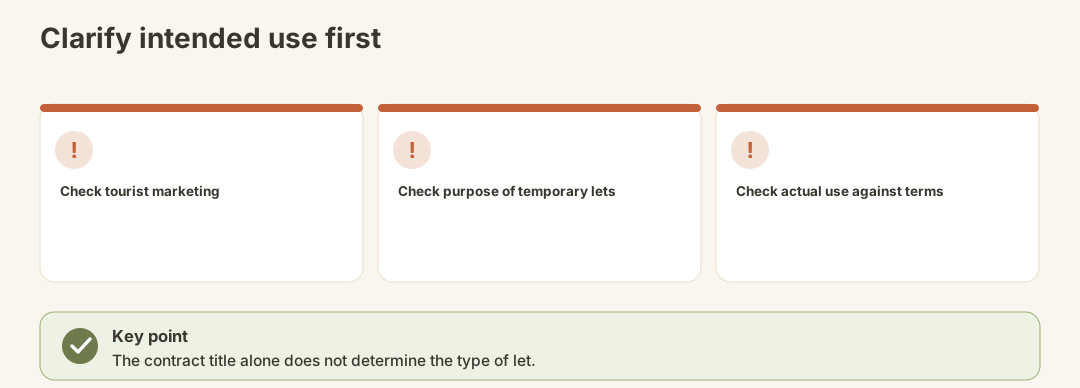
Tourist holiday lets and seasonal lets are subject to different rules. Tourist lets are governed by Balearic tourism law; a seasonal let may fall under Article 3 of Spain’s Ley de Arrendamientos Urbanos (LAU). In a seasonal let, the tenant uses the property temporarily for an identifiable purpose without making it their usual home.

| Type of let | Governing framework | What to check in practice |
|---|---|---|
| Tourist holiday let | Balearic Tourism Act 8/2012 | Whether the offer is tourist accommodation and whether letting is permitted |
| Seasonal let (alquiler de temporada) | Article 3 LAU | The actual, temporary purpose of the stay |
| Use as a usual home | Residential tenancy under LAU | Actual use as a main home |
A fixed number of days is not a reliable shortcut. Especially for short stays, what matters is whether the property is marketed to tourists or whether another purpose for the stay can be demonstrated. Even a listing labelled ‘seasonal let’ may raise questions if its description and booking process resemble those of a holiday rental.
What ETV categories are there for holiday properties?
There are several ETV categories for tourist lets in Mallorca. You cannot tell which, if any, applies to a particular property from its type alone: its location and other requirements must also be checked.
| Category | In practice, it refers to | Stated time limit |
|---|---|---|
| ETV365 | Year-round tourist letting of a single-family house | The name does not limit letting to specific days |
| ETVPL | Tourist letting of a flat within a community of owners | To be assessed on a case-by-case basis |
| ETV60 | Tourist letting of a primary residence | A maximum of 60 days per year |
Particularly for flats in communities of owners, it is not enough to ask, ‘Does the flat have an ETV?’ Check whether tourist letting is permitted at the location and what requirements apply to that particular flat. If you take over a property with an existing ETV, read our guide to transferring an ETV licence.
Please note: The term ETV60 does not give blanket permission to offer any owner-occupied property to tourists for 60 days.
What should you do if you want to let to tourists?
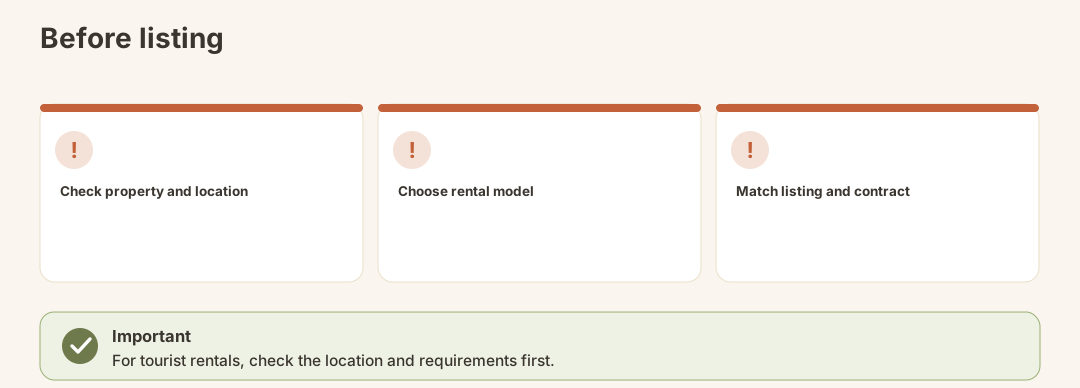
Start by checking whether tourist letting is permitted for the specific property, not by posting an advert. A declaration of responsibility (DRIAT) is cited in connection with starting a tourist letting activity. It does not, however, give you an automatic right to accommodate holiday guests in any property.
- Check the property and its location: Is it a single-family house, a flat in a community of owners or your primary residence? Then check whether tourist letting is permitted at that location.
- Check the requirements: Find out which ETV category and requirements apply to your property. This check deserves particular attention if the property is in a community of owners.
- Ask about the process and costs in advance: Ask the relevant tourism authority to confirm the documents, tourist accommodation places and costs required for your case.
- Only then market the property: Do not describe the property as tourist accommodation until you have clarified the requirements and the procedure for starting the activity in your case.
There is no single answer to ‘How much does a holiday letting licence cost?’ Costs are cited in connection with tourist accommodation places, among other things, and vary according to the type of letting. What matters for your decision is an assessment of the specific property, not a standalone flat-rate figure. For a closer look at the legal points to check, see Holiday letting in Mallorca: licence and requirements.
When is a seasonal let actually a seasonal let?
A genuine seasonal rental needs a temporary purpose for the stay. Examples include a limited period of work, study, a project or a transitional period. What matters is not just what the contract says, but how the property is actually used.
An eleven-month contract does not therefore automatically qualify as a seasonal rental. If the tenant actually uses the property as their permanent home, simply calling it a “seasonal rental” does not reflect the reality of the tenancy. We explain more in our articles on the eleven-month rental agreement in Spain and the fixed-term rental agreement in Mallorca.
For a seasonal rental agreement, you should state the reason for the stay clearly. It also helps to record the tenant’s usual place of residence, the agreed period of use and the services you will actually provide during the stay. A heading on the contract is no substitute for clarifying these points.
What do actual seasonal rental listings show?
Seasonal rentals in Mallorca are advertised for a wide range of periods. The following examples show details from published Lindacasas listings. They are individual listings, not market prices; in particular, you cannot tell which additional costs are included in an advertised amount without checking the listing.
| Listing and location | Advertised amount | Stated period | Date shown in listing |
|---|---|---|---|
| Apartment in Portocolom | €1,800 | October to May | 22 May 2026 |
| Finca near Felanitx | €2,850 | November to March | 15 May 2026 |
| Apartment in Colònia de Sant Jordi | €950 | September to July | 28 April 2026 |
For your own listing, what matters less is the comparison figure than the precise description of the listing informative: Clearly state the available period, facilities and what the costs include. Above all, a seasonal rental listing should make clear what temporary purpose the property is being offered for. For a comparison of using a property yourself and letting it, read Using your property yourself or letting it on Mallorca.
Where and how should you advertise the property?
The best platform depends first on what you are legally allowed to offer. You can find seasonal rental listings on idealista; Lindacasas and Mallorca Zero also list flats and houses for temporary stays. Airbnb, Booking and Vrbo are mainly associated with tourist bookings. The choice of platform does not, on its own, determine how a rental is legally classified, but the booking process, length of stay and description can make the tourist nature of a listing clear.
A note about our own services: mallorca.com offers property listings. The same rule applies there: your listing must match the type of rental you are actually permitted to offer.
Before publishing, write a short, consistent property description:
- For tourist lets: Describe only services and booking options that comply with your confirmed permission to offer tourist lets.
- For seasonal lets: State the temporary purpose of the stay and the period for which the property is available. Avoid presenting it as an ordinary holiday let that can be booked by the day.
- For both types of rental: Keep details of facilities, additional costs and actual availability consistent.
Our guide to booking platforms for holiday homes gives an overview of channels for marketing tourist lets. It cannot be used to establish a definitive ranking of platforms for seasonal lets.
Do you need a contract even if you let privately?
Yes, a written contract is advisable even when the owner and tenant deal directly with each other. For a seasonal let, it should clearly set out the temporary purpose, the period, the people involved and the agreed services. For tourist lets, however, a private contract is no substitute for checking whether tourist letting is permitted.
If you are looking for a free template, use it only as a guide to the structure. A brief starting point for describing a seasonal let might look like this:
“The parties agree to the temporary use of the property for [specific purpose] during the period [start date] to [End]. The tenant’s usual residence is located [details]. Agreed services and additional costs: [list in detail].“
This is not a complete template agreement. Whether the agreement legally qualifies as a seasonal rental also depends on how the property is actually used. Check in particular that the contract, listing and planned stay all describe the same arrangement.
Most common mistakes
Important: Giving the same offer a different title changes neither its tourist character nor how the tenant actually uses the property.
- Assuming eleven months automatically makes it a seasonal rental. Without a genuine temporary reason, it may be classified differently.
- Calling a holiday rental a seasonal rental. How the property is marketed and used also matters.
- Assuming an existing ETV can be freely transferred. Check the specific transaction and property before planning for tourist rental income.
- Using costs from someone else’s licence application. The type of rental and tourist places may be relevant to your calculations.
- Starting with a listing and sorting out the legal questions later. For tourist rentals, checking the location and requirements should come first.
What comes next?
Once you have settled on a rental model, the practical questions follow: Who will handle handovers and look after the condition of the property? What ongoing expenses will arise? How will the income be taxed? The type of ETV or the length of a seasonal rental agreement alone cannot answer these questions.
For tourist rentals, you can then look at guest registration for holiday rentals, the tourist tax for landlords and the VAT treatment checked separately. With a seasonal let, however, the actual use, a suitable seasonal tenancy agreement under Article 3 LAU and the agreed costs require particular attention. If the property is actually used as a habitual residence, it may constitute a residential tenancy.
Checklist before signing a contract and publishing a listing
- Is the intended use for tourism or temporary for another reason?
- Does the letting model suit the specific property and its location?
- For tourist letting, have the ETV category, requirements and procedure been clarified?
- For a seasonal let, is the reason for the temporary stay clear?
- Are the listing, booking process and contract terms consistent?
- Are the period, services and additional costs clearly described?
- Have property management, ongoing expenses and tax matters been checked separately?
Conclusion
Holiday lets and seasonal lets are not interchangeable names for short-term letting in Mallorca. If you want to host holidaymakers, first check whether tourist letting is permitted for your property. If you want to let temporarily to someone staying for another purpose, that specific purpose must be clear in both the contract and the property’s actual use. Only once you have settled on the letting model should you plan the price, listing and property management.
Official sources
- Boletín Oficial del Estado (BOE) – Spain’s Ley de Arrendamientos Urbanos, particularly Article 3, and the publication of the Balearic Tourism Act 8/2012.
- Govern de les Illes Balears – official information on Balearic tourism law.