
Caló de sa Barca Trencada beach, Mallorca

Places to stay near Caló de sa Barca Trencada
AdTo load the accommodation map by our partner Stay22, we need your consent for marketing cookies. Your consent applies to all marketing content on mallorca.com.
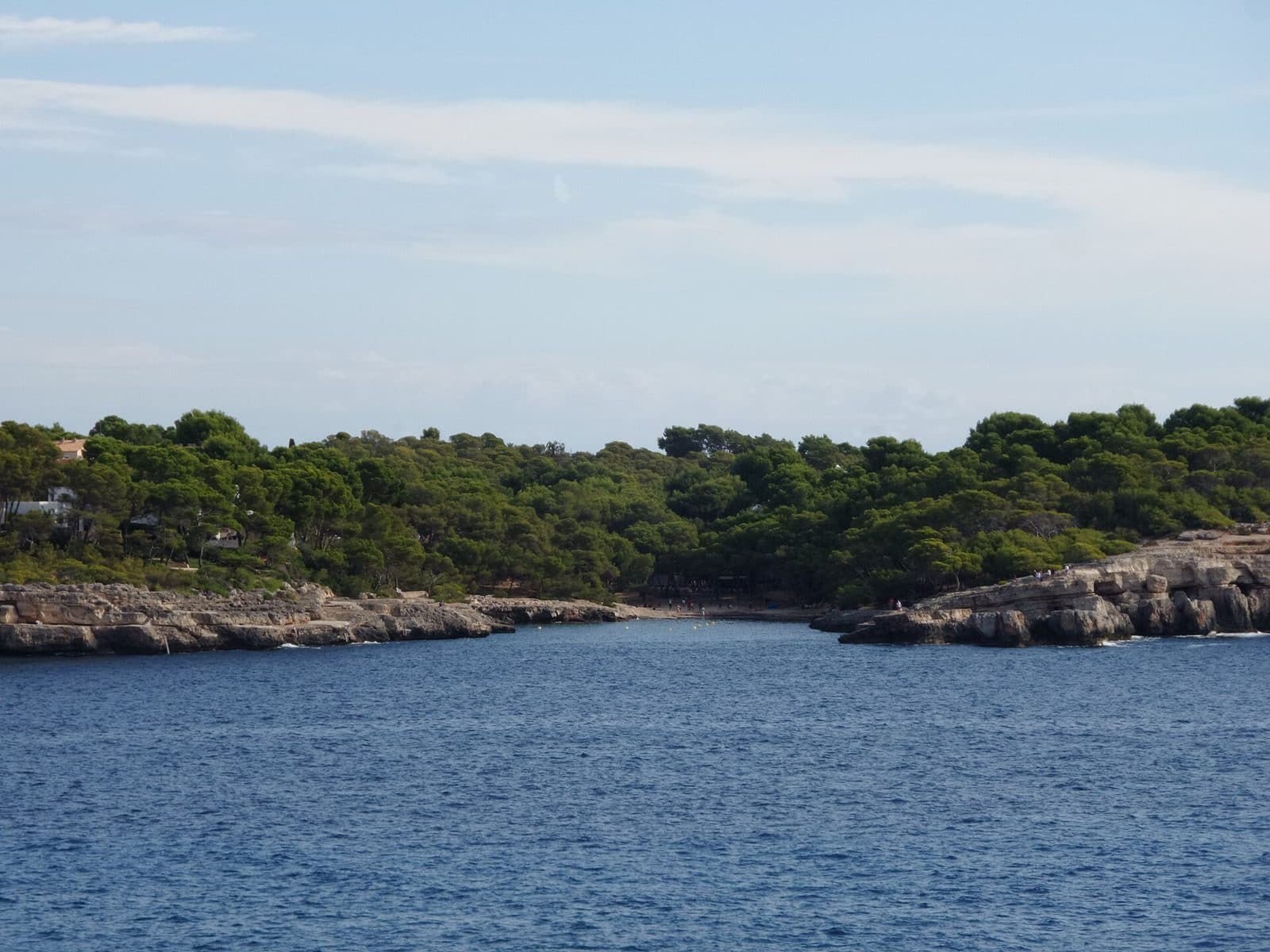
Caló de sa Barca Trencada is a small sandy cove near Portopetro where nature and holiday development sit close together. Between rocky arms lies a beach just 35 metres long, behind which pine trees, garrigue, old holm oaks and dune vegetation meet hotels and holiday complexes. The right-hand side of the cove has the broad stretch of sand, while the left remains rockier. This clear layout is precisely what distinguishes the cove from many longer beaches on the southeast coast.
It is relatively easy to get here by car, and you can park free of charge near the beach. Even so, the cove is not a reliable retreat: the Balearic Islands beach catalogue rates its occupancy as high during the season. A shallow, gradual entry into the water in the sandy area, natural shade beneath pine trees and short walking distances make it particularly appealing for a manageable beach day. Caló de sa Barca Trencada does not feel completely untouched, however. Its strength lies instead in the contrast between the protected coastal landscape, the small sandy beach and the tourist development directly behind it.
Where is Caló de sa Barca Trencada beach?
Caló de sa Barca Trencada lies on Mallorca’s southeast coast near Portopetro, in the municipality of Santanyí. According to the Balearic Islands beach catalogue, the cove is about four kilometres from the inland village of s’Alqueria Blanca. The official tourism platform of the Balearic Islands lists the beach at the address 07691 Santanyí.
The coastal formation is divided into two distinctly different arms. Rocks shape the shoreline on the left, while the actual sandy beach opens out on the right. Small hills and pine trees frame the cove. Garrigue, pine forest, old holm oaks and dune plants form the natural backdrop, which in places directly borders hotels and other tourist complexes.
The beach is listed as part of a protected natural area. Hermann’s tortoises may also be encountered on the inland and coastal paths towards Punta des Savinar near Cala Figuera. It is therefore worth looking beyond the waterline and paying close attention to the vegetated edges and paths as well.
| Feature | Details |
|---|---|
| Beach type | Sandy beach |
| Length | 35 m |
| Width | 25 m |
| Location | near Portopetro, municipality of Santanyí |
| Distance from s’Alqueria Blanca | about 4 km |
| Occupancy during the season | high |
| Protected natural area | yes |
| Nearest harbour | Reial Club Nàutic Portopetro, 1.9 nautical miles |
What is this small cove like?
Caló de sa Barca Trencada is a compact, sheltered-looking sandy cove with rocky edges, pine trees and clearly visible tourist development nearby. Anyone looking for a completely secluded natural cove will notice the surrounding hotel activity. Those who value short walking distances, shade and a small, easily manageable beach, however, will find a suitable combination here.
The central and right-hand areas consist of light-coloured, fine sand. Along the sides, the ground becomes rockier and more uneven. Numerous pine trees stand behind the beach among low rises, accompanied by scrubland and dune vegetation. As a result, the greenery reaches unusually close to the small sandy area.
At 35 metres long, there is little space for visitors to spread out when occupancy is high. Even a manageable number of bathers can make the cove appear quite full. According to the Balearic Islands beach catalogue, the construction of hotels in the surrounding area played a major role in turning this formerly more untouched stretch of coastline into a heavily visited beach.
The cove is too small for long walks directly on the sand. The shaded paths around its edges and the inland and coastal trails nearby are more interesting. Sturdy or at least suitable footwear is advisable there; the official tourism platform of the Balearic Islands specifically recommends appropriate footwear and sufficient water when visiting the cove, especially during the hot summer months.
How do you get to Caló de sa Barca Trencada and where can you park?
By car, you can easily reach Caló de sa Barca Trencada via the signposted access road towards Cala Barca or Caló de sa Barca Trencada. The Balearic Islands beach catalogue explicitly describes the journey as straightforward and mentions a free car park close to the beach.
The car park is small and can fill up quickly during the high season. From there, a short path leads through scrubland and pine trees down to the sand. If you want to spend as little time as possible looking for a parking space during the main season, arriving early is advisable.
There is also a bus stop nearby. Mallorca Hub lists the “Sa Barca Trencada” stop around 200 metres from the beach and names route 521. Timetables and operating periods may change seasonally, so check the current connection before travelling. Other stops are listed at Cala Mondragó and in Portopetro.
Note: During the high season, do not rely on finding an available space directly by the beach at any time. The free car park is close by, but it has limited capacity.
Using the full beach name is helpful for navigation because “Caló de sa Barca Trencada” and the shortened names “Sa Barca Trencada” and “Cala Barca” are all used.
What are the sand, water and sea entry like?
The beach consists mainly of fine sand, and the entry into the water in the central area is shallow and gradual. The seabed initially remains sandy before the water becomes deeper farther out. This makes calm wading and swimming close to the shore easier.
The character changes along the rocky sides. Stones and rock slabs lie above and below the water there, and seagrass and sea urchins may occur in places. If you want to explore these outer areas, water shoes are useful. The central sandy access, by contrast, is more comfortable for entering barefoot.
The rocky arms are suitable for light snorkelling. You should keep an eye on the seabed and not assume that the entire cove is sandy. The transition from the beach to the sides in particular can be uneven.
The cove is often described as sheltered and the water as generally calm. Calm conditions are not guaranteed, however: the Balearic Islands beach catalogue notes exposure to winds from the southwest to west. Wind and waves can therefore alter the swimming experience.
Families benefit from the manageable beach and gradual entry. This is no substitute for supervision. Children and less confident swimmers should always be accompanied, even in a cove that appears small, as the water becomes deeper farther out and conditions can change with the wind and boat traffic.
What facilities are available at the beach?
You should plan for facilities at Caló de sa Barca Trencada to vary by season. MallorCard and VerPlayas mention sun loungers, parasols, food and drink, toilets and showers near the beach, while Mallorca Hub lists no confirmed facilities. You should therefore not assume that every service will be available on every day you visit.
One advantage is the natural shade provided by the pine trees behind the sand. These spots are particularly popular around midday. As the beach is only 35 metres long, the shaded area can also fill up quickly. Bringing your own sun protection is therefore still advisable unless you intend to rely exclusively on the trees or a seasonal parasol rental service.
Hotels and holiday complexes are located immediately nearby. This means that places serving food and drink and accommodation are relatively close, but the cove also feels less secluded than natural beaches without development. This contrast defines the setting: sand, rocks and pine trees in front, with tourist infrastructure behind them.
Note: Bring your own water and beach-day essentials regardless. The official tourism platform of the Balearic Islands recommends drinking enough, especially during the hot summer months.
Whether a particular service is open on the day of your visit may depend on the season and the operator. You should not rely on a confirmed lifeguard service either unless one is clearly indicated at the beach.
When is the best time to visit and how crowded does it get?
Caló de sa Barca Trencada is generally at its quietest in the morning or later in the afternoon. The Balearic Islands beach catalogue rates occupancy as high during the season, and because of the cove’s small size, crowds are more noticeable here than on long sandy beaches.
Early morning offers a better chance of finding a parking space, a spot beneath the pine trees and a little more room by the water. Later, both guests from the surrounding hotels and day visitors arrive. Because the beach is so short, even a moderate number of visitors can make it feel full.
It often becomes more relaxed again in the late afternoon when some bathers return to their accommodation. If you are visiting solely for a peaceful experience in nature, however, the cove remains an uncertain choice during peak summer periods.
Outside the busiest summer periods, the surroundings may feel quieter. At the same time, seasonal services are less reliable then. The official tourism platform of the Balearic Islands presents the cove as a destination for all four seasons, but swimming, food and drink, and rentals depend on the weather and seasonal operations.
Warning: “Small cove” does not automatically mean “hidden gem” here. Because of the surrounding hotels and easy access, Caló de sa Barca Trencada is one of the heavily visited beaches during the season.
What is near Caló de sa Barca Trencada?
Portopetro, Mondragó Nature Park and the beaches of Cala Mondragó and S’Amarador are nearby. This makes it easy to combine a visit with a harbour town, a coastal walk or a second bathing cove.
Portopetro is the nearest harbour town. According to the Balearic Islands beach catalogue, Reial Club Nàutic Portopetro is 1.9 nautical miles from the cove. In the town, you will find a harbour setting with places serving food and drink; excursion boats also operate along this stretch of coast.
Coastal paths lead towards Mondragó Nature Park, providing access to more landscapes and beaches in the southeast. MallorCard specifically mentions Cala Mondragó and S’Amarador. For longer walks, you should bring suitable footwear, water and sun protection, as not every section crosses sand or remains continuously in the shade.
Other destinations named in the region include s’Alqueria Blanca, Cala Egos, Cala Ferrera and Cala d’Or. They differ significantly in character: while Mondragó and S’Amarador are more closely associated with protected nature, the beaches around Cala d’Or and Cala Ferrera are more closely connected with holiday resorts.
For a flexible day, you can first take a look at Caló de sa Barca Trencada and continue elsewhere if it is too crowded. Bear in mind, however, that other well-known coves in the southeast can also be busy during the main season.
What practical information should you know before visiting?
For Caló de sa Barca Trencada, you should pack water shoes, drinking water, sun protection and a backup plan in case the car park is full. Water shoes are particularly useful along the rocky sides; they are not essential in the central sandy area.
The pine trees provide natural shade, but the available spots are limited. Visitors with children will find a shallow, gradual entry and a manageable sandy area. At the same time, there are rocks along the sides, and the water becomes deeper farther out.
Anchoring conditions are generally suitable for boats. The Balearic Islands beach catalogue notes a sandy seabed at a depth of about five metres where the cove begins to narrow. The cove is exposed to winds from the southwest to west. The nearest harbour is Reial Club Nàutic Portopetro, 1.9 nautical miles away.
As the cove lies in a protected natural area and is characterised by dune vegetation, garrigue and woodland, you should use the existing paths and respect the vegetated edges. Hermann’s tortoises may appear on the coastal and inland paths.
There is no consistently confirmed rule for dogs. You should therefore follow the signs at the entrance and any seasonal restrictions. The same applies to individual services: opening times and availability may change, especially outside the main season.
How do I get to Caló de sa Barca Trencada?
Can I park for free at Caló de sa Barca Trencada?
Is Caló de sa Barca Trencada suitable for children?
Is there natural shade at the beach?
Are dogs allowed at Caló de sa Barca Trencada?
How crowded does Caló de sa Barca Trencada get?
What facilities are available?
Which nearby beaches are good alternatives?
Weather
Currently in Portopetro: 22°C · Partly cloudy
Getting there by bus
Sa Barca Trencada (57023) · 0.2 km as the crow flies
- 521Cala d'Or - Cala Mondragó · Daily
Cala Mondragó (57024) · 0.8 km as the crow flies
- 521Cala d'Or - Cala Mondragó · Daily
Portopetro 2 (57052) · 1.7 km as the crow flies
- 515Cala d'Or - Campos · Daily
- 515eCala d'Or - Palma · Mon-Fri
- 521Cala d'Or - Cala Mondragó · Daily
Timetable data: official GTFS feeds (TIB/EMT), no real-time — check with the operator before travelling.
Food & drink nearby
Iberostar Cala barca Beach house restaorant
Restaurant· 84 m· 4.0(9)
Es Molí Restaurant (Mediterranean)
Restaurant· 107 m· 5.0(1)
Agave Restaurant
Restaurant· 115 m
Balances Restaurant
Restaurant· 165 m
Sa Font de n'Alis
Restaurant· 895 m· 3.6(1752)
Beach Club
Restaurant· 1.0 km
Run a business near this beach?
Add your business to the directory for free and reach visitors right on this page.