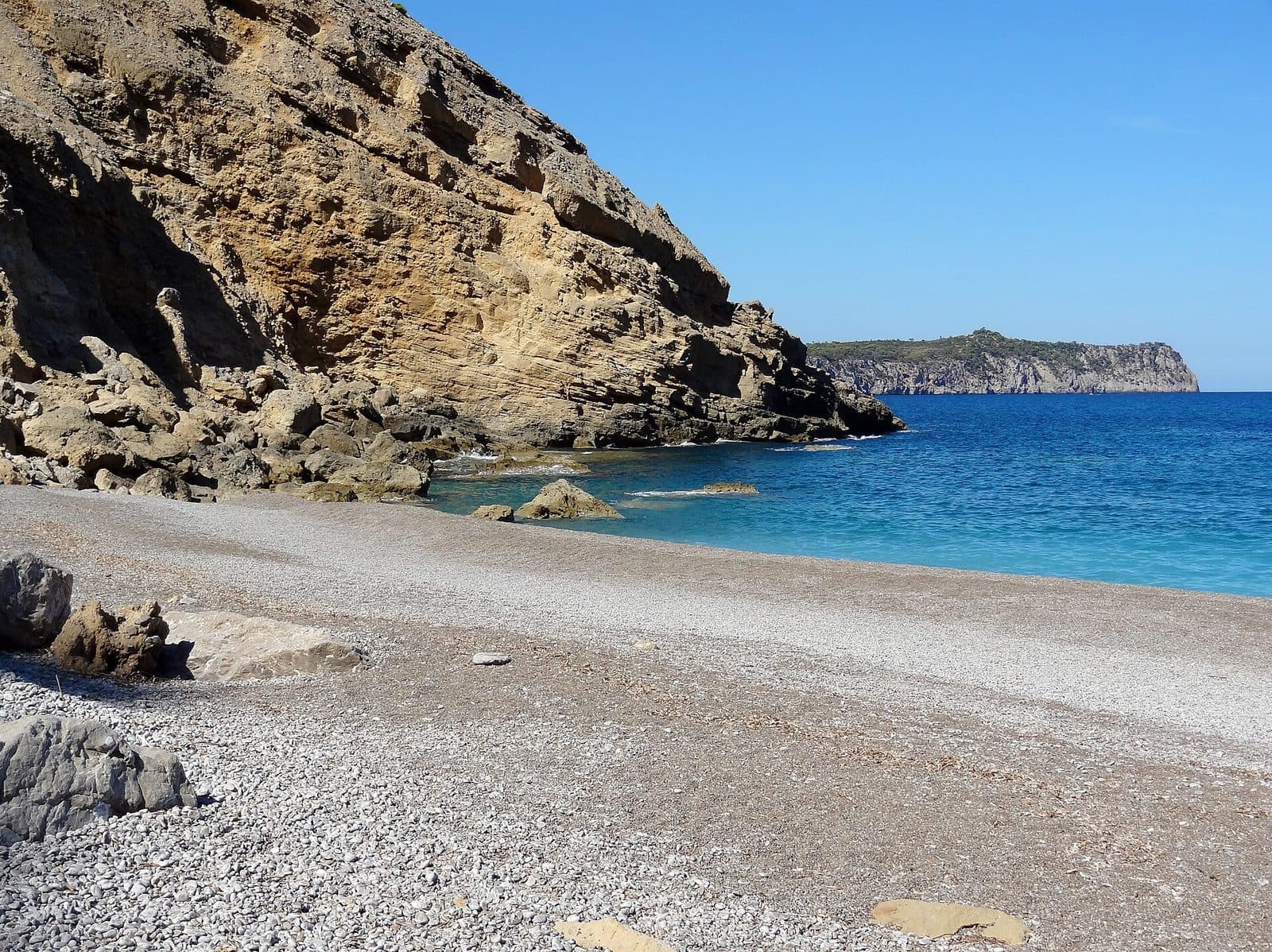
Coll Baix beach, Mallorca

Places to stay near Coll Baix
AdTo load the accommodation map by our partner Stay22, we need your consent for marketing cookies. Your consent applies to all marketing content on mallorca.com.
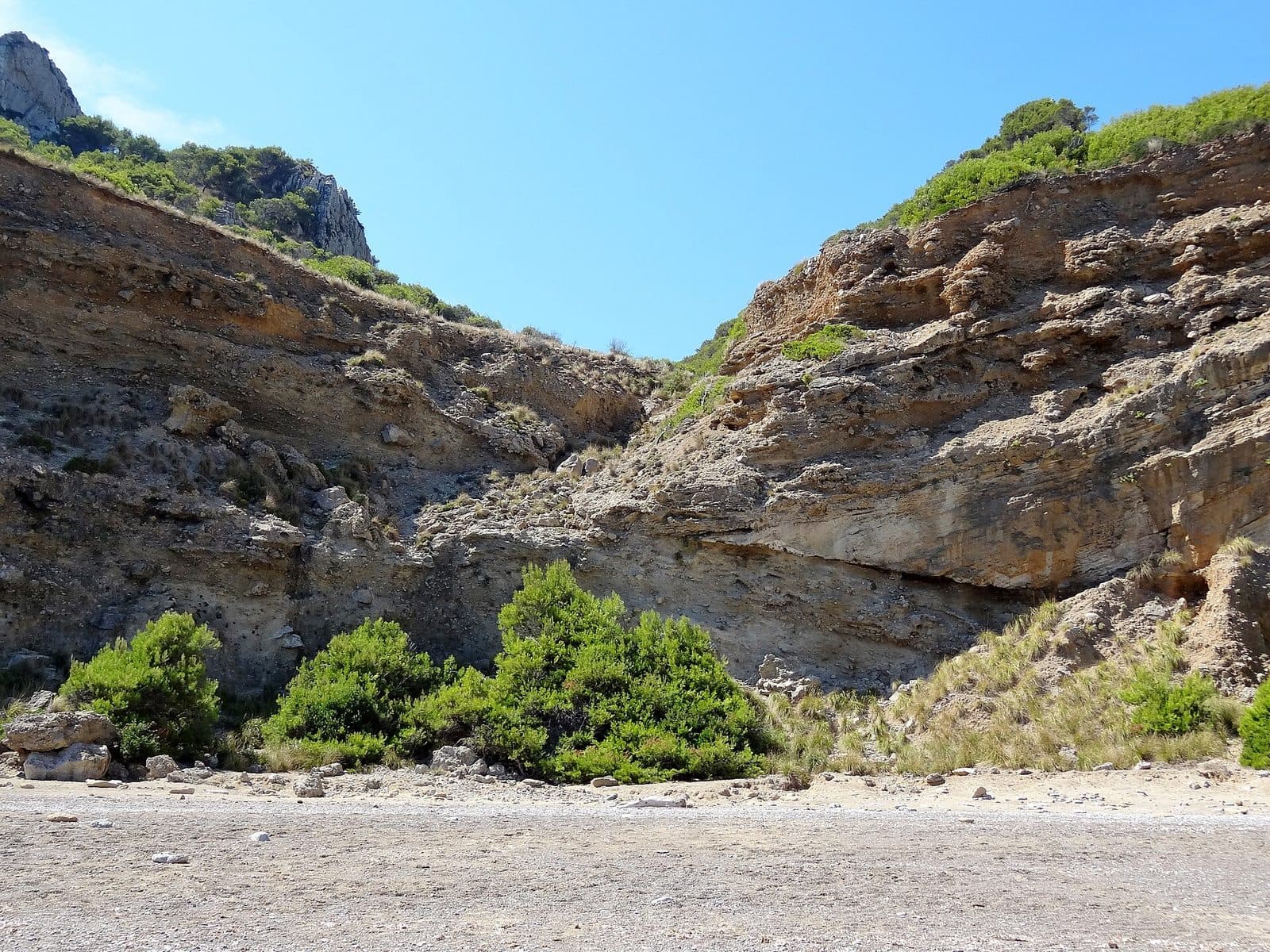
Coll Baix is not a beach where you casually step out of the car and lie beneath a parasol a few minutes later. The secluded cove near Port d’Alcúdia lies on the La Victòria peninsula, framed by cliffs, pines and Mediterranean vegetation. The final approach follows a steep, rocky path; alternatively, you can reach the cove from the sea. This separation between the road and the shore shapes the character of the place: there are no buildings on the beach, nor is there a beach bar, sun loungers or a lifeguard.
At 220 metres long and 50 metres wide, Coll Baix is not a tiny gap between the rocks but a comparatively broad pebble beach, according to the Balearic Islands beach catalogue. Small pebbles and fine gravel form the shore, and the water becomes deep just a few metres after you enter. The cove is therefore better suited to sure-footed hikers and confident swimmers than to families looking for a shallow sandy beach. Anyone making the descent should pack lightly, wear sturdy footwear and bring all their own water, food and sun protection.
Where is Coll Baix and what defines the cove?
Coll Baix lies within the municipality of Alcúdia on the La Victòria peninsula in northeastern Mallorca. The cove is located at the foot of a steep coastal landscape and forms part of a protected natural area. There are no buildings along the shore; pines, scrub vegetation, rocks and towering slopes dominate the scenery.
The Balearic Islands beach catalogue lists Coll Baix as a pebble beach near Port d’Alcúdia. Its official dimensions differ from some tourism information that gives larger measurements. For orientation, the catalogue figures of 220 metres in length and 50 metres in width are therefore the authoritative measurements.
| Feature | Details |
|---|---|
| Beach type | Pebbles |
| Length | 220 m |
| Width | 50 m |
| Seasonal occupancy | high |
| Protected natural area | yes |
The name is sometimes given as Es Coll Baix or Playa des Coll Baix. Both refer to the same secluded cove on the coast of Alcúdia. Its position beneath the cliffs is particularly easy to see from the sea or from higher paths on La Victòria.
Coll Baix feels unspoilt but is by no means unknown. Boats visit the cove, hikers arrive overland, and visitor numbers rise during the high season. Its remote location should therefore not be mistaken for guaranteed solitude.
How do you reach Coll Baix by car and on foot?
From Alcúdia, drive towards Bonaire and Fundació Ben Jakober, then complete the final section on foot. The access road eventually becomes an unsurfaced track in places, marked by potholes and ruts. Drive slowly and be aware that conditions can vary from one section to another.
The route via Bonaire is recommended. Camí de s’Alou is narrow and winding and is therefore not considered the more convenient approach. At the end of the drivable section, there is an open parking area; a chain prevents cars from continuing. From there, it is only a few minutes to the refuge or Coll Baix recreation area.
From the refuge, signs point towards the beach. The path initially runs through pine trees and descends in bends. The final section is considerably more difficult: the clearly visible trail partly disappears, and you have to climb over rocky or loose ground. In a few places, you will need your hands for support.
Allow approximately 25 to 30 minutes for the descent from the refuge. If you start farther away at the recreation area or from a parking spot farther out, the approach may take closer to 45 to 60 minutes. Allow plenty of time and remember that the uphill return journey is more strenuous in hot weather.
Warning: The final descent is unsuitable for flip-flops, pushchairs or people with limited mobility. Sturdy, closed shoes and a backpack are far more practical than bags, cool boxes or beach chairs.
Where can you park and how reliable is the access road?
You can park in an open area near the recreation area, but the space is small and may fill up early during the high season. Alcúdia Sea Trips describes the car park as free and reports that it can already be full before 9:30 during the high season. A parking space is therefore not guaranteed.
You should not treat the final kilometres like a conventional paved access road to a beach. The track is made of gravel and includes repaired and uneven sections. Expect potholes, ruts and changing road surfaces. Whether you want to drive the route in your vehicle therefore also depends on its current condition and your experience on unsurfaced roads.
Park so that the access route and turning area remain clear. You may not drive beyond the chain. From there, walk to the refuge and then down to the sea. The return journey follows the same steep route uphill, so the car park’s proximity to the refuge does not mean the beach is quick or easy to reach.
If you want to avoid the rocky footpath, the remaining option is to arrive by water. Boats and kayaks reach Coll Baix from Alcanada, Mal Pas and Port d’Alcúdia, among other places. Organised boat trips departing from Port d’Alcúdia also offer stops at the cove. Whether the boat actually lands or merely anchors for swimming depends on the particular excursion.
Note: Do not rely solely on what appears to be the shortest navigation route when driving there. The approach via Bonaire is recommended over the narrow and winding Camí de s’Alou.
What are the pebbles, water and swimming conditions like?
Coll Baix consists of small pebbles and fine gravel, and the water becomes deep shortly beyond the shore. The surface is therefore different from that of the long sandy beaches in the Bay of Alcúdia. Water shoes can be comfortable on the pebbles, but they are no substitute for sturdy footwear on the approach path.
The rapid increase in depth is particularly important for children and less confident swimmers. Just a few metres from shore, it may no longer be possible to touch the bottom. There is no supervised swimming area because Coll Baix has no lifeguard. You should therefore monitor the water and weather yourself and not overestimate your swimming ability.
The right-hand side of the beach is particularly suitable for snorkelling, with rocky sections of the seabed to explore. However, do not expect guaranteed marine diversity or consistently clear visibility: wind, waves and boat traffic can change the conditions. What is certain is that the cove is frequently used for snorkelling because of its rocky seabed.
Boats may anchor close to the shore. Watch for boat traffic when swimming and do not move away from the beach without due consideration. The northern coast can sometimes experience wind, cooler water and rougher seas. When the water is unsettled, the steeply shelving entry should be taken particularly seriously.
What facilities are available at the beach and recreation area?
There is no tourist infrastructure on Coll Baix beach. You will find no beach bar, sun loungers, rental parasols, showers or lifeguard. There are also no toilets or places to buy drinking water or food directly on the shore.
There are picnic tables and a toilet at the refuge in the recreation area. This spot lies above the beach and is of no help while you are down by the water. You should therefore take enough water for the walk there, your time at the beach and the return journey. Food should be compact and fit entirely inside a backpack.
Reliable natural shade is unavailable on the beach. The pine trees grow along the approach path and in the surrounding area, but the open pebble shore does not offer continuously shaded places to lie down. Bringing your own sunshade is therefore sensible, provided you can carry it safely across the rocky section. A hat, sunscreen and lightweight clothing are easier to transport than a large parasol.
Waste disposal is also not part of the beach facilities. Whatever you carry down, take back up with you. Wild goats may appear around the area and on the beach, so do not leave food exposed or feed the animals.
Note: Do not pack for a conventional beach day with a cool box, lounger and several bags. On the final rocky section, you need your hands free and should carry as little weight as possible.
Is Coll Baix suitable for children?
Coll Baix is more suitable for older, sure-footed children who are used to longer walks and rocky terrain. The approach is challenging for small children: the final section is steep, uneven and inaccessible with a pushchair. In addition, the water becomes considerably deeper shortly beyond the shore.
Parents should assess not only the descent but also the return journey. After spending time in the sun, the entire route must be completed uphill. You also have to carry your own water, food and swimming equipment. A backpack leaves your hands free for rocky passages.
There is no lifeguard on the beach, nor are there toilets or places serving food and drinks. If a child needs a break, shade or extra drinks at short notice, you cannot arrange these things on site. Arriving by boat avoids the difficult overland route, but it does not change the deepening water or lack of beach infrastructure.
Coll Baix is therefore not the obvious choice for families looking for shallow water and comprehensive facilities. Alcanada is described as a beach with shallower water; at Playa de Muro, you will find fine sand, shallow water, restaurants, beach bars, loungers and parasols. However, both have a distinctly different character from the secluded pebble cove.
When is the best time to visit and how busy does Coll Baix get?
Spring, autumn and winter are more pleasant for hiking to Coll Baix than very hot summer days. Swimming visits are particularly suitable between May and October. On hot days, the climb back becomes more strenuous because the beach has no infrastructure or reliable shade.
You should not expect solitude when it comes to visitor numbers. The Balearic Islands beach catalogue classifies seasonal occupancy as high. Coll Baix may feel quieter than more easily accessible beaches, but hikers, excursion boats and private boats converge here, particularly at weekends and during July and August.
If you plan to take the overland route, an early start is practical. This improves your chances of finding a parking space and lets you avoid some of the daytime heat. Alcúdia Sea Trips reports that the small car park can be full before 9:30 during the high season. The cove may also be quieter in the late afternoon, although you must then allow enough time for the rocky return journey.
Outside the height of summer, Coll Baix can easily be included in longer hikes on La Victòria. A well-known circular route leads from s’Illot via Ermita de la Victòria and Talaia d’Alcúdia to Coll Baix and covers around 14 kilometres. Another route begins in Alcanada, runs partly close to the coast and measures approximately 13 kilometres in total.
What can you do around Coll Baix?
Around Coll Baix, the La Victòria peninsula, Talaia d’Alcúdia, Alcanada and Alcúdia’s old town are worthwhile additional destinations. Which combination makes sense depends on whether you want to hike, swim or continue your day without another long walk.
Talaia d’Alcúdia lies above the peninsula and forms part of the approximately 14-kilometre hiking route via Ermita de la Victòria and Coll Baix. The path is marked with wooden posts and offers views across the bays of Alcúdia and Pollença as well as Coll Baix. For this circuit, consider the beach visit part of a full-scale hike rather than a short addition.
Alcanada is the starting point for an approximately 13-kilometre route to Coll Baix. Long sections run close to the coast before the route climbs through pine forest to the recreation area. Although the route involves comparatively little elevation gain, its length still makes it demanding.
In Alcúdia, you can visit the preserved city walls, the old town and the Roman ruins of Pollentia. A market takes place there on Tuesdays and Sundays. If you prefer a more easily accessible beach after Coll Baix, Alcanada and Playa de Muro are possible alternatives. Playa de Muro offers a long sandy beach, shallow water and tourist facilities, while Alcanada can be a quieter option, particularly because of its shallower water.
What should you pack and bear in mind for Coll Baix?
You should take sturdy footwear, a backpack, enough water, food, sun protection and a bag for your rubbish. At the beach, you cannot buy more drinks or rent a parasol, lounger or snorkelling equipment.
Keep your luggage as light as possible. On the final section, you have to climb over rocks and sometimes use your hands for support. Loose carrier bags, large cool boxes and bulky beach furniture make this section considerably more difficult. A lightweight towel and compact food are better suited to the approach.
Coll Baix lies in a protected natural area. Do not leave behind rubbish or cigarette butts, light fires, barbecue or play loud music. Do not leave the visible paths unnecessarily, as shortcuts can place additional strain on the vegetation and ground. Camping on the beach is not permitted.
No clear general beach ban on dogs is specified. At the same time, Coll Baix is a protected natural area; dogs should remain on a lead, and their waste must be removed. Also observe the current signs on site, as local or seasonal rules may apply.
Before descending, honestly assess whether the route, heat and luggage suit your fitness level. The descent is only half the journey. After your beach visit, you must follow the same route uphill, with no opportunity to buy water or food along the way.
How do I get to Coll Baix?
Can I park directly at Coll Baix beach?
Is Coll Baix suitable for children?
Is there shade on Coll Baix beach?
Are dogs allowed at Coll Baix?
How busy is Coll Baix in summer?
What facilities are available at Coll Baix?
Which beaches are alternatives to Coll Baix?
Weather
Currently in Port d'Alcúdia: 23°C · Partly cloudy
Food & drink nearby
Run a business near this beach?
Add your business to the directory for free and reach visitors right on this page.