
Can Pasqual in Palma: A Mansion Shaped by Many Eras
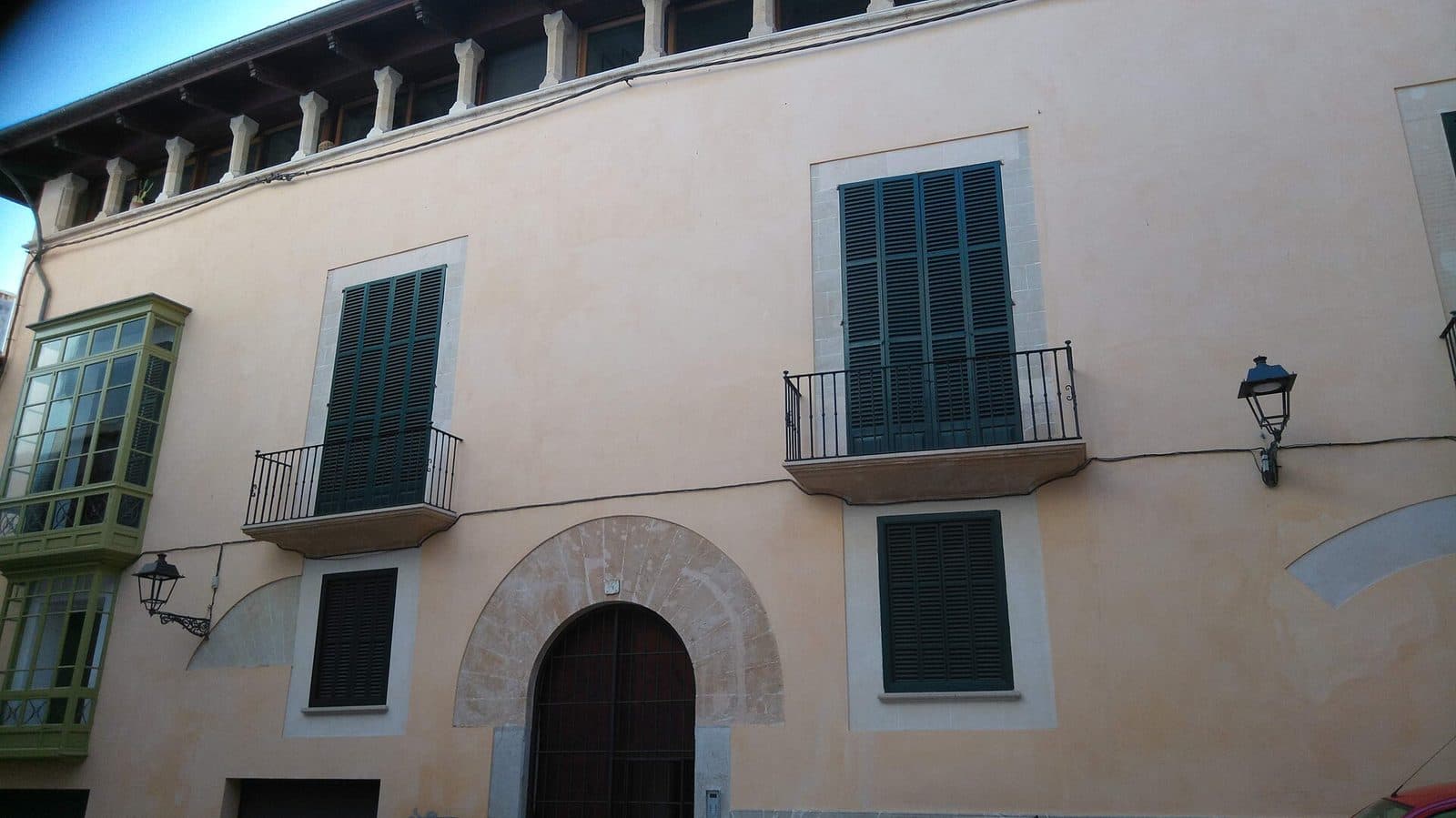

In the heart of Palma's historic fabric, Can Pasqual represents a side of the city that can easily be overlooked among the cathedral, palaces, and lively squares: the world of Mallorcan mansions. The building is not a landmark visible from afar, but a place that rewards closer inspection. Carved stone, an inward-facing courtyard, and traces of different architectural styles tell the story of an urban residential culture that changed over a long period.
Can Pasqual is classified as a casa senyorial, meaning a distinguished town house. This is precisely where its appeal lies: the building reveals itself not through monumental size but through the interplay of its facade, stone details, and courtyard. Gothic, Renaissance, and Baroque elements do not represent a single, completed design, but an architecture that was continually rewritten over generations.
A visit is especially worthwhile for anyone who wants to understand Palma beyond its major standalone monuments. Those who photograph historic architecture, seek out traditional town houses, or want to enrich a walk through the old town with a less obvious building will find it a revealing stop. Realistic expectations are important: Can Pasqual is best viewed as a historic building within an old-town walk. Whether and to what extent the interior is accessible should be checked in advance using current information. Even from outside, however, the building remains legible if attention is directed not only toward the whole structure but deliberately toward its materials, transitions, and courtyard layout.
History and Significance
The name leads directly to the building's original meaning. In Mallorcan, “Can” denotes the house of a family or a particular person; Can Pasqual can therefore be understood as the house of the Pasqual family.
The Casa Senyorial
Can Pasqual is classified as a casa senyorial, meaning a distinguished town house. This classification is helpful when visiting because the building should not be judged by the standards of a palace with grand ceremonial halls. Its historical significance instead lies in its Gothic, Renaissance, and Baroque elements, as well as its stone details and courtyard.
Palma's Architectural Layers Through Time
The surviving Gothic, Renaissance, and Baroque elements make Can Pasqual an example of Palma's architecture as it evolved over time. The Christian conquest of Mallorca took place in 1229. This does not, however, mean that every part of the building dates from that period. It is more informative to observe that Can Pasqual combines several later architectural languages within one structure.
Gothic, Renaissance, and Baroque styles represent different ideas about space and representation. Gothic forms belong to Palma's medieval character; at Can Pasqual, they are mentioned together with Renaissance and Baroque elements.
A House as Urban Memory
It is precisely the combination of different styles that makes the building's historic character tangible. Can Pasqual therefore tells less of a single spectacular event than of its importance as a historic mansion. The house reflects the aristocratic residential culture of the old town. Among Palma's major monuments, it provides a smaller but important scale: history appears here not as an isolated monument, but as part of a city that remains in use today.
What to See
The first impression is formed at the boundary between the public street and the private house. Can Pasqual does not reveal its effect from a great distance. Only up close do the carved stones and gradations of its historic design become visible. A visit should therefore begin with a slow look across the facade before the courtyard or individual details draw the eye.
The Facade
The facade forms the mansion's representative exterior and should not be regarded merely as a backdrop for a photograph. What matters is how the stone surface is structured and how older and more recent layers of design coexist. The combination of Gothic, Renaissance, and Baroque elements means that the frontage does not present a completely uniform stylistic image. This very coexistence is part of the house's character.
From a good position opposite, the overall arrangement can first be appreciated. It is then worth moving closer to the stonework and looking for differences in craftsmanship and form. Such transitions are often more revealing than any single decorative motif: they show that the building's present appearance was not determined in one construction phase.
The Stonework Details
Among the explicitly highlighted features of Can Pasqual are its carefully crafted stone details. They convey the aspirations of a house whose architecture was intended to provide more than simple protection from the weather. Stone served both as a structural material and as a means of representation.
An oblique angle is often more rewarding than a completely frontal view. Light falling from the side brings recesses and projecting sections into clearer relief. Can Pasqual therefore makes its impression less through conspicuous decoration than through the controlled quality of its stone architecture.
The Courtyard
At Can Pasqual, the courtyard is cited as one of the building's defining features. If a view inside is possible, the courtyard should not be understood merely as a picturesque backdrop. Together with the stone details and different architectural styles, it is one of Can Pasqual's highlighted characteristics.
The contrast between exterior and interior is part of the essential visitor experience. From the street, Can Pasqual appears as part of the old town's enclosed frontage. Whether the courtyard can be entered or only viewed depends on current access conditions.
Gothic, Renaissance, and Baroque
The three styles mentioned can be used as a guide, not as a search for supposedly unambiguous individual elements. Their interaction is what matters, because Can Pasqual is not a stylistically pure model house from a single period. More revealing questions are where the architecture appears calm and unified, where it is more strongly articulated, and where differences in architectural language can be discerned.
Views from the Old Town
The immediate urban setting also contributes to the impression. Can Pasqual does not stand alone but forms part of Palma's dense historic center. As a result, it lacks the distant perspectives possible with a castle or country estate. The house is discovered while walking and viewed from changing, often close-range angles.
This proximity suits the building's character. Can Pasqual therefore benefits from being read not in isolation but together with the lanes, sequences of squares, and neighboring historic facades.
Visiting Can Pasqual
A visit is best approached not with the expectation of an extensive exhibition, but with time to observe the architecture. Can Pasqual is a historic town house whose value lies in its structural form and layers accumulated over time. The experience also depends on which areas are accessible on the day. Current information about access, opening, and possible forms of visiting should therefore be checked before heading through the old town.
Approaching the Building
The building stands in Palma's historic center and can easily be included in a walking tour. Approaching at a slow pace makes it easier to notice how the mansion fits into this structure.
In front of the facade, it is advisable first to find a position that provides the fullest possible view of the frontage. Attention can then shift to the stonework and visible differences between the layers of design. If a view into the courtyard is possible, this highlighted feature can be examined afterward.
Access and Length of Stay
As no reliable fixed opening hours or admission conditions are recorded, visitors should not assume either that the interior is always open or that a particular tour program is available. Checking current information is especially important if Can Pasqual is the main reason for entering the old town. Anyone already planning a historical walking tour can respond more flexibly and begin by viewing the building from outside.
Without confirmed access to the interior, it is not practical to specify a fixed length of stay. As an architectural stop, Can Pasqual requires less time than a large museum, but more attention than a quick photo opportunity. For those interested in historic facades and mansions, examining the details closely can add considerable depth to the visit. If access is restricted, the stop will remain correspondingly compact.
Time of Day and Light
There is no documented time of day that is generally free of crowds. Visitor numbers in the old town also depend on the season, day of the week, and events in the center. Those seeking peace for viewing and photography should choose times when their old-town walk does not coincide with the heaviest visitor flows around the cathedral and central squares.
For the architecture, the angle of the light is more important than any supposedly perfect time. Low or side lighting can make the sculptural treatment of the stone stand out more clearly than even frontal light. Because the streets of the old town cast shadows, the impression made by the facade changes throughout the day. A brief second look on the return route may therefore reveal different details from those seen during the first encounter.
Getting There and Parking
From Palma Airport, the route initially follows the Ma-19 toward Palma. The road distance to Palma is 11 kilometers, and the drive takes around 20 minutes. These figures apply specifically to the journey into the city, not directly to Can Pasqual. Additional time should be allowed for the final section into the historic center, depending on traffic, the chosen parking facility, and access restrictions.
By Car from the Airport
The Ma-19 connects the airport with Palma and leads toward the city's access roads. One central option is the underground Passeig de Mallorca parking garage west of the center. It has entrances on Carrer de l’Institut Balear and Plaça de la Porta de Santa Catalina. From there, the route continues through the center. The garage is not directly beside Can Pasqual; it is suitable as a starting point for a longer walk through the old town that combines the mansion with other historic stops.
Walking Through the Center
The final section also provides an appropriate introduction to the building. In Palma's old town, larger squares alternate with narrower streets, and historic houses often reveal themselves only at close range. A walking route makes it possible to approach Can Pasqual not as an isolated point but as part of the old urban fabric.
For navigation, the building's name should be used as the destination because the general location Palma is insufficient for precise directions. Shortly before arrival, it is advisable to look for building names and facades. The name should not be confused with similarly named holiday homes and fincas in the Manacor or Porto Cristo area; these are not connected with the historic attraction in Palma described here.
By Bus
Several stops in the central area allow the journey to be continued on foot. These include Plaça de Cort, Plaça d’en Coll, and the Plaça de la Reina – Catedral stops. The most convenient connection depends on the starting point in Palma. Plaça de Cort leads directly into the old-town fabric, while Plaça de la Reina provides a useful point of reference by the cathedral and the southern edge of the historic core. The bus therefore covers only the first part of the journey; Can Pasqual is reached on foot for the final sections.
Bus lines to Can Pasqual at a glance
| Line | Route | Departures/day | First | Last |
|---|---|---|---|---|
| 501 | Manacor - Campos - Palma | 103 | 05:38 | 23:58 |
| 504 | Tolleric - Palma | 55 | 06:13 | 23:13 |
| 501e | Campos - Palma, exprés | 33 | 06:50 | 20:50 |
| 25 | s'Arenal - Pl. Reina | Catedral | 8 | 09:35 | 12:41 |
| 35 | Aquàrium - Pl. Reina | Catedral | 8 | 07:10 | 13:50 |
| 3 | Pont d'Inca / Joan Carles I | 6 | 07:37 | 09:46 |
| 515e | Cala d'Or - Palma | 5 | 11:10 | 19:15 |
| N1 | Portopí - Porta des Camp | 4 | 00:55 | 23:55 |
| 20 | Portopí - Son Espases | 2 | 07:17 | 07:19 |
From the official GTFS feeds (TIB/SFM), no real-time data. The figures cover all stops in the town; weekend and holiday services differ — check with the operator before travelling.
Getting there by bus
662-pl. de Cort · 0.3 km as the crow flies
- CCCircular Centre Ciutat · 08:00–08:00 · Daily
453-pl. de la Reina - Catedral · 0.4 km as the crow flies
- 25s'Arenal - Pl. Reina | Catedral · 06:36–21:01 · Daily
663-pl. d'en Coll · 0.4 km as the crow flies
- CCCircular Centre Ciutat · 08:00–08:00 · Daily
7-pl. de la Reina - Catedral · 0.4 km as the crow flies
- 35Aquàrium - Pl. Reina | Catedral · 06:21–22:41 · Daily
1982-Parc de la Mar - Catedral · 0.4 km as the crow flies
- 25s'Arenal - Pl. Reina | Catedral · 06:36–21:01 · Daily
- 30Marivent-Palau de Congressos · 08:00–08:00 · Daily
664-pl. de sa Quartera · 0.4 km as the crow flies
- CCCircular Centre Ciutat · 08:00–08:00 · Daily
986-pl. de la Reina - Catedral · 0.4 km as the crow flies
- 35Aquàrium - Pl. Reina | Catedral · 06:21–22:41 · Daily
- CCCircular Centre Ciutat · 08:00–08:00 · Daily
106-pl. del Mercat · 0.5 km as the crow flies
- 3Pont d'Inca / Joan Carles I · 08:00–08:00 · Daily
- 4Ses Illetes - Pl. Columnes · 08:00–08:00 · Daily
- 7Son Gotleu - Son Serra - Sa Vileta / Son Vida · 08:00–08:00 · Daily
- 20Portopí - Son Espases · 06:06–22:40 · Daily
52-pl. del Mercat · 0.5 km as the crow flies
- 4Ses Illetes - Pl. Columnes · 08:00–08:00 · Daily
- 7Son Gotleu - Son Serra - Sa Vileta / Son Vida · 08:00–08:00 · Daily
- 20Portopí - Son Espases · 06:06–22:40 · Daily
- 35Aquàrium - Pl. Reina | Catedral · 06:21–22:41 · Daily
Porta des Camp 2 (40002) · 0.5 km as the crow flies
- 501Manacor - Campos - Palma · Daily
- 501eCampos - Palma, exprés · Mon-Sat
- 504Tolleric - Palma · Daily
- 515eCala d'Or - Palma · Mon-Fri
458-Porta des Camp · 0.5 km as the crow flies
- 23s'Arenal / Parc Aquàtic - Pl. Espanya · 06:27–21:50 · Daily
- 25s'Arenal - Pl. Reina | Catedral · 06:36–21:01 · Daily
- 30Marivent-Palau de Congressos · 08:00–08:00 · Daily
- 31Sant Jordi - Sindicat · 08:00–08:00 · Daily
- 35Aquàrium - Pl. Reina | Catedral · 06:21–22:41 · Daily
- A1Aeroport - Palma Centre · 08:00–08:00 · Daily
- N1Portopí - Porta des Camp · 08:00–08:00 · Daily
105-pl. de Joan Carles I - Catedral · 0.5 km as the crow flies
- 3Pont d'Inca / Joan Carles I · 08:00–08:00 · Daily
- 4Ses Illetes - Pl. Columnes · 08:00–08:00 · Daily
- 7Son Gotleu - Son Serra - Sa Vileta / Son Vida · 08:00–08:00 · Daily
- 20Portopí - Son Espases · 06:06–22:40 · Daily
Timetable data: official GTFS feeds (TIB/EMT), no real-time — check with the operator before travelling.
Nearby Sights
Can Pasqual is best appreciated in the context of Palma. The mansion is not a remote standalone building but part of an old town whose architectural history is composed of religious monuments, royal buildings, squares, and private residences. A visit is therefore particularly rewarding when combined with a walk that contrasts the different scales of historic architecture.
Palma's Old Town
Around Can Pasqual, the historic city is visible not only in its famous monuments. The routes of the lanes, stone facades, and sequence of public and private spaces are also part of the experience. Can Pasqual can be viewed as a historic mansion with a courtyard, stone details, and several architectural styles.
Those who continue walking after Can Pasqual can direct their attention toward other old houses. Not every facade is accessible, and not every courtyard can be seen. The old town emerges as a dense residential fabric with boundaries between public and private space.
La Seu and the Almudaina Palace
The nearby sights include La Seu cathedral and the neighboring Almudaina Palace, while Can Pasqual is a distinguished historic town house. It is precisely this comparison that makes combining them worthwhile.
The route between these stops reveals how differently stone architecture was used. The cathedral defines Palma's skyline, the palace tells a story of power, while Can Pasqual makes its impression from within the narrower street space. A shared walking route therefore connects several different historic buildings in the city.
Plaça de Cort and Plaça de la Reina
Plaça de Cort is a useful orientation point in the center. Plaça de la Reina opens the route toward the cathedral and palace area. Both squares help integrate the visit into a clear walking route without turning the mansion into an inconvenient standalone destination.
Those with sufficient time should not choose their route solely according to the shortest line. Small detours through the old town reveal squares, lanes, and historic facades. Can Pasqual thereby becomes a stop in an ongoing narrative about Palma: from its large public spaces to the understated architecture of a private historic residence.
The place it belongs to
Palma in the place guidePractical Visitor Information
Can Pasqual requires less equipment than attention. The surfaces and routes are part of Palma's urban environment, though comfortable shoes are still advisable for a walk through the old town. Anyone combining the house with the cathedral, Almudaina Palace, and the central squares will spend considerably longer on foot than during the actual stop in front of the facade.
Photography at Close Range
The dense buildings of the old town can make a completely frontal photograph difficult. A wide-angle image may show more of the facade but can significantly distort its proportions. For architectural details, individual sections photographed at an angle are often more informative. The carved stone sections particularly benefit from side lighting, which makes recesses and edges visible.
If a view into the courtyard is possible, the entrance should not be blocked. Can Pasqual remains a historic town house and should not be treated like a freely accessible open-air site. Consideration around thresholds and passageways is therefore as much a part of the visit as careful observation.
Visiting with Children
For families, Can Pasqual is more suitable as a short discovery stop within a city walk than as a standalone children's activity. The stop becomes engaging when attention is directed toward simple observations: the entrance, the carved stones, the different styles, and a possible view into the courtyard. In this way, historic architecture can be understood without lengthy explanations.
A permanent exhibition or interactive program should not be assumed. Current access to the interior should also be checked in advance. Families can therefore best combine the visit flexibly with nearby squares and the major monuments in the center.
Setting the Right Expectations
Can Pasqual is not a rural finca and should not be confused with similarly named holiday homes near Manacor or Porto Cristo. This refers exclusively to the historic building in Palma. On site, the architecture itself is the focus: the facade, the carefully worked stone, the courtyard, and the coexistence of several stylistic phases.
Anyone expecting a comprehensive museum presentation will miss the place's special character. The reward lies in observing a historic mansion. On a small scale, Can Pasqual shows how Palma's history becomes visible in a private building—as a multilayered part of today's old town.
Local insider tips
Look for the Transitions
Do not look only for a single decorative detail. The transitions between the Gothic, Renaissance, and Baroque layers of design are particularly revealing: this is where the building's long process of change becomes visible.
Compare Large and Small
First view Can Pasqual as a private historic residence, then visit La Seu and the Almudaina Palace. The shift from mansion to religious and royal monumental architecture makes Palma's social spaces easier to understand.
Photograph the Stone at an Angle
Do not photograph the facade only from the front. A position to the side and light falling at an angle bring out the edges, recesses, and sculptural treatment of the stone more clearly.