
Banys Àrabs in Palma: Mallorca's Arab Baths
,_Palma_de_Mallorca_-_panoramio.jpg)
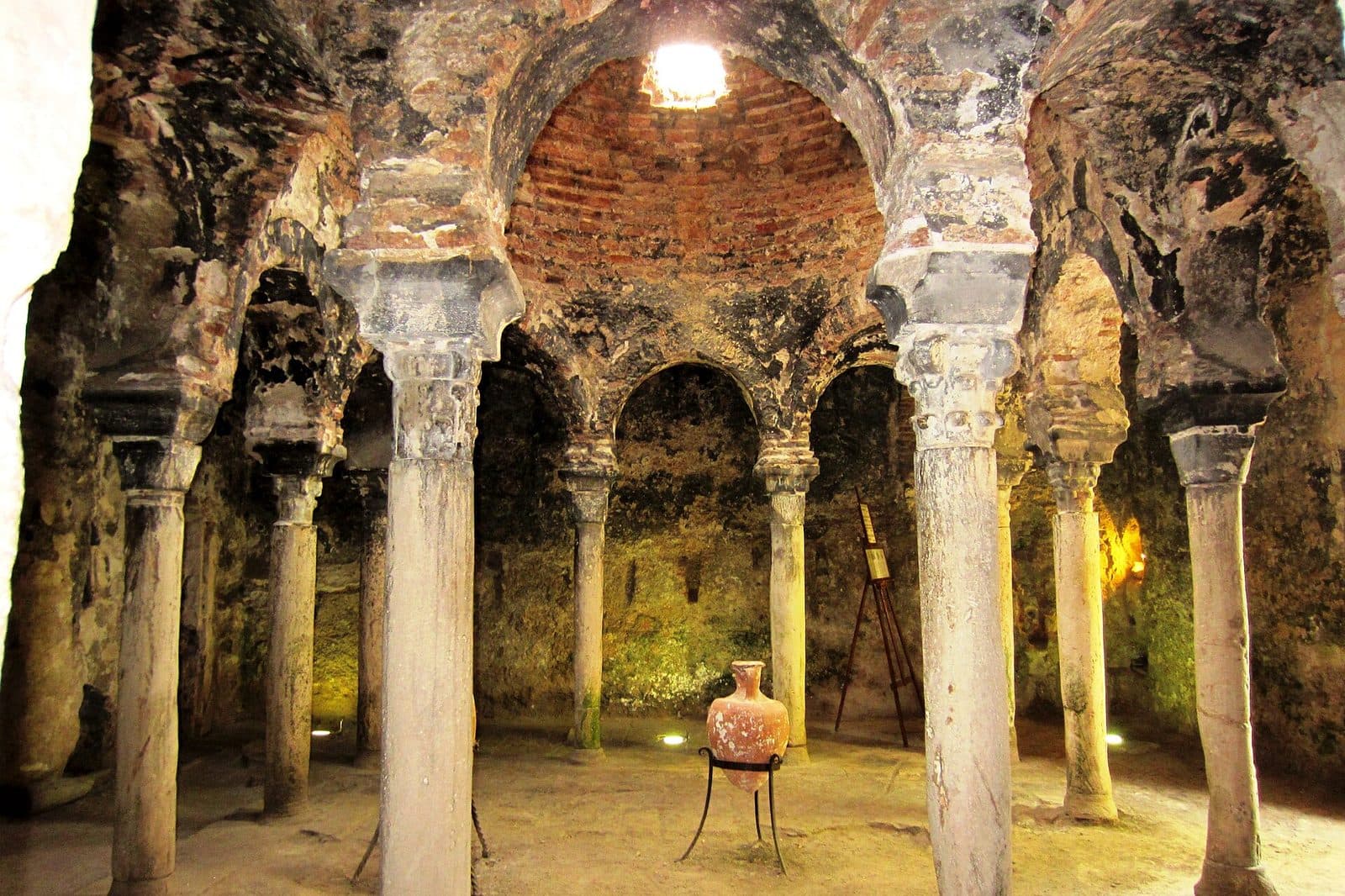
Behind the walls of the Old Town lies not a sprawling palace, but a small, remarkably concentrated remnant of medieval Palma. The Banys Àrabs preserve one of the few surviving glimpses of Islamic-era architecture on Mallorca. Anyone entering the domed hall stands among columns whose varied forms tell of even older buildings.
Their appeal lies precisely in their modest dimensions. Instead of a large exhibition, visitors encounter a group of historic spaces whose former function can still be read in the dome, light openings and heating technology. A leafy garden also forms part of the route. Among old walls, palms and orange trees, there is a sense of tranquillity that would be difficult to expect just a few steps away in the city's livelier lanes.
A visit is especially worthwhile for anyone who wants to discover Palma's history beyond the cathedral. Architecture enthusiasts can see how older structural elements were reused here; photographers will find striking contrasts between the dark interior, bright light from the dome and weathered stone. The baths are also well suited to a short stop on an Old Town walk. The right expectations are important, however: the Banys Àrabs are not a reconstructed spa complex or a large museum. Their value lies in a handful of original rooms, architectural traces and the imagination they inspire. Those who look slowly will discover more than those who simply hurry through the site.
History and significance
Medina Mayurqa
Long before later buildings shaped Palma's present-day skyline, the city was known as Medina Mayurqa and was an important centre of Islamic Mallorca. The Banys Àrabs are among the rare architectural remains to have survived from this period. Precisely because later alterations profoundly changed the face of the city, the surviving rooms have a significance far beyond their modest size.
The complex dates from Mallorca's Islamic period. It was built at a time when Mallorca belonged to Al-Andalus and the city was organised according to Islamic principles. Water played a central role, both in the water supply and in bathing culture. The surviving architecture shows that heat, water and steam were not handled improvisedly, but channelled through a deliberately planned system.
Baths beside an elegant residence
The rooms probably belonged to a larger palace or the residence of a wealthy inhabitant. This interpretation explains why the baths visible today appear so closely connected to what was once a private complex. Only a small section of the larger architectural setting has survived, so the two accessible rooms do not convey the complete layout of a large public hammam.
The baths followed a graduated sequence of different temperatures. The central heated room is described as the Caldarium. An adjoining room may have served as the Tepidarium, a moderately warm area. This cautious wording is important because the present-day ruins do not allow every section to be assigned a function with complete certainty.
History reused
One particularly vivid chapter of the building's history is found in its columns. They do not look like a uniformly commissioned set, but differ in their shafts and capitals. Several components came from older buildings, including elements of Roman origin. The builders therefore used existing materials and gave them a new role in the baths.
This reuse directly connected different construction periods and explains why the domed hall appears so irregular despite its clear design. One column reveals a different sense of form from the next. The room is therefore both a work of the Islamic Middle Ages and a bearer of older traces.
From bathhouse to monument
With the end of Islamic rule on Mallorca during the Middle Ages, Palma changed fundamentally. Large parts of Medina Mayurqa disappeared, were built over or were incorporated into later buildings. The surviving bathing rooms endured within the grounds of the former Can Fontirroig manor house and its orchard.
Today, the Banys Àrabs are accessible as a historical monument. This makes the site both quiet and demanding: it tells its story not through elaborate displays, but through masonry, columns, room temperature, light and the visible principles of its construction.
What to see
The domed hall
The strongest spatial impression is created immediately in the former warm or hot area. The hall has a square floor plan, yet the arrangement of the columns and the dome rising above them make it appear more enclosed and almost like a centralised space. Twelve columns support the structure. Their lack of uniformity is not a flaw, but one of the complex's most important details.
The eye is drawn upwards almost automatically. Small openings pierce the dome and allow daylight to enter the otherwise subdued interior. Depending on the position of the sun, individual sections of masonry appear brighter while the spaces between the columns remain in shadow. What fascinates as a lighting effect today also had a practical role when the baths were in operation: openings in the ceiling helped manage the steam.
The room should not be viewed only from the centre, however. The differences between the columns become clearer at the edges, and an oblique angle makes it easier to see how the dome and supports work together. The weathered surfaces are also part of the impression. They reveal no flawless decoration, but a building that has endured many centuries.
The twelve columns
No column is completely identical to another. Some capitals appear simpler, others more elaborate; their proportions and forms vary. This small forest of columns is a vivid example of spolia: structural elements taken from older buildings and reused. They include pieces dating from Roman times.
Anyone who photographs only the dome will therefore miss the real architectural and historical point. Only by comparing one column with another does it become clear that the hall was assembled from materials of different origins. The medieval builders nevertheless created a structurally sound and spatially convincing order from this heterogeneous collection. This process can be seen unusually closely in the Banys Àrabs: ancient elements support a medieval domed room that, in turn, survived within the later Old Town.
The Caldarium and underfloor heating
The central room is known as the Caldarium. Heat and steam were intended to define the experience here. Hot air circulated beneath the floor, warming the surface above. This principle, known as a hypocaust, was already used in antiquity and continued in later bathing cultures.
The technology explains why the floor was more than a simple walking surface. Beneath it lay a functional area for distributing heat. Water and heated surfaces created the humid warmth characteristic of the room. Nothing of that bathing experience remains today; it is precisely the contrast between the cool historic room and its former use that makes the visit so thought-provoking.
It is therefore worth reading the architecture through its purpose. Hot air circulated beneath the floor, while the openings in the dome admitted light and helped manage the steam. A seemingly simple chamber thus becomes a carefully planned technical system.
The adjoining room
Another surviving area lies beside the domed hall. It is interpreted as a possible Tepidarium, a room with a milder temperature. The complex originally formed part of a larger functional whole, but only two rooms survive today. The second room is therefore less striking than the domed hall and requires closer attention.
Its value lies primarily in the comparison. Only by moving between the rooms does it become clear that a historical bath was not a single steaming hall, but contained different climate zones. Even though the complete route through the original complex can no longer be traced, its basic principle can still be imagined.
The garden of Can Fontirroig
After the darker stone room, the garden opens up as a peaceful counterpoint. It occupies the former orchard of the Can Fontirroig manor house. Palms and orange trees, planted areas and seating give the visit a second focus that is less archaeological than atmospheric.
The garden helps visitors take in the site at leisure. From here, walls, vegetation and architecture can be viewed together. After the narrow Old Town lanes, the green space feels surprisingly secluded. It also offers different photographic subjects from the domed hall: weathered walls beside foliage, shadows beneath the trees and glimpses of the historic structures. Anyone not pressed for time should therefore treat the garden not merely as a path between the entrance and the baths, but as a distinct part of the experience.
Visiting the baths
From the Old Town route into the interior
The approach is already part of the experience. The Banys Àrabs are located in the older part of Palma, where narrow streets, changes of direction and occasional steps prevent a direct view of the destination. The complex does not rise monumentally from the cityscape. It is found rather than recognised from afar—a clear contrast to the widely visible cathedral.
After entering, the route leads through the surviving rooms and into the garden. It is worth first taking in the overall impression of the domed hall and only then examining the columns, capitals, light openings and floor more closely. Afterwards, the garden provides space for a break.
Time required and pace of visit
Around 20 to 30 minutes is usually allowed for the visit itself. This is enough time to see both rooms and walk through the garden once. Anyone taking photographs, comparing the column capitals or wishing to sit in the garden can easily stay longer.
A hurried walkthrough hardly does the site justice. The baths are understood not through a large number of exhibits, but through details. Two additional looks—one upwards into the dome and one sideways along the columns—often reveal more than a rushed circuit. The Banys Àrabs are too small to serve as a standalone destination for the day; their strength lies in combining them with an Old Town walk.
Time of day and visitor numbers
Palma's centre is particularly busy during the summer travel season. Although the baths lie in a quieter part of the Old Town, the domed hall is compact and feels noticeably more crowded even with a small group of visitors. Instead of immediately joining several people inside, visitors can explore the garden first and then return to the interior.
Opening hours and admission
The Banys Àrabs are open Monday to Sunday from 10:00 to 18:30. Admission is charged. As no reliable current price is available, it should be checked before visiting. When planning, it is also advisable not to arrive shortly before closing if you want to view the garden and architectural details without rushing.
Getting there and parking
From the airport to Palma
The road route from Palma Airport follows the Ma-19 into the city. Palma is 11 kilometres away by road, and the journey takes around 20 minutes. These details apply expressly to the journey as far as Palma, not to the entrance of the Banys Àrabs. Traffic, the time of day and access to the historic centre can make the final section longer.
From the Ma-19, continue towards the city centre. The baths lie within the Old Town's network of narrow lanes and restricted vehicle access, making a direct approach impractical. Walking is the more suitable option for the final section. This also means that the historical context begins along the way, as the route passes through the very dense urban fabric in which the monument has survived.
Walking through the Old Town
The complex is only a few minutes' walk from the cathedral. Anyone already in the centre will find walking the most practical way to reach it. Do not look only for a prominent building visible from afar: the Banys Àrabs are discreetly positioned within the network of lanes and appear only at close range.
Digital navigation is helpful in the small streets, but it does not replace paying attention to turns and steps. Depending on the starting point, the route may lead through irregular Old Town passages. A small time buffer prevents the search for the entrance from becoming a rushed part of the visit.
Parking at the edge of the historic centre
Searching for parking immediately beside the baths is not recommended. Driving through the narrow streets offers no advantage for the visit. It is more practical to leave the vehicle in a public parking facility at the edge of the Old Town and continue from there on foot.
This option combines well with a longer city walk. Instead of returning to the car after the baths, visitors can reach the cathedral, squares and other central sights on foot. Anyone arriving from the airport should therefore consider the approximately 20 minutes to Palma only the first part of the journey and allow additional time for parking and walking.
By bus
Several city bus stops are located around the Old Town area. Each still requires a walk through the lanes. The bus does not enter the complex's historic courtyard, so the apparently shortest route matters less than choosing a stop from which the final section can easily be combined with an Old Town walk.
Bus lines to Banys Àrabs at a glance
| Line | Route | Departures/day | First | Last |
|---|---|---|---|---|
| 501 | Manacor - Campos - Palma | 208 | 05:38 | 23:58 |
| 504 | Tolleric - Palma | 109 | 06:13 | 23:13 |
| 501e | Campos - Palma, exprés | 59 | 06:50 | 20:50 |
| 515e | Cala d'Or - Palma | 10 | 10:30 | 19:15 |
| 25 | s'Arenal - Pl. Reina | Catedral | 8 | 09:35 | 12:41 |
| 35 | Aquàrium - Pl. Reina | Catedral | 8 | 07:10 | 13:50 |
| N1 | Portopí - Porta des Camp | 4 | 00:55 | 23:55 |
| 512 | Portocolom - Felanitx | 1 | 08:05 | 08:05 |
From the official GTFS feeds (TIB/SFM), no real-time data. The figures cover all stops in the town; weekend and holiday services differ — check with the operator before travelling.
Getting there by bus
662-pl. de Cort · 0.3 km as the crow flies
- CCCircular Centre Ciutat · 08:00–08:00 · Daily
663-pl. d'en Coll · 0.4 km as the crow flies
- CCCircular Centre Ciutat · 08:00–08:00 · Daily
453-pl. de la Reina - Catedral · 0.4 km as the crow flies
- 25s'Arenal - Pl. Reina | Catedral · 06:36–21:01 · Daily
664-pl. de sa Quartera · 0.5 km as the crow flies
- CCCircular Centre Ciutat · 08:00–08:00 · Daily
7-pl. de la Reina - Catedral · 0.5 km as the crow flies
- 35Aquàrium - Pl. Reina | Catedral · 06:21–22:41 · Daily
458-Porta des Camp · 0.5 km as the crow flies
- 23s'Arenal / Parc Aquàtic - Pl. Espanya · 06:27–21:50 · Daily
- 25s'Arenal - Pl. Reina | Catedral · 06:36–21:01 · Daily
- 30Marivent-Palau de Congressos · 08:00–08:00 · Daily
- 31Sant Jordi - Sindicat · 08:00–08:00 · Daily
- 35Aquàrium - Pl. Reina | Catedral · 06:21–22:41 · Daily
- A1Aeroport - Palma Centre · 08:00–08:00 · Daily
- N1Portopí - Porta des Camp · 08:00–08:00 · Daily
Porta des Camp 2 (40002) · 0.5 km as the crow flies
- 501Manacor - Campos - Palma · Daily
- 501eCampos - Palma, exprés · Mon-Sat
- 504Tolleric - Palma · Daily
- 515eCala d'Or - Palma · Mon-Fri
1982-Parc de la Mar - Catedral · 0.5 km as the crow flies
- 25s'Arenal - Pl. Reina | Catedral · 06:36–21:01 · Daily
- 30Marivent-Palau de Congressos · 08:00–08:00 · Daily
450-Porta des Camp · 0.5 km as the crow flies
- 19UIB i Parc Bit - Porta des Camp · 05:46–22:12 · Daily
- 23s'Arenal / Parc Aquàtic - Pl. Espanya · 06:27–21:50 · Daily
- 31Sant Jordi - Sindicat · 08:00–08:00 · Daily
- 35Aquàrium - Pl. Reina | Catedral · 06:21–22:41 · Daily
- A1Aeroport - Palma Centre · 08:00–08:00 · Daily
- N1Portopí - Porta des Camp · 08:00–08:00 · Daily
986-pl. de la Reina - Catedral · 0.5 km as the crow flies
- 35Aquàrium - Pl. Reina | Catedral · 06:21–22:41 · Daily
- CCCircular Centre Ciutat · 08:00–08:00 · Daily
Porta des Camp 1 (40108) · 0.5 km as the crow flies
- 501Manacor - Campos - Palma · Daily
- 501eCampos - Palma, exprés · Mon-Sat
- 504Tolleric - Palma · Daily
- 512Portocolom - Felanitx · Daily
- 515eCala d'Or - Palma · Mon-Fri
106-pl. del Mercat · 0.5 km as the crow flies
- 3Pont d'Inca / Joan Carles I · 08:00–08:00 · Daily
- 4Ses Illetes - Pl. Columnes · 08:00–08:00 · Daily
- 7Son Gotleu - Son Serra - Sa Vileta / Son Vida · 08:00–08:00 · Daily
- 20Portopí - Son Espases · 06:06–22:40 · Daily
Timetable data: official GTFS feeds (TIB/EMT), no real-time — check with the operator before travelling.
Nearby sights
Palma's historic Old Town
The Banys Àrabs become more meaningful when viewed not in isolation, but as part of the city's many-layered history. Palma is now the capital of the Balearic Islands, yet traces of very different periods lie close together in its historic centre. The Arab Baths represent a phase that is rarely visible in the cityscape.
A walk through the surrounding streets also reveals how discreetly the monument is situated. Tall façades, narrow passageways and small squares shape the route. This closeness between the everyday city and a historical remnant is precisely what makes the visit so compelling: there is no freestanding landscape of ruins, but a surviving fragment within a city that continued to evolve around it.
Cathedral and Parc de la Mar
La Seu cathedral is only a few minutes' walk away and provides the most natural contrast. The Banys Àrabs feature small rooms, reused columns and subdued light. Together, the two sites reveal how profoundly Palma changed between the Islamic Middle Ages and the development of the Christian city.
Below the cathedral, Parc de la Mar offers an open view of the city's waterfront. After the narrow lanes and secluded garden of the baths, the sense of space there changes completely. For a walking route, this sequence is more meaningful than a series of unrelated individual sights: from the small domed room through the Old Town to monumental architecture and the open waterfront.
Santa Clara and Sant Francesc
The Santa Clara monastery and the Sant Francesc basilica can also be included in a walk through this part of Palma. They do not require an extensive additional visit to broaden the historical context. Anyone allowing only 20 to 30 minutes for the Banys Àrabs can turn the outing into a considerably longer cultural walk in this way. The baths remain a concentrated stop and need not be artificially extended into a half-day programme.
Squares and the rhythm of the city
Towards the centre, the route reaches livelier squares and shopping streets. The transition is distinct: from the quiet garden, visitors return to a Palma that functions as the political, economic and infrastructural centre of the Balearic Islands. For that very reason, a short seated break among palms and orange trees is more than mere decoration at the end of the visit.
A sensible order is to visit the baths before the larger attractions or as a quiet interlude between them. Those who have already spent a long time at the cathedral will find a smaller scale here; those who begin at the baths gain a historical perspective that sharpens their subsequent view of Palma's later architecture.
The place it belongs to
Palma in the place guidePractical information for your visit
The right expectations
You will not see a fully preserved bathhouse with pools, steam and reconstructed furnishings. The visit focuses on two historic rooms, the domed hall, architectural details and the garden. Anyone expecting a large exhibition or a modern hammam experience will miss the character of the place.
Its restraint is precisely its strength. The former use must be read from the construction: from the heated space beneath the floor and the openings in the dome. A little prior knowledge therefore makes a substantial difference. The terms Caldarium, Tepidarium and hypocaust alone help transform old walls into a functioning bathhouse in the mind's eye.
Clothing and footwear
Practical footwear is advisable because, depending on the route, access through Palma's Old Town may involve narrow lanes, changes of direction and steps. Anyone combining the visit with the cathedral, Parc de la Mar and other stops will be walking for an extended period anyway. There is less direct sunlight indoors than outside, while the garden offers both open and shaded areas. The contrast is pleasant on warm days.
Photographing with patience
The classic subject is the dome above the twelve columns. For a more expressive image, however, it is worth doing more than photographing directly upwards. A position to one side captures the columns, capitals and light openings together. Because the room is small, even a single group can significantly alter its atmosphere.
If it is busy, begin in the garden. The contrasts between plants and weathered masonry are particularly interesting there; in the hall, the strong difference in brightness between the dome openings and the shadows calls for a carefully composed shot.
Take time to look closely
The most important details are easily overlooked: the columns do not come from a uniform construction programme, the openings in the dome were functional, and today's garden occupies the former orchard of Can Fontirroig. Keeping these three points in mind already makes the site much easier to understand.
At the end, it is worth walking through the domed hall again. After viewing the garden and adjoining room, the construction often appears clearer than it did on first entering. The Banys Àrabs do not reward haste, despite their small size—or perhaps precisely because of it.