
Posada de s'Estorell – Renaissance House in Palma's Old Town
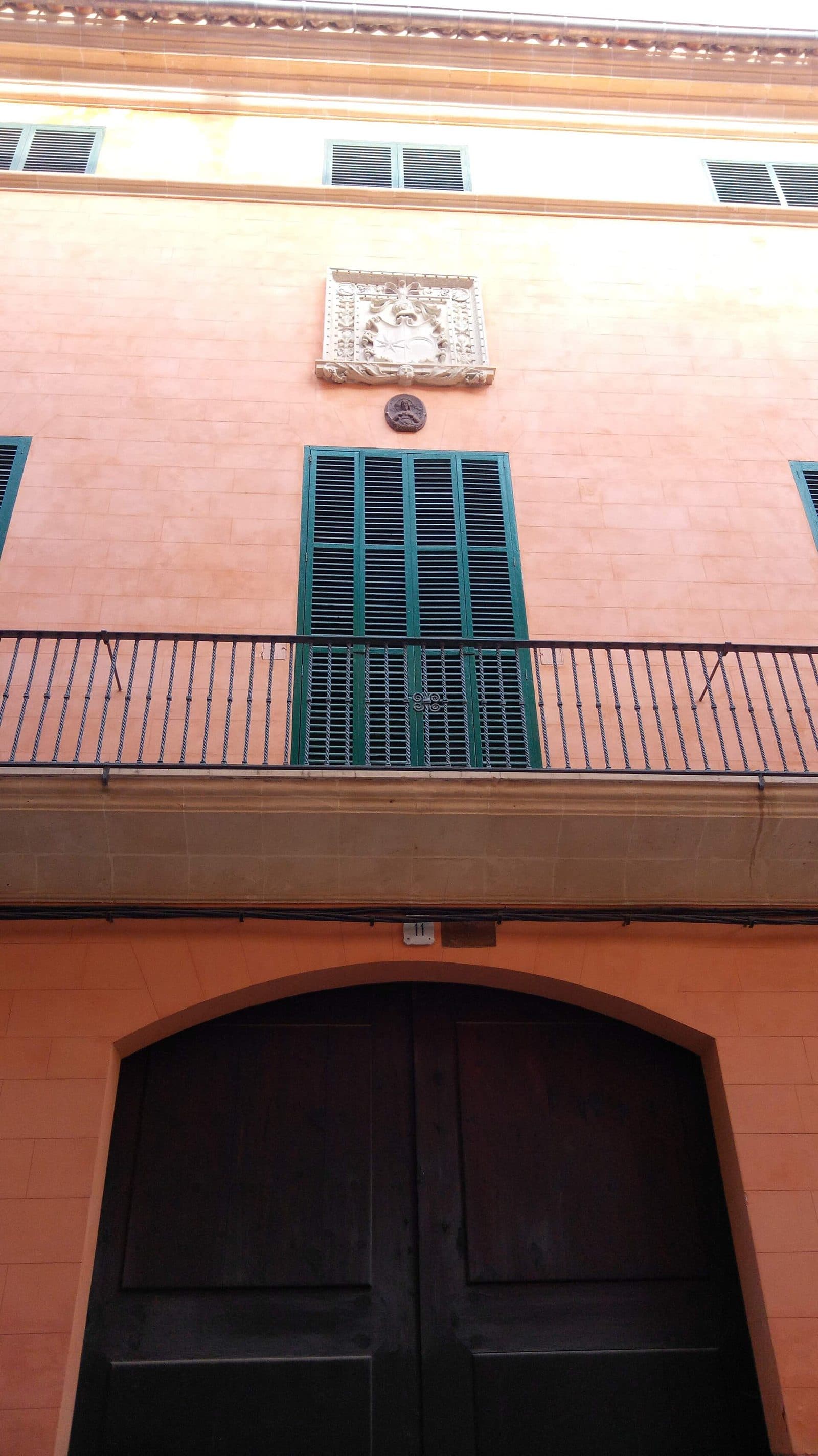

Amid the narrow lanes of the Old Town, the Posada de s'Estorell tells a story revealed not in a museum gallery, but through a city palace that remains in use. The house was built by the Morei family at the beginning of the 16th century and was later associated for centuries with the Lord of s’Estorell. Today, it is also known as Pont i Vic.
What makes it especially worth seeing is the interplay of different historical layers: The design is still rooted in medieval building traditions, while its street-facing appearance is shaped by the Renaissance. A courtyard lies behind the historic façade. The Posada is also listed in the City of Palma's heritage catalogue.
Visiting it, however, requires different expectations from visiting a church or museum. The building was restored as a residence and is not a conventional exhibition venue open to the public. It is therefore particularly rewarding for those who explore Palma's Old Town attentively on foot, compare historic façades, and appreciate buildings whose history can initially be understood only from the outside.
History and Significance
The Morei Family
The story begins with the Morei family: The Moreis had the house built at the beginning of the 16th century. Its location on today's Carrer d’en Morei preserves this connection even in the street name. The Posada was created during an era when Palma's medieval cityscape was continuing to evolve and new Renaissance forms were entering the architecture of the island's capital.
The building was initially based on a medieval architectural concept. This does not mean that the house visible today has survived unchanged from a single construction phase. Instead, it was maintained, altered, and refined over a long period. This gradual development explains precisely why the Posada de s'Estorell cannot be assigned neatly to just one architectural style: Its historic fabric reaches back to older traditions, while its prestigious appearance is defined by Renaissance forms added later.
The Lord of s’Estorell
After the Morei family, the house passed into the possession of the Lord of s’Estorell. Under him, it bore the name Posada de s’Estorell and remained connected with this lordship until 1811. Here, the name explicitly refers to the historic house in Palma—not to an estate, mountain, or landscape area with the same name elsewhere on Mallorca.
From Historic City Palace to Pont i Vic
Alterations and restorations continued over the following centuries. In the middle of the 20th century, the property was sold and subsequently used as an upscale family residence. Its residential function was therefore preserved, even as its owners, technical facilities, and requirements for the rooms changed.
A more recent restoration project led the building into a new chapter under the name Pont i Vic. Nine high-quality residences were planned within the historic shell. The conversion seeks to preserve the Renaissance façade and historic character while adapting the interior to contemporary living. Its inclusion in Palma's heritage catalogue underscores that the house is not only an exclusive address, but also part of the Old Town's architectural memory.
What to See
The Renaissance Façade
The façade is the first feature to examine. It is the most reliably visible public side of the Posada de s'Estorell and shows how the house has presented itself since the 16th century. Unlike a freestanding palace, it creates its effect within the continuous fabric of the Old Town: The narrow street forces visitors to move closer and view the frontage section by section.
Its Renaissance character is not a historical backdrop added to a modern new building. It belongs to the house's long development, whose origins were still shaped by medieval traditions. Renaissance elements were added from the 16th century onward, and later owners repeatedly had the property remodelled. Anyone looking at the façade is therefore not seeing a building frozen in one year, but the result of continual care and change.
The Medieval Design
An older architectural order lies beneath the prestigious exterior. The project's history describes the building as having medieval foundations. This layer is less immediately apparent from the street than the Renaissance façade, but it explains the structure of the historic house and its place within Palma's organically developed Old Town.
This is precisely where the building's appeal lies: It documents the transition between eras without one having completely displaced the other. The medieval layout, Renaissance design, and modern residential use are not separate exhibits. They are components of the same house, which has repeatedly been adapted to meet new needs.
The Courtyard
Historic photographs document a patio inside. The courtyard is therefore an essential part of understanding the architecture of the Posada de s'Estorell: Behind the enclosed street frontage, the house opens inward.
Nevertheless, the patio should not be confused with a freely accessible museum courtyard. Its current use as a residential complex limits access. Anyone standing before a locked door has not missed the most important part of a public exhibition, but is instead outside a historic private building. A look into the courtyard is appropriate only when access is expressly permitted on site.
The Restored Residences
The Pont i Vic project planned nine residences within the historic building fabric. The published designs combine modern interior design with the goal of preserving the character of the old house. This is significant for understanding the Posada because it was neither abandoned nor reduced to a purely decorative façade: It continues its centuries-long history as a place to live.
This modern layer is only partially visible from outside. That itself is part of the visitor experience. The Posada de s'Estorell presents its past not through display cases and labels, but through its façade, basic structure, patio, and continued use. Anyone expecting a fully furnished historic interior is therefore approaching the building from the wrong perspective.
Visiting the Posada de s'Estorell
An Architecture Stop Rather Than a Museum Tour
The best approach begins with a walk along Carrer d’en Morei. The Posada de s'Estorell is a destination for close observation, not a monument with a set visitor route. From outside the façade, visitors can appreciate how closely historic residences fit into Palma's street network and how strongly their impact depends on their immediate surroundings.
Because the house is now used for residential purposes, a visit should initially be planned as an exterior viewing. Regular opening hours and admission conditions have not been documented; anyone specifically planning to see the interior should therefore check current access options in advance. An open door at a private building is not an invitation to enter the courtyard or stairways without permission.
How Much Time to Allow
A short stop during an Old Town walk is sufficient for the façade alone. It is worth allowing more time if the Posada forms part of a deliberate exploration of Palma's historic residences. The aim is then less about ticking off as many rooms as possible and more about comparing façades, the widths of lanes, and courtyards.
A fixed visit duration would be misleading because it depends entirely on the access available at the time. Without confirmed admission, the Posada remains a compact stop. If access to the interior is possible during an announced opening or authorised visit, the patio becomes the crucial spatial counterpart to the street façade.
Respecting the Residential Building
Pont i Vic was developed as a peaceful residence in the heart of the historic Old Town. Visitors should behave with corresponding discretion. Entrances and passageways must remain clear; conversations, photography, and waiting for possible glimpses inside should not disturb residents. This is especially important in the narrow street, where pedestrians and residents pass close to one another.
With children, the Posada works well as a brief stop during a city walk. However, visitors should not expect an exhibition, interactive interpretation, or facilities designed specifically for families. The stop becomes more interesting if children look for the differences between the enclosed street frontage and the courtyard layout behind it, or spot the name Morei on the house and in the street name.
Getting There and Parking
From Palma Airport to the Old Town
The drive from Palma Airport follows the Ma-19 into the island's capital. Palma is 11 kilometres away by road, and the journey takes around 20 minutes. These figures apply specifically to the route into Palma, not directly to the entrance of the Posada de s'Estorell. The final section leads into the historic Old Town, with narrow streets, one-way systems, pedestrian areas, and restricted-access zones.
Carrer d’en Morei is the key destination when finding the property. Drivers using a navigation system should nevertheless avoid following every turn instruction blindly. In Palma's Old Town, ACIRE signs mark areas that may be entered only by authorised vehicles, with cameras recording number plates. The more relaxed option is usually to leave the car outside the historic network of lanes and continue on foot.
Parking Near the Old Town
The Posada has no documented visitor parking. Public car parks or parking areas along the larger roads and by the harbour are suitable for an Old Town walk. The Carrer del Moll car park is somewhat hidden on Camí de l’Escullera and offers around 300 spaces. From there, the route continues into the Old Town on foot.
Before entering outdoor parking areas, always check the signs, coloured markings, and any time limits. Searching for parking directly beside the Posada is hardly worthwhile: The surroundings are defined by narrow historic lanes and restricted traffic, not by convenient parking spaces in front of individual houses.
By Bus and on Foot
Several stops provide access to the Old Town centre. Plaça de Cort, Plaça d’en Coll, Plaça de la Reina by the cathedral, and Plaça de sa Quartera are conveniently located as possible starting points for the final walk. The best stop depends on the bus route used.
Walking is also the most fitting way to approach the building. From the larger squares, the streets gradually narrow, and the Posada appears not as an isolated monument but as part of a continuous historic neighbourhood. This context would be lost by travelling directly to the door.
Bus lines to Posada de s'Estorell at a glance
| Line | Route | Departures/day | First | Last |
|---|---|---|---|---|
| 35 | Aquàrium - Pl. Reina | Catedral | 8 | 07:10 | 13:50 |
| 3 | Pont d'Inca / Joan Carles I | 6 | 07:37 | 09:46 |
| 25 | s'Arenal - Pl. Reina | Catedral | 6 | 09:35 | 12:41 |
| 20 | Portopí - Son Espases | 2 | 07:17 | 07:19 |
From the official GTFS feeds (TIB/SFM), no real-time data. The figures cover all stops in the town; weekend and holiday services differ — check with the operator before travelling.
Getting there by bus
662-pl. de Cort · 0.2 km as the crow flies
- CCCircular Centre Ciutat · 08:00–08:00 · Daily
663-pl. d'en Coll · 0.4 km as the crow flies
- CCCircular Centre Ciutat · 08:00–08:00 · Daily
453-pl. de la Reina - Catedral · 0.4 km as the crow flies
- 25s'Arenal - Pl. Reina | Catedral · 06:36–21:01 · Daily
664-pl. de sa Quartera · 0.4 km as the crow flies
- CCCircular Centre Ciutat · 08:00–08:00 · Daily
7-pl. de la Reina - Catedral · 0.4 km as the crow flies
- 35Aquàrium - Pl. Reina | Catedral · 06:21–22:41 · Daily
106-pl. del Mercat · 0.4 km as the crow flies
- 3Pont d'Inca / Joan Carles I · 08:00–08:00 · Daily
- 4Ses Illetes - Pl. Columnes · 08:00–08:00 · Daily
- 7Son Gotleu - Son Serra - Sa Vileta / Son Vida · 08:00–08:00 · Daily
- 20Portopí - Son Espases · 06:06–22:40 · Daily
986-pl. de la Reina - Catedral · 0.4 km as the crow flies
- 35Aquàrium - Pl. Reina | Catedral · 06:21–22:41 · Daily
- CCCircular Centre Ciutat · 08:00–08:00 · Daily
52-pl. del Mercat · 0.4 km as the crow flies
- 4Ses Illetes - Pl. Columnes · 08:00–08:00 · Daily
- 7Son Gotleu - Son Serra - Sa Vileta / Son Vida · 08:00–08:00 · Daily
- 20Portopí - Son Espases · 06:06–22:40 · Daily
- 35Aquàrium - Pl. Reina | Catedral · 06:21–22:41 · Daily
1982-Parc de la Mar - Catedral · 0.5 km as the crow flies
- 25s'Arenal - Pl. Reina | Catedral · 06:36–21:01 · Daily
- 30Marivent-Palau de Congressos · 08:00–08:00 · Daily
105-pl. de Joan Carles I - Catedral · 0.5 km as the crow flies
- 3Pont d'Inca / Joan Carles I · 08:00–08:00 · Daily
- 4Ses Illetes - Pl. Columnes · 08:00–08:00 · Daily
- 7Son Gotleu - Son Serra - Sa Vileta / Son Vida · 08:00–08:00 · Daily
- 20Portopí - Son Espases · 06:06–22:40 · Daily
1048-pl. de Joan Carles I · 0.5 km as the crow flies
- 25s'Arenal - Pl. Reina | Catedral · 06:36–21:01 · Daily
- 35Aquàrium - Pl. Reina | Catedral · 06:21–22:41 · Daily
985-pl. de Joan Carles I · 0.5 km as the crow flies
- CCCircular Centre Ciutat · 08:00–08:00 · Daily
Timetable data: official GTFS feeds (TIB/EMT), no real-time — check with the operator before travelling.
Things to See Nearby
Zona Catedral
The Posada de s'Estorell stands in the part of the Old Town frequently known as Zona Catedral. From here, key sites in the historic city can be linked on foot. La Seu Cathedral, the gardens of the Bishop's Palace, the Arab Baths, and Museu de Mallorca are among the nearby stops on a walking route.
For understanding the Posada, this setting is more important than a simple list of famous sights. The house was built in the historic Old Town near ecclesiastical and historic sites. A walk makes these differences in scale immediately comprehensible: Monumental architecture gives way to inconspicuous doors, which may in turn conceal historic courtyards.
Plaça de Cort and Sant Francesc
Heading toward the city centre, Plaça de Cort is the next useful major landmark. From there, the route can continue to Plaça de Sant Francesc. Both squares open up the urban space after the narrower lanes and are therefore ideal for combining a visit to the Posada with other historic buildings.
Anyone interested in Palma's old residential architecture should look beyond churches and public monuments along the way. Houses such as Ca n’Olesa and Can Ordines d’Almadrà are also nearby. The Posada de s'Estorell becomes more meaningful through comparison: Its distinctive character lies in the combination of a medieval layout, Renaissance façade, and present-day residential use.
Cathedral and Parc de la Mar
Toward the coast, the route leads to the cathedral and onward to Parc de la Mar. There, the view opens up after experiencing the Posada at close range within the narrow street. The contrast between the restrained façade of a private city palace and the widely visible monumental architecture of La Seu reveals two very different faces of historic Palma.
The Posada is therefore not a reason for a long excursion on its own, but it is a carefully placed stop within a day in the Old Town. It directs attention away from the major landmarks and toward the private architectural culture that has shaped the neighbourhood just as strongly over the centuries.
Local insider tips
Study the Façade Up Close
The narrow Carrer d’en Morei offers no classic view from a distance. Instead of stepping back, walk slowly along the frontage: This makes its Renaissance character and integration into the row of houses easier to understand.
Do Not Assume Patio Access
The courtyard is key to understanding the house's layout, but Pont i Vic serves residential purposes. It should be viewed only when access is expressly permitted; on a regular Old Town walk, the façade is the reliably accessible sight.
Approach via Plaça de Cort
From Plaça de Cort, the route approaches on foot through the historic network of lanes. This allows the Posada to appear not as an isolated object, but within its original urban context.
Watch for ACIRE Signs
Do not let navigation direct you all the way to the front door: In the Old Town, ACIRE signs mark restricted-access areas with number-plate recording. It is better to park outside and complete the final section on foot.
Combine It with Zona Catedral
The Posada can usefully be combined with the cathedral, the Bishop's gardens, the Arab Baths, and Museu de Mallorca. Moving between a private city palace and major monuments sharpens your understanding of Palma's architectural history.