
Can Sansimón in Palma: Historic Old Town Courtyard
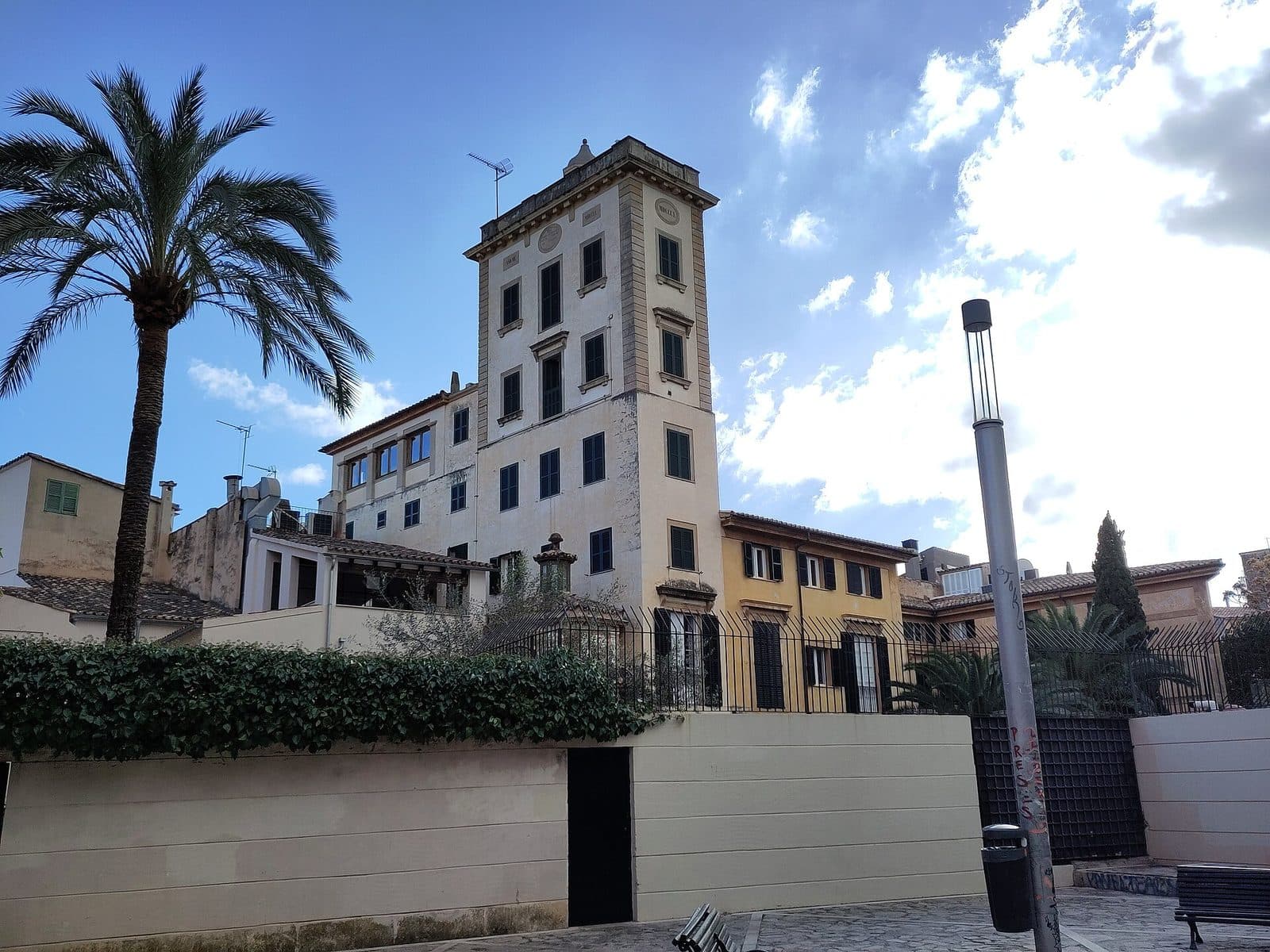

Amid the dense network of streets in the Old Town, Can Sansimón is a reminder that Palma’s historical heritage consists of more than churches, palaces and public monuments. The house on Carrer de Sant Jaume is one of those quieter architectural witnesses whose significance lies behind the street frontage: its focal point is an 18th-century courtyard considered a remarkable example of Mallorcan courtyard architecture.
Can Sansimón is particularly worthwhile for visitors who want to understand Palma through its historic buildings. Rather than offering an imposing overall spectacle, the site presents a precise architectural feature. The courtyard is attributed to the 18th century and is considered a remarkable example of Mallorcan architecture. For architecture enthusiasts, this is revealing; for those exploring the Old Town on foot, it is an opportunity to shift their gaze from the famous main attractions to the less obvious traces of the city’s history.
However, Can Sansimón should not be confused with a conventional museum. No reliable general visiting hours are recorded, and the house’s historic character does not automatically mean that all areas are freely accessible. Anyone specifically wishing to see the courtyard should therefore check current access arrangements in advance. As a stop on a walk through central Palma, the building remains interesting even if the visit is limited to the address and whatever impression can be gained from there.
The name appears in directories with different spellings, including Can Sansimón and Ca’n San Simón. This article refers exclusively to the historic building on Carrer de Sant Jaume in Palma’s Centre district, not the similarly named Can Simoneta hotel on Mallorca’s east coast.
History and significance
In the 18th century, Can Sansimón belonged to the Orlandis family. This documented ownership provides the key historical reference for understanding the house. Can Sansimón is a historic building in Palma’s historic centre.
The Orlandis family
The association with the Orlandis family makes the house’s history more tangible. The Orlandis family is documented as the owner of this building in the 18th century. More extensive biographical episodes, accounts of alterations or precise details about how individual rooms were used are not securely documented and should not be retrospectively attributed to the house.
The documented connection between the owning family, the Old Town location and the courtyard is already significant in itself.
The 18th century
The courtyard is attributed to the 18th century and is regarded as a particularly successful example of a terrace or courtyard space from that period.
The building belongs to Palma’s Old Town. Within this lively setting, the courtyard preserves an architectural form from the 18th century and is considered an example of Mallorcan architecture.
Historic landmark rather than museum
Today, Can Sansimón is listed as a historic landmark in Palma. This designation is important for setting expectations before a visit. It does not promise a permanent exhibition, rooms furnished as a museum or a signposted tour. The site’s value lies in the house itself and, above all, in its courtyard.
Can Sansimón thus broadens the picture of the Old Town. Its main documented feature is the 18th-century courtyard.
What to see
The main attraction is not an extensive collection but something beyond the threshold of the house. Can Sansimón is known for its courtyard, which is considered a fine example of an 18th-century complex. Anyone granted access should therefore not treat the courtyard as merely a passageway. It is the true historical exhibit.
The courtyard
The courtyard belongs to the historic building on Carrer de Sant Jaume. Carrer de Sant Jaume lies in central Palma, while the courtyard is located inside the house.
Sources describe it both as a courtyard and as an 18th-century terrace. This refers to an open or courtyard-like area forming part of the property’s historic structure. Its quality lies in the overall composition. It is therefore worth looking beyond individual decorative details and first considering the space as a whole: How is the courtyard enclosed by the surrounding parts of the building? What sight lines emerge from the passageway?
In historic townhouses in particular, the architectural concept can often be appreciated better from a quiet position than while passing through quickly. The courtyard of Can Sansimón is neither a viewpoint nor a large public square. It is considered a remarkable example of an 18th-century terrace or courtyard.
The threshold between street and house
Understanding Can Sansimón also requires attention to the courtyard’s position within the building. Can Sansimón makes a specifically documented 18th-century courtyard visible.
Can Sansimón stands on Carrer de Sant Jaume in the Centre district and forms part of the Old Town’s built fabric. The building does not appear as a freestanding monument. Anyone looking only for towers, grand portals or broad squares may pass the address without recognising the historical quality of the building and its courtyard.
For the same reason, any closed access point should be respected. The courtyard’s cultural and historical importance does not automatically make the property a public space that is open at all times. A visit depends on the access currently permitted.
The building within the Old Town
The building’s immediate setting is also part of what makes it worth seeing. Can Sansimón stands on Carrer de Sant Jaume in the heart of the old city rather than on a cleared monument square. Its street frontage forms part of a broader urban context. The house can therefore be viewed not only from the front but also understood during a short walk along the street.
This location explains the attraction’s distinctive character. Can Sansimón is not a sight that dominates Palma from a distance. It calls for close attention to the scale of the Old Town. The historic courtyard is a vivid example of how 18th-century architecture is integrated into an urban district.
What is not part of the visit
There is no documented exhibition, collection of furnished historic rooms, observation tower or designated visitor route at Can Sansimón. Accordingly, the visit should not be planned with the expectations associated with a palace or museum. The attraction centres on the historic building and its courtyard.
This does not diminish its appeal, but it does establish the right context. Can Sansimón is aimed primarily at people who want to examine an architectural detail carefully and place it within the city’s history. Anyone looking for an extensive indoor programme should combine this stop with a broader walk through the Old Town.
Visiting Can Sansimón
Can Sansimón is best experienced as a deliberate stop during a walk through central Palma. Carrer de Sant Jaume lies in the Centre district, so no separate excursion beyond the city is necessary. The key is to head consciously for the address and allow sufficient attention for a building whose most important area does not stand openly on a square.
Check access in advance
Neither reliable general opening hours nor a current admission price are recorded for Can Sansimón. Before making a special trip, it is therefore advisable to check the current access arrangements. This is particularly important if the courtyard is the main objective. A historic landmark may be in private use or accessible only under certain conditions; landmark status alone does not imply free admission.
Once there, visitors should enter only areas that are clearly open to the public. If access is closed, the stop will be brief. If a permitted view into the courtyard is available, it is worth not leaving immediately. The spatial effect becomes clearer when the courtyard and the surrounding parts of the building are considered first.
A short, focused visit
The time required depends entirely on the access actually available. A short stop is sufficient to view the exterior and locate the address. If the courtyard can be visited, allow more time to appreciate it calmly, but do not expect a lengthy museum tour. There is no documented sequence of multiple exhibition rooms that must be explored systematically.
This manageable format makes Can Sansimón a good intermediate stop. The site does not require extensive planning for the day, but it rewards close observation. A visit is particularly worthwhile for travellers who want to compare several of Palma’s historic houses and streetscapes.
Crowds and time of day
No specific visitor statistics or reliable peak periods are documented. It would therefore be misleading to present a particular time as a guaranteed quiet window. It is more practical to plan the visit around confirmed access and your own Old Town route. Anyone wishing to take photographs or study architectural details should leave sufficient room for other passers-by, as this is an address within the city’s everyday activity.
Can Sansimón is not a large visitor attraction with a waiting area. If several people are standing at the entrance at the same time, restraint is advisable. The courtyard and access situation can be experienced more comfortably when the passageway is not blocked.
Who will particularly enjoy this stop
Architecture enthusiasts will find at Can Sansimón a tangible example of an 18th-century Mallorcan courtyard. Those interested in urban history can compare the property with Palma’s major public buildings. Photographers may also find the contrast between the street and courtyard appealing, provided that photography and entry are permitted on site.
Anyone visiting with children should present the stop as a brief discovery during a walk rather than as an extensive attraction. No child-friendly stations or exhibition are documented. The place works best when everyone looks for the entrance together and it is explained that the well-known courtyard lies inside the historic building.
Getting there and parking
From Palma Airport, the route initially follows the Ma-19 towards Palma. The road distance to the city is 11 kilometres, and the journey takes around 20 minutes. These figures apply explicitly to the route as far as Palma, not directly to Can Sansimón. The final section leads into the centre and then to Carrer de Sant Jaume, where the historic house stands in the Old Town.
From the airport via the Ma-19
The Ma-19 is the main connection between the airport and Palma. After entering the urban area, navigation should be set for Carrer de Sant Jaume.
The measured 11 kilometres and approximately 20 minutes end in Palma. How long it then takes to reach the attraction depends on traffic, the chosen approach and the parking location. Particularly during busy periods, allow extra time to find parking and walk the remaining distance.
Parking outside the Old Town streets
One documented option is the underground Parking de Paseo Mallorca, also known as Aparcament Passeig Mallorca. It is located on Passeig de Mallorca. From there, continue on foot.
Another documented underground car park is Parking Saba sa Gerreria on the eastern edge of the Old Town. It is particularly suitable as a starting point if Can Sansimón is included in a longer walk through the centre. Which car park is more practical depends on the rest of the day’s route.
Taking the bus into the centre
Several stops around Plaça de Joan Carles I include “Catedral” in their names and lie within the central urban area. These include 53-pl. de Joan Carles I - Catedral, 105-pl. de Joan Carles I - Catedral, 1048-pl. de Joan Carles I and 985-pl. de Joan Carles I. From there, continue on foot through the centre to Carrer de Sant Jaume.
The stops are particularly convenient when visiting Can Sansimón together with other Old Town attractions. The appropriate route depends on the point of departure and should be checked against the current timetable. Within the Old Town, continue on foot until reaching Can Sansimón on Carrer de Sant Jaume.
Bus lines to Can Sansimón at a glance
| Line | Route | Departures/day | First | Last |
|---|---|---|---|---|
| 3 | Pont d'Inca / Joan Carles I | 6 | 07:37 | 09:46 |
| 20 | Portopí - Son Espases | 4 | 07:17 | 07:31 |
From the official GTFS feeds (TIB/SFM), no real-time data. The figures cover all stops in the town; weekend and holiday services differ — check with the operator before travelling.
Getting there by bus
53-pl. de Joan Carles I - Catedral · 0.1 km as the crow flies
- 4Ses Illetes - Pl. Columnes · 08:00–08:00 · Daily
- 7Son Gotleu - Son Serra - Sa Vileta / Son Vida · 08:00–08:00 · Daily
- 20Portopí - Son Espases · 06:06–22:40 · Daily
105-pl. de Joan Carles I - Catedral · 0.1 km as the crow flies
- 3Pont d'Inca / Joan Carles I · 08:00–08:00 · Daily
- 4Ses Illetes - Pl. Columnes · 08:00–08:00 · Daily
- 7Son Gotleu - Son Serra - Sa Vileta / Son Vida · 08:00–08:00 · Daily
- 20Portopí - Son Espases · 06:06–22:40 · Daily
1048-pl. de Joan Carles I · 0.1 km as the crow flies
- 25s'Arenal - Pl. Reina | Catedral · 06:36–21:01 · Daily
- 35Aquàrium - Pl. Reina | Catedral · 06:21–22:41 · Daily
985-pl. de Joan Carles I · 0.1 km as the crow flies
- CCCircular Centre Ciutat · 08:00–08:00 · Daily
52-pl. del Mercat · 0.2 km as the crow flies
- 4Ses Illetes - Pl. Columnes · 08:00–08:00 · Daily
- 7Son Gotleu - Son Serra - Sa Vileta / Son Vida · 08:00–08:00 · Daily
- 20Portopí - Son Espases · 06:06–22:40 · Daily
- 35Aquàrium - Pl. Reina | Catedral · 06:21–22:41 · Daily
106-pl. del Mercat · 0.2 km as the crow flies
- 3Pont d'Inca / Joan Carles I · 08:00–08:00 · Daily
- 4Ses Illetes - Pl. Columnes · 08:00–08:00 · Daily
- 7Son Gotleu - Son Serra - Sa Vileta / Son Vida · 08:00–08:00 · Daily
- 20Portopí - Son Espases · 06:06–22:40 · Daily
107-la Rambla - Via Roma · 0.3 km as the crow flies
- 25s'Arenal - Pl. Reina | Catedral · 06:36–21:01 · Daily
- 35Aquàrium - Pl. Reina | Catedral · 06:21–22:41 · Daily
986-pl. de la Reina - Catedral · 0.3 km as the crow flies
- 35Aquàrium - Pl. Reina | Catedral · 06:21–22:41 · Daily
- CCCircular Centre Ciutat · 08:00–08:00 · Daily
54-Jaume III · 0.3 km as the crow flies
- 4Ses Illetes - Pl. Columnes · 08:00–08:00 · Daily
- 7Son Gotleu - Son Serra - Sa Vileta / Son Vida · 08:00–08:00 · Daily
- 20Portopí - Son Espases · 06:06–22:40 · Daily
104-Jaume III · 0.3 km as the crow flies
- 3Pont d'Inca / Joan Carles I · 08:00–08:00 · Daily
- 4Ses Illetes - Pl. Columnes · 08:00–08:00 · Daily
- 7Son Gotleu - Son Serra - Sa Vileta / Son Vida · 08:00–08:00 · Daily
- 20Portopí - Son Espases · 06:06–22:40 · Daily
- CCCircular Centre Ciutat · 08:00–08:00 · Daily
50-la Rambla - Via Roma · 0.3 km as the crow flies
- 4Ses Illetes - Pl. Columnes · 08:00–08:00 · Daily
- 7Son Gotleu - Son Serra - Sa Vileta / Son Vida · 08:00–08:00 · Daily
- 20Portopí - Son Espases · 06:06–22:40 · Daily
- 35Aquàrium - Pl. Reina | Catedral · 06:21–22:41 · Daily
108-La Rambla-Via Roma · 0.3 km as the crow flies
- 3Pont d'Inca / Joan Carles I · 08:00–08:00 · Daily
- 4Ses Illetes - Pl. Columnes · 08:00–08:00 · Daily
- 7Son Gotleu - Son Serra - Sa Vileta / Son Vida · 08:00–08:00 · Daily
- 20Portopí - Son Espases · 06:06–22:40 · Daily
Timetable data: official GTFS feeds (TIB/EMT), no real-time — check with the operator before travelling.
Nearby attractions
After viewing the courtyard, the route leads directly back into Palma’s historic centre. This location in particular makes Can Sansimón a worthwhile addition to a day in the city. The visit does not need to be artificially extended; it gains meaning through comparison with the streets, squares and larger monuments of the Old Town.
Palma’s Centre district
Carrer de Sant Jaume lies in the Centre district, Palma’s urban core. Can Sansimón reveals an understated side of this centre. The focus is not on its visual impact from a distance but on the historic building and its courtyard.
The street itself should therefore also be observed during a walk. The courtyard lies inside the building. This difference becomes particularly vivid when compared with the city’s open squares.
The cathedral and central Old Town
The word “Catedral” in the names of several stops around Plaça de Joan Carles I indicates their proximity to Palma’s central sightseeing area. Can Sansimón can therefore easily be combined with a walk towards La Seu Cathedral and the adjoining Old Town streets. A detailed portrait of these monuments is unnecessary here: for planning purposes, it is enough to understand that they provide a much larger, public counterpoint to the smaller scale of the historic building.
Anyone who first visits the cathedral or the major squares and then heads to Can Sansimón will experience two very different forms of architecture. There, long-distance visual impact and public space take centre stage; here, the focus is a courtyard within a historic building. Alternatively, Can Sansimón can form the starting point before the route opens out towards the better-known monuments.
Historic houses as a shared theme
Palma has other historic town palaces and notable buildings. Can Sansimón can therefore be included in an architectural history walk that considers not only individual façades but also portals, entrances and courtyards. Depending on the route, Casal Balaguer, Can Cera or Can Casasayas can provide further points of reference without reducing Can Sansimón to a mere secondary stop.
Its own contribution remains clearly defined: the 18th-century courtyard and the documented connection with the Orlandis family. Anyone comparing several houses should avoid mixing up their individual features. Can Sansimón is neither the Can Simoneta hotel nor one of Palma’s other historic “Can” buildings.
A break in the centre
Palma’s centre offers numerous options for a break after the walk. One traditional address is Ca’n Joan de s’Aigo, a family business that has produced Mallorcan confectionery for centuries and now operates several locations in Palma. A visit there is not part of Can Sansimón itself, but it can provide a flavourful conclusion to an Old Town walk.
The combination is particularly appealing thematically: the historic house reflects Palma’s architecture, while the traditional business represents continuing urban craftsmanship and local food culture. This creates a city walk that does more than simply tick off the major monuments, allowing visitors to experience different layers of old Palma.
The place it belongs to
Palma in the place guidePractical visitor information
The most important practical point concerns expectations. Can Sansimón is a historic building with a significant courtyard, but it is not a museum confirmed to open daily. Anyone travelling specifically for an interior visit should clarify access beforehand. If it is included in an already planned stay in central Palma, the stop can be approached more flexibly.
Clothing and footwear
No special equipment is required for the building. Comfortable shoes are advisable, however, because the visit is usually combined with a walk through the Old Town.
A large part of the visit takes place not in an air-conditioned exhibition area but while walking through Palma and possibly waiting outside the entrance. Clothing should therefore suit the weather and an urban walk. The courtyard is not a substitute for an extended break in the shade, particularly because access cannot be assumed.
Respecting the house
Can Sansimón’s status as a historic landmark does not mean that every area may be entered or photographed by the public. Signs visible on site, closed doors and private uses must be respected. Even when the entrance is open, visitors should not assume that adjoining rooms are accessible.
It is best to focus on the documented main feature: the courtyard as an 18th-century architectural space. This keeps the visit factual and attentive without attributing to the building a museum role that is not documented.
Visiting with children
For families, Can Sansimón is more suitable as a brief observation activity than as a standalone children’s programme. There are no documented play areas, interactive stations or exhibitions. Looking for the historic building and its well-known courtyard can provide the element of discovery.
Because the stop is usually part of a city walk, its length should be adapted to the children’s age and attention span. Pushchairs or other mobility aids should be taken into the courtyard only if current access and the physical setting clearly allow it; reliably step-free access is not recorded.
Understanding Can Sansimón correctly
Visitors should not expect a panorama over Palma, a large garden, archaeological excavations or an exhibition about the island’s entire history. Can Sansimón presents a narrower but vivid subject: a historic building, the connection with the Orlandis family and an 18th-century courtyard.
This focus is the attraction’s strength. Anyone who visits with a clear question—what is documented about the historic building and its courtyard?—will gain more than someone simply looking for another photo opportunity. Can Sansimón is a house that rewards a second look.
Local insider tips
Look for the courtyard
Can Sansimón does not resemble a freestanding monument. The key detail lies behind the street frontage: the 18th-century courtyard is the real reason to seek out the address deliberately.
Compare it with grand buildings
Can Sansimón is especially easy to understand after visiting Palma’s public monuments. The private scale of the courtyard provides an illuminating counterpoint to the cathedral, squares and representative façades.
Leave the car outside the Old Town
Do not drive all the way to the house: Parking de Paseo Mallorca lies outside the narrowest Old Town lanes. From there, Can Sansimón can be included on foot in a walk through the Centre district.
Check the correct name
Directories use both Can Sansimón and Ca’n San Simón. Do not confuse it with Can Simoneta: this similarly named hotel is on Mallorca’s east coast and has nothing to do with the historic house in Palma.