
Can Tacón in Palma – Historic House in the Old Town
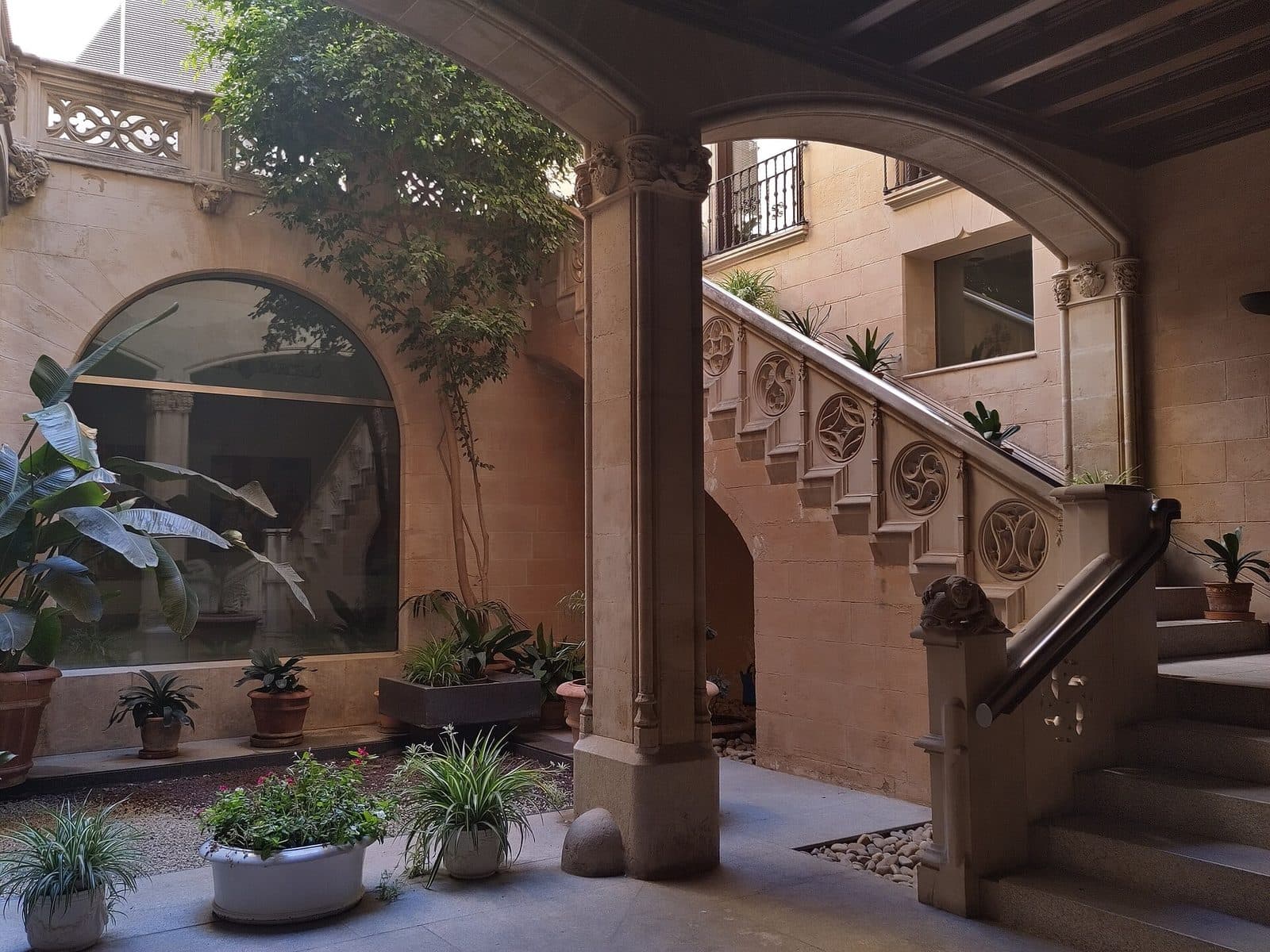

Can Tacón is one of those historic houses through which Palma can be understood not by looking at a grand monument, but on the scale of its Old Town. The building stands in the old center of the Mallorcan capital and is listed in local directories as a historic attraction. Compared with La Seu or the Royal Palace of La Almudaina, it appears understated—which is precisely why it fits well into a walking tour that does not follow only the best-known landmarks.
Can Tacón is particularly interesting for visitors who enjoy viewing architecture in its urban context. The house is associated with Catalan Gothic, Baroque, and Modernisme influences. It therefore tells its story less through a single monumental façade than through the coexistence of the architectural styles that have shaped Palma's cityscape over a long period.
Can Tacón is not a full-day destination in its own right. The most rewarding setting is a walk through the Old Town, where historic houses, narrow streets, squares, and courtyards become visible as parts of a connected urban fabric. Among workshops, galleries, and cafés, visitors can see how naturally historic buildings and contemporary city life come together in Palma. Can Tacón therefore appeals more to attentive urban explorers, architecture enthusiasts, and travelers who also seek Palma's character in its less famous buildings.
History and significance
Palma's Old Town is the result of many historical layers. The city developed from Roman Palmaria, was later shaped by Byzantine influence, belonged to the Islamic world as Medina Mayurqa, and changed fundamentally again after the Christian conquest. Medieval streets, prestigious town palaces, and more recent alterations therefore often stand close together. Can Tacón should be understood in this context: not as an isolated monument, but as part of a cityscape that has developed over a long period.
The historic building
Can Tacón is a historic building in Palma. Unlike the cathedral or a fortress, a house of this kind does not tell a story of foreign political power.
Several eras in one cityscape
Catalan Gothic, Baroque, and Modernisme influences are documented at Can Tacón. This combination fits Palma's historical development, but it should not be misunderstood as a unified design.
Can Tacón is listed as a historic attraction in Palma's Old Town. Anyone who views the building together with the neighboring streets will understand why the Old Town is more than a collection of individual sights: façades, plots, squares, and routes form a historical network in which even an understated house acquires significance.
What to see
Visitors encounter the house within the dense Old Town, where the eye can rarely range far across a façade and each building initially appears as part of a continuous street wall. This proximity is not a disadvantage, as it draws attention to proportions, openings, and the relationship between the older structure and later design ideas.
The Catalan Gothic influence
The Catalan Gothic influence places Can Tacón within an architectural tradition that strongly shaped historic Palma. Visitors should not look for the dramatic impact of a church here; at Can Tacón, Catalan Gothic is instead cited as an influence.
The difference in scale becomes particularly clear when the house is compared with the city's larger Gothic monuments. Can Tacón is therefore especially rewarding as a counterpoint to the prestigious buildings around the cathedral.
The Baroque layer
Baroque influences represent a later concept of prestige and display. At Can Tacón, the appeal comes from their encounter with older forms. Rather than hastily assigning the building to a single style, it is worth slowly examining its overall appearance. Changes in composition and expression may be more important than any single decorative motif, as Can Tacón is associated with Catalan Gothic, Baroque, and Modernisme influences.
The Modernisme influence
Modernisme introduced a more recent architectural language to Palma, one that differed from the medieval and Baroque city without completely displacing its streetscapes. The fact that Can Tacón is associated not only with Catalan Gothic and Baroque influences but also with Modernisme makes the house an interesting intersection in the history of architectural styles.
A restrained approach is useful when examining it. Not every curved line or decorative form can readily be attributed to a particular era. The overall effect is more revealing: Can Tacón does not appear as a stylistically pure showpiece, but as a historic house that has absorbed several design concepts.
The building in its streetscape
The most important “space” of the visit is the surrounding Old Town. The narrow streets limit the distance from the façade and change the viewing angle as you walk. A few steps may be enough for different parts of the building to emerge or disappear behind neighboring houses. Anyone who merely takes a photograph from the front and immediately moves on misses this relationship between house and street.
The neighborhood is also part of the experience. Workshops, galleries, and cafés show that the old center is not a sealed-off open-air museum. Can Tacón stands in a lived-in and actively used district. Its effect therefore arises not only from historic masonry, but also from the contrast between traditional architecture and contemporary city life.
Visiting Can Tacón
Can Tacón is most compelling as a stop on a walk through the Old Town. The route there leads through streets where historic houses are not lined up one after another like exhibits, but form a coherent cityscape. The building is therefore best appreciated through close observation rather than a fixed sightseeing program.
A short, attentive stop
There is no need to plan a long stay for Can Tacón alone. How much time is worthwhile depends on whether you only view the exterior or include the house in an architectural walk. Anyone wishing to trace the different stylistic influences and examine the effect from several angles should do more than take a photograph while passing by.
A good approach begins from a little distance, as far as the street allows. It is then worth walking slowly along the façade before viewing the house once more together with its neighboring buildings. This makes it easier to recognize which effects genuinely come from Can Tacón and which impressions belong to the general character of the Old Town.
Time of day and crowds
Can Tacón is not one of Palma's main monumental attractions. The central Old Town can nevertheless become lively, particularly when many visitors are moving between the cathedral, shopping streets, and major squares.
Later in the day, the surroundings take on a different appeal: shops, galleries, and cafés make the district's contemporary use more noticeable. Quiet conditions are more helpful for a purely architectural view; anyone wishing to experience Can Tacón as part of present-day Palma can deliberately include the livelier streetscape.
Check access in advance
Confirmed opening hours and admission conditions have not been recorded. Before visiting, you should therefore check current information to find out whether access beyond viewing the exterior is possible and, if so, in what form. This is particularly important if Can Tacón is intended to be the main reason for visiting this part of the Old Town rather than simply a stop on a walk.
Can Tacón stands within the historic urban fabric of Palma's Old Town and can be viewed from outside. A walking tour therefore remains worthwhile as long as expectations are focused on a historic town house.
Getting there and parking
From Palma airport, the route initially follows the Ma-19 toward Palma. The road distance to the city is around 11 kilometers, and the drive takes around 20 minutes. These details apply specifically to the route as far as Palma, not to a precise arrival directly outside Can Tacón. Traffic, one-way streets, and access restrictions in the center can lengthen the final part of the journey.
The final stretch into the Old Town
Within Palma, driving is less convenient than the journey from the airport. The Old Town has narrow streets, numerous one-way systems, and areas where unrestricted driving is not permitted. When visiting Can Tacón, it therefore makes sense to leave the car in a central parking garage and walk the rest of the way.
This also corresponds to the best way of experiencing the house. Anyone approaching through the Old Town from a parking garage or public transport stop sees Can Tacón not in isolation, but within the historic street pattern. Approaching on foot is therefore not merely a practical fallback, but part of the visitor experience.
Parking on the edge of the historic center
The Parc de la Mar parking garage is a convenient option for a walk around the cathedral and Old Town. It is located opposite the cathedral and provides short walking routes into the historic center, although it can become very busy from midday onward. The central parking garages at Plaça Major, Plaça d’Espanya, or Mercat de l’Olivar are also suitable if a visit to Can Tacón is combined with other stops in Palma.
When driving through the center, pay attention to residents-only areas. In particular, an apparent shortcut through restricted streets can cause unnecessary detours. It is more relaxing to set the navigation system for a parking garage rather than trying to find a space immediately beside the building.
Arriving by bus
Several stops at Plaça de Joan Carles I include the designation “Catedral” and are located in the central city area. From there, the route to Can Tacón becomes a walk through the Old Town. The specific service should be checked immediately before traveling, as timetables and routes may change.
This option is particularly practical for travelers without a car: it avoids searching for parking and dealing with access restrictions, while the final stretch on foot leads through historic Palma. Comfortable footwear is more important than choosing the closest possible stop.
Bus lines to Can Tacón at a glance
| Line | Route | Departures/day | First | Last |
|---|---|---|---|---|
| 3 | Pont d'Inca / Joan Carles I | 6 | 07:37 | 09:46 |
| 20 | Portopí - Son Espases | 4 | 07:17 | 07:31 |
From the official GTFS feeds (TIB/SFM), no real-time data. The figures cover all stops in the town; weekend and holiday services differ — check with the operator before travelling.
Getting there by bus
53-pl. de Joan Carles I - Catedral · 0.1 km as the crow flies
- 4Ses Illetes - Pl. Columnes · 08:00–08:00 · Daily
- 7Son Gotleu - Son Serra - Sa Vileta / Son Vida · 08:00–08:00 · Daily
- 20Portopí - Son Espases · 06:06–22:40 · Daily
105-pl. de Joan Carles I - Catedral · 0.1 km as the crow flies
- 3Pont d'Inca / Joan Carles I · 08:00–08:00 · Daily
- 4Ses Illetes - Pl. Columnes · 08:00–08:00 · Daily
- 7Son Gotleu - Son Serra - Sa Vileta / Son Vida · 08:00–08:00 · Daily
- 20Portopí - Son Espases · 06:06–22:40 · Daily
1048-pl. de Joan Carles I · 0.2 km as the crow flies
- 25s'Arenal - Pl. Reina | Catedral · 06:36–21:01 · Daily
- 35Aquàrium - Pl. Reina | Catedral · 06:21–22:41 · Daily
985-pl. de Joan Carles I · 0.2 km as the crow flies
- CCCircular Centre Ciutat · 08:00–08:00 · Daily
52-pl. del Mercat · 0.2 km as the crow flies
- 4Ses Illetes - Pl. Columnes · 08:00–08:00 · Daily
- 7Son Gotleu - Son Serra - Sa Vileta / Son Vida · 08:00–08:00 · Daily
- 20Portopí - Son Espases · 06:06–22:40 · Daily
- 35Aquàrium - Pl. Reina | Catedral · 06:21–22:41 · Daily
107-la Rambla - Via Roma · 0.2 km as the crow flies
- 25s'Arenal - Pl. Reina | Catedral · 06:36–21:01 · Daily
- 35Aquàrium - Pl. Reina | Catedral · 06:21–22:41 · Daily
106-pl. del Mercat · 0.3 km as the crow flies
- 3Pont d'Inca / Joan Carles I · 08:00–08:00 · Daily
- 4Ses Illetes - Pl. Columnes · 08:00–08:00 · Daily
- 7Son Gotleu - Son Serra - Sa Vileta / Son Vida · 08:00–08:00 · Daily
- 20Portopí - Son Espases · 06:06–22:40 · Daily
50-la Rambla - Via Roma · 0.3 km as the crow flies
- 4Ses Illetes - Pl. Columnes · 08:00–08:00 · Daily
- 7Son Gotleu - Son Serra - Sa Vileta / Son Vida · 08:00–08:00 · Daily
- 20Portopí - Son Espases · 06:06–22:40 · Daily
- 35Aquàrium - Pl. Reina | Catedral · 06:21–22:41 · Daily
108-La Rambla-Via Roma · 0.3 km as the crow flies
- 3Pont d'Inca / Joan Carles I · 08:00–08:00 · Daily
- 4Ses Illetes - Pl. Columnes · 08:00–08:00 · Daily
- 7Son Gotleu - Son Serra - Sa Vileta / Son Vida · 08:00–08:00 · Daily
- 20Portopí - Son Espases · 06:06–22:40 · Daily
54-Jaume III · 0.3 km as the crow flies
- 4Ses Illetes - Pl. Columnes · 08:00–08:00 · Daily
- 7Son Gotleu - Son Serra - Sa Vileta / Son Vida · 08:00–08:00 · Daily
- 20Portopí - Son Espases · 06:06–22:40 · Daily
104-Jaume III · 0.3 km as the crow flies
- 3Pont d'Inca / Joan Carles I · 08:00–08:00 · Daily
- 4Ses Illetes - Pl. Columnes · 08:00–08:00 · Daily
- 7Son Gotleu - Son Serra - Sa Vileta / Son Vida · 08:00–08:00 · Daily
- 20Portopí - Son Espases · 06:06–22:40 · Daily
- CCCircular Centre Ciutat · 08:00–08:00 · Daily
986-pl. de la Reina - Catedral · 0.3 km as the crow flies
- 35Aquàrium - Pl. Reina | Catedral · 06:21–22:41 · Daily
- CCCircular Centre Ciutat · 08:00–08:00 · Daily
Timetable data: official GTFS feeds (TIB/EMT), no real-time — check with the operator before travelling.
Nearby attractions
Can Tacón is best understood as a quiet opening stop or intermediate point on a route through Palma. Nearby, the city's major landmarks meet smaller historic houses, workshops, galleries, and everyday urban spaces. Depending on your interests, the visit can therefore continue as an architectural or historical tour, or simply as an extended walk.
Palma's Old Town
The Old Town is the most natural continuation. Its winding streets reveal how Palma grew across different eras. Anyone who has already noticed stylistic changes and later alterations at Can Tacón will discover similar layers on other façades. This gives the walk a recurring theme without requiring every house to be a separate attraction.
The center's compact layout makes it easy to plan the route spontaneously. Small squares alternate with narrow lanes, while courtyards and town palaces recall Palma's traditional residential culture. In this context, Can Tacón is an observation point from which visitors can sharpen their awareness of less conspicuous buildings.
La Seu and La Almudaina
The cathedral of La Seu and the Royal Palace of La Almudaina provide a monumental counterpoint to Can Tacón. They represent religious and royal display respectively and differ completely in scale and presentation from a historic town house. This contrast is precisely what makes combining them worthwhile.
Anyone who views Can Tacón first may become more aware at the major buildings of how differently historic architecture can appear within a compact area. Conversely, after a visit to the cathedral, the house feels like a return to the smaller-scale history of everyday urban life.
Parc de la Mar and Passeig des Born
Parc de la Mar opens up the previously confined space of the Old Town and provides an unobstructed view of the cathedral. It is a peaceful transition between an architectural walk and the waterfront. Passeig des Born, by contrast, leads into a lively central district with shops and restaurants.
Both places can be included without an elaborate additional itinerary. Parc de la Mar adds a landscaped element, while Passeig des Born presents Palma's modern center. Can Tacón remains the historic detail within a broader city walk.
The place it belongs to
Palma in the place guidePractical visitor information
Can Tacón requires less preparation than a major museum, but it benefits from the right expectations. The house is a historic architectural stop in central Palma whose appeal lies in close observation and its relationship with the Old Town.
Comfortable footwear
The most sensible approach is on foot. Old Town paving, narrow pedestrian areas, and longer walks between individual destinations all call for sturdy, comfortable shoes. Anyone combining Can Tacón with the cathedral, palace, squares, and waterfront will spend much of the visit walking or standing.
For strollers, wheelchairs, or visitors with limited mobility, the specific route should be checked in advance. No reliable confirmation of accessibility at Can Tacón itself is available; step-free access should not be assumed from the general conditions of a historic Old Town.
Respect for an active urban district
Can Tacón is not located within an enclosed archaeological site. The surroundings are part of present-day Palma and are used by residents, businesses, and visitors. Building entrances and narrow passageways should be kept clear, even if they appear to offer the best angle for a photograph.
The same applies to courtyards or parts of the building that may be visible from the street. Visibility does not automatically mean public access. The architectural impression can still be appreciated without crossing private thresholds.
Sun, shade, and photography
Light and shade change with the time of day in the Old Town's narrow streets. This can significantly alter how a façade is perceived. Soft light is generally more helpful for photography than harsh midday sun because the composition and appearance of materials are less obscured by strong contrasts.
A wide-angle image alone is unlikely to do the location justice. A full view within the streetscape and a few restrained detail shots are more informative. This preserves the sense that Can Tacón is experienced not as a freestanding monument, but as part of the historic urban structure.
The right expectations
Expect a historic building with references to several architectural styles, not a castle or fortress. The visit is most worthwhile if you already have an interest in Palma's architecture or are planning a walk through the Old Town anyway.
Anyone looking exclusively for widely known landmarks may pass Can Tacón quickly. Those who enjoy transitions between Gothic, Baroque, and Modernisme, however, will find a reason to slow down and interpret historic Palma beyond its monumental highlights.
Local insider tips
View the street wall first
Can Tacón works best when it is not treated as an isolated photo subject. First view the entire street wall and then approach slowly: this makes it clear how the historic house interacts with neighboring buildings and the Old Town lane.
Focus on the façade
When viewing the façade, the Catalan Gothic, Baroque, and Modernisme influences are the main focus. Its composition and the appearance of its materials can be appreciated in the context of the historic building.
Contrast it with La Seu
See Can Tacón before or after La Seu and La Almudaina. The transition from the understated town house to the monumental religious and royal buildings makes the different scales of historic architecture especially clear.
Leave the car near the center
Do not try to drive directly to the house. Head for a central parking garage and walk the final stretch. The narrow streets and changing façades are an essential part of the Can Tacón experience.