
La Concepció in Palma: Augustinian Church and Convent
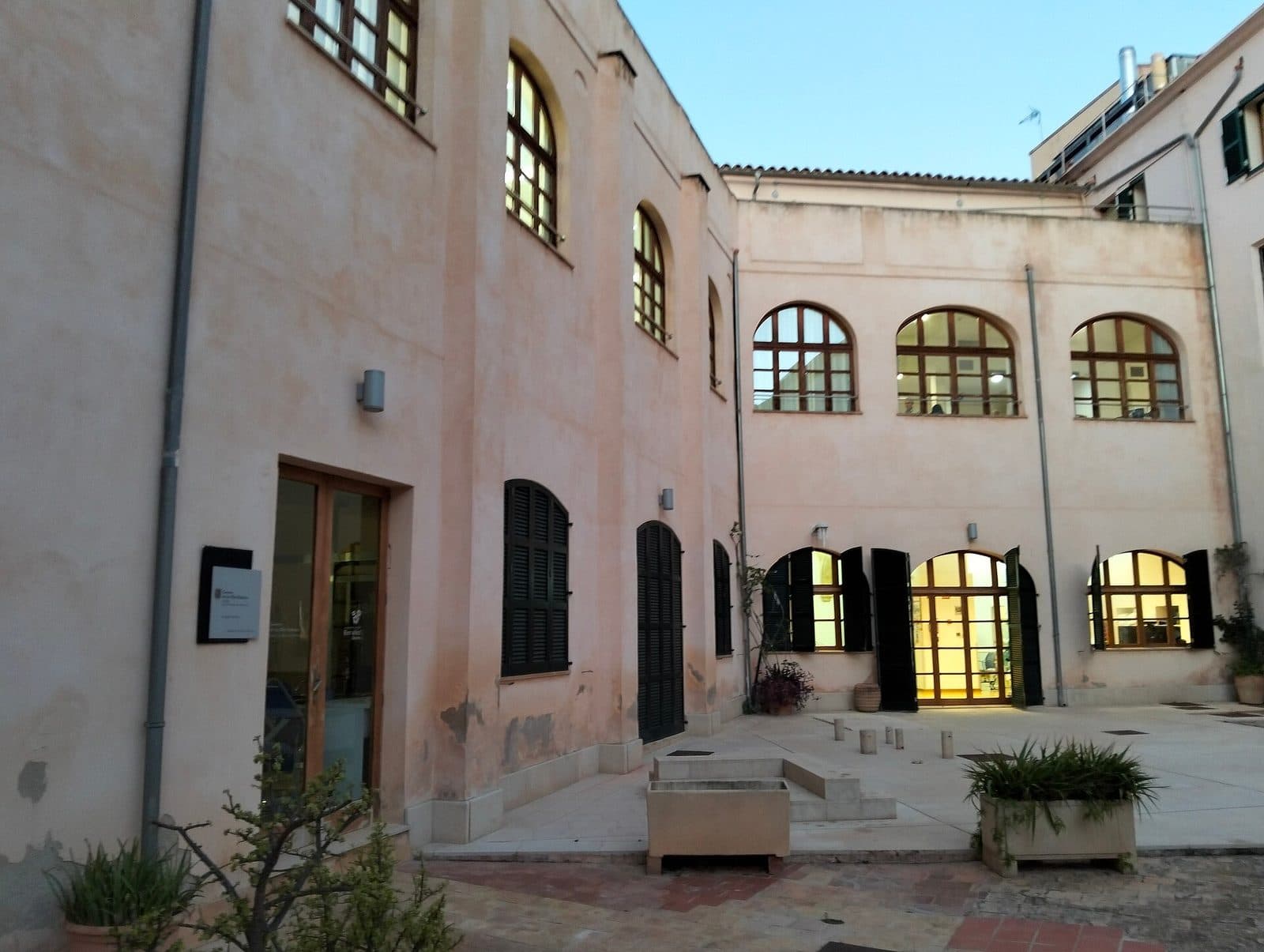
.jpg)
La Concepció is one of those historic places in Palma whose significance cannot be read from a monumental showpiece façade alone. Behind the name is a convent and church whose history leads from northern Mallorca to the island’s capital. The complex tells of forced departure, temporary accommodation, and a new building that took shape over generations.
This article refers exclusively to the Augustinian convent that emerged from the community of Puig de Pollença and is also known by the names Puríssima Concepció and Sant Antoni de Viana.
A visit is especially worthwhile for those who want to understand Palma beyond its major standalone monuments. La Concepció shows how religious communities responded to decisions on church policy, how existing homes were gradually transformed into a convent, and why an early modern construction project often required several attempts.
At the same time, the site calls for different expectations than a conventional museum attraction. The complex is a historic convent and continues to be used by a religious community. Anyone specifically wishing to see the interiors should therefore check in advance which areas are accessible at the desired time.
History and significance
The decisive episode begins not in Palma but at Puig de Pollença. The convent whose community la Concepció continues today was located there. When the provisions of the Council of Trent took effect, the nuns had to leave their former home and move to Palma in 1564. A convent in an elevated rural setting thus became a community in the densely built-up capital—an upheaval that shaped its subsequent history.
The move from Puig de Pollença
The move was not a voluntary search for a more convenient location. It followed new church regulations. In Palma, the nuns were initially housed in the house and hospital of Sant Antoni. This temporary stop explains the older name Sant Antoni de Viana, by which the convent also became known. Historical sources also use a designation that explicitly refers to its origins: Sant Antoni de Viana, formerly of Puig de Pollença.
These layers of names are more than a linguistic curiosity. They preserve the memory of three stages in the history of the same community: its starting point near Pollença, its temporary quarters at Sant Antoni, and finally the new convent under the patronage of Puríssima Concepció. Anyone encountering different names in older texts is therefore not necessarily dealing with separate institutions.
A new beginning at Puig del Sitjar
The temporary accommodation in the house and hospital of Sant Antoni could not meet the requirements of convent life in the long term. The community therefore acquired land and houses at Puig del Sitjar. It moved to the new location in 1576. Initially, the existing buildings were adapted to the convent’s needs while plans for purpose-built monastic structures began in parallel.
Construction of a new church began in 1580. Before this first church was completed, a decision was made in 1608 to replace it with a larger new building. More land had to be acquired for this purpose. The foundation stone was laid in 1614, but work continued until close to the end of the century. La Concepció is therefore not the result of a single design carried out in a straightforward manner. The complex developed from existing houses, conversions, an abandoned church project, and a substantially more protracted new building.
Threats and reorganization
The convent came under pressure several times in the 19th century. In 1812, an attempt was made to expel the community and use the complex as a military hospital. A temporary exclaustration followed in 1821. The far-reaching reorganization of monastic life in 1836 affected male and female orders differently: while many monasteries for men were dissolved, convents for women were able to continue, although they had to accept major changes.
Only one house of each female religious community was to remain in Palma. The Augustinian nuns had previously maintained several establishments in the city. La Concepció subsequently received the community of Santa Margalida as well as some of the nuns from La Consolació. The convent thereby became a gathering place for different branches of Augustinian life for women in Palma. It survived not unchanged, but precisely through incorporation, consolidation, and adaptation.
The dedication to the Immaculate Conception
The dedication to Puríssima Concepció belongs to a broader Mallorcan context. Devotion to the Immaculate Conception was deeply rooted in Mallorca and was associated particularly with the Franciscan tradition and Ramon Llull. The Gran i General Consell declared Puríssima Concepció the patroness of the Kingdom of Mallorca and the city of Palma. The convent’s dedication thus embraced a religious theme whose significance extended far beyond the community itself.
Today, the monastic tradition is continued by the community of Agustines de l’Empar. La Concepció is therefore not merely the remnant of a dissolved convent. Its continued religious use also explains why the site cannot be treated like a fully museumized historic monument.
What to see
The most revealing way to view la Concepció begins with the realization that the complex was not built all at once. Its present appearance reflects several clearly distinguishable stages. This sequence is precisely what makes the convent interesting from an architectural perspective: existing buildings were reused, an initial church was begun, and while it was still under construction, it was replaced by a more ambitious project.
The existing houses
At Puig del Sitjar, the convent did not begin with an empty construction site. The community had acquired houses that were converted for monastic life after the move in 1576. The first rooms of la Concepció were therefore not entirely new cloister buildings designed from scratch, but adapted urban residences. This pragmatic solution reveals how an early modern convent actually came into being: first by using what was available, then through gradual expansion.
This background is important when viewing the complex. Not every irregular transition or variation in building form should be understood as a flaw in a unified plan. La Concepció grew together from several plots and existing houses. Its architecture thus preserves the memory of the difficult transition from temporary quarters to a permanently established convent.
The first church of 1580
Only a few years after the move, construction of a church on a new ground plan began in 1580. The fact that this place of worship was never completed makes it an invisible yet crucial layer of the complex. The convent evidently did not want to rely permanently on merely adapted houses but required a church space designed specifically for religious life.
The decision of 1608 shows, however, that the building already underway no longer met the community’s expectations. Instead of completing it at all costs, a larger new building was approved. This is one of the most remarkable episodes in the history of la Concepció: even during the first phase of construction, ideas about what the convent church should be like changed. The site therefore documents not only building activity but also abandoned plans.
The larger convent church
Additional land was required for the new church. After it had been acquired, the foundation stone was laid in 1614. The lengthy construction period, lasting until close to the end of the century, points to a project that demanded the resources of several decades. What now appears to be a historic church building thus stands at the end of a process that began with the initial adaptation of the houses and extended well beyond the lifetimes of the nuns who originally moved there.
The church should therefore not be viewed in isolation from the convent’s history. It became the permanent spiritual center of a community that had first been driven from Pollença, moved into temporary quarters in Palma, and then had to establish a home of its own. Its size reflects the decision not simply to finish the incomplete predecessor but to begin again.
The convent buildings
The various convent areas were constructed alongside the church. The recorded building history does not describe a single, self-contained construction campaign but an ongoing development that proceeded in parallel with the church. The result is an ensemble in which religious, communal, and everyday functions found their place over an extended period.
Its historical value therefore lies not solely in an individual artwork or a spectacular room. What matters is the interaction between church and convent, between the existing building fabric and later additions. La Concepció is best understood as a convent complex that evolved over time—an architectural record of a community that first had to create its own place in Palma.
The building’s historical names
Those who pay attention to the names will discover another layer. Puríssima Concepció refers to the dedication, Sant Antoni de Viana recalls the first quarters in Palma, and the reference to Puig de Pollença preserves the community’s origins. These names help correctly identify older references.
The complex discussed here is the Augustinian convent at the historic Puig del Sitjar that emerged from Puig de Pollença.
Visiting la Concepció
At la Concepció, the nature of a visit is often determined at the threshold. This is not a conventional museum where a fixed route automatically leads through every part of the building. The convent continues to be used for religious purposes. Accordingly, the church, convent areas, and any other accessible rooms may be subject to different rules.
Check access in advance
The available visitor information for la Concepció includes neither reliable opening hours nor an admission price. Specific times or costs should therefore not be taken from older directories. Anyone wishing to see more than the exterior of the church should check the current access situation immediately before visiting. This is particularly important when making a special trip to see the interiors.
When making an inquiry, explicitly mention the Augustinian convent la Concepció or the historical name Sant Antoni de Viana.
How much time should you allow?
It is not possible to provide a reliable fixed visit duration without a confirmed tour route. A look at the exterior and an introduction to the historical context require comparatively little time. If access to the church or other parts is possible, the time needed will depend on which areas are open. La Concepció is therefore better suited as a deliberately chosen stop on a city walk than as an attraction for which a lengthy museum visit should be reserved without checking first.
Anyone familiar with the building’s history will, however, see more even during a short stay. The key questions are: Where is the character of an ensemble that evolved over time visible? How do the church and convent buildings relate to one another? And which features might point to the gradual combination of older houses? In this way, a quiet stop becomes a vivid introduction to the history of Palma’s convents.
Respect convent life
La Concepció remains connected to a religious community. Quiet and restraint are therefore more important than taking as many photographs as possible. Visitors should not leave accessible areas without permission or treat locked doors as invitations to explore further. During a service or convent event, sightseeing should take second place.
There is no documented, reliable information about typical peak times. Rather than relying on supposedly “secret” visiting times, coordinate your visit with current access arrangements. Here, this matters more than the usual question of whether fewer people come in the morning or afternoon.
Getting there and parking
From Palma Airport, the route initially follows the Ma-19 into the island’s capital. Palma is 11 road kilometers away, and the journey takes around 20 minutes. These details expressly apply only as far as Palma, not directly to the convent entrance. Allow additional time for the final section through the city center, as access restrictions, one-way streets, and restricted areas can make a direct approach difficult.
Driving to Palma
The Ma-19 takes travelers from the airport to the eastern and southern edges of the city. In the center, it is generally more practical to leave the vehicle in a public parking garage and continue on foot rather than attempt to drive directly to the historic building. Central Palma has regulated traffic zones, so an apparently direct navigation route is not necessarily legal or practical to drive.
For a general visit to the old town, possible parking garages include Passeig Mallorca, Plaça Major, Parc de la Mar, Plaça d’Espanya, and Mercat de l’Olivar. The choice should depend on the direction of arrival and any other planned destinations in Palma. Passeig Mallorca is particularly convenient for the western city center and Santa Catalina, while Parc de la Mar is more suitable for the cathedral area and the southern old town.
The final section on foot
La Concepció is located within Palma’s historic urban area. Walking is worthwhile not only because of traffic restrictions but also because it provides context: along the way, it becomes clear how closely convents, churches, former hospitals, and private homes stood together in the early modern city. Use the attraction’s full name when navigating.
By bus
Plaça de Joan Carles I–Catedral and Jaume III are among the stops recorded in the wider central area. From there, continue on foot. The most convenient connection depends on your starting point and the current route schedule. Particularly when combining the visit with the old town, the bus is often easier than searching for a parking space in the narrow city-center streets.
Bus lines to la Concepció at a glance
| Line | Route | Departures/day | First | Last |
|---|---|---|---|---|
| 3 | Pont d'Inca / Joan Carles I | 6 | 07:37 | 09:46 |
| A1 | Aeroport - Palma Centre | 6 | 04:30 | 07:45 |
| 1 | Portopí - Sindicat | 4 | 08:09 | 08:54 |
| 20 | Portopí - Son Espases | 4 | 07:17 | 07:31 |
From the official GTFS feeds (TIB/SFM), no real-time data. The figures cover all stops in the town; weekend and holiday services differ — check with the operator before travelling.
Getting there by bus
53-pl. de Joan Carles I - Catedral · 0.2 km as the crow flies
- 4Ses Illetes - Pl. Columnes · 08:00–08:00 · Daily
- 7Son Gotleu - Son Serra - Sa Vileta / Son Vida · 08:00–08:00 · Daily
- 20Portopí - Son Espases · 06:06–22:40 · Daily
54-Jaume III · 0.2 km as the crow flies
- 4Ses Illetes - Pl. Columnes · 08:00–08:00 · Daily
- 7Son Gotleu - Son Serra - Sa Vileta / Son Vida · 08:00–08:00 · Daily
- 20Portopí - Son Espases · 06:06–22:40 · Daily
104-Jaume III · 0.2 km as the crow flies
- 3Pont d'Inca / Joan Carles I · 08:00–08:00 · Daily
- 4Ses Illetes - Pl. Columnes · 08:00–08:00 · Daily
- 7Son Gotleu - Son Serra - Sa Vileta / Son Vida · 08:00–08:00 · Daily
- 20Portopí - Son Espases · 06:06–22:40 · Daily
- CCCircular Centre Ciutat · 08:00–08:00 · Daily
985-pl. de Joan Carles I · 0.2 km as the crow flies
- CCCircular Centre Ciutat · 08:00–08:00 · Daily
1048-pl. de Joan Carles I · 0.2 km as the crow flies
- 25s'Arenal - Pl. Reina | Catedral · 06:36–21:01 · Daily
- 35Aquàrium - Pl. Reina | Catedral · 06:21–22:41 · Daily
105-pl. de Joan Carles I - Catedral · 0.2 km as the crow flies
- 3Pont d'Inca / Joan Carles I · 08:00–08:00 · Daily
- 4Ses Illetes - Pl. Columnes · 08:00–08:00 · Daily
- 7Son Gotleu - Son Serra - Sa Vileta / Son Vida · 08:00–08:00 · Daily
- 20Portopí - Son Espases · 06:06–22:40 · Daily
19-passeig Mallorca - Instituts · 0.3 km as the crow flies
- 1Portopí - Sindicat · 08:00–08:00 · Daily
- 3Pont d'Inca / Joan Carles I · 08:00–08:00 · Daily
- A1Aeroport - Palma Centre · 08:00–08:00 · Daily
- CCCircular Centre Ciutat · 08:00–08:00 · Daily
- N4Pl. Progrés - Pont d'Inca · 08:00–08:00 · Daily
20-passeig Mallorca - Jaume III · 0.3 km as the crow flies
- 1Portopí - Sindicat · 08:00–08:00 · Daily
- A1Aeroport - Palma Centre · 08:00–08:00 · Daily
- N4Pl. Progrés - Pont d'Inca · 08:00–08:00 · Daily
50-la Rambla - Via Roma · 0.3 km as the crow flies
- 4Ses Illetes - Pl. Columnes · 08:00–08:00 · Daily
- 7Son Gotleu - Son Serra - Sa Vileta / Son Vida · 08:00–08:00 · Daily
- 20Portopí - Son Espases · 06:06–22:40 · Daily
- 35Aquàrium - Pl. Reina | Catedral · 06:21–22:41 · Daily
203-passeig Mallorca - Jaume III · 0.3 km as the crow flies
- 1Portopí - Sindicat · 08:00–08:00 · Daily
- 5Es Rafal Nou - Pl. Progrés · 08:00–08:00 · Daily
- 40Eixample Transversal · 00:11–22:41 · Daily
- 46la Bonanova - Gènova - Sindicat (dreta) · 08:00–08:00 · Daily
- 47Gènova - la Bonanova - Sindicat (esquerra) · 08:00–08:00 · Daily
- A1Aeroport - Palma Centre · 08:00–08:00 · Daily
- N1Portopí - Porta des Camp · 08:00–08:00 · Daily
- N4Pl. Progrés - Pont d'Inca · 08:00–08:00 · Daily
107-la Rambla - Via Roma · 0.3 km as the crow flies
- 25s'Arenal - Pl. Reina | Catedral · 06:36–21:01 · Daily
- 35Aquàrium - Pl. Reina | Catedral · 06:21–22:41 · Daily
108-La Rambla-Via Roma · 0.3 km as the crow flies
- 3Pont d'Inca / Joan Carles I · 08:00–08:00 · Daily
- 4Ses Illetes - Pl. Columnes · 08:00–08:00 · Daily
- 7Son Gotleu - Son Serra - Sa Vileta / Son Vida · 08:00–08:00 · Daily
- 20Portopí - Son Espases · 06:06–22:40 · Daily
Timetable data: official GTFS feeds (TIB/EMT), no real-time — check with the operator before travelling.
Nearby attractions
La Concepció reveals a side of Palma that can easily be overlooked among its famous major monuments. The city was not only a royal, commercial, and port center but also a dense network of religious houses. The history of this convent leads directly to the consequences of the Council of Trent, the reorganization of women’s communities, and the upheavals of the 19th century.
Palma as a city of convents
For a themed walk, la Concepció can be combined with other churches and former convents in Palma. A comparison with Sant Francesc, Santa Magdalena, or other religious houses in the old town is especially illuminating. Simply comparing their locations and external appearances is enough to reveal differences between a mendicant church, a convent for women, and a large urban monastery.
The cathedral La Seu also fits into this context, although on a different scale. While the cathedral embodies the ecclesiastical representation of the diocese, la Concepció tells of the everyday life and survival of a particular community of women. Both places also share the Mallorcan connection to devotion to the Immaculate Conception.
Old town, Jaume III, and Santa Catalina
The central stops at Jaume III and Plaça de Joan Carles I make it easy to combine the site with a walk through central Palma. Around Jaume III and Passeig del Born, the newer, more representative city comes into view; in the old town’s narrower lanes, older plots, churches, and historic houses are more prominent. La Concepció forms a quiet historical stop between these different urban spaces.
Those continuing west can extend the walk toward Santa Catalina. For a visit focused on cultural history, however, the old town remains the more suitable addition. There, Palma’s development from an ecclesiastically shaped city to the present-day center can be understood most directly.
A worthwhile combination
La Concepció should not be considered a substitute for Palma’s major sights. The site works better as an opportunity for deeper understanding: the cathedral provides the monumental framework, while historic convents such as la Concepció tell the stories of the communities that lived within the city. Combining both gives a more complete picture than a walk devoted exclusively to façades and viewpoints.
The place it belongs to
Palma in the place guidePractical visitor information
At la Concepció, preparation is more useful than extensive equipment. The most important practical question is not which ticket to choose but whether access is possible and, if so, to what extent. Opening hours and admission details have not been reliably recorded and should be checked for the latest information. A spontaneous detour can be worthwhile for viewing the exterior; anyone coming specifically for the interiors should make contact in advance.
Clothing and conduct
As a place that continues to be used for religious purposes, the convent calls for appropriate restraint. Simple, respectful clothing is advisable, particularly if entry to the church is possible. Conversations should be kept quiet, and ongoing liturgical or convent activities should not be disturbed. Photography is appropriate only where it is expressly permitted.
Footwear and walking through the city
The visit can easily be incorporated into a longer walk through Palma. Comfortable shoes are more useful for this than specialized hiking equipment. Visitors arriving from a parking garage or a central bus stop will walk the final section through city streets. In summer, the urban route should be planned with the usual precautions against sun and heat, even though the attraction itself is not an extensive outdoor site.
Visiting with children
For children, la Concepció is particularly interesting when its history is told as a vivid story: a community has to leave its mountain near Pollença, initially lives in a hospital, and then builds a new convent in Palma whose first church is abandoned before completion. Without this story, younger visitors may find the site more understated than a castle or a large museum.
As there is no evidence of a regular family-oriented tour, visitors should not expect a dedicated children’s program. The rules of a religious house also apply during any interior visit. For families, a shorter stop as part of a varied city walk is generally more suitable than expecting a standalone visitor attraction.
What la Concepció is not
On this page, la Concepció refers exclusively to the Augustinian convent that continues the tradition of Puig de Pollença.
Nor should visitors expect a fully museumized convent complex with guaranteed access to every room. Its appeal lies in its continuing history, its unusual development from acquired houses, and the new church that was constructed only after an earlier project had been abandoned.