
Can Torró in Alcúdia – Historic House and Living Library
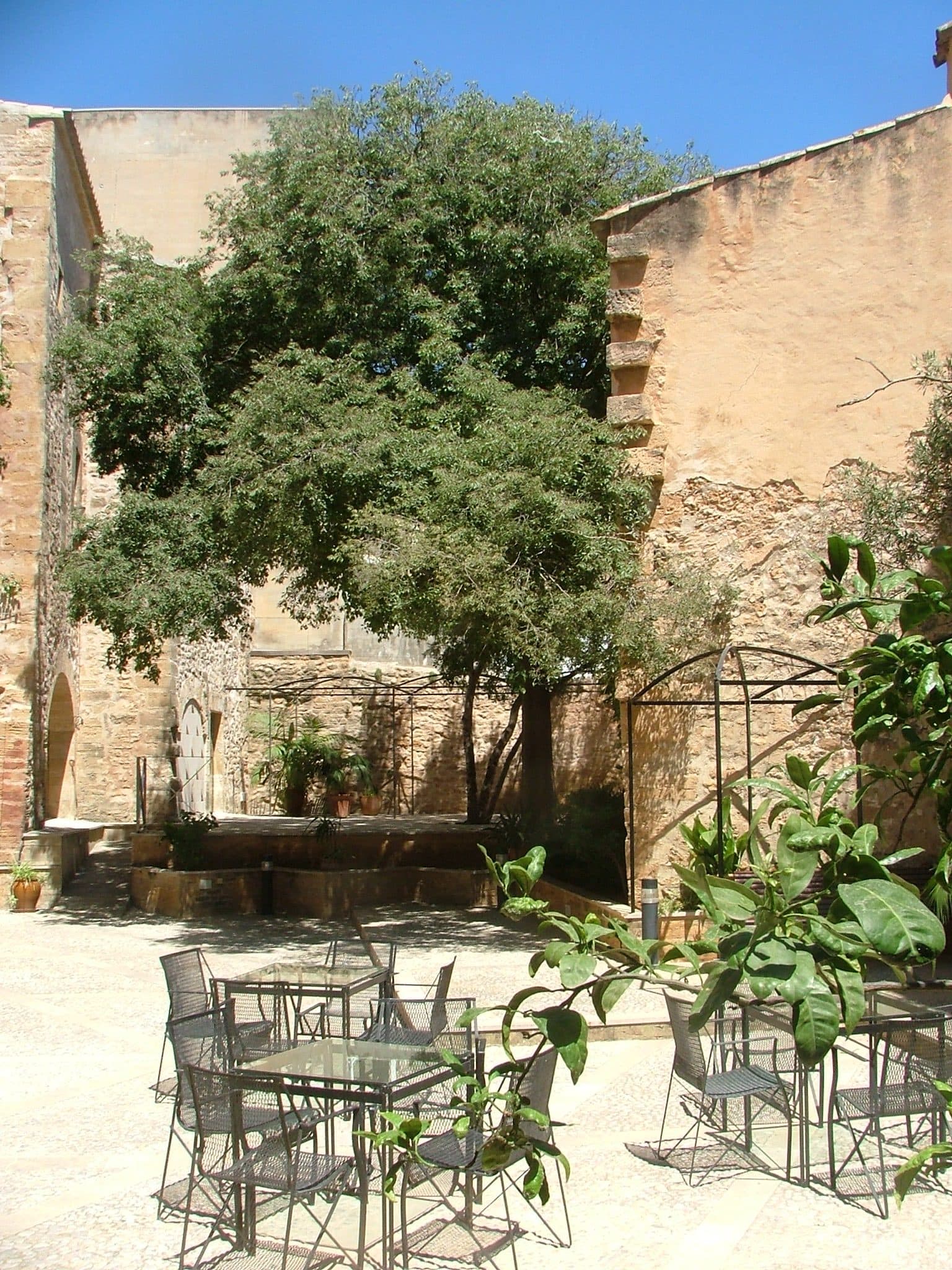

In the heart of Alcúdia’s historic center, the name Can Torró does not refer to a conventional attraction with roped-off rooms and a numbered visitor route. The old townhouse serves as a public library and cultural venue. This everyday use is precisely what makes a visit interesting: history is not merely preserved here but carried forward through books, events, internet access, and activities for children.
Can Torró is especially worthwhile for travelers who want to discover Alcúdia beyond photographs of the city walls. The house demonstrates how a historic building can remain part of contemporary urban life. Anyone who reads Catalan or Spanish will also gain direct access to local literary and media culture, but even without language skills, visitors can appreciate the atmosphere of the house, the terrace, and the interplay between its historic shell and modern use.
No one should expect a monumental museum, however. Can Torró is first and foremost a working library. People come here to read, study, conduct research, and take part in cultural activities. For visitors, its appeal therefore lies less in a collection of historic exhibits than in quietly observing a place that Alcúdia genuinely needs and uses.
The house fits best into a walk through the old town. Among gates, walls, and narrow streets, Can Torró adds a distinctive note: it tells not only of Alcúdia’s past but also of how a historic town translates its old spaces into the present.
History and significance
The defining turning point in the history of Can Torró came not in the Middle Ages but in 1990. That was when Alcúdia’s public library opened here. It was created through a partnership between the municipality and the Bertelsmann Stiftung. Gütersloh City Library served as the conceptual model—an unusual transfer of knowledge between a medium-sized German city and a Mallorcan municipality.
The founding in 1990
The project was based on the idea that a library should not be understood as a silent book repository but as an open place for information and culture. This explains why Can Torró still offers more than shelves and lending services. Media, free internet access, Wi-Fi, spaces for cultural activities, and a dedicated area for first reading experiences are all part of the institution’s identity.
This approach was particularly well suited to Alcúdia. The town has an exceptionally dense historical legacy, from the remains of Roman Pollentia to the walled old town. Can Torró did not add another sealed-off memorial space to that heritage. Instead, a historic house was given a public purpose aimed at today’s urban community.
From partnership to municipal responsibility
Since 1997, the town of Alcúdia has held sole responsibility for the library. The founding phase with international involvement thus transitioned into permanent local operation. The institution nevertheless remained true to its original goal of being both a library and a cultural meeting place. The name Can Torró therefore refers both to the building and to an institution firmly embedded in Alcúdia’s public life.
The neighboring house Can Fondó was added later. As a result, Can Torró developed into a complex with possibilities extending beyond those of a single small old-town library. The expansion is also significant in terms of purpose: it created additional space for the cultural and community functions that had shaped the project from the beginning.
A counterpart to monumental Alcúdia
Elsewhere, visitors encounter Alcúdia’s history in the form of excavations, defensive walls, and town gates. Can Torró tells a different kind of story. Its focus is not the reconstruction of a past era but the continued use of a surviving historic house. The building was not turned into a static exhibit but became a setting for reading, learning, and meeting others.
This is where its true significance lies. Can Torró shows that heritage preservation and contemporary life are not necessarily opposites. While the old-town streets outside recall Alcúdia’s long development, current media are used inside. The venue combines the memory of the house with a purpose that is constantly changing.
What to see
The nature of a visit to Can Torró already differs from Alcúdia’s major monuments. There is no prescribed viewing direction and no route leading every guest from object to object. Instead, the house reveals itself through its use: book sections, workspaces, rooms used for cultural purposes, and the terrace together form the image of a library deliberately designed as an open living space.
The historic townhouse
Can Torró occupies a historic house in the old town. Its impact comes precisely from the contrast between the surviving architectural shell and its present public function. Where one might expect enclosed living quarters in an old private residence, there is now an institution intended to provide access to knowledge and culture.
The architectural impression therefore cannot meaningfully be separated from the building’s use. Books, readers, and events are not intrusive additions but the building’s present-day content. Those interested in historic architecture should not look for fully preserved furnishings from a specific period. More intriguing is the question of how an old house can be adapted to modern requirements without losing its identity as part of the old town.
Can Fondó
The neighboring Can Fondó later became part of the library project. The cultural venue is therefore no longer limited to a single house. The extension represents both the institution’s growth and its aim of accommodating different forms of use.
For visitors, this development is an important key to understanding Can Torró. The venue was not created as a museum concept completed once and for all. It expanded because a living library has different requirements from a historic showpiece. Collections grow, activities need space, and different age groups should be able to read, learn, or attend events alongside one another.
The library areas
Inside, books and other information resources shape the overall impression. The library provides novels for different readerships and expands its holdings with new sections. Digital access is also available: internet and Wi-Fi are expressly included among its services. Can Torró therefore combines traditional reading with modern information searches rather than setting them against each other.
Travelers should enter these areas with the same consideration expected in any public library. The house is not a staged backdrop. People work at tables, browse the shelves, and visit with specific needs. This very normality offers an impression of present-day Alcúdia that is difficult to gain at the town’s more heavily visited monuments.
The children’s area
A dedicated area is intended for first-time readers. It underlines that Can Torró is not designed only for students or adults. Children are addressed as a natural part of library life, and cultural activities may also involve young visitors.
For families, this provides a welcome contrast to attractions where children are expected only to keep their distance and walk quietly past display cases. Consideration is still necessary in a library, but reading and discovery are explicitly part of its purpose. Whether a suitable activity is taking place should be checked in advance in the current program.
The multipurpose rooms
Can Torró describes its culturally used areas as versatile spaces. Different activities can take place there, so the specific impression depends on the day’s program. On an ordinary library day, these rooms remain part of the quiet building; during an event, its function as a cultural center becomes more prominent.
Anyone specifically interested in the events held here should therefore not rely solely on visiting the building. The current program shows when Can Torró becomes visible as a stage for cultural encounters beyond its regular library operations. Events are not a secondary feature but a continuation of the founding concept.
The terrace
The terrace is one of Can Torró’s distinctive areas. It adds an outdoor space to the library and illustrates particularly clearly that reading and cultural activity here are not confined to enclosed rooms. Between browsing the shelves and continuing a walk through the old town, it creates a natural transition.
Even on the terrace, Can Torró remains a public place for work and relaxation rather than a viewing platform. Its appeal lies not in a sweeping landscape panorama but in the transition between the library rooms and the open space of the old town. It is therefore one of the details that make the venue feel more personal than a purely functional lending facility.
Visiting Can Torró
Before traveling there, the first step should be to check the institution’s currently published information. Opening hours and possible access instructions may change; confirmed times and an admission price are not included in the available visitor information. Anyone wishing to attend a specific activity should also check the events program, as not every library day offers the same insight into its cultural work.
A brief look or a longer stay
Can Torró does not require a fixed amount of time for a visit. Anyone mainly wishing to see the historic house and learn about the idea behind the institution can plan it as a stop on an old-town walk. Those who browse the collection, use the digital services, or attend an event will stay correspondingly longer.
This is more honest than giving a general estimate in minutes: Can Torró has no tour with a set number of rooms. The duration depends on personal interest and current operations. Without an event, the venue is more of a focused stop than a half-day destination. With an announced cultural activity, it can become the main focus of a visit to the old town.
The quieter visitor experience
Because the building is an active library, visitor numbers do not depend solely on Alcúdia’s tourist rhythm. School holidays, local activities, and events can change the atmosphere.
On busy days in the old town, the surrounding streets may also be livelier even when the library itself remains quiet. The contrast is part of the experience: outside, visitors move through the historic center; inside, reading and concentrated work set the tone.
Behavior in a living library
Photography, extended conversations, and exploring individual work areas should not be taken for granted. Can Torró is not an empty architectural monument but a public space in active use. A quick look at the information displayed on-site and, if necessary, asking staff will help avoid disturbing readers or children taking part in an activity.
This does not mean that guests are unwelcome. The library expressly sees itself as an open information and cultural venue. A different attitude from the one adopted in an open-air museum is appropriate, however: enter quietly, get your bearings first, and respect the house’s everyday function.
Language and program
The collection and activities are primarily intended for Alcúdia’s residents. Catalan and Spanish therefore shape everyday life in the library. The venue nevertheless remains accessible to visitors who speak other languages because its basic idea can be understood without lengthy explanations. Shelves, the children’s area, digital services, event rooms, and terrace demonstrate how broadly a modern municipal library can be conceived.
Anyone wishing to participate in a specific program should note the language of the announcement. Comprehensive language skills are not required simply to look around the house.
Getting there and parking
From Palma, the route runs directly toward northern Mallorca, but the stated driving times expressly apply only as far as Alcúdia. The final section to Can Torró leads into the historic center with its narrow, organically developed street network. For route planning, it therefore makes sense to navigate to Alcúdia first and then consider access to the old town separately.
From Palma Airport
From Palma Airport, the road distance to Alcúdia is 58 kilometers. The drive takes around 45 minutes and follows the Ma-30 to the Ma-13. After arriving in Alcúdia, the final section leads into the historic old town. Can Torró is easier to incorporate into a walking tour there than to treat the narrow streets merely as a route for driving through.
The driving time should not be understood as the time required to reach the entrance directly. Additional time is needed to find your way through the center. Anyone trying to arrive for the start of an event should allow an appropriate buffer.
From central Palma
The road distance from central Palma to Alcúdia is 55 kilometers. The drive via the Ma-13 takes around 49 minutes. This information also ends in Alcúdia rather than directly at Can Torró. In the historic center, the nature of the journey changes: the wide island road and motorway give way to narrower old-town streets.
Can Torró, the city walls, gates, and other central attractions can be combined into a continuous walking route.
Parking near the historic center
Current signs and the access rules in force at the time are decisive.
Can Torró is not an isolated roadside attraction. The house is best understood as part of old Alcúdia, and even the route there conveys the scale of the walled town.
By bus
Several stops may be considered when traveling by public transport. The Centre històric stop is particularly useful, as its name already indicates access to the old town. Other stops include Pol·lèntia, Ses Forques 1, and Ses Forques 2. From there, the journey through Alcúdia continues on foot.
The best connection depends on the departure point and current timetable. Because Can Torró is located in the center rather than at a remote scenic destination, the library can easily be combined with an already planned visit to the historic town.
Bus lines to Can Torró at a glance
| Line | Route | Departures/day | First | Last |
|---|---|---|---|---|
| 324 | Can Picafort - Alcúdia | 304 | 00:01 | 23:49 |
| 322 | Pollença - Port d'Alcúdia | 229 | 07:00 | 23:55 |
| 302 | Can Picafort - Palma | 186 | 00:01 | 23:42 |
| 315 | Sa Pobla - Badia d'Alcúdia | 84 | 06:51 | 23:29 |
| A32 | Can Picafort - Aeroport | 73 | 00:06 | 23:17 |
| 327 | Alcúdia - Estany Petit | 72 | 07:47 | 23:42 |
| 325 | Alcúdia - Cala Rajada | 52 | 08:27 | 22:38 |
From the official GTFS feeds (TIB/SFM), no real-time data. The figures cover all stops in the town; weekend and holiday services differ — check with the operator before travelling.
Getting there by bus
Entre-mar-i-estany 2 (3065) · 1.3 km as the crow flies
- 302Can Picafort - Palma · Daily
- 315Sa Pobla - Badia d'Alcúdia · Daily
- 322Pollença - Port d'Alcúdia · Daily
- 324Can Picafort - Alcúdia · Daily
- 325Alcúdia - Cala Rajada · Daily
- 327Alcúdia - Estany Petit · Daily
- A32Can Picafort - Aeroport · Daily
Entre-mar-i-estany 1 (3064) · 1.4 km as the crow flies
- 302Can Picafort - Palma · Daily
- 315Sa Pobla - Badia d'Alcúdia · Daily
- 322Pollença - Port d'Alcúdia · Daily
- 324Can Picafort - Alcúdia · Daily
- 325Alcúdia - Cala Rajada · Daily
- 327Alcúdia - Estany Petit · Daily
- A32Can Picafort - Aeroport · Daily
Pla del Pinar 2 (3063) · 1.7 km as the crow flies
- 302Can Picafort - Palma · Daily
- 315Sa Pobla - Badia d'Alcúdia · Daily
- 324Can Picafort - Alcúdia · Daily
- 325Alcúdia - Cala Rajada · Daily
- 327Alcúdia - Estany Petit · Daily
- A32Can Picafort - Aeroport · Daily
Pla del Pinar 1 (3062) · 1.7 km as the crow flies
- 302Can Picafort - Palma · Daily
- 315Sa Pobla - Badia d'Alcúdia · Daily
- 324Can Picafort - Alcúdia · Daily
- 325Alcúdia - Cala Rajada · Daily
- A32Can Picafort - Aeroport · Daily
Timetable data: official GTFS feeds (TIB/EMT), no real-time — check with the operator before travelling.
Nearby attractions
Outside the walls lie the traces of Roman Pollentia, while inside the fortifications history continues through streets, gates, and old houses. Can Torró stands precisely in the part of Alcúdia where several eras can be read within a compact area. A visit should therefore not be planned as an isolated detour but as a chapter in a broader walk through the town.
The historic old town
Alcúdia’s present center is rooted in a long history of settlement. The place name developed from the Islamic Alqudya, while the form of the walled town was shaped decisively during the Middle Ages. After the Catalan conquest, Alcúdia became royal land.
Can Torró fits into this historic setting without presenting itself as a defensive structure or palace. Its different character becomes especially apparent after walking along the walls. The library reveals the inhabited and actively used side of the old town—the level on which historic houses are not merely observed but continue to perform useful functions.
City walls and gates
The city walls and their gates are the most obvious complement to Can Torró. They convey the scale of old Alcúdia and explain why the streets inside feel compact and walkable. A circuit along accessible sections of the wall can be planned before or after visiting the library without having to drive between widely separated places.
While the fortifications tell of protection and political significance, Can Torró represents education and public exchange. Both places demonstrate in different ways how Alcúdia engages with its architectural heritage.
Pollentia and the Monographic Museum
Outside the medieval center lie the remains of the Roman city of Pollentia, founded in 123 BC. The forum, residential quarter, and theater are among Alcúdia’s most important archaeological sites. Finds are displayed in the Monographic Museum.
This creates a clear sequence for a cultural day: Pollentia leads into antiquity, the walls and streets into medieval Alcúdia, and Can Torró into the contemporary use of historic architecture. There is no need to string together several widely separated destinations.
A day between heritage and everyday life
Anyone who visits only the major monuments may easily perceive Alcúdia as a carefully preserved historical backdrop. Can Torró corrects this impression. The old town is also a place to live, work, and learn. Between an archaeological site and a defensive wall, a public library may initially seem unspectacular, but it demonstrates precisely because of this that the town has not remained frozen in its past.
For a break by the sea, the cultural day can later continue toward the coast. Can Torró itself, however, is clearly an old-town stop; a beach visit and a library visit are two distinct parts of a day in northern Mallorca.
The place it belongs to
Alcúdia in the place guidePractical information for your visit
A library visit requires different preparation from a hike or a tour of archaeological ruins. Can Torró is located in the historic center and can be visited in ordinary town clothing. No special equipment is needed, although comfortable shoes are still advisable if the house is combined with a longer walk through Alcúdia’s streets and along the fortifications.
With children
Families will not encounter a place where children are merely tolerated. Can Torró expressly promotes an area for first-time readers, and cultural activities also address different age groups. This makes the library a useful stop when a day in the old town should not consist solely of walls, excavations, and historical explanations.
Whether a specific children’s program is available depends on the current events calendar. A regular library visit also remains a quiet experience. The children’s area is not a freely accessible leisure facility but part of a building where other guests read and work.
Internet and media
Free internet access and Wi-Fi are among the services offered by Can Torró. This may be practical for travelers, but it is not the main reason to visit the building as an attraction. More interesting is the way its digital infrastructure reflects the original goal of creating a modern information library.
The combination of books, new media, and cultural spaces demonstrates why Can Torró is more than a historic façade. The building houses an institution whose content is continuously renewed.
What Can Torró is not
Can Torró is neither a museum about Alcúdia’s history nor a fully furnished manor house. There is no guaranteed visitor route, no sequence of historic state rooms, and no permanent exhibition advertised independently of library operations. Anyone primarily interested in archaeological objects should visit Pollentia and the Monographic Museum.
Can Torró’s strength lies elsewhere: in the direct coexistence of an old house and contemporary urban life. Those who engage with this idea will discover an understated but revealing place. Those looking only for a spectacular photo opportunity are more likely to see the library as a brief stop.
Consideration and current planning
Before visiting, check the currently valid access times and activity program. Outdated schedules are particularly unhelpful for a working public institution. The house may feel livelier during events; on ordinary days, its library function remains central.
Quiet and consideration are expected inside. Conversations should be held softly, workspaces should not be treated as exhibits, and people should be photographed only with their consent. This allows Can Torró to remain exactly what makes it worth seeing: not a frozen monument but a historic house in public use.
Local insider tips
Do not treat it as a museum
Can Torró is best understood as a living library inside a historic house. Anyone waiting for a signposted visitor route will miss the essential point: books, students, children’s services, and cultural events are the venue’s present-day content.
Do not miss the terrace
After exploring the library areas, it is worth taking a look at the terrace. It is not a conventional viewpoint, but it shows particularly well how Can Torró connects enclosed reading and work rooms with an open area for spending time.
Check the program in advance
Can Torró has versatile rooms used for cultural purposes. A visit during an announced activity therefore creates a different impression from an ordinary library day. The current program determines whether the experience will be quiet or shaped by an event.
Plan it as a historical sequence
A coherent cultural route begins at Pollentia, continues through the medieval old town, and ends at Can Torró. This reveals how Alcúdia connects ancient remains, historic walls, and an old house that remains in active use.
Choose the old-town stop
When arriving by bus, Centre històric is the most obvious orientation point. From there, Can Torró can be incorporated into an old-town walk; depending on the connection, Pol·lèntia and the Ses Forques 1 and Ses Forques 2 stops may also be suitable.