
Museu Monogràfic de Pol·lèntia: Roman Alcúdia
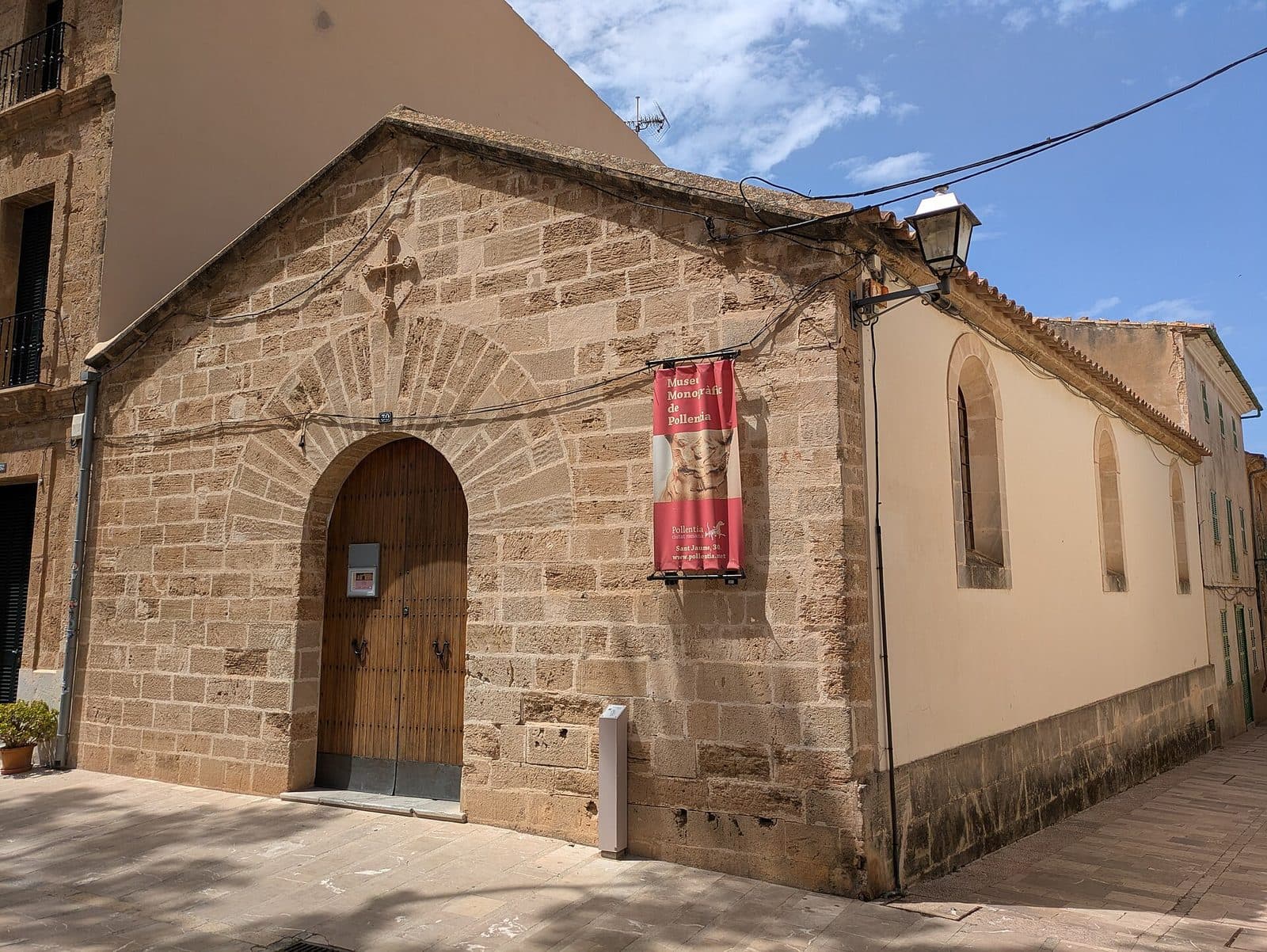

The Museu Monogràfic de Pol·lèntia preserves the objects that would be easy to overlook among the ruins of the Roman city: coins, jewellery, tableware, inscriptions, and small items from domestic life. Within the walls of a former hospital in Alcúdia’s old town, they reveal how people in Pol·lèntia lived, ate, traded, worshipped their gods, and buried their dead.
It is precisely the museum’s manageable size that makes it valuable. Rather than attempting to tell the entire history of Rome in the Mediterranean, it remains consistently focused on one place: Pol·lèntia. Almost every exhibit leads the imagination back to the nearby archaeological site, with its houses, forum, and theatre. Visitors who see the museum first will find it easier to recognise the world of everyday life behind the foundations and walls outside. Those arriving from the ruins, meanwhile, will suddenly see the city that is only suggested there in vivid detail inside the display cases. The museum is therefore recommended for history enthusiasts, families with curious children, and anyone who wants to experience Alcúdia as more than a medieval old town.
History and significance
The central idea behind the museum was unusually specific from the outset: the excavated objects were not to be presented as a miscellaneous collection of Roman antiquities but were to remain connected to the place where they were found. The Museu Monogràfic de Pol·lèntia was established as a branch of the Museu de Mallorca to interpret finds from the ancient city where its walls still lie beneath the ground in Alcúdia.
Pol·lèntia’s golden age
The core of the collection consists of objects from the first and second centuries, the period when Pol·lèntia reached its greatest prosperity. This focus is clearly evident throughout the museum. The objects tell not only of prestigious public buildings but also of meals, domestic cults, handcrafted tableware, and personal jewellery. The result is not an abstract image of a “Roman city” but a portrait of a specific urban society on Mallorca.
The museum is closely linked to archaeological research. Its holdings come from excavation campaigns in Pol·lèntia, and both the place where an object was found and its original use determine how it is classified. An item from the forum therefore tells a different story from an object discovered in a house or necropolis. This provenance is the key to understanding the exhibition.
From hospital to museum
The collection is housed in the Hospitalet, a former municipal hospital. The building itself therefore brings together two widely separated periods in Alcúdia’s history: behind a historic old-town façade are artefacts from a city that existed long before medieval Alcúdia.
The museum was established as a branch of the Museu de Mallorca; in 1987, it opened in the former hospital. It is managed in cooperation with the town of Alcúdia. This local connection explains its monographic character: the focus is not on presenting as many periods as possible or spectacular loans, but on the archaeological legacy of Pol·lèntia.
A key to the archaeological site
The museum’s true significance becomes clear when moving between display case and ruin. At the archaeological site, foundation walls reveal the size of houses and public spaces. In the museum, surfaces, materials, and personal traces are added: inscribed stone, shaped pottery, glass, metal, and jewellery. Only together do the two places convey how the ancient city was built and how life unfolded within it.
The museum is therefore less a treasury than a place of interpretation. It translates archaeological evidence into comprehensible scenes from everyday life and restores the context of inconspicuous finds. A table vessel or coin can create a greater sense of immediacy than a large section of wall because its function and human use are instantly imaginable.
What to see
The route through the museum is not merely a sequence of attractive individual objects. The exhibition organises Pol·lèntia according to different areas of life: on one side is the public city, with its forum, theatre, and necropolises, and on the other is private life in the home, kitchen, and domestic religion. This structure helps visitors interpret even the smaller objects correctly.
Forum and public city
The forum was the centre of public life. The finds discovered there accordingly include some of the museum’s most prestigious objects. Three marble sculptures from the forum area are particularly noteworthy. They are a reminder that the foundations visible today once formed designed public spaces adorned with sculptures and inscriptions.
Alongside the sculptures, stone tablets and inscriptions convey another dimension of Roman public life. In the museum, these surfaces can be examined at close range, while outside it is mainly their architectural context that can be seen. Coins also form part of this picture: the contrast between large marble statues and small metal objects shows the many different ways in which public order could be present in daily life.
Theatre and leisure
A separate part of the exhibition explores theatre and leisure. This is an important complement to the archaeological site because an ancient theatre is understood outdoors primarily through its shape. The associated finds instead draw attention to the people who used such places and to the social role of public entertainment.
Within the exhibition as a whole, the theatre is not treated in isolation but, like the forum, as part of the organised city. Both areas demonstrate that Pol·lèntia was far more than a collection of houses: public assembly, representation, and leisure had their own spaces and each left different archaeological traces.
Houses and domestic religion
In the private sphere, the scale becomes smaller but no less revealing. Here, visitors encounter household objects, evidence of domestic religious practices, and items used to prepare and serve food. Pottery and bronze vessels, glassware, and amphorae show how many different materials came together in a Roman household. Amphorae and tableware add further insight into the home, food preparation, and table service; the differing forms and materials illustrate the variety of vessels on display.
One of the most distinctive finds is a female bronze head. It gave the house in the Portella where it was discovered its modern archaeological name. Such naming is part of everyday archaeological practice: a characteristic find becomes a reference point for a building complex whose ancient name has not survived. Visitors who subsequently explore the Portella will carry this small portrait in their minds as they walk among the walls.
Jewellery, glass, and personal possessions
Jewellery and glass objects form part of the exhibition. Unlike monumental architecture, such items were held, worn, used, or stored in the home. Their often small size calls for a slower look. It is especially worthwhile not to search only for the most elaborate exhibit, as the meaning emerges from the juxtaposition of different materials: coarse storage pottery beside finer tableware, metal beside glass, and everyday utensils beside jewellery. This makes the material range of a household tangible without requiring a reconstructed domestic scene.
Fragments of mosaics are also included in the collection. In the museum, they appear not as fully preserved ornamental floors but as archaeological pieces of a lost whole.
Necropolis and Cornelius Atticus
The section devoted to the necropolises leads from daily life into Roman burial culture. Grave goods reveal which objects were placed with the deceased or survived in the surroundings of a burial. The inscription of Cornelius Atticus deserves particular attention. A recorded name changes the viewer’s perception: for a moment, an individual emerges from the anonymous population of an ancient city. Such inscriptions are among the museum’s most powerful exhibits because they directly connect language, memory, and stone.
The necropolis section forms a quiet counterpoint to the forum and household displays. It makes clear that the archaeological story of a city does not end with its streets and houses. Approaches to death and remembrance were also part of the order of Pol·lèntia and left behind objects, texts, and spatial traces.
Visiting the museum
The most useful way to begin is with a simple question: did the object come from the public or private sphere? This distinction runs through the exhibition and prevents pottery, coins, sculptures, and inscriptions from being perceived merely as unrelated finds.
Museum first, ruins afterwards
Anyone wishing to see the museum and archaeological site on the same day should visit the display cases first. There, concepts such as forum, domestic cult, table service, and necropolis are illustrated with specific objects. Afterwards, it is easier to interpret the remains of walls outside as parts of an inhabited city. The bronze head from the Portella and the marble sculptures from the forum area create particularly direct mental links between the two places.
The reverse order also works, but it changes the perspective. After walking through the ruins, the exhibits resemble close-up views: a house plan becomes vessels and jewellery, while the forum becomes sculptures and inscriptions. Visitors with sufficient time can deliberately combine both perspectives.
Duration and pace
Around 30 to 45 minutes is a useful guideline for the compact museum. This is sufficient for a focused visit covering the main groups in the collection and its outstanding individual objects. Anyone wishing to study inscriptions, pottery forms, and archaeological contexts more closely can spend correspondingly longer.
There is no need to rush. The museum’s strength lies not in a vast number of galleries but in close observation. A short pause in front of the bronze head, the three marble sculptures, and the inscription of Cornelius Atticus is more rewarding than quickly passing every display case.
Visiting times and admission
The museum is open from 9:00 to 14:30 on Tuesdays to Fridays and on Saturdays. As arrangements can change, checking the latest information before travelling is recommended, especially when combining the museum with the archaeological site. Admission is charged; a reliable current price should be confirmed before visiting.
Starting early in the morning provides the greatest flexibility within the stated opening hours. This is particularly practical if the Roman city and Alcúdia’s historic centre are also on the itinerary afterwards.
Getting there and parking
Long-distance journeys end first in Alcúdia. The Museu Monogràfic de Pol·lèntia is not on the archaeological site south of the old town but within the historic centre on Carrer de Sant Jaume. The old town itself is therefore the destination for the final stage; from its entrances, the route continues through the historic streets to the museum.
From Palma Airport
From Palma Airport, the route first follows the Ma-30 and then the Ma-13 to Alcúdia. The road distance to Alcúdia is 58 kilometres, and the drive takes around 45 minutes. This journey time expressly applies only as far as Alcúdia. The final section requires finding your bearings at the edge of the old town and making your way into the historic centre.
As the museum is located within the old town, it should not be confused in navigation systems with the archaeological zone of Pol·lèntia. The museum and excavations are closely connected in subject matter but do not share the same entrance. Anyone planning to visit both should allow for the short journey between the old town and excavation area.
From central Palma
From central Palma, the route follows the Ma-13. Alcúdia is 55 road kilometres away, and the drive takes around 49 minutes. Here too, the distance and travel time refer to the route as far as Alcúdia, not directly to the museum entrance. Within the town, the final section leads towards the historic centre.
Drivers are advised to orient themselves first towards the approaches to the old town and then continue to the museum on foot. Specific parking options and access regulations may change and should be observed locally. The museum is an old-town destination, not a detached complex with a clearly visible vehicle entrance.
By bus and on foot
For journeys by public transport, the Centre històric and Pol·lèntia stops are particularly relevant orientation points. Centre històric is suitable for the museum’s location within the old town, while Pol·lèntia refers to the area of the Roman excavations. The more convenient stop therefore depends on whether the collection or outdoor site will be visited first.
Bus services run from Port d’Alcúdia to the Centre històric stop. After leaving the bus, reaching the museum becomes a walk through the old town: Carrer de Sant Jaume lies within the historic street network, and the former hospital blends into the surrounding buildings. Visitors should not expect a clearly visible open-air site like the excavation area.
Bus lines to Museu Monogràfic de Pol·lèntia at a glance
| Line | Route | Departures/day | First | Last |
|---|---|---|---|---|
| 322 | Pollença - Port d'Alcúdia | 269 | 07:00 | 23:55 |
| 324 | Can Picafort - Alcúdia | 242 | 00:01 | 23:49 |
| 302 | Can Picafort - Palma | 187 | 00:01 | 23:55 |
| 315 | Sa Pobla - Badia d'Alcúdia | 105 | 06:53 | 23:29 |
| 327 | Alcúdia - Estany Petit | 96 | 07:47 | 23:42 |
| A32 | Can Picafort - Aeroport | 62 | 00:06 | 23:17 |
| 325 | Alcúdia - Cala Rajada | 39 | 08:27 | 22:38 |
From the official GTFS feeds (TIB/SFM), no real-time data. The figures cover all stops in the town; weekend and holiday services differ — check with the operator before travelling.
Getting there by bus
Pol·lèntia (3033) · 0.2 km as the crow flies
- 302Can Picafort - Palma · Daily
- 315Sa Pobla - Badia d'Alcúdia · Daily
- 322Pollença - Port d'Alcúdia · Daily
- 324Can Picafort - Alcúdia · Daily
Entre-mar-i-estany 2 (3065) · 1.3 km as the crow flies
- 302Can Picafort - Palma · Daily
- 315Sa Pobla - Badia d'Alcúdia · Daily
- 322Pollença - Port d'Alcúdia · Daily
- 324Can Picafort - Alcúdia · Daily
- 325Alcúdia - Cala Rajada · Daily
- 327Alcúdia - Estany Petit · Daily
- A32Can Picafort - Aeroport · Daily
Entre-mar-i-estany 1 (3064) · 1.3 km as the crow flies
- 302Can Picafort - Palma · Daily
- 315Sa Pobla - Badia d'Alcúdia · Daily
- 322Pollença - Port d'Alcúdia · Daily
- 324Can Picafort - Alcúdia · Daily
- 325Alcúdia - Cala Rajada · Daily
- 327Alcúdia - Estany Petit · Daily
- A32Can Picafort - Aeroport · Daily
Pla del Pinar 2 (3063) · 1.6 km as the crow flies
- 302Can Picafort - Palma · Daily
- 315Sa Pobla - Badia d'Alcúdia · Daily
- 324Can Picafort - Alcúdia · Daily
- 325Alcúdia - Cala Rajada · Daily
- 327Alcúdia - Estany Petit · Daily
- A32Can Picafort - Aeroport · Daily
Av. Tucà (3032) · 1.6 km as the crow flies
- 327Alcúdia - Estany Petit · Daily
Timetable data: official GTFS feeds (TIB/EMT), no real-time — check with the operator before travelling.
Nearby attractions
Few museums can be connected so convincingly with the place where their objects were found. In Alcúdia, the collection, Roman ruins, and medieval urban fabric are close enough to experience three very different historical periods on a single route.
The Roman city of Pol·lèntia
The most obvious addition is the archaeological zone of Pol·lèntia. There, the themes explored in the museum reappear on a larger scale: residential areas, the forum, and the theatre can be understood as urban spaces. The museum presents the movable finds, while the outdoor site shows plans, routes, and spatial relationships.
It is especially rewarding to compare the bronze head with the house in the Portella named after it, and the marble sculptures with the area where they were found at the forum. Not every object can be matched to a visible point outdoors, but the exhibition’s structure sharpens awareness of public and private zones.
Alcúdia’s historic centre
The museum itself stands in the heart of Alcúdia’s historic centre. The transition between Roman and medieval history therefore begins at the door: the collection is housed in a former hospital surrounded by the old town that developed later.
A walk through the lanes and along the medieval walls places the museum visit in a new perspective. Modern Alcúdia does not simply cover the Roman past but exists alongside it. This proximity helps explain why the museum feels more meaningful here than the finds would in a distant exhibition.
Old town and excavations on one route
For half a day of culture, a clear sequence works well: first the museum, then the Roman city, followed by a walk through Alcúdia’s old town. The route thus progresses from individual objects to the ancient urban layout and then to the medieval and modern town.
Those who prefer to begin outdoors can reverse the order and then look in the museum specifically for objects whose original context they have just seen. In both cases, it is important to distinguish between the Museu Monogràfic and the excavation zone. Their similar names refer to two visitor sites with different purposes: here are the artefacts and their interpretation, while there are the preserved structures in the landscape.
The place it belongs to
Alcúdia in the place guidePractical visitor information
The Museu Monogràfic de Pol·lèntia is neither a large experience museum nor a reconstruction of a complete Roman city. Its appeal lies in the originals: genuine finds arranged according to their place in Pol·lèntia’s public and private life. Visitors who arrive with this expectation will also appreciate small pottery fragments and inconspicuous everyday objects.
Preparing for the collection
No prior knowledge of archaeology is required. It is helpful only to remember the exhibition’s two guiding concepts: public and private. The forum, theatre, and necropolises belong to the first major narrative level; the home, domestic religion, food preparation, and table service lead into the second. This structure makes the museum understandable even without extensive preparation.
Visitors with limited time should not miss the three marble sculptures from the forum, the female bronze head, and the inscription of Cornelius Atticus. It is then worth looking at the vessels, glassware, and jewellery because these objects in particular narrow the distance between ancient history and everyday experience.
Visiting with children
For children, the compact size can be more suitable than a sprawling museum, especially if the visit is turned into a search for clues. Easily recognisable tasks arise directly from the collection: finding a vessel, piece of jewellery, coin, mosaic fragment, or the small bronze head. This keeps the visit focused on specific objects.
Interactive stations or a staged Roman world should not be expected. The museum works primarily with original archaeological objects and their interpretation. Combining it with the archaeological site is therefore particularly useful, as the themes already seen can then be connected to houses, the forum, and the theatre.
Clothing and footwear
No special equipment is required for the museum itself. Sturdy, comfortable footwear becomes important when the visit is combined with Alcúdia’s old town and the archaeological site, where historic streets and uneven ground are encountered. The museum can be visited on its own but benefits considerably from this change of setting.
Anyone combining the museum and ruins in summer should regard the indoor visit as the quieter part of the day and consider conditions at the outdoor site when planning. As the museum is open only until early afternoon, it is better to decide the order in advance than to leave it spontaneously until the end of a long old-town walk.
Distinguishing the names correctly
Pol·lèntia and Pollença are often confused. The museum is dedicated to the Roman city of Pol·lèntia near Alcúdia and is located in Alcúdia. It is not a museum in the modern town of Pollença. Within Alcúdia, it is also important to distinguish between the Museu Monogràfic in the old town and the archaeological zone to the south. They are thematically connected but occupy separate locations and offer different visitor experiences.
Local insider tips
Display cases first, ruins afterwards
Starting at the museum makes it easier to understand the forum, Portella, and necropolises later at the archaeological site. The bronze head and marble sculptures create particularly direct connections.
Three figures from the forum
The three marble sculptures from the forum area are among the most important exhibits. They show that prestigious works of art once stood among the foundations visible today.
The head that named a house
The female bronze head is more than a finely crafted individual object: it gave the house in the Portella where it was found its modern archaeological name.
Look for Cornelius Atticus
Among the pottery and everyday objects, the inscription of Cornelius Atticus deserves special attention. Through the recorded name, an individual emerges from the city’s otherwise anonymous population.
Do not look only for showpieces
Everyday vessels are just as important as sculptures for understanding Pol·lèntia. Pottery, amphorae, glass, and tableware collectively tell the story of storage, preparation, and meals.