
cova des Camp del Bisbe – prehistoric burial cave near Biniali
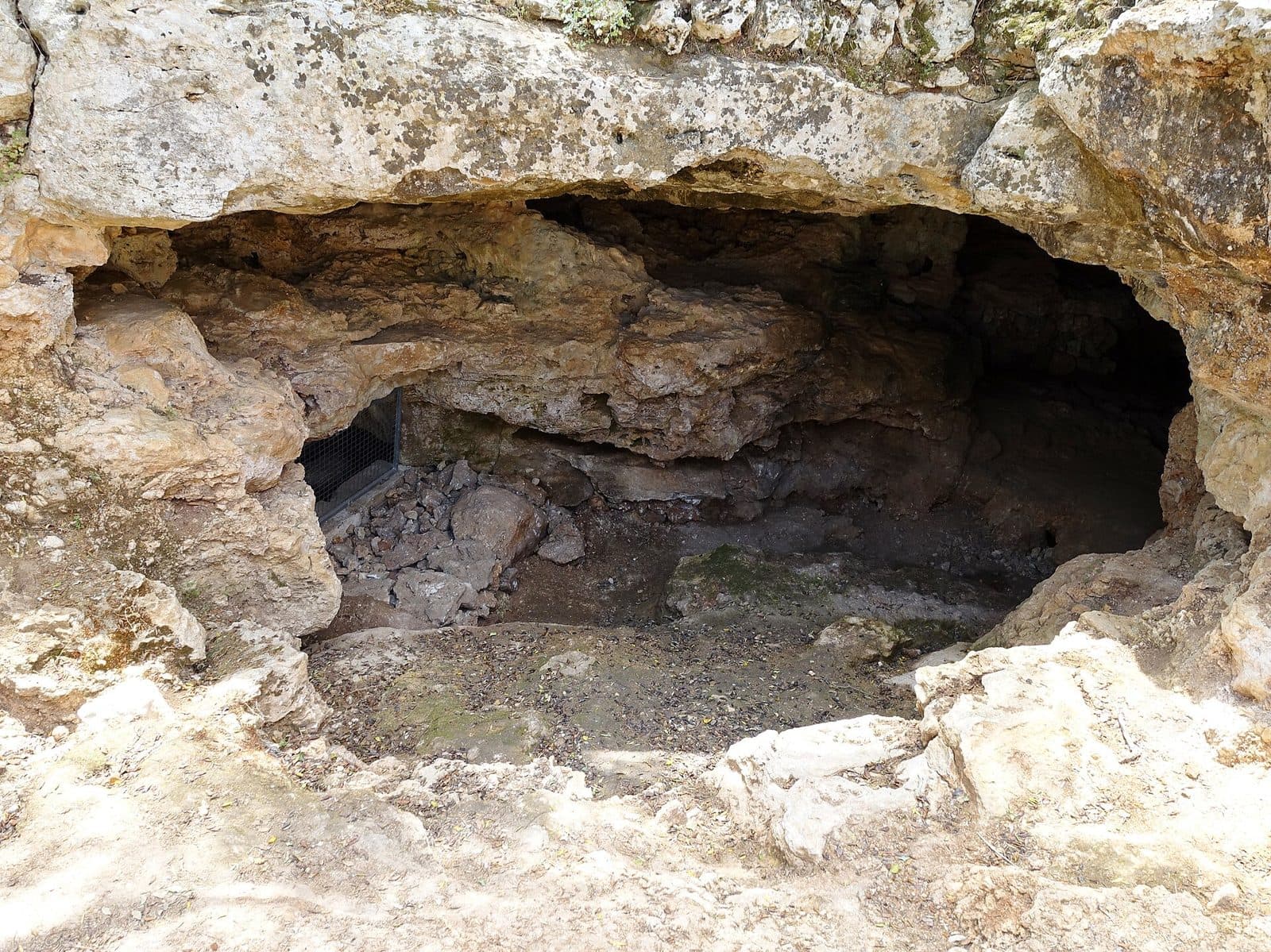

Near Biniali, visitors encounter a small archaeological site whose significance comes from its former use: In prehistoric times, the cave served as a burial place. Bone remains and pottery make it tangible evidence of life and death on Mallorca around 3,000 years ago.
The cave’s modest scale is precisely what makes it interesting. Those who explore only the coast can easily overlook how densely central Mallorca is dotted with prehistoric sites. The cova des Camp del Bisbe forms part of an archaeological route between Sencelles and Costitx. Over a short distance, visitors can compare very different sites there—from the burial cave to talayots, settlement remains, and a sanctuary.
The visit therefore appeals especially to people who want to discover Mallorca beyond its major museums. Instead of a spectacular presentation, a quiet original site awaits, where an information panel and the shape of the place guide the eye. The cova des Camp del Bisbe is particularly rewarding as the starting point or a stop on a longer archaeological tour through the Pla de Mallorca.
For planning purposes, it is important to distinguish between the site itself and its historical significance. The site is compact, but its archaeological context extends far beyond the cave chamber. As access was due to be reorganized after the site passed into municipal ownership, checking the current visiting arrangements before travelling is recommended.
History and significance
A Late Bronze Age burial place
Human bone remains and pottery were found in the small cave. These finds show that it was not used merely as a natural shelter but as a burial chamber. It has been dated to the Late Bronze Age; its use as a burial place is placed around 1000 BC. The cova des Camp del Bisbe therefore represents an era long before Mallorca’s Roman towns, medieval villages, and the now-familiar churches of the island’s central region.
A burial cave tells a different story from a residential site. It preserves not the everyday floor plan of a house but traces of how a community treated its dead. Bones and vessel fragments are therefore not incidental finds. Together, they demonstrate the deliberate use of an underground space. Standing before the cave, visitors look upon a place that served a special function for the people of that time, separate from daily life.
Part of Sencelles’ prehistory
The cave’s significance becomes particularly clear when it is compared with the other stops on the Ruta Arqueològica Sencelles–Costitx. The route includes six archaeological sites within the two municipalities and extends for a total of 12 kilometres. Only 2.5 kilometres separate the cova des Camp del Bisbe from the sanctuary of Son Corró, but they represent approximately 1,000 years of historical development.
This proximity is revealing: The individual sites were not all created at the same time and did not serve the same purpose. The burial cave represents interment and remembrance, while other stops offer insights into settlement, communal structures, or religious practices. Several inconspicuous points in the landscape thus form a chronological picture of Mallorca’s prehistory.
From archaeological site to public heritage
The cave was archaeologically investigated and later promoted as a stop on the regional archaeological route. In 2025, the municipality of Sencelles acquired the site with support from the Consell de Mallorca. The purchase price of 36,000 euros was less important than the cultural policy decision itself: The archaeological site entered municipal ownership, enabling its long-term protection.
The change in ownership was accompanied by plans to organize access carefully and use the cave for educational purposes. Controlled, informative visits were intended instead of unregulated cave tourism. This approach suits the character of the place. The cova des Camp del Bisbe is a sensitive burial site, not a recreational space capable of withstanding unlimited use.
What to see
The small burial cave
The first impression is deliberately understated: The cova des Camp del Bisbe is a small cave, not an extensive underground system. Its significance therefore lies neither in its size nor in decorative rock formations. What matters is the preserved spatial relationship between the cave and the archaeological finds. The confined space makes it clear that this was a selected burial place rather than a settlement used in everyday life.
At the site, it is worth setting aside expectations of a conventional cave tour. The cave itself is the exhibit. Its opening, enclosed interior, and position in the landscape form the setting in which the prehistoric burials took place. Precisely because so little modern visitor infrastructure distracts from it, the site’s original function remains present.
The interior should be entered only if this is expressly permitted under the current visiting arrangements. Controlled access was planned after the municipality acquired the site. Barriers or restrictions serve not as theatrical devices but to protect an archaeological site.
Bone remains and pottery
The cave’s most important evidence consists of the human bones and pottery remains recovered during investigations. They support its interpretation as a Late Bronze Age burial chamber. The finds themselves explain the cave’s history scientifically; at the site, the focus is on the relationship between the landscape, the cave chamber, and its former use.
Pottery is particularly useful for archaeological classification because its production methods and forms can be dated. Together with the human remains, it makes clear that this is not merely a vaguely transmitted tradition. The burial function is supported by material finds. This distinguishes the site from some caves whose prehistoric use is only presumed.
Anyone viewing the site without prior knowledge could easily underestimate its significance. Only the finds transform the small opening into a historical document. They lead back to the people who lived in central Mallorca and selected a protected space for their dead.
Information at the site
The stops on the archaeological route are signposted and equipped with interpretation panels. The texts are available in Catalan, Spanish, and English. These panels are especially important at the cova des Camp del Bisbe because the site does not communicate through monumental walls or a self-explanatory layout. Only the explanation of its dating, use, and finds reveals what visitors should look for.
It is worth reading the panel before examining the cave more closely. Afterwards, the compact chamber no longer appears to be an arbitrary hollow in the terrain but a deliberately used burial place. The clear signage also connects the cave with the route’s other stops and places it within the longer development of the island’s prehistoric culture.
The cave as part of a route
The visible experience also includes moving between the sites. The cova des Camp del Bisbe is the first stop on the designated route; other destinations include the Talayot de Son Fred, the sanctuary of Son Corró, the settlement of Turassot, the Talayot de Binifat, and Ses Talaies de Can Xim. Their structures and functions differ markedly from those of the burial cave.
This comparison prevents a common misunderstanding: Mallorca’s prehistory did not consist exclusively of talayots. The cave reveals another side of the same archaeological landscape. Burial spaces, settlements, monumental towers, and sanctuaries occupied an area now shaped by villages, fields, and local roads. The cova des Camp del Bisbe is small, but it plays an unmistakable role within this ensemble.
Visiting the cave
A compact original site
The actual stay at the cova des Camp del Bisbe is more likely to be short than to fill an entire day. It is sensible to allow enough time to read the explanation, view the cave from the permitted area, and consider its function as a burial place. Anyone who takes only a photograph and immediately continues misses the most important aspect: the relationship between the small chamber and the remains recovered there.
The length of a visit therefore depends less on the site’s size than on the visitor’s interest. As an individual stop, it can be seen quickly; combined with other sites along the route, it becomes a longer archaeological excursion. The full route connects six sites across 12 kilometres and is most conveniently covered by car or bicycle.
Check access in advance
Specific opening hours and an admission price are not currently recorded reliably. Before travelling, visitors should therefore check when and in what form a visit is possible. This is particularly important because a controlled access plan with informative or guided visits was intended following the municipal acquisition. A visible archaeological site does not automatically mean that the cave may be entered at any time.
This restriction does not detract from the visitor experience. Archaeological burial sites are sensitive to uncontrolled access. A guided tour can also explain details about the finds that cannot be understood simply by looking at the cave chamber. Anyone travelling specifically to see the cova des Camp del Bisbe should therefore confirm its current status before arriving.
Independently or with archaeological guidance
Four of the six stops on the regional route have been described as sites that can be explored independently. Signage and multilingual panels provide a basic understanding without a guide. Nevertheless, an expertly guided tour offers more: Dates, differences between the sites, and the significance of seemingly minor traces become clearer when explained directly at the original location.
The information provided on-site is sufficient for an initial overview. Anyone who has already visited other Talayotic sites or has a particular interest in burial rituals will gain more from a guided tour. The cova des Camp del Bisbe is not a place that tells its story through monumental impact; it requires careful observation and explanation.
Do not plan the entire route on foot
The archaeological route can be covered by car or bicycle. A continuous hike is less advisable because some sections would require walking along the edges of local roads. This affects not only comfort but also safety. Anyone wishing to connect individual stops on foot should check each route in advance and not treat road sections as designated hiking trails.
A dedicated detour is sufficient for the cave alone. Those combining several sites will benefit from a clear itinerary and from taking time to read the information at each stop. This ensures that the cova des Camp del Bisbe remains recognizable as a burial cave and does not blur together with the route’s very different talayots and settlement sites.
Getting there and parking
From Palma Airport to Biniali
From Palma Airport, the route initially follows the Ma-30, then the Ma-13 and the Ma-3030 into central Mallorca. Biniali is 31 road kilometres away, and the drive takes around 31 minutes. These details expressly end in the village of Biniali, not directly at the cave entrance. For the final section to the cova des Camp del Bisbe, follow the current signs for the archaeological route.
The transition from the main road network to local roads is part of the character of this excursion. The cave is not located beside a major tourist access road but in the rural landscape between settlements in the municipality of Sencelles. Careful navigation is therefore more useful than expecting to follow signs to a visitor centre from a great distance.
From Palma to Biniali
From central Palma, Biniali is 28 road kilometres away. The drive takes around 35 minutes and follows the Ma-13, Ma-3030, and Ma-3020. Here too, the distance and travel time refer to Biniali. From there, the final section leads through the local road network to the archaeological site or the signposted route.
A car is practical when combining several stops because the full archaeological route covers 12 kilometres. A bicycle is also an option. The entire route should not be attempted casually on foot, as parts follow local roads and would require walking along the roadside.
Parking and arriving by bus
When parking, keep access roads, farm tracks, and roadsides clear. Follow local signs and use only areas where parking is permitted; a short walk from a suitable parking place is preferable to a risky stop directly beside the road.
For travel by public transport, the stops Camí d’Establiments, Sencelles 1, Sencelles 2, and Camí de ses Ànimes may serve as reference points. Since none guarantees immediate access to the cave, the connection, departure stop, and final section must be planned together before travelling. For a complete tour of several sites, a bicycle or car remains the easier solution.
Bus lines to cova des Camp del Bisbe at a glance
| Line | Route | Departures/day | First | Last |
|---|---|---|---|---|
| 304 | Inca - Sencelles - Palma | 62 | 06:29 | 22:13 |
From the official GTFS feeds (TIB/SFM), no real-time data. The figures cover all stops in the town; weekend and holiday services differ — check with the operator before travelling.
Getting there by bus
Camí d'Establiments (47017) · 0.4 km as the crow flies
- 304Inca - Sencelles - Palma · Daily
Sencelles 1 (47015) · 0.7 km as the crow flies
- 304Inca - Sencelles - Palma · Daily
Sencelles 2 (47018) · 0.9 km as the crow flies
- 304Inca - Sencelles - Palma · Daily
Camí de ses Ànimes (47011) · 1.1 km as the crow flies
- 304Inca - Sencelles - Palma · Daily
Timetable data: official GTFS feeds (TIB/EMT), no real-time — check with the operator before travelling.
Nearby places
Biniali
Biniali is a small village in the municipality of Sencelles in the Pla de Mallorca. Stone houses, agricultural surroundings, and vineyards shape its appearance. Especially after driving through the more densely developed areas around Palma, visitors can sense how quickly Mallorca gives way to a quiet, rural interior. The cova des Camp del Bisbe fits this scale: It is not a monumental attraction but a historic point within a cultural landscape used over a long period.
Time in the village can easily be planned before or after visiting the cave without turning it into an extensive sightseeing programme. A short walk through Biniali provides a sense of the area’s present-day setting, in which its prehistoric traces are located. It also becomes clear why the sites do not resemble a self-contained open-air museum: They are distributed among villages, fields, and roads.
Sencelles and Costitx
Sencelles and Costitx give the shared archaeological route its name. The six stops are located around the two municipalities and can be viewed as a connected sequence. For history enthusiasts, this combination is more rewarding than visiting just one isolated site because the burial cave, talayot, settlement, and sanctuary reveal different areas of life.
At 12 kilometres, the route is manageable, but its scattered sites require sensible transport planning. Four stops have been described as suitable for independent exploration. Anyone who does not want to travel the full route can combine the cova des Camp del Bisbe with one selected second site and compare two different archaeological types.
Son Fred and Son Corró
The Talayot de Son Fred and the sanctuary of Son Corró are the most obvious thematic additions. Son Fred represents monumental talayot construction, while Son Corró is interpreted as a religious site from a later period. The burial cave and Son Corró are separated by 2.5 kilometres, but historically by around 1,000 years.
This leap through time is precisely what makes the combination worthwhile. Over a short drive, visitors encounter several phases of the island’s history without the sites having been assembled into an artificial theme park. The landscape itself remains the connecting element. Careful comparison reveals how differently prehistoric architecture could develop depending on its purpose.
The place it belongs to
Biniali in the place guidePractical information for visitors
What to expect from a burial cave
The cova des Camp del Bisbe is a small archaeological burial cave. Visitors should expect a compact original archaeological site whose value comes from its Late Bronze Age burials and finds. Those who understand this context will not be disappointed by its modest size.
The finds provide the scientific key to understanding the cave; at the site itself, the chamber, its location, and the information panel take centre stage. Combining the visit with other stops on the route or joining an expert-led tour provides a more extensive experience.
Read the information first
At this site, it is worth resisting the urge to reach for the camera immediately. The multilingual explanation gives the scene its proper scale. After reading it, the cave’s inconspicuous characteristics come to the fore: its confined dimensions, enclosed nature, and deliberate use as a burial chamber.
Anyone continuing to other stops should follow the same sequence—first get oriented, then observe, and finally compare. In this way, six separate archaeological sites become an understandable journey through different periods of Mallorca’s prehistory.
Local insider tips
Read the panel before viewing the cave
The small cave cannot be understood through monumental architecture. Read the multilingual information panel first, then examine the chamber: The bone and pottery finds explain its use as a burial place.
Do not treat it as a hiking trail
The archaeological route includes six stops across 12 kilometres. A car or bicycle is more practical than walking the entire route because parts would require walking along the edges of local roads.
A short distance, a great leap through time
Only 2.5 kilometres separate the cova des Camp del Bisbe from the sanctuary of Son Corró, but historically they are approximately 1,000 years apart. This combination shows especially clearly how greatly the prehistoric sites differ.
Compare it with Son Fred
After the compact burial cave, the Talayot de Son Fred offers a particularly revealing contrast. The comparison shows that Mallorca’s prehistory consisted not only of talayots but also included burial spaces and other specialized sites.
Confirm access beforehand
After the municipality acquired the site, controlled and informative visits were planned. Before making a dedicated journey, check whether the cave is freely accessible or can be viewed only as part of regulated visits.