
el Carme in Es Capdellà: Village Church in Southwest Mallorca
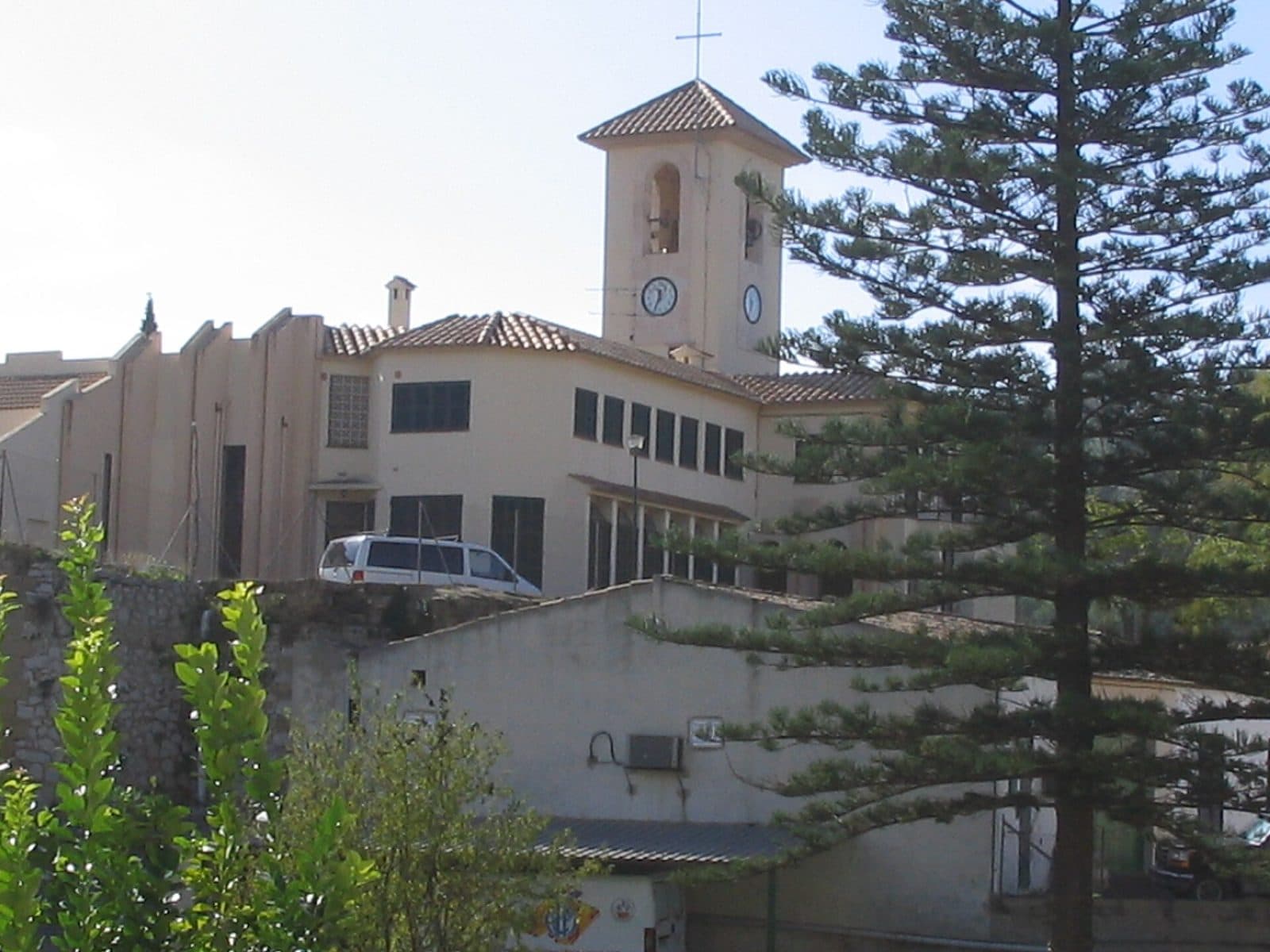

el Carme is one of those Mallorca attractions whose appeal comes less from its size than from its place in village life. The church, also known as Virgen del Carmen, stands in the center of Es Capdellà, a rural village in southwest Mallorca. Between traditional houses and the mountains, it reveals how differently Calvià's hinterland has developed compared with the nearby coastal resorts.
A visit is especially worthwhile for travelers who deliberately seek out places away from major monuments. el Carme is not an extensive sightseeing destination for an entire day, but a peaceful focal point on a walk through Es Capdellà. This context is particularly important: the church is best understood together with the village, its origins, and the landscape at the foot of Puig de Galatzó.
Anyone passing through Es Capdellà on the way to Galilea, Andratx, or Finca Galatzó will find it a worthwhile stop. The church is also revealing for those interested in cultural history, as it was built after the village's early development. el Carme therefore tells a story not of courtly splendor, but of the growth of a small workers' settlement into an enduring rural community.
History and significance
The origins of Es Capdellà
At the end of the 17th century, farmworkers settled in the area. The site lay at a crossroads with routes toward Peguera, Andratx, Calvià, and the Galatzó valley. The new settlement therefore did not emerge by chance: it stood where routes to work, farmland, and the large estates of the surrounding area converged.
The early residents worked on nearby estates and also helped build manor houses and villas in Calvià. Es Capdellà therefore grew not as a town planned for prestige, but out of the everyday lives of its working population. These origins shape the context of el Carme. A village church gave the consolidating settlement a religious focal point and, at the same time, a shared place in its emerging center.
The Virgen del Carmen church
The Virgen del Carmen church dates from the 18th century. Its construction therefore followed the founding phase of Es Capdellà and belongs to the period when the initially scattered settlement became a recognizable village. el Carme symbolizes this transition: paths and workplaces developed into a community with a center of its own.
The name refers to Our Lady of Mount Carmel, known in Spanish as Virgen del Carmen and in Catalan as Mare de Déu del Carme. This dedication appears in several places on Mallorca; here it refers specifically to the village church of Es Capdellà. Its significance therefore comes not from other churches with the same name or festivals elsewhere on the island, but from the history of this community on the edge of Serra de Tramuntana.
Today, el Carme remains one of the defining features of the compact village center. While tourism has dramatically transformed the coast of the municipality of Calvià, Es Capdellà has remained free of large hotel complexes. The church thus stands in surroundings where traditional houses, gardens, and the rural network of paths still determine the character.
What to see
The Virgen del Carmen church
Standing before el Carme, visitors first gain a sense of the village's scale. This is not a monumental urban church, but a sacred building created for a small village in Mallorca's hinterland. Its historical value lies primarily in its connection with the development of Es Capdellà: the church dates from the 18th century, while the village itself began to take shape toward the end of the 17th century.
When viewing it, it is therefore worth looking beyond any single spectacular detail. What matters is the church's position in the village center. It marks a communal focal point in a settlement that originally grew from working life surrounding estates, agriculture, and construction projects. On this scale, el Carme reveals more about rural Mallorca than many considerably larger attractions.
The name Virgen del Carmen also helps with orientation, as el Carme appears in different contexts on Mallorca and beyond. The church in Es Capdellà should not be confused with the church bearing the same dedication in Porto Cristo or with institutions on other Balearic Islands. Its historical setting is unmistakably the village center of Es Capdellà.
The historic village center
The surroundings are part of the visitor experience. Traditional houses form the compact center together with the church, while gardens, restored stone houses, and scattered country estates shape the transition to the surrounding landscape. The village does not offer a long succession of major museums and monuments. Precisely for this reason, el Carme stands out as a historic landmark: the sacred building gives direction and context to a short walk.
The village well nearby can also be included in the walk. It recalls the former local water supply before a centralized drinking-water network took over its practical role. The church and well tell different stories about communal daily life: one as a religious center, the other as once-essential infrastructure.
The mountain landscape remains present above the rooftops and between the streets. Puig de Galatzó has a particularly strong influence on how Es Capdellà is perceived. As a result, el Carme does not feel like an isolated monument, but part of a settlement where village, cultivated land, and the foothills of Tramuntana follow closely one after another.
Visiting el Carme
A stop at the church
A visit is best begun with a slow walk through the village center. el Carme is not an attraction with a prescribed route, extensive exhibition, or long succession of rooms to explore. Instead, the church works well as the starting point or destination of a walk that also takes in the traditional houses and old village well.
How much time to allow depends on whether you view only the church or include the wider village. A short, attentive stop is enough for el Carme alone. Anyone wishing to understand the village's origins, walk through the center, and stop for food or a drink afterward should not squeeze the visit between two tightly scheduled activities. Es Capdellà makes its impression through its peaceful pace, not through a large number of attractions to be checked off in sequence.
Current opening hours and admission conditions should be checked before traveling. Visitors should not assume that the interior will always be accessible. Even if the church is locked, however, the stop remains worthwhile because el Carme's historic position in the village center can be appreciated from outside and in relation to the surrounding streets.
Quiet days and village events
Outside special events, Es Capdellà is an exceptionally peaceful residential community. It becomes busier during the summer village festivals and the agricultural fair in autumn. Those wishing to experience the church and center at their quietest should therefore choose an ordinary day outside these events. Travelers interested in present-day village life, by contrast, will encounter a considerably livelier side of the community during the festivities.
This does not make it possible to give a reliable estimate of daily visitor numbers at the church. In practical terms, however, el Carme should not be planned like a heavily visited major attraction. There is neither an extensive museum operation nor a long shopping street to dictate a fixed itinerary. Its appeal lies in exploring independently and in the opportunity to combine the church visit with scenery, dining, or a hike.
For families, the compact village center is generally easier to navigate than a sprawling attraction. The stop becomes more engaging when the church, village well, and visible mountain scenery are combined into a small discovery tour.
Getting there and parking
From Palma and the airport
The measured driving distances lead to Es Capdellà, not to a guaranteed parking space immediately beside el Carme. From the center of Palma, the road distance is 21 kilometers. The journey takes around 37 minutes and follows the Ma-1. From Palma airport, the route first follows the Ma-20 and then the Ma-1; the journey of 32 road kilometers takes around 38 minutes.
After leaving the major roads, the route enters the more rural hinterland of the municipality of Calvià. In the village, follow signs toward the compact center where the church is located. Allow some flexibility when looking for parking; local signs and possible temporary restrictions take precedence.
By bus
The Es Capdellà bus stop provides public transport access to the village. From there, visiting becomes a walk through the community rather than a direct arrival at an enclosed attraction complex. This suits el Carme well: the church, houses, and village center can be experienced together without needing to drive between them.
Check the current timetable when planning, especially if combining the visit with a hike or meal. Es Capdellà is a small village whose transport connections cannot be compared with Palma's dense network. Anyone wishing to remain flexible should therefore plan the return journey before beginning the walk.
Bus lines to el Carme at a glance
| Line | Route | Departures/day | First | Last |
|---|---|---|---|---|
| 107 | Es Capdellà - Palma | 39 | 06:30 | 23:10 |
From the official GTFS feeds (TIB/SFM), no real-time data. The figures cover all stops in the town; weekend and holiday services differ — check with the operator before travelling.
Getting there by bus
Es Capdellà (11118) · 0.1 km as the crow flies
- 107Es Capdellà - Palma · Daily
Timetable data: official GTFS feeds (TIB/EMT), no real-time — check with the operator before travelling.
Nearby attractions
Es Capdellà
Around el Carme, Es Capdellà reveals a side of the southwest that is easily overlooked in the large coastal resorts. The village belongs to the municipality of Calvià but feels considerably more rural than its well-known seaside destinations. Stone houses, gardens, and country estates shape the scene; large hotel complexes and an extensive promenade are absent.
A walk can include the village well and the traditional houses in the center. Those wishing to stay longer will find places to eat that also draw visitors to Es Capdellà from other parts of Mallorca. The church, a walk, and a meal form a well-rounded excursion without requiring a packed sightseeing schedule.
Galatzó and the hinterland
Puig de Galatzó forms the village's scenic landmark. Es Capdellà also serves as a starting point for trips into the Galatzó valley and to the publicly accessible Finca Galatzó. Visitors to el Carme can therefore combine this cultural-history stop with a hike or excursion through the traditional cultivated landscape of southwestern Tramuntana.
Calvià Vila, Galilea, Andratx, and Peguera also make suitable additional stops on a route through the southwest. Each place offers a different emphasis: Calvià Vila continues the historic village character, Galilea lies farther into the mountain landscape, Andratx has a larger town center, and Peguera marks the transition to the tourism-focused coast. Within such a route, el Carme remains the peaceful village stop.
This contrast is particularly striking when arriving from a coastal resort. Within a short time, promenades and holiday complexes recede as cultivated land, estates, and mountains take over the view. The church of Es Capdellà can thus be understood not merely as an individual building, but as a visible sign of an older history of settlement and everyday life.
Local insider tips
See the church and village together
el Carme is best appreciated as more than an isolated photo stop. A short walk through the compact village center connects the church with traditional houses and reveals its role as the village's historic focal point.
Include the village well
The old village well also belongs on the walking route. It lost its former purpose when the village was connected to the centralized drinking-water network, but it remains a reminder of communal daily life in old Es Capdellà.
Combine it with Galatzó
Anyone wishing to see more than the village center can combine el Carme with the Galatzó valley or the publicly accessible Finca Galatzó. In this way, village history leads directly into the cultivated landscape at the foot of Puig de Galatzó.
Choose festival days deliberately
Outside the summer village festivals and the agricultural fair in autumn, Es Capdellà is particularly peaceful. During these events, however, visitors experience more local life as well as considerably more activity in the village.