
Església dels Caputxins – Capuchin Church in Palma
.jpg)
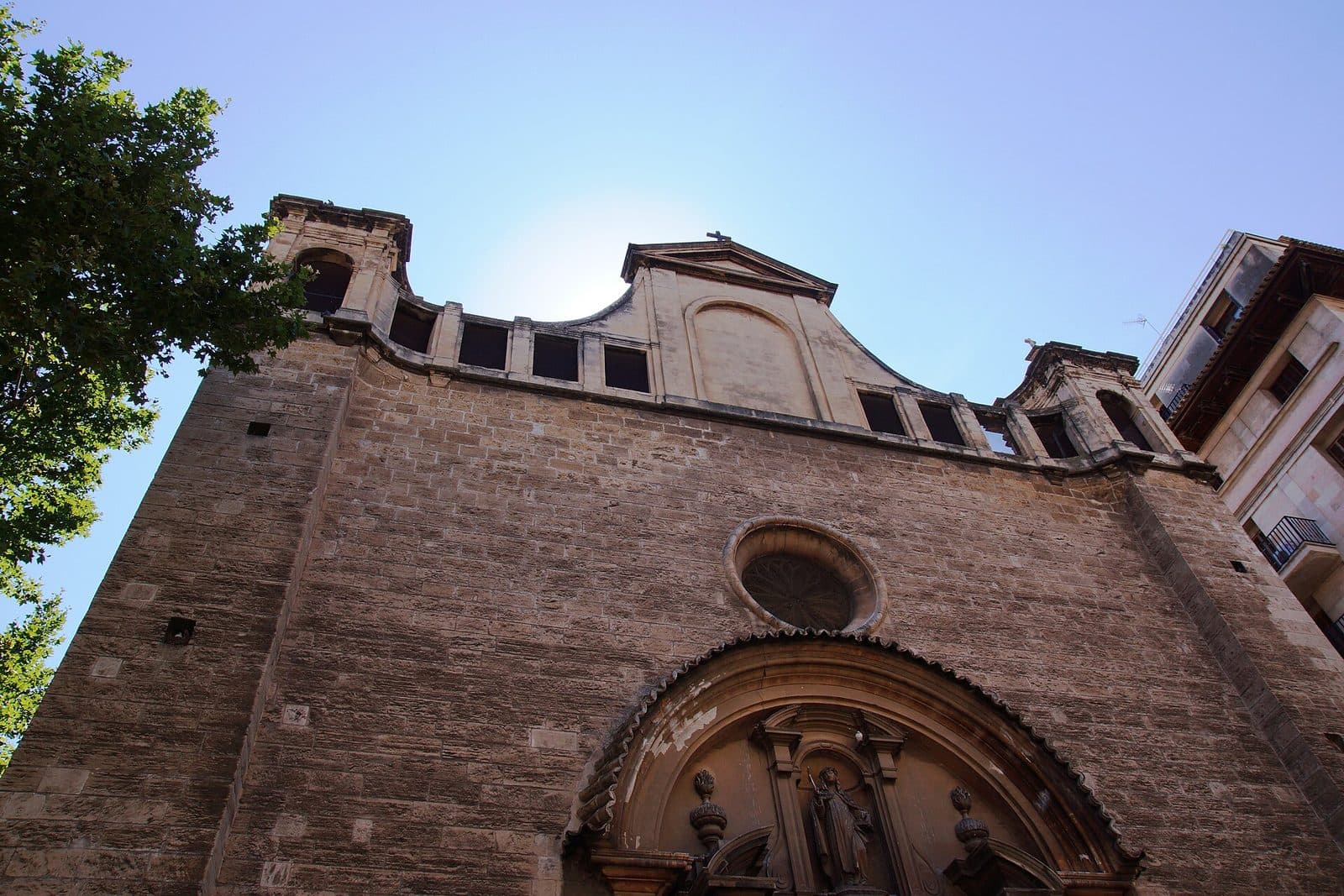
In the heart of Palma, the Església dels Caputxins recalls a religious community whose path into the city was anything but straightforward. The Capuchins had to fight for a long time to establish themselves, lost their first monastery outside the walls for military reasons, and were later expelled again. The fact that their church survives to this day was by no means inevitable.
This history is precisely what makes the site interesting. This is not a monumental must-see like the cathedral, but a quiet setting in the city's development: the church tells how religious orders, fortification policies, and government intervention shaped Palma's cityscape. A closer look at its location in the historic center reveals the outcome of several forced new beginnings.
The visit is particularly suitable for travelers who want to explore Palma's sacred architecture beyond La Seu and the major medieval churches. The Església dels Caputxins is also a worthwhile stop on a themed tour of monasteries and religious communities. Its significance lies less in spectacular individual objects than in the remarkable continuity of the Capuchins in Palma.
It is important to arrive with the right expectations: the Església dels Caputxins is a church with a monastic background. The site is most rewarding when its history is already known and the present church is viewed as the survivor of a foundation threatened several times.
History and significance
The difficult path to Palma
The history of the Capuchin convent begins in 1623 with an initial attempt to establish friars of the order in Palma. The plan met with opposition, including from the Franciscans. The first Capuchins from the convent in Saragossa arrived in Mallorca in 1626, but they did not receive final permission to establish themselves until 1677. There was therefore a long period between their arrival and official recognition during which their position in the city was by no means secure.
This difficult beginning is essential to understanding the site. Palma already had a dense religious landscape of churches, monasteries, and influential communities. A new order was therefore not simply entering unclaimed territory but had to assert its place within an established structure. The Capuchin church consequently recalls not only piety and religious life but also rivalry, permits, and the struggle to maintain a lasting presence.
The first monastery outside the city wall
Construction of the first Capuchin convent began between 1680 and 1683. It stood outside the city wall of the time, near the Porta de Jesús, between the street named after this gate and the old road to La Real. The location was therefore not part of Palma's protected core but lay in an area whose use was always influenced by military considerations.
That proved to be the convent's downfall. Its demolition was ordered under the pretext of improving the city's defenses and was carried out in 1771. This meant the loss not only of a building but also of the community's permanent home, which had taken decades to secure. The friars had to stay temporarily in various places while negotiations took place over a new foundation within the walls.
A new beginning within the walls
Work on the new convent within the city began in 1778, and its church was blessed in 1791. This building site marks the decisive relocation in the history of Palma's Capuchins: visitors to the Església dels Caputxins today are not standing on the site of the first convent from the late 17th century, but at the urban foundation created after its forced demolition.
The church is dedicated to the Immaculate Conception, known in Catalan as Immaculada Concepció. Its existence in the historic center is therefore directly connected to the destruction of the previous monastery. What initially appeared to be a definitive setback led to a permanent move into the heart of Palma. Even the street name Carrer dels Caputxins preserves the connection between the order and the city district.
Suppression, threatened demolition, and return
In 1836, the foundation was closed as a result of the government suppression of monasteries. This once again brought the Capuchins' continuous use of the site to an end. The situation became even more dramatic in 1861, when its demolition was ordered. The church, however, was saved. Its survival to the present day is therefore not the result of uninterrupted development but of a successful escape from further destruction.
The Capuchins returned to Palma in 1906 and regained the church. This date completes the historical arc: the delayed foundation, the demolition of the first convent, the new building within the walls, and the later suppression were followed by the restoration of the Capuchin presence. The Església dels Caputxins is therefore above all a testament to perseverance. Its value lies in connecting a specific place of worship with the history of an order whose presence was repeatedly at risk of being cut short.
What to see
The surviving church
The most important part of the site today is the church itself. It belongs to the convent whose construction began in 1778 and whose church was blessed in 1791. This chronological context helps prevent a common misunderstanding: the visible building is not Palma's first Capuchin monastery. That monastery stood outside the walls near the Porta de Jesús and had already been demolished in 1771.
When viewing the church, it is therefore worth looking less for medieval origins and more for traces of a later urban new beginning. The church was built after the community had lost its previous location and had to find a new home within the fortified city. It embodies this transition and is also the part of the complex that survived the suppression of the convent and the later demolition order.
The dedication to the Immaculada Concepció gives the site its religious identity. It should not be confused with the name of the order: “dels Caputxins” refers to its association with the Capuchins, while the Immaculate Conception is the church's dedication. The two names tell different sides of the same place—one about its community, the other about its spiritual purpose.
The convent in its historical context
The church and convent should be considered together. The Capuchins did not come to Palma merely to build a single place of worship; their foundation was intended as a religious house. The convent provided the setting for communal religious life, while the church was its sacred center. The government suppression of 1836 therefore affected the entire community, not merely the use of one building. Today, the church is the crucial visible and preserved core.
The documented history also shows why preservation here means more than an unchanged group of buildings. The first foundation was completely lost, while the second was suppressed and later likewise threatened with demolition. The present site is therefore the result of loss, rescue, and return. This sequence cannot be read from a single decorative feature; it becomes clear through the relationship between the church, the convent, and the city.
Carrer dels Caputxins
An often-overlooked detail is found not behind the portal but on the city map. The convent stands in the historic center on the street that bears the Capuchins' name. Carrer dels Caputxins preserves the memory of the order in the city's everyday landscape and shows how strongly a religious community could shape the identity of a district.
The difference between the two historic locations also becomes clear here. The first monastery stood outside the walls near the Porta de Jesús, while the later one was inside the city. The present street therefore belongs to the second phase of Capuchin history. Anyone arriving on a walking tour of the old town is, in a sense, retracing the step the friars had to fight for after the demolition of their first house: moving into the protected heart of the city.
The street itself is therefore part of the attraction, even though it is not a separate monument. It anchors the church in Palma's historic network of monasteries, churches, and lanes named after religious communities. Before moving on, it is worth looking at the street name—it is the most concise summary of the site's history still in everyday use.
Visiting the church
Before entering
A visit is best begun by getting oriented on Carrer dels Caputxins. Those who first consider that the Capuchins came here only after losing their house outside the walls will perceive the church differently. The location is not merely an incidental address but the result of lengthy negotiations and a forced relocation.
Neither opening hours nor admission information are available for the church. Anyone planning the Església dels Caputxins as a specific stop should therefore avoid an overly tight schedule and have an alternative ready in case the church is not accessible at that time.
A quiet historic site rather than a museum circuit
The length of the visit depends mainly on whether the church is accessible and how deeply visitors engage with its history. The site works well as a focused stop on a walking tour of the old town. Understanding it requires more attention than taking a quick photograph of the entrance: only the sequence of the earlier monastery outside the walls, the new urban building, the suppression, and the return explains what makes it distinctive.
A functioning church stands here where an order was able to begin again after losing its first home. This type of attraction requires some background knowledge, but in return it offers a more nuanced picture of Palma beyond the major monuments.
Adding it to a city walk
The Església dels Caputxins is particularly worthwhile as part of a route through Palma's religious topography. It should not be compared with La Seu, Sant Francesc, or Santa Eulàlia in terms of size or furnishings. Its subject is different: it reveals how a religious community lost its place through political decisions, began again within the walls, and returned after a long interruption.
Anyone looking only for a single spectacular work of art may easily underestimate the character of the site. Those who want to understand why Palma's old town has so many buildings and street names shaped by the church will find an illuminating piece of the puzzle here. The visit therefore works best as part of a walk that considers not only façades but also the historic functions of the neighborhoods.
Getting there and parking
From the airport to Palma
The route from Palma Airport follows the Ma-19 into the island's capital. Palma is 11 road kilometers away, and the drive takes around 20 minutes. These details apply expressly to the route to Palma, not directly to the church portal. The final section leads into the densely built-up urban area around Carrer dels Caputxins and depends more heavily on traffic routes, one-way streets, and possible access restrictions.
Anyone arriving by rental car should not treat the old town as a typical destination with guaranteed parking directly outside the attraction. Palma's center has many pedestrian areas and one-way streets, and restricted-access zones must also be taken into account. An up-to-date navigation system helps but is no substitute for paying attention to signs. It is usually advisable to leave the car in a regular parking garage on the edge of the historic core and complete the final section on foot.
The church should be searched for in the navigation system by its name or by Carrer dels Caputxins. Even so, it is advisable not to drive blindly to the entrance. Although the site's history reaches back to the era of the city walls, its present surroundings form a modern central district with correspondingly heavy traffic. A car is practical for reaching Palma but is often more of a hindrance in the final narrow streets.
Via Plaça d’Espanya
Plaça d’Espanya is the main point of reference for arriving by public transport. It is home to the Estació Intermodal and several stops, including 1139-Plaça d’Espanya and the stops at pl. d’Espanya – Estació Intermodal. From this transport hub, the route to the church becomes an urban walk through the center.
This option suits the character of the visit. Instead of dealing with access rules and searching for parking, the walk through Palma can already become part of the tour. Carrer dels Caputxins lies in the historic center, so no further intercity journey is needed after getting off. Current timetables for the relevant day of travel should be checked for the specific bus or train connection.
Plaça d’Espanya is also a clear meeting point for groups arriving separately. From there, the church visit can be combined with other stops in the city center without having to return to a vehicle in between. This is generally more logical on foot than repeatedly moving the car, especially on a route that includes several sacred buildings.
Bus lines to Església dels Caputxins at a glance
| Line | Route | Departures/day | First | Last |
|---|---|---|---|---|
| N1 | Portopí - Porta des Camp | 4 | 00:02 | 02:05 |
| N4 | Pl. Progrés - Pont d'Inca | 4 | 00:55 | 02:45 |
| N2 | Can Blau - Can Valero | 3 | 00:30 | 01:45 |
| N3 | Germans Escales - sa Indioteria | 3 | 00:30 | 01:45 |
| 25 | s'Arenal - Pl. Reina | Catedral | 2 | 10:33 | 10:39 |
| 35 | Aquàrium - Pl. Reina | Catedral | 2 | 10:06 | 12:51 |
| 7 | Son Gotleu - Son Serra - Sa Vileta / Son Vida | 1 | 07:37 | 07:37 |
From the official GTFS feeds (TIB/SFM), no real-time data. The figures cover all stops in the town; weekend and holiday services differ — check with the operator before travelling.
Getting there by bus
1139-Plaça d'Espanya · 0.1 km as the crow flies
- 1Portopí - Sindicat · 08:00–08:00 · Daily
- 6Son Espases - Sindicat · 08:00–08:00 · Daily
- 8Son Roca - Sindicat · 08:00–08:00 · Daily
455-pl. d'Espanya - Estació Intermodal · 0.1 km as the crow flies
- 23s'Arenal / Parc Aquàtic - Pl. Espanya · 06:27–21:50 · Daily
- 25s'Arenal - Pl. Reina | Catedral · 06:36–21:01 · Daily
- 35Aquàrium - Pl. Reina | Catedral · 06:21–22:41 · Daily
- N1Portopí - Porta des Camp · 08:00–08:00 · Daily
- N2Can Blau - Can Valero · 08:00–08:00 · Daily
- N3Germans Escales - sa Indioteria · 08:00–08:00 · Daily
- N4Pl. Progrés - Pont d'Inca · 08:00–08:00 · Daily
2-pl. d'Espanya - Estació Intermodal · 0.1 km as the crow flies
- 6Son Espases - Sindicat · 08:00–08:00 · Daily
- 7Son Gotleu - Son Serra - Sa Vileta / Son Vida · 08:00–08:00 · Daily
- 8Son Roca - Sindicat · 08:00–08:00 · Daily
598-pl. d'Espanya - Estació Intermodal · 0.1 km as the crow flies
- A1Aeroport - Palma Centre · 08:00–08:00 · Daily
404-pl. d'Espanya - Estació Intermodal · 0.1 km as the crow flies
- 10Son Castelló - Sindicat · 08:00–08:00 · Daily
- 12Sa Garriga - Nou Llevant · 08:00–08:00 · Daily
- 24Antiga Presó - Nou Llevant · 06:33–21:18 · Daily
219-pl. d'Espanya - Estació Intermodal · 0.1 km as the crow flies
- 1Portopí - Sindicat · 08:00–08:00 · Daily
- 3Pont d'Inca / Joan Carles I · 08:00–08:00 · Daily
- 4Ses Illetes - Pl. Columnes · 08:00–08:00 · Daily
- N1Portopí - Porta des Camp · 08:00–08:00 · Daily
- N2Can Blau - Can Valero · 08:00–08:00 · Daily
- N3Germans Escales - sa Indioteria · 08:00–08:00 · Daily
- N4Pl. Progrés - Pont d'Inca · 08:00–08:00 · Daily
295-pl. d'Espanya - Estació Intermodal · 0.1 km as the crow flies
- 5Es Rafal Nou - Pl. Progrés · 08:00–08:00 · Daily
- 46la Bonanova - Gènova - Sindicat (dreta) · 08:00–08:00 · Daily
- 47Gènova - la Bonanova - Sindicat (esquerra) · 08:00–08:00 · Daily
1078-pl. d'Espanya - Estació Intermodal · 0.2 km as the crow flies
- 16Es Muntant - Mercat de Pere Garau · 06:36–21:55 · Mon-Sat
- 19UIB i Parc Bit - Porta des Camp · 05:46–22:12 · Daily
- 33Son Espases - Son Fuster · 07:12–19:32 · Daily
- A1Aeroport - Palma Centre · 08:00–08:00 · Daily
- CCCircular Centre Ciutat · 08:00–08:00 · Daily
Timetable data: official GTFS feeds (TIB/EMT), no real-time — check with the operator before travelling.
Nearby
Palma's historic center
Its central location makes the Església dels Caputxins a good intermediate stop on a longer walk through Palma. The old town is shaped by churches, former convents, squares, and traditional streets. Many of its significant buildings can be linked on foot, with the Capuchin church revealing a lesser-known layer of this religious urban landscape.
Unlike the major medieval churches, it primarily reflects Palma's reorganization in later centuries. Its predecessor still stood outside the walls; the present foundation was created only after the forced relocation into the city. Those continuing through the surrounding streets afterward can therefore pay particular attention to place names recalling religious orders, saints, or former church institutions.
In this way, Palma can be understood not merely as a sequence of famous monuments but as a city whose districts were shaped by religious communities for a long time. The Església dels Caputxins is a vivid example: the order gave its name not only to a church but also to the street.
A route through Palma's sacred buildings
For a thematic continuation, consider the cathedral La Seu, the Basilica of Sant Francesc, and the church of Santa Eulàlia. These buildings should not be viewed merely as additions to the same sightseeing experience, as they belong to different periods, communities, and architectural contexts. Together, however, they convey the diversity of Palma's religious heritage.
Sant Francesc is also interesting as a Franciscan site because the Franciscans were among those who opposed the early Capuchin foundation. This historic contrast can form the basis of a particularly coherent city walk: on one side, the older and firmly established Franciscan convent; on the other, the Capuchins, who struggled for a long time to gain permission. The two sites should not be confused.
La Seu provides the monumental counterpart. The cathedral shapes Palma's skyline and attracts the greatest share of visitor interest, while the Capuchin church tells a more intimate story of a religious order. Santa Eulàlia, in turn, is one of the old town's long-established churches. Connecting these stops does not create a uniform panorama of styles but a sequence of very different religious institutions.
Between Plaça d’Espanya and the old town lanes
Plaça d’Espanya is not only a transport hub but also a practical starting point for approaching the center. From here, Palma changes gradually: the metropolitan traffic around the railway station and bus connections gives way to the more tightly packed streets of the city center. The Església dels Caputxins fits well into this transition.
After visiting the church, the walk can continue deeper into the old town or toward the central squares. Those who take time to notice street signs, former convents, and smaller churches will more easily recognize that Palma's religious heritage is not limited to individual attractions. This is precisely where the Capuchin church's strength lies: it shifts attention from a monument visible from afar to the historical significance of one specific urban site.
The place it belongs to
Palma in the place guidePractical information for your visit
Expectations and preparation
Neither opening hours nor admission information are available for the church. Flexible planning prevents a closed entrance from determining the entire walking tour of the old town. Since several other historic sites are located in the center, the order of visits can easily be adjusted.
Comfortable everyday shoes are sufficient for the city walk. Special equipment matters less than being able to navigate Palma's streets. Visitors with children can present the visit as a brief historical stop: the story of the first monastery, demolished for the city's defenses, and the later new beginning within the walls is particularly easy to understand.
The church reveals the most when the key stages of its history are known in advance. Looking at the street name, distinguishing between the first and second locations, and knowing about the prevented demolition of 1861 transform an understated stop into a precise piece of urban history.
Local insider tips
Notice the street name
Carrer dels Caputxins is more than an address: the street name preserves the connection between the order and the district. Before moving on, it is therefore worth taking a deliberate look at the sign.
Do not look for the first location
The present church does not stand on the site of the first Capuchin convent. That convent was outside the walls near the Porta de Jesús and was demolished in 1771 for reasons connected to the city's defenses.
Combine it with Sant Francesc
A route to the Basilica of Sant Francesc makes the Capuchins' difficult beginnings easier to understand: there had been opposition to their foundation in Palma, particularly from the Franciscans.
View the church as a survivor
The crucial perspective is historical: after the suppression of the convent, demolition was ordered in 1861, but the church survived. Knowing this changes how the site is perceived.
Start at Plaça d’Espanya
Anyone arriving via the Estació Intermodal can include the Església dels Caputxins in a walk through the center without searching for parking, then continue to other sacred buildings.