
La Mercè in Palma: Visit the Church and Monastery
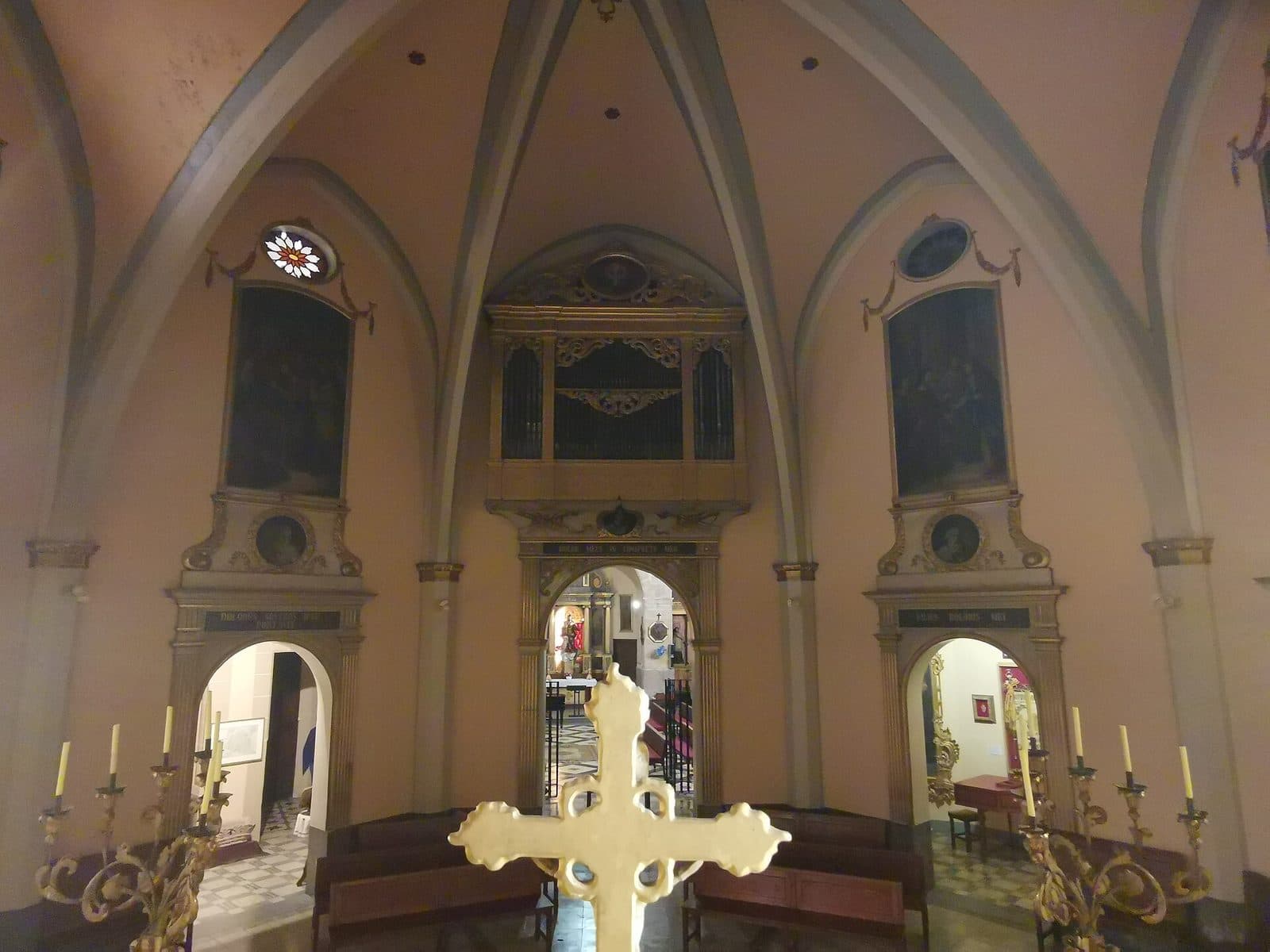

La Mercè is one of Palma’s religious buildings that can easily be overshadowed by the island capital’s widely known landmarks. That is precisely where its appeal lies: listed as a church and monastery, the sight is not a monumental must-see but a destination for travelers who want to discover Palma beyond its grand showpieces.
A visit is particularly worthwhile for those interested in cultural history, church visitors, and attentive urban explorers. La Mercè should not be planned in isolation like a major museum. It makes more sense to understand the building as a stop on a route through Palma—a city where religious architecture, narrow streets, historic squares, and façades from different eras follow one another in close succession at its center.
As no reliable general visiting hours or confirmed admission policy have been recorded for La Mercè, the detour requires slightly more preparation than a visit to a regularly operated museum. Anyone specifically wishing to enter should check current access immediately before setting out into the city. Yet even a stop outside offers an opportunity to understand the name and ecclesiastical function of the site within Palma’s cityscape.
Visiting La Mercè
No general visiting hours have been recorded for La Mercè. Current information should therefore be checked on the day of the visit.
A stop outside
On a city walk, La Mercè can initially be viewed as an architectural and religious stop. Such a visit requires no lengthy advance planning and also works when the interior is not accessible. The most important thing is to have the right expectations: La Mercè is not a substitute for Palma’s great cathedral or a spacious exhibition venue, but an ecclesiastical site in its own right.
Anyone who enjoys photography or studying historic urban structures should not simply tick off the building from the front. Its relationship with the surrounding street is more interesting: How does a religious building stand out in the dense city, how is its entrance marked, and where does the secular row of houses end? Observations like these make smaller churches and monastery complexes legible without hastily assigning individual architectural elements to a particular period or style.
Time needed and planning your day
It is not possible to give a reliable fixed duration for visiting La Mercè. If the interior is closed, it remains a brief stop on a city walk. If the church is open and a quiet visit is possible, allow enough flexibility to experience the site without rushing. A tightly scheduled itinerary is not ideal because actual access may only become clear on arrival.
There is also no reliably documented time when crowds are guaranteed to be lighter. A flexible itinerary is therefore more practical than searching for a supposedly perfect time: include La Mercè on a route through the center and return later if necessary. The most useful preparation consists of just a few steps: select the correct location in Palma, check current access information, and have another stop in the center ready in case the door is closed. This keeps La Mercè a worthwhile part of the day without making the entire city walk dependent on unconfirmed opening hours.
Getting There and Parking
From Palma Airport, the documented route initially leads to Palma. Via the Ma-19, the road distance is 11 kilometers, and the journey takes around 20 minutes. These details expressly apply to the connection from the airport into the city, not directly to the entrance of La Mercè. The final section of the journey begins in the center and should be planned separately because of the dense street network.
Via the Ma-19 to Palma
The Ma-19 is the main route from the airport toward the island capital. Navigation is straightforward along this section: the initial destination is Palma, not an individual building in the old town. Only after reaching the city should navigation be set for La Mercè or a suitable transfer point in the center.
The same approach is recommended for the return trip to the airport. First, allow enough time to leave the center; the route via the Ma-19 follows afterward. The driving time of around 20 minutes to Palma says nothing about finding parking, walking to the destination, or traffic on the inner streets. This distinction should not be overlooked, especially when catching a flight afterward.
By bus via Sindicat
Several recorded stops are located at the Àrea d’intercanvi Sindicat. This interchange is therefore the most important documented reference point for arriving by city bus. The specific stops and routes are shown in the transport modules on the page; before traveling, select the appropriate connection for your respective starting point there.
The walk through the city center begins after getting off the bus. For navigation, the full name La Mercè together with Palma is essential. An offline map can be helpful if finding your way among similarly named streets, churches, and institutions proves difficult.
Parking on the edge of the center
Anyone arriving by car should not treat La Mercè as a destination for searching spontaneously for parking directly beside the building. It is more practical to drive to a public parking garage in Palma and continue on foot or by city bus. This keeps the route to the parking space straightforward while allowing the final streets in the center to be explored without repeatedly circling in search of parking.
The Parc de la Mar parking garage is a documented starting point for the southern center and the old town. Its entrances are on Avenida de Gabriel Roca and Avenida d’Antoni Maura. However, it is not described here as the closest parking facility to La Mercè; the rest of the day’s itinerary and current traffic conditions should determine the specific choice.
A second documented parking option in the city is the parking garage at Passeig Mallorca. Here too, the walking route to the actual destination should be checked before entering. Anyone combining several places in Palma can choose a parking garage based on the entire walking route.
Bus lines to La Mercè at a glance
| Line | Route | Departures/day | First | Last |
|---|---|---|---|---|
| 7 | Son Gotleu - Son Serra - Sa Vileta / Son Vida | 8 | 07:57 | 19:26 |
| 1 | Portopí - Sindicat | 6 | 07:15 | 09:15 |
| 8 | Son Roca - Sindicat | 6 | 07:24 | 09:50 |
| 10 | Son Castelló - Sindicat | 6 | 07:30 | 14:48 |
| 31 | Sant Jordi - Sindicat | 6 | 07:25 | 09:25 |
| 46 | la Bonanova - Gènova - Sindicat (dreta) | 6 | 07:20 | 09:15 |
| 47 | Gènova - la Bonanova - Sindicat (esquerra) | 6 | 07:30 | 08:53 |
| 3 | Pont d'Inca / Joan Carles I | 2 | 09:22 | 09:25 |
| 5 | Es Rafal Nou - Pl. Progrés | 2 | 09:12 | 09:25 |
| 6 | Son Espases - Sindicat | 2 | 08:11 | 08:50 |
| 12 | Sa Garriga - Nou Llevant | 2 | 06:34 | 07:07 |
| 16 | Es Muntant - Mercat de Pere Garau | 2 | 07:38 | 09:21 |
| 24 | Antiga Presó - Nou Llevant | 2 | 07:52 | 08:02 |
| 35 | Aquàrium - Pl. Reina | Catedral | 2 | 09:18 | 13:34 |
| 19 | UIB i Parc Bit - Porta des Camp | 1 | 08:39 | 08:39 |
From the official GTFS feeds (TIB/SFM), no real-time data. The figures cover all stops in the town; weekend and holiday services differ — check with the operator before travelling.
Getting there by bus
360-Sindicat - Àrea d'intercanvi Sindicat · 0.2 km as the crow flies
- 6Son Espases - Sindicat · 08:00–08:00 · Daily
- 8Son Roca - Sindicat · 08:00–08:00 · Daily
1-Sindicat - Àrea d'intercanvi Sindicat · 0.2 km as the crow flies
- 46la Bonanova - Gènova - Sindicat (dreta) · 08:00–08:00 · Daily
- 47Gènova - la Bonanova - Sindicat (esquerra) · 08:00–08:00 · Daily
422-Grans Magatzems - Àrea d'intercanvi Sindicat · 0.2 km as the crow flies
- 4Ses Illetes - Pl. Columnes · 08:00–08:00 · Daily
- 23s'Arenal / Parc Aquàtic - Pl. Espanya · 06:27–21:50 · Daily
- 35Aquàrium - Pl. Reina | Catedral · 06:21–22:41 · Daily
- A1Aeroport - Palma Centre · 08:00–08:00 · Daily
195-Grans Magatzems - Àrea d'intercanvi Sindicat · 0.2 km as the crow flies
- 12Sa Garriga - Nou Llevant · 08:00–08:00 · Daily
- 16Es Muntant - Mercat de Pere Garau · 06:36–21:55 · Mon-Sat
- 19UIB i Parc Bit - Porta des Camp · 05:46–22:12 · Daily
- 22Plaça d'Espanya - Piscines de Son Hugo · 06:49–21:14 · Daily
- 24Antiga Presó - Nou Llevant · 06:33–21:18 · Daily
- 33Son Espases - Son Fuster · 07:12–19:32 · Daily
- N1Portopí - Porta des Camp · 08:00–08:00 · Daily
- N2Can Blau - Can Valero · 08:00–08:00 · Daily
- N3Germans Escales - sa Indioteria · 08:00–08:00 · Daily
- N4Pl. Progrés - Pont d'Inca · 08:00–08:00 · Daily
810-Sindicat - Àrea d'intercanvi Sindicat · 0.2 km as the crow flies
- 10Son Castelló - Sindicat · 08:00–08:00 · Daily
48-Grans Magatzems - Àrea d'intercanvi Sindicat · 0.2 km as the crow flies
- 1Portopí - Sindicat · 08:00–08:00 · Daily
- 7Son Gotleu - Son Serra - Sa Vileta / Son Vida · 08:00–08:00 · Daily
- 14Sant Jordi / S'Hostalot - Pl. Espanya · 08:00–08:00 · Daily
- CCCircular Centre Ciutat · 08:00–08:00 · Daily
799-Alexandre Rosselló - Àrea d'intercanvi Sindicat · 0.2 km as the crow flies
- 7Son Gotleu - Son Serra - Sa Vileta / Son Vida · 08:00–08:00 · Daily
- 12Sa Garriga - Nou Llevant · 08:00–08:00 · Daily
- 14Sant Jordi / S'Hostalot - Pl. Espanya · 08:00–08:00 · Daily
- 22Plaça d'Espanya - Piscines de Son Hugo · 06:49–21:14 · Daily
- 24Antiga Presó - Nou Llevant · 06:33–21:18 · Daily
- N2Can Blau - Can Valero · 08:00–08:00 · Daily
6-Sindicat - Àrea d'intercanvi Sindicat · 0.2 km as the crow flies
- 1Portopí - Sindicat · 08:00–08:00 · Daily
456-Alexandre Rosselló - Àrea d'intercanvi Sindicat · 0.2 km as the crow flies
- 19UIB i Parc Bit - Porta des Camp · 05:46–22:12 · Daily
- 23s'Arenal / Parc Aquàtic - Pl. Espanya · 06:27–21:50 · Daily
- 25s'Arenal - Pl. Reina | Catedral · 06:36–21:01 · Daily
- 35Aquàrium - Pl. Reina | Catedral · 06:21–22:41 · Daily
- A1Aeroport - Palma Centre · 08:00–08:00 · Daily
- N1Portopí - Porta des Camp · 08:00–08:00 · Daily
1139-Plaça d'Espanya · 0.2 km as the crow flies
- 1Portopí - Sindicat · 08:00–08:00 · Daily
- 6Son Espases - Sindicat · 08:00–08:00 · Daily
- 8Son Roca - Sindicat · 08:00–08:00 · Daily
1377-Sindicat Àrea Sindicat · 0.3 km as the crow flies
- 31Sant Jordi - Sindicat · 08:00–08:00 · Daily
49-Grans Magatzems - Àrea d'intercanvi Sindicat · 0.3 km as the crow flies
- 3Pont d'Inca / Joan Carles I · 08:00–08:00 · Daily
- 5Es Rafal Nou - Pl. Progrés · 08:00–08:00 · Daily
Timetable data: official GTFS feeds (TIB/EMT), no real-time — check with the operator before travelling.
Nearby
Palma is best explored on foot. The center is not a uniform open-air museum but a network of streets and squares where buildings from very different periods follow one another. La Mercè fits into this picture as a religious stop that does not need to compete with the scale of the famous monuments. The visit becomes more rewarding when deliberate attention is paid before or afterward to façades, portals, and transitions between streets.
Palma’s historic center
Palma’s history reaches back to Roman times. Later, the city was shaped by Byzantine and Muslim rule, among others, as well as powers from the Spanish mainland. Not every one of these phases can be read directly from every building, but this long development explains why the center does not form an architecturally uniform backdrop.
This variety is precisely what makes a route including La Mercè interesting. The city walk leads not only from sight to sight but through layers of urban development. Religious buildings stand beside residential and commercial properties, large squares open up beyond narrow streets, and older forms meet later alterations and façades. La Mercè should be viewed as part of Palma.
Architecture from Gothic to Modernisme
Palma’s best-known architectural range extends from medieval Gothic to the modernist façades of the early 20th century. The cathedral La Seu is the city’s dominant ecclesiastical landmark, while buildings from the Modernisme period show how dramatically Palma changed again later. A walk including La Mercè can reveal this range without requiring an extensive visit to every stop.
Anyone interested in architecture should therefore look beyond the main façades. In Palma, it is worth looking up: balconies, window axes, ornamentation, and rooflines are easily overlooked in the dense streetscape. La Mercè can provide an opportunity to change scale—from the cathedral visible from afar to a less prominent religious site, and from the city skyline to the immediate row of buildings.
Plaça Major and Sindicat
Plaça Major is one of Palma’s central squares. Together with the Sindicat area, it provides a useful framework for a city walk, especially when arriving by bus. From here, the route through the center can continue without needing another form of transport for every stop.
The connection with La Mercè is primarily practical: Sindicat serves as a documented interchange, while Plaça Major provides an easily recognizable reference point within the city center. Anyone not visiting under time pressure can treat the route between the two areas as part of the sightseeing experience and observe the changing façades and street spaces along the way.
La Seu, Almudaina, and the Arab Baths
For a longer cultural day, the cathedral La Seu, the Royal Palace of La Almudaina, and the Arab Baths can be included in the wider center. These places represent different chapters of Palma’s history and give a visit to La Mercè a broader urban-historical context. However, each should be viewed as an attraction in its own right, not as part of the La Mercè church or monastery complex.
Anyone wishing to visit several interiors should check their current access conditions separately. For a walk only, a loose sequence based on the starting point is sufficient. From the southern edge of the old town, beginning at La Seu and Almudaina makes sense; when arriving via Sindicat, starting in the central street network is more convenient.
The place it belongs to
Palma in the place guidePractical Information for Your Visit
La Mercè requires no special equipment, but it does call for appropriate expectations: it is a church or monastery in Palma.
Save the correct location
Before setting out, make sure the map entry clearly identifies Palma on Mallorca. Selecting the correct location is also useful for taxi rides and route planners. Ideally, save the destination at the hotel or while you have a stable internet connection. Anyone traveling by bus can also mark the Sindicat interchange and start walking navigation from there.
Footwear and the city climate
Comfortable shoes are particularly useful because of the city walk that follows. La Mercè can easily be planned as a stop on a longer route through Palma involving repeated transitions between streets, squares, and other cultural sites. For a day like this, light, secure footwear is more helpful than equipment tailored to the individual building.
On sunny days, carry water and sun protection even though the actual destination is indoors. Most of a combined visit to Palma takes place on streets and squares. Anyone continuing on foot from the parking garage or bus should consider the conditions along this urban route as well as the time spent in the church.
Visiting with children
With children, La Mercè is more suitable as a short, clearly explained stop within a varied city walk than as the only item on the itinerary. A simple task can help: observe the difference between a large cathedral and a less prominent ecclesiastical site, compare entrances, or look for signs indicating religious use.
What not to expect
La Mercè should not be mistaken for an all-day museum, a viewpoint, or a tourist attraction designed as an immersive experience. The value of the visit lies in encountering a religious site within Palma and placing it in the context of a broader city walk.
Local insider tips
Use Sindicat as Your Starting Point
For arrival by city bus, the Àrea d’intercanvi Sindicat is the most important documented reference point. From there, the visit can continue as a walk through the center rather than searching for parking within the inner street network.
Plan an Architecture Walk
La Mercè can be usefully included in a walking route through Palma’s center. Moving from a less prominent church to La Seu, Almudaina, Plaça Major, and the old town streets makes the city’s different architectural scales especially clear.