
l'Esperança in Capdepera: Church in the Castell
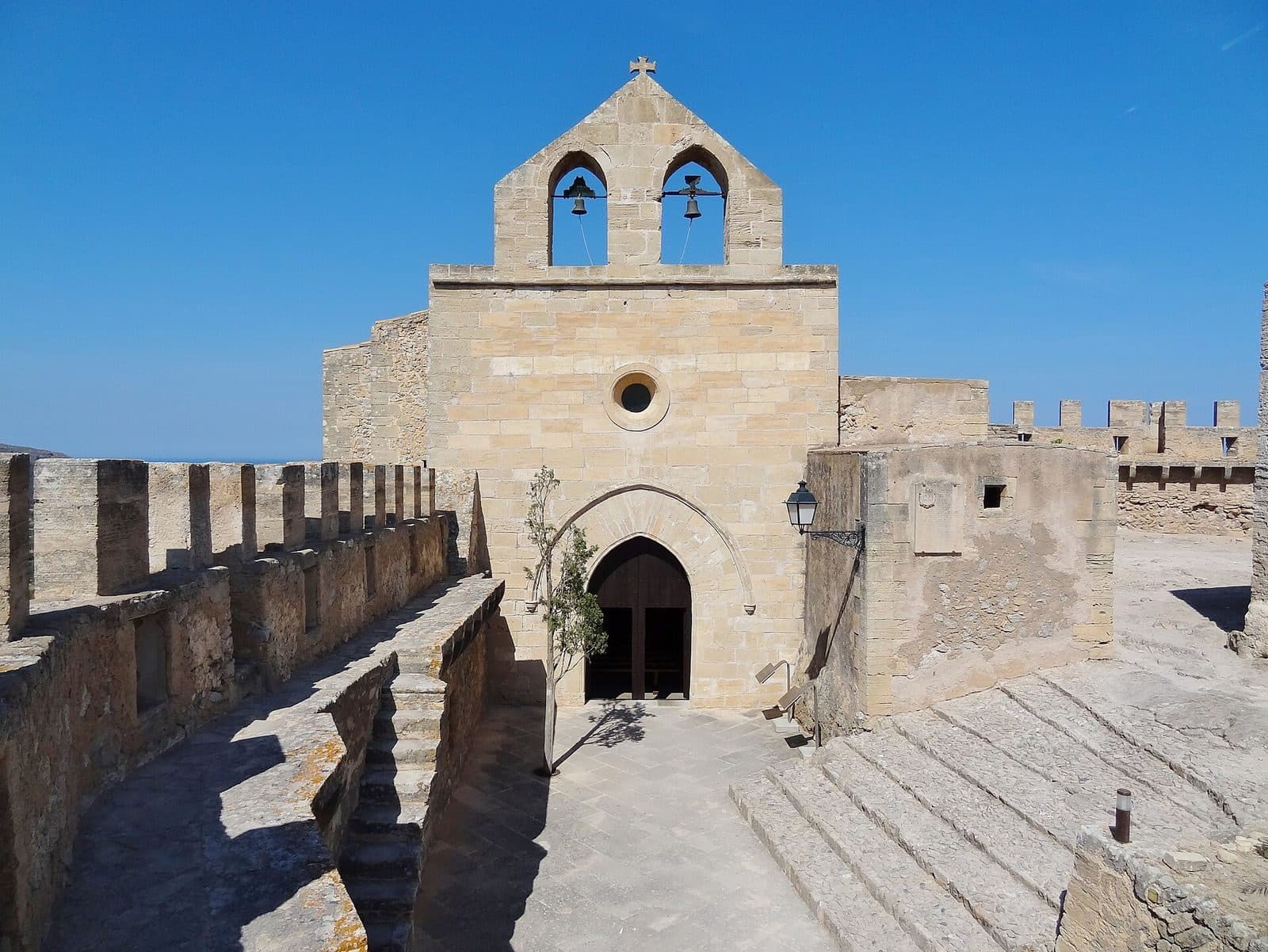

Anyone who climbs up to l'Esperança is not visiting a freestanding village church. The church belongs to Castell de Capdepera, the former fortified village above the rooftops of the town. Walls, defensive functions, and religious protection are almost impossible to separate here.
This setting is precisely what makes the visit so appealing. The church stands within a ring of fortifications that rises prominently on the Puig de Capdepera above northeastern Mallorca. The route therefore leads not only to a sacred building, but into the heart of a complex that was once intended to protect the scattered local population from attacks from the sea.
At its heart is a comparatively tranquil place with an unusual history: A chapel dedicated to Sant Pere was built within the defensive ring, and it houses a Madonna figure associated with a miraculous story. Anyone who prefers to view historic architecture in context rather than as an isolated church interior will find one of Capdepera's most vivid examples here.
History and significance
Jaume II's fortified village
The story began not with the church, but with a royal plan for protection. In 1300, Jaume II planned a walled settlement on the hill of Capdepera. The population scattered across the surrounding area was to be given a more defensible place within the ring of walls. The main reason was the threat of pirate raids from the Mediterranean.
Today's Castell was therefore not a castle in the strict sense, serving only a ruler or noble family. It was built as a fortified village. Homes, defensive walls, and religious spaces formed part of a shared living environment. This history explains why l'Esperança is found not outside but within the fortifications.
The location on the Puig de Capdepera was crucial to this purpose. The hill reaches 159 meters and rises clearly above the houses of the town. From here, the surrounding area could be watched; at the same time, the elevation made the walled village a visible refuge from a considerable distance. The surviving fortifications and buildings still shape the appearance of Capdepera today.
The Sant Pere chapel
Only 23 years after Jaume's plans, King Sanç had a chapel built within the defensive ring. It was dedicated to Sant Pere, Saint Peter.
The sequence of events is revealing: First, the protected settlement was created, and then it was given its own chapel. Religion was therefore part of everyday life in the fortified village, not merely a feature added for prestige. In a community whose walls were a response to the threat of raids, refuge and hope also had a very tangible meaning.
The church is associated with a Madonna figure surrounded by a miraculous tradition. That reputation alone shows that, in local memory, the building became more than the chapel of an abandoned fortified settlement.
What to see
The church of l'Esperança
The most important impression comes from the church's location itself. l'Esperança does not stand beside the fortress, but within it. The walled hill forms its architectural setting, and only in this context does the church become fully understandable: It was the sacred space of a community that sought protection behind the walls.
From outside, you should therefore look at more than just the church façade. The relationship between the church, the hillside location, and the ring of fortifications is particularly interesting. The church occupies a prominent point within the former fortified village. The sacred building and the defensive architecture tell two sides of the same story—the hope for spiritual assistance and the very practical need for secure walls.
The Madonna figure
The chapel houses a Madonna figure. Its significance cannot be understood solely through its art-historical features. What matters most is the local tradition that links the image to a miracle, giving it a special place in Capdepera's collective memory.
The chapel was dedicated to Sant Pere; it houses a Madonna figure surrounded by a miraculous story.
The Puig de Capdepera
In front of the church, the elevated complex offers views across Capdepera and northeastern Mallorca. The panorama is not part of the visitor experience by chance. This commanding view was exactly what made the hill valuable for the fortified village: Movements in the surrounding area and possible threats from the coast could be detected early.
Looking down over the rooftops also makes the town's development easy to understand. Today's settlement spreads below the walls, while the former fortified village lies above it. From a single vantage point, you can therefore see how Capdepera moved from the protection of the hilltop into the terrain below the Castell.
Visiting the church
The climb through the Castell
A visit to l'Esperança does not really begin at the church door. The route through the fortifications is part of the experience. Walls and preserved buildings demonstrate that the church was part of a larger fortified village established in the 14th century. Anyone who rushes directly to the church can easily miss the site's most important context.
It is worth looking back toward Capdepera several times along the way. As you gain height, the Castell's commanding position becomes increasingly clear. Once at the top, first view the church from outside in relation to the ring of walls; afterward, turn your attention to the Madonna and the site's religious history.
Planning before your visit
Current opening hours and admission conditions should be checked before traveling. The church is located within Castell de Capdepera, so access to the surrounding complex, not merely possible entry to the church itself, is relevant when planning a visit. A spontaneous view of the church from outside does not necessarily mean that its interior can also be visited.
The best way to visit is determined less by a long list of individual artworks than by a clear sequence: First understand the setting within the fortified village, then explore the chapel and Madonna figure, and finally let your gaze sweep from the hill across the modern town. This turns a short church visit into a coherent story about protection, faith, and the development of Capdepera.
Getting there and parking
From Palma Airport
From Palma Airport, the road route follows the Ma-15, then the Ma-4030 and the Ma-4040 to Capdepera. The distance to the town is 77 kilometers by road, and the journey takes around 65 minutes. These figures explicitly apply only as far as Capdepera, not directly to the church.
The nature of the journey changes in Capdepera. l'Esperança stands in an elevated position within the Castell, while the main access route ends in the town below the fortifications. The final section should therefore be understood as access to a historic hilltop site, not as a direct drive to an ordinary church on a main road. As you approach, the fortress visible above the houses already points the way.
From Palma
From central Palma, the route also follows the Ma-15, the Ma-4030, and the Ma-4040. The road distance to Capdepera is 79 kilometers, for which around 72 minutes of driving time should be allowed. Here too, the information refers to the route as far as the town. Access to l'Esperança then continues uphill through Capdepera to the Castell.
The church is part of the elevated monument. By bus, you can reach the central area of Capdepera and continue from there toward the Castell above the town.
Bus lines to l'Esperança at a glance
| Line | Route | Departures/day | First | Last |
|---|---|---|---|---|
| 411 | Cala Rajada - Manacor | 124 | 05:45 | 23:25 |
| 424 | Cala Rajada - Portocristo | 105 | 08:03 | 23:29 |
| 423 | Font de sa Cala - Cala Rajada | 98 | 08:05 | 21:45 |
| 325 | Alcúdia - Cala Rajada | 78 | 09:18 | 21:49 |
| 411e | Cala Rajada - Palma | 48 | 08:40 | 23:53 |
| 422 | Cala Mesquida - Cala Rajada | 41 | 08:29 | 21:32 |
From the official GTFS feeds (TIB/SFM), no real-time data. The figures cover all stops in the town; weekend and holiday services differ — check with the operator before travelling.
Getting there by bus
Capdepera centre 1 (14033) · 0.4 km as the crow flies
- 325Alcúdia - Cala Rajada · Daily
- 411Cala Rajada - Manacor · Daily
- 411eCala Rajada - Palma · Daily
- 424Cala Rajada - Portocristo · Daily
Capdepera centre 2 (14043) · 0.4 km as the crow flies
- 325Alcúdia - Cala Rajada · Daily
- 411Cala Rajada - Manacor · Daily
- 411eCala Rajada - Palma · Daily
- 424Cala Rajada - Portocristo · Daily
Capdepera oest (14003) · 0.7 km as the crow flies
- 325Alcúdia - Cala Rajada · Daily
- 411Cala Rajada - Manacor · Daily
- 411eCala Rajada - Palma · Daily
Capdepera est 1 (14028) · 1.0 km as the crow flies
- 325Alcúdia - Cala Rajada · Daily
- 411Cala Rajada - Manacor · Daily
- 411eCala Rajada - Palma · Daily
- 422Cala Mesquida - Cala Rajada · Daily
- 423Font de sa Cala - Cala Rajada · Daily
- 424Cala Rajada - Portocristo · Daily
Capdepera est 2 (14027) · 1.0 km as the crow flies
- 325Alcúdia - Cala Rajada · Daily
- 411Cala Rajada - Manacor · Daily
- 411eCala Rajada - Palma · Daily
- 422Cala Mesquida - Cala Rajada · Daily
- 423Font de sa Cala - Cala Rajada · Daily
- 424Cala Rajada - Portocristo · Daily
Sa Pedruscada 2 (14042) · 1.9 km as the crow flies
- 423Font de sa Cala - Cala Rajada · Daily
Sa Pedruscada 1 (14041) · 1.9 km as the crow flies
- 423Font de sa Cala - Cala Rajada · Daily
Son Moll (14011) · 1.9 km as the crow flies
- 325Alcúdia - Cala Rajada · Daily
- 411Cala Rajada - Manacor · Daily
- 411eCala Rajada - Palma · Daily
- 422Cala Mesquida - Cala Rajada · Daily
- 423Font de sa Cala - Cala Rajada · Daily
- 424Cala Rajada - Portocristo · Daily
N'Aguait 2 (14037) · 2.1 km as the crow flies
- 423Font de sa Cala - Cala Rajada · Daily
N'Aguait 1 (14010) · 2.1 km as the crow flies
- 423Font de sa Cala - Cala Rajada · Daily
Timetable data: official GTFS feeds (TIB/EMT), no real-time — check with the operator before travelling.
Nearby
Castell de Capdepera
The most important surroundings of l'Esperança begin directly outside the church door. The Castell is not simply a neighboring attraction, but the church's historical setting. Its walls belonged to the fortified village planned by Jaume II to protect the population from pirate raids. A walk around the fortifications should therefore not be treated as a second, separate activity.
From the preserved structures, the church's position can be viewed and interpreted in different ways. At times it appears as part of the skyline, and at others as part of the walled site. Anyone who has already seen the walls, the elevated location, and the views across the landscape will also understand more clearly why a chapel was needed within this protected space.
Capdepera
Below the Castell, the historical trail continues through the town. Old Capdepera is characterized by Mallorcan stone houses and narrow streets; the townscape also includes the town hall and the parish church of Sant Bartomeu. The descent therefore provides an opportunity to compare the fortified settlement on the hill with the later town that developed below it.
Within the wider municipality, Cala Ratjada forms the livelier coastal hub. A visit can therefore be combined with the coast without reducing the church to a mere stopover. The most coherent route remains from historic Capdepera up to the Castell and l'Esperança—or in the opposite direction, from the old place of refuge back down into the modern town.
Local insider tips
See the church and Castell together
l'Esperança can only be fully understood in the context of the former fortified village. Before entering, it is worth looking at the ring of walls, the hilltop location, and the church's position within the fortifications.
Look closely at the Madonna
The Madonna figure is more than a decorative feature: It belongs to the chapel and is surrounded by a miraculous story.
Look back toward the town
From the elevated Castell, Capdepera can be seen below the old walls. This view immediately illustrates how the modern town developed outside the former fortified village.