
Museu de la Mar – Sóller’s Maritime History
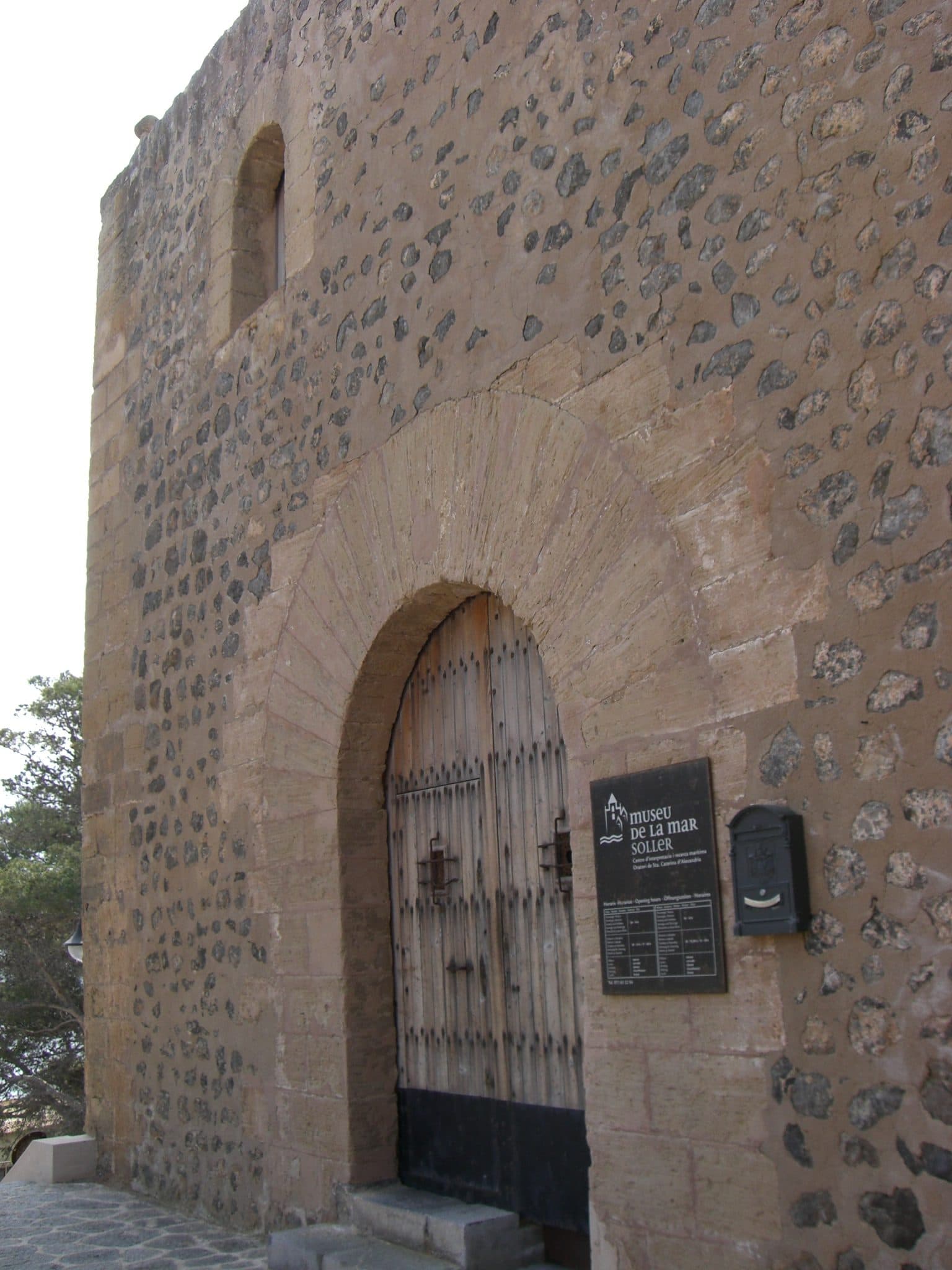

The Museu de la Mar stands where its subject becomes immediately clear: above the harbor of Port de Sóller, in a former oratory at the entrance to the sheltered bay. Behind its walls, the Mediterranean is not presented as a vacation backdrop, but as a place of work, departure and danger. Fishers, boatbuilders, traders and emigrants have shaped Sóller’s relationship with the sea for generations.
The small maritime museum is particularly worthwhile for visitors who want to discover the town’s older identity beyond the promenade, beach and marina. Old ship parts and tools, boat models, photographs, documents and recorded memories tell a local story. This focus is precisely what makes it appealing: the museum does not attempt to portray the entire maritime history of the Mediterranean, but stays with Sóller and its harbor.
The setting itself is also remarkable. The museum occupies the former oratory Santa Catalina de Alejandría, whose history reaches back to a time when the coast was not only a link to the outside world but also a vulnerable frontier. The walk uphill creates a noticeable separation from the lively activity around the harbor; at the top, historic walls, maritime objects and views of the harbor entrance come together.
The Museu de la Mar suits history enthusiasts as well as families with older children who are interested in boats and craftsmanship. It is a compact, narrative museum whose strength lies in its closeness to the people and trades of the harbor.
History and significance
Santa Catalina de Alejandría
Long before display cases and boat models arrived, the building served as the oratory Santa Catalina de Alejandría. It stands on a hill at the harbor entrance and offers a view of the bay that was important to Sóller’s fishing and trade, while also giving attackers access to the coast.
The oratory is described as medieval in origin. After attacks by Barbary pirates, it was rebuilt in 1542. This episode belongs to a particularly insecure phase of the 16th century, when raids from North Africa threatened Mallorca’s coastal communities. Watchtowers on elevated sites were used to spot ships early and warn the population. In the old oratory, this history has a tangible setting: the walls are a reminder that, for the people of the Sóller Valley, the sea meant not only food and trade but also uncertainty.
Harbor, fishing and trade
Before the rise of tourism, fishing was a mainstay of the harbor economy. Coastal and maritime trade also played a role, as did the crafts without which no boat could be launched. Central among them were the Mallorcan shipwrights known as mestres d’aixa, who built and repaired traditional wooden boats.
The harbor was also a place of departure. The exhibition therefore covers not only fishing techniques and the movement of goods, but also emigration. This perspective prevents an overly romantic view of seafaring: the sea could feed families and create prosperity, but it could equally mean separation, hard work and loss.
From oratory to museum
The Museu de la Mar opened on 24 August 2004. It was conceived as a research and interpretation center dedicated to the history of Sóller, its harbor and their relationship with the sea. The historic building thus became more than a backdrop for maritime objects. Building and collection together tell the story of a community whose development can scarcely be understood without its sheltered harbor bay.
This task has become more urgent as traditional boats, craft skills and inherited fishing techniques disappear. The museum therefore preserves more than material objects. Through recorded voices from Port de Sóller, it also safeguards memories, terms and experiences that cannot be preserved in an anchor or tool. This very combination of objects and oral tradition gives the museum its cultural significance.
What to see
The former oratory
The building itself immediately draws attention to local history. The Museu de la Mar occupies the old oratory Santa Catalina de Alejandría on the hill at the harbor entrance. It includes an entrance area, outdoor spaces, a courtyard, a designed exhibition hall and a room for audiovisual presentations.
The historic architecture and maritime use do not compete with each other. The former place of worship provides a calm setting for the collection, while its location extends the themes of the exhibition directly into the surrounding landscape. Standing among documents, boat models and tools, visitors do not have to imagine the harbor in the abstract: it lies below the museum and was the real workplace of the people whose stories the exhibition tells.
Courtyard and entrance area
Visitors encounter larger maritime objects right at the beginning. Anchors, cannons and traditional Mallorcan boats of the llaüt type are displayed in the courtyard and around the entrance. These pieces provide a vivid introduction because their shapes and materials have an immediate impact without requiring lengthy explanations.
The llaüt in particular offers an insight into everyday life around the harbor. The traditional Mallorcan boat appears here not as a decorative symbol, but as the product of skilled craftsmanship. Its construction points to the work of the mestres d’aixa, who built and maintained boats and adapted them to the demands of fishing and coastal navigation. The displayed tools and records help visitors understand the many stages of work between the start of construction and a finished boat.
Exhibition hall
The main exhibition hall is designed with wood and shades of blue. Old ship parts, working equipment, models, historic photographs, visual material and documents are displayed throughout the room. The design evokes the sea without turning the interior into an artificial ship setting. The focus remains on the preserved objects and the stories connected with them.
The boat models illustrate the shapes and functions of vessels that could not be accommodated inside the museum at their original size. Tools and documents, by contrast, offer a closer look at everyday work. Together, they tell stories of boatbuilding, fishing and trade. Photographs add faces and places to this factual dimension: the harbor appears not as a timeless view, but as a workplace, transport hub and point of departure for journeys.
The mestres d’aixa
The shipwrights are a key focus. The Catalan term mestres d’aixa refers to the craftspeople who built and repaired traditional wooden boats. Their work required a precise understanding of both the material and the shape of the boat. The exhibition therefore focuses not only on the vessels themselves, but also on construction knowledge, tools and working techniques.
This section is particularly revealing because it highlights an easily overlooked chapter of maritime history. The exhibition presents documents and tools used to build traditional boats and explains why the disappearance of these vessels could also mean the loss of the mestres d’aixa’s extensive craft knowledge.
Fishing, trade and emigration
The exhibition’s themes are closely intertwined. Fishing represents daily work on the water, while trade reflects the harbor’s connections beyond the bay. Emigration, finally, tells of people who left Sóller by sea. Models, images and written records show that the same harbor could hold very different meanings: a workplace for some, a trading point for others and a place of farewell for those seeking a future elsewhere.
The story of emigration broadens the perspective in particular. Port de Sóller was not merely an endpoint on Mallorca’s northwest coast, but a gateway to the wider world. The museum therefore tells less about isolated fishers than about a harbor community whose everyday life was shaped by movement, exchange and absence.
“La remor de la Memòria”
In the audiovisual room, factual history becomes audible. The project “La remor de la Memòria” is devoted to the intangible heritage and oral memory of Port de Sóller. Twelve people share stories from their lives: ten of them were born toward the end of the 1920s, while two younger fishers connect inherited knowledge with the present.
These voices are among the museum’s most important exhibits. They convey not only what people did, but also how work, the harbor and the sea are remembered. Personal accounts give the tools and photographs a social context. Catalan, Spanish and international sign languages were incorporated into the videos. The room therefore demonstrates that maritime heritage consists not only of objects, but also of language, gestures and experiences passed down through generations.
Visiting the museum
From the outdoor area into the collection
It makes sense to begin the tour with the larger objects in the entrance area and courtyard. Anchors, cannons and llaüts first create a material impression; the exhibition hall and documents then lead deeper into boatbuilding, fishing, trade and emigration. The audiovisual room is a worthwhile conclusion because the personal voices return many of the previously viewed objects to the everyday life of the harbor.
It is helpful not to rush past the tools and images. Many objects are less spectacular than a complete boat, but they contain the museum’s real substance: they tell of skills, working processes and people. Visitors who also follow “La remor de la Memòria” attentively will spend considerably more time in the museum than those who merely glance around the exhibition hall.
Time required and pace of visit
The Museu de la Mar is a compact museum. For an initial impression, it can be included as a short cultural stop during a day at the harbor. Visitors who want to examine the photographs, documents and boat models more closely and listen to the eyewitnesses should not squeeze the visit between tightly scheduled activities. The audiovisual presentation is not an incidental addition, but an essential part of the concept.
The walk up the hill and the subsequent return to the harbor are effectively part of the visit. The entire excursion therefore takes longer than the time spent inside the rooms alone. Combining it with a walk along the bay makes more sense than rushing directly to the museum door and back.
Visiting hours, opening and admission
From Tuesday to Saturday, the museum is open from 10:00 to 15:00 both from May to September and from October to April. On Sundays, it can be visited from 10:00 to 14:00. Admission is free. As museum hours may change on public holidays or for organizational reasons, it is nevertheless advisable to check the latest information before setting out.
Getting there and parking
From Palma Airport
From Palma Airport, the drive first follows the Ma-20 and then the Ma-11 to El Port, meaning Port de Sóller. The road distance to the town is 36 kilometers, and the journey takes around 48 minutes. This information covers the route to Port de Sóller, not directly to the Museu de la Mar. The museum stands above the harbor in the former oratory Santa Catalina de Alejandría, so an uphill walk from the harbor area must be allowed for the final section.
From Palma
From central Palma, the route follows the Ma-11, which connects Palma with the harbor bay through the Sóller Valley. The road distance to El Port is 31 kilometers, and the journey takes around 52 minutes. Here too, the distance and travel time refer to Port de Sóller. Within the town, the final section leads toward the hill at the harbor entrance where the museum is located.
By bus and tram
The relevant bus stop in town is called Port de Sóller. From there, visitors continue on foot. The museum stands in an elevated position at the harbor entrance, so more than the distance shown on a local map should be considered when planning the walk.
Port de Sóller is also connected to Sóller by the historic tram. It should not be regarded as direct transport to the museum, but it offers an appealing way to combine a harbor visit with the main town in the valley. Visitors using public transport can thus link the museum, bay and promenade.
Bus lines to Museu de la Mar at a glance
| Line | Route | Departures/day | First | Last |
|---|---|---|---|---|
| 204 | Port de Sóller - Palma | 76 | 00:40 | 23:30 |
| 203 | Valldemossa / Deià | 58 | 06:05 | 23:15 |
| 232 | Port de Sóller - Fornalutx | 58 | 07:05 | 21:15 |
| 231 | Port de Sóller - Alcúdia | 8 | 09:00 | 20:35 |
From the official GTFS feeds (TIB/SFM), no real-time data. The figures cover all stops in the town; weekend and holiday services differ — check with the operator before travelling.
Getting there by bus
Port de Sóller (61027) · 0.8 km as the crow flies
- 203Valldemossa / Deià · Daily
- 204Port de Sóller - Palma · Daily
- 231Port de Sóller - Alcúdia · Daily
- 232Port de Sóller - Fornalutx · Daily
Timetable data: official GTFS feeds (TIB/EMT), no real-time — check with the operator before travelling.
Nearby attractions
Port de Sóller
Below the museum, Port de Sóller extends around its sheltered, horseshoe-shaped bay. Today, the promenade, beaches, marina and restaurants define its appearance. The Museu de la Mar adds historical depth: it recalls that the boats here were not merely leisure craft and that fishers, craftspeople and traders used the coast long before tourism arrived.
After the exhibition, many of its themes can be considered further by the water. Boats lie in the marina, the shape of the bay is clearly visible from the promenade, and the harbor entrance makes it easy to understand why the site of the old oratory is so striking. A walk along the waterfront is therefore more than an arbitrary addition; it connects the museum’s history with the present-day harbor.
Sóller and the valley
The historic tram connects Port de Sóller with Sóller. In the main town, the focus shifts from the sea to the valley and its historic center. Combining both places shows how closely the harbor and inland town belong together despite their different atmospheres.
The Sóller Valley is known for its orange groves and old olive terraces. This cultural landscape explains another part of the regional economy, while the Museu de la Mar explores connections by sea. Together, they create a coherent day trip: maritime history and the harbor in the morning, followed later by a tram journey and a walk through Sóller.
Bay and coastal landscape
Even without another specific attraction in mind, it is worth allowing time for the bay. From the elevated area around the museum and along the return route, the view of the harbor basin, shoreline and entrance changes continuously. The landscape here is not merely a backdrop: the sheltered shape of the bay explains why a harbor could develop in this location and why its entrance also had to be watched.
Anyone planning time at the beach can easily schedule it after the museum visit. The museum provides a meaningful introduction and prevents Port de Sóller from being perceived merely as a picturesque setting.
The place it belongs to
El Port (Port de Sóller) in the place guidePractical information for your visit
Location and outdoor area
The museum is located above the harbor. The courtyard and outdoor objects are not contained exclusively within enclosed exhibition rooms. At the same time, visitors should allow enough time to view the exhibits calmly instead of treating the museum merely as a break from the harbor.
Visiting with children
For children, the clearly visible boat shapes, anchors, cannons and models are the most accessible exhibits. Boatbuilding can be explored vividly by looking together for tools and components. Younger children will need guidance and a simple explanation of how the objects were used.
For older children and teenagers, the audiovisual room can provide a good point of entry. The memories of real people make it clearer that fishing and seafaring were occupations involving hard physical work. Anyone who rushes through the rooms will miss this human dimension in particular.
Character of the museum
The museum presents a focused local collection inside a historic oratory. Its value lies in its tools, documents, photographs, models and voices from Port de Sóller. Its name should not be confused with those of other maritime museums on Mallorca: this museum deals specifically with Sóller and its harbor. Visitors who arrive with that expectation will discover a precisely told local history, from traditional boatbuilding, fishing and trade to emigration and oral memory.
Local insider tips
Take time to hear the voices
The audiovisual room is not merely a closing film. In “La remor de la Memòria,” twelve people from Port de Sóller share their stories. Their memories connect the tools, images and boats with real everyday life around the harbor.
Start in the courtyard
The anchors, cannons and traditional llaüts in the entrance and courtyard areas provide the best introduction. Visitors who examine these larger objects first will find it easier to recognize the tools, boat models and documents in the exhibition hall.
Check the opening hours
The museum is located above the harbor. From Tuesday to Saturday, it is open from 10:00 to 15:00, and on Sundays from 10:00 to 14:00.
Combine it with Sóller
The historic tram connects Port de Sóller with Sóller. This makes it easy to combine the harbor’s maritime history with the town center and the valley’s cultural landscape.
Look for traces of craftsmanship
The unassuming tools of the *mestres d’aixa* are key pieces in the collection. They show that a llaüt is not merely a picturesque type of boat, but the result of specialized craft knowledge that is now at risk.