
Robert Graves: The Writer’s House in Deià
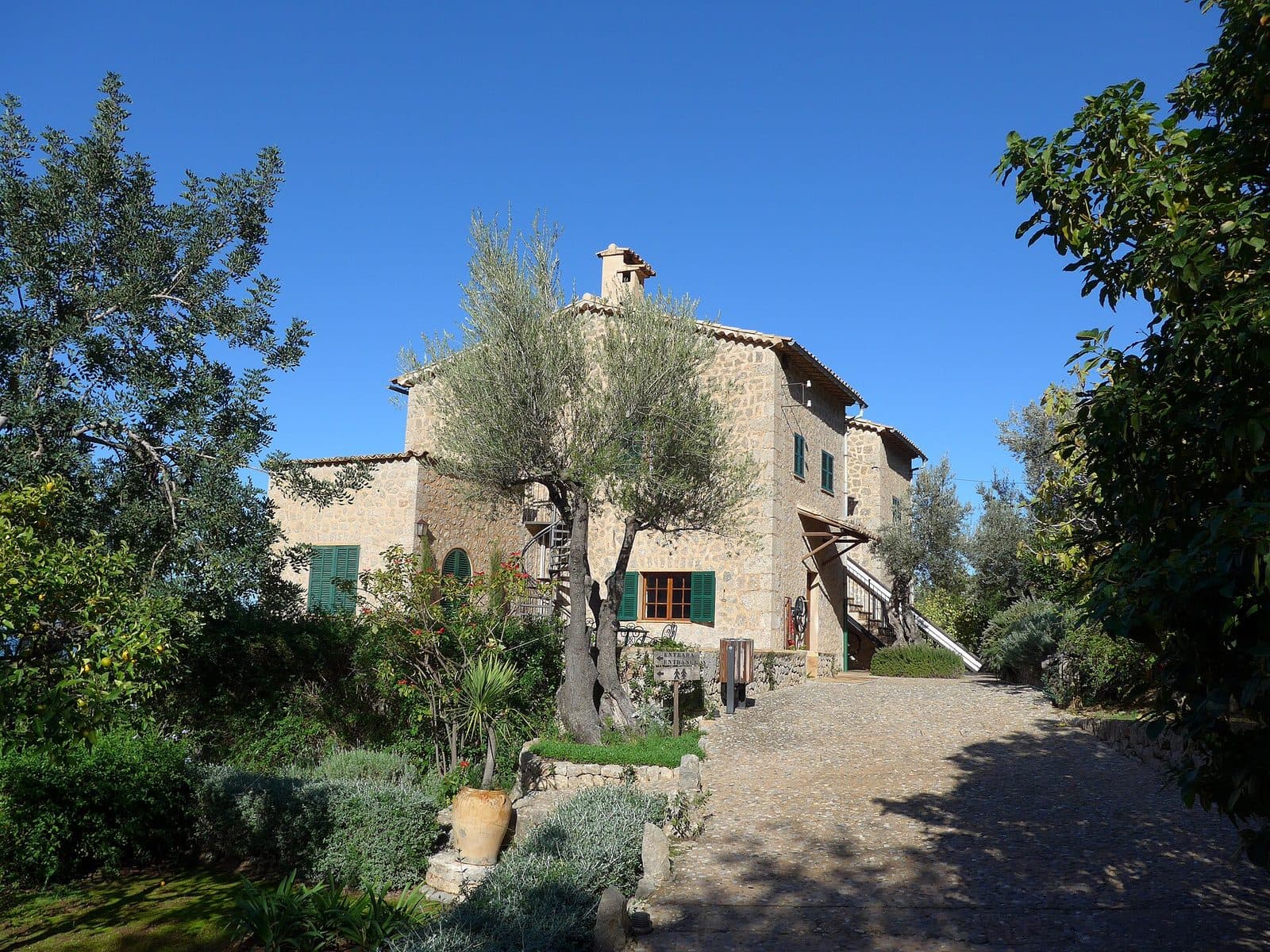

On the edge of Deià stands a house that feels preserved rather than staged. Robert Graves lived and worked here for decades; today, the museum leads visitors through his private rooms, his working environment and a garden whose design dates back to the time of its first residents. Known by its proper name, Ca n’Alluny is one of the most personal cultural sites in northwestern Mallorca.
Its appeal lies not in monumental architecture but in its closeness to a writer’s life: desks still hold working tools and personal belongings, books and manuscripts point to an extraordinarily extensive body of work, and outside, olive trees, citrus trees and a kitchen garden adjoin the house. Much of it looks as though someone had merely paused work to take a walk in the garden.
The visit is worthwhile even without an in-depth knowledge of his books. The Casa explains how the British war poet and novelist became a Mallorcan by choice who saw Deià as more than a backdrop. Those familiar with I, Claudius or Claudius the God encounter the setting in which major works were created; those discovering Graves here for the first time receive a vivid introduction to his life and work.
Above all, Ca n’Alluny offers an alternative to the large, densely packed museum. The house and garden reward attention to small details. Literature enthusiasts, garden lovers and visitors seeking to understand Deià’s artistic history will find more than a collection of memorabilia here: a preserved place of life and work.
History and significance
Arrival in Deià
The path to Deià began with a recommendation that was also a warning. Gertrude Stein is said to have described Mallorca to Robert Graves and the American poet Laura Riding as a paradise—provided they could stand living there. Graves and Riding arrived on the island in 1929 and chose what was then the remote village of Deià. Behind Graves lay the First World War, whose psychological consequences stayed with him for a long time, an academic environment in Oxford that he found oppressive, and an increasingly unstable personal and financial situation.
His choice of location was therefore more than a Mediterranean change of scenery. Graves sought distance from Britain and from the society he rejected in his autobiography Good-Bye to All That. Deià offered him landscape and seclusion without cutting him off completely from the world. In Majorca Observed, he later wrote about the island’s people, customs and landscapes. The village thus became not only his home but also a subject and sounding board for his writing.
Ca n’Alluny
In 1932, Graves and Riding had the house built on the edge of the village. The name Ca n’Alluny can be understood roughly as “house in the distance” and suits its location just outside the village centre. Among ancient olive trees, they created not a grand country residence but a home and workplace whose scale remains modest to this day. Graves and Riding also ran their own printing press here. Books and poems appeared under the name Seizin Press; this first productive period in Mallorca also produced works that established his international reputation, including the Claudius novels and Count Belisarius.
The house was nevertheless not an isolated writer’s retreat. Friends from literary and artistic circles came to Ca n’Alluny, some staying for extended periods. The site therefore offers a glimpse of the development that later gave Deià its reputation as an international artists’ colony. Graves was not the village’s only creative resident, but for decades he was one of its defining figures.
Departure, return and museum
With the outbreak of the Spanish Civil War, Graves and Riding had to leave Mallorca in 1936. The Second World War followed, resulting in an interruption of ten years in all. Graves did not return until 1946, now with Beryl and his family. Ca n’Alluny once again became his permanent home. The writer remained in Deià until his death in 1985; his simple grave is in the village’s small cemetery.
After Beryl’s death in 2003, the property passed into public or institutional care. The house and garden were carefully restored and adapted for visitors. The garden was explicitly modelled on its layout and planting in the 1930s. In the summer of 2006, Ca n’Alluny opened as a museum. Today, it is also the headquarters of the Robert Graves Foundation, which looks after the house, garden and literary legacy.
The museum’s significance lies precisely in this continuity. It commemorates not only a British poet and novelist but also documents an enduring cultural connection between Mallorca and English-language literature. Graves arrived as an outsider, returned after war and exile, and became part of Deià’s history. The house makes this process more visible than a purely biographical exhibition could.
What to see
The introductory film
The tour does not begin immediately among desks and bookshelves but with a film about Graves’ life and work. It lasts 15 minutes and combines historical photographs, film footage and interview material. This is more than a preliminary biography: the images give the rooms that follow their historical depth. Visitors who previously knew Graves only by name will understand why his wartime experiences, separation from England and return to Mallorca were so important to his writing. At the same time, the film helps visitors interpret the museum correctly: the introduction establishes the context, while the house then makes it tangible and reveals the place where a substantial part of this work was produced.
The studies
The most compelling rooms are the two studies. Their wooden desks, complete with typewriter, books and personal belongings, make the working process almost tangible. It is precisely this restraint that makes an impression: a carefully preserved arrangement of furniture, tools and everyday objects defines the rooms.
The desks show that writing was not merely a matter of inspiration for Graves but disciplined work. Manuscripts and books connect the private space with the published work. A chronological presentation of the bibliography displays titles and publication dates, illustrating how far his output extended beyond the famous historical novels. The sheer succession of publications creates an effective contrast with the tranquillity of the room in which they were prepared.
The small signs of use deserve particular attention: the typewriter as a tool, the arrangement of objects and the proximity between the work surface and the books. They reveal more about Graves than a decorative portrait could. The museum does not attempt to present the author as a remote genius but shows a person who lived and worked in this house.
Living spaces and personal belongings
Beyond the studies, Ca n’Alluny remains recognisably a lived-in house. Original furniture, personal belongings, books and documents are not isolated in neutral display cases but presented in their domestic setting. This makes it possible to trace the boundary between work and everyday life: literature was created here not in a separate institution but in the midst of a family home.
This atmosphere explains why a slow tour is more rewarding than quickly ticking off individual exhibits. The rooms tell their story through relationships: a manuscript has a different effect beside the desk than it would in a library; a piece of furniture recalls the family and the guests who visited Ca n’Alluny over the years. Even the house’s modest size contributes to the understanding of it, as Graves’ international network gathered in a place that remained personal and manageable.
Technical self-sufficiency was also part of daily life on the historic property. A generator on display supplied Ca n’Alluny between 1935 and 1963. Such equipment may initially seem incidental beside manuscripts, but it makes the practical conditions of life on what was then the edge of the village tangible. Literary seclusion was by no means free of practical work.
Garden, olives and citrus trees
Beyond the interiors, the story moves outdoors. The garden was restored according to its historic layout and planting in the 1930s. Ancient olive trees connect the grounds with Deià’s cultivated landscape; cypresses, bougainvillea and other Mediterranean plants give structure to the paths. There are also productive areas showing that the garden served more than views and recreation.
The vegetable garden and citrus plantings are particularly distinctive. Graves planted an orange grove with bitter oranges and mandarins and used the fruit, among other things, to make marmalade. It is one of those small details that distinguishes Ca n’Alluny from an abstract memorial to a poet. Among the trees and garden beds, everyday life becomes visible: writing, family, self-sufficiency and Mallorca’s climate all existed side by side.
Parts of the garden offer views of the coast, the sea and the mountains of the Serra de Tramuntana. Yet it is not a conventional viewpoint visited merely for a photograph. Its effect unfolds in connection with the house: outside is the landscape Graves chose, while inside are the texts and working tools with which he responded to it. Spending time in the garden is therefore part of the tour and should not be treated merely as the way out.
Visiting the museum
From the film into the house
The intended route begins with the 15-minute introductory film and then leads through the preserved living and working spaces into the garden. This sequence makes sense, as many objects are easier to understand once visitors know the stages of Graves’ life. Those familiar with his books can then focus specifically on the manuscripts, bibliography and workspaces; for those without prior knowledge, the film provides a sufficient foundation.
There is no sensible standard duration for the complete visit. The film provides a fixed opening, after which the time required depends heavily on how closely visitors examine the texts, books, personal belongings and garden. The house is hardly suited to a quick photo stop. Anyone who wants to absorb the rooms properly and include the garden should not plan too little time.
Tranquillity instead of crowds
The foundation itself states that its aim is not to lead as many people as possible through the house but to convey something of the tranquillity Graves found here. This attitude shapes the visit: Ca n’Alluny is a small writer’s house, and proximity to the original setting is its true exhibition principle.
During busy travel periods, Deià can nevertheless become crowded, and parking also becomes more difficult. Those who can arrange it should arrive earlier in the day and allow extra time, especially for the journey. Outside the main travel season, the atmosphere in the village and museum is usually quieter; one documented winter visit mentions only a handful of other guests. That is no guarantee of emptiness, but it is a useful indication for anyone wishing to experience Ca n’Alluny as quietly as possible.
Check current information beforehand
Opening times and admission charges have deliberately not been included here as permanent details because they may change. Before travelling, it is therefore advisable to check the museum’s currently published visitor information. This is particularly important because the house is not a site that can be accessed every day or at any time. Anyone wishing to combine the museum with the village, cemetery or coast should first plan the day around access to Ca n’Alluny.
Getting there and parking
From Palma and the airport
From Palma Airport, the route to Deià follows Ma-20, Ma-1110 and Ma-10. The road distance is 32 kilometres, and the journey takes around 48 minutes. From central Palma, Deià is 27 kilometres by road; the journey via Ma-1110 and Ma-10 takes around 52 minutes. In each case, these figures apply only as far as Deià, not to a guaranteed parking space directly beside the museum.
The final section follows the Ma-10 through the Serra de Tramuntana. Ca n’Alluny stands on the northern edge of Deià, beside the road leading towards Sóller. The gate is on a bend, so paying attention when approaching is more important than looking for a highly visible museum building. The property is understated when seen from the road and does not announce itself like a large tourist attraction.
The stated driving time should not be understood as including parking time. Particularly on busy days, finding a space in Deià can take longer. The winding approach through the Tramuntana also requires an unhurried pace, even if the navigation system predicts a seemingly tight arrival time.
Parking in Deià
There is no visitor parking at the house itself. Visitors must therefore park in Deià wherever regular spaces are available and walk the final section to the museum. At busy times, finding parking in the village can be difficult. Arriving early is therefore less a tip for finding a supposedly empty exhibition than a practical strategy for avoiding a long search at the start of the visit.
Ca n’Alluny is a short walk from the village centre. As the house lies slightly outside the village, luggage should remain in the vehicle and a little time should be allowed for the walk. Anyone planning to climb through the steep old centre to the cemetery after the museum should choose the vehicle’s location so that each section does not have to be driven again.
By bus
Deià can be reached by scheduled bus from the direction of Palma, Valldemossa and Sóller; route 203 is named as the relevant service. For the museum, visitors can use the stops in Deià or at S’Empeltada. From there, the journey continues on foot. S’Empeltada is closer to the property, while leaving the bus in the village may be more practical if the museum visit is to be combined with the historic centre.
The bus avoids the search for parking but ties the visit to the current timetable. As the Ma-10 is the principal transport route through this section of the Tramuntana, the return journey should also be checked in advance. The walks between the bus stop, museum and village are part of the excursion; Ca n’Alluny has no separate transport hub directly at its entrance.
Bus lines to Robert Graves at a glance
| Line | Route | Departures/day | First | Last |
|---|---|---|---|---|
| 203 | Valldemossa / Deià | 261 | 06:25 | 22:50 |
From the official GTFS feeds (TIB/SFM), no real-time data. The figures cover all stops in the town; weekend and holiday services differ — check with the operator before travelling.
Getting there by bus
S'Empeltada 1 (18003) · 0.1 km as the crow flies
- 203Valldemossa / Deià · Daily
S'Empeltada 2 (18004) · 0.1 km as the crow flies
- 203Valldemossa / Deià · Daily
Deià 1 (18002) · 0.5 km as the crow flies
- 203Valldemossa / Deià · Daily
Deià 2 (18010) · 0.5 km as the crow flies
- 203Valldemossa / Deià · Daily
Es Clot 1 (18011) · 0.8 km as the crow flies
- 203Valldemossa / Deià · Daily
Es Clot 2 (18001) · 0.8 km as the crow flies
- 203Valldemossa / Deià · Daily
Llucalcari 1 (18005) · 1.3 km as the crow flies
- 203Valldemossa / Deià · Daily
Llucalcari 2 (18006) · 1.3 km as the crow flies
- 203Valldemossa / Deià · Daily
Sa Foradada (18009) · 1.5 km as the crow flies
- 203Valldemossa / Deià · Daily
Timetable data: official GTFS feeds (TIB/EMT), no real-time — check with the operator before travelling.
Nearby attractions
Deià
After the quiet house, Deià feels like a continuation of its story. Stone houses rise along the hillside, and the mountains of the Serra de Tramuntana press closely around the village. Graves did not choose this place by chance: the village offered seclusion and landscape while retaining a connection to Palma. Other writers, artists and academics arrived later, and Deià’s reputation as an artistic centre spread far beyond Mallorca.
The old village centre can easily be combined with the museum visit. It also reveals the topographical reality behind the picturesque views: paths and lanes climb noticeably. Walking from the house to the upper part of the village offers more than an attractive setting; it gives a better understanding of how closely the settlement, terraced landscape and mountains are connected here.
Church and cemetery
Robert Graves is buried in the small cemetery beside the church. The grave is simple and easy to overlook; precisely for that reason, it provides a powerful counterpoint to his extensive body of work. A walk there is not an essential extension of the museum visit, but it completes the biography geographically: below, or on the village edge, stands the house where he spent his long working life; above in the village is his final resting place.
The route to the cemetery leads through the rising village centre and should therefore not be treated as a casual detour without an additional walk. The connection is particularly fitting, however, because it does not separate Robert Graves from Deià. House and grave do not lie within an artificial memorial district but at two points in the place that became his home.
Coast and Tramuntana
Anyone spending a full day in the area can combine the museum with Cala Deià or another destination along the Ma-10. The cove reveals the municipality’s rocky coastline, while the road towards Valldemossa or Sóller opens further views of the Tramuntana. Such combinations should not, however, be scheduled so tightly that they compromise the tranquillity of the house.
Visitors interested in literature can also see Deià as one stop on a broader cultural route. In the western Tramuntana, several places recall writers, travellers and artists who described Mallorca or lived here for a time. Ca n’Alluny remains especially vivid among them because what survives is not merely a name or an information panel but the actual place where someone lived and worked.
The place it belongs to
Deià in the place guidePractical information for your visit
Who the museum is for
The house particularly appeals to people interested in literature, biographies, historic interiors or gardens. Prior knowledge is helpful but not necessary; the introductory film places Graves’ life and the most important areas of his work in context. Anyone who reads one of his poems, an excerpt from Good-Bye to All That or several pages of a Claudius novel beforehand will nevertheless find it easier to make connections in the study.
A visit with children works best if they can engage with a real home and individual objects. Visitors see a typewriter, workspaces, books, personal belongings and garden areas—not an interactive attraction designed around movement or play. The film at the beginning and the alternation between interiors and garden give the tour a clear structure.
Clothing and paths
Everyday clothing is sufficient for the house and garden, but sturdy, comfortable footwear is sensible when combining the visit with Deià. The village centre lies on a hillside, and the route to the church and cemetery climbs uphill. Walking is also required between the bus stop, museum and village. Anyone expecting only an indoor attraction with smooth museum corridors may therefore underestimate the character of the overall excursion.
The garden includes trees and planted areas. Sun and rain protection should be considered according to the weather, even though the main focus is indoors. A longer walk through Deià or down towards the coast naturally has different requirements from the compact museum tour.
What not to expect
The collection draws its strength from its original setting: furniture stands in the rooms for which it was intended; desks and the typewriter point to actual work; the garden remains part of the household. Those seeking spectacular effects may find the presentation restrained. Those who look closely will recognise that this is precisely its strength.
Nor is the property a freely accessible scenic garden. Views of the sea and mountains are part of the experience, but the purpose of the visit remains the life and work of Robert Graves. Photography, admiring the landscape and walking through Deià can all be combined with it, but they should not overshadow the quiet details inside the house. The lasting memory is often not a panorama but a desk where work was done between everyday Mallorcan life and world literature.
Local insider tips
Look closely at the desks
In the two studies, do not focus only on the typewriter. The arrangement of books, working tools and personal belongings gives an especially vivid sense of how naturally Graves’ writing formed part of everyday life at Ca n’Alluny.
Allow time for the kitchen garden
The garden is not merely the way out. The orange grove, mandarins, bitter oranges and vegetable plots tell the story of a productive property; Graves used the citrus fruit, among other things, to make marmalade.
Choose S’Empeltada instead of searching for parking
Visitors arriving on route 203 can leave the bus at S’Empeltada and walk to the nearby property. Leaving the bus in the village is more practical if the old centre and Graves’ grave are also part of the visit.
Look for the simple grave
Graves’ simple grave is in the cemetery beside the church. It is easy to overlook and, precisely for that reason, feels like a fitting conclusion after visiting the personal, understated presentation of his home.
Do not overlook the generator
The technical equipment is easy to miss among the manuscripts and furniture: a generator supplied the property between 1935 and 1963 and recalls how practically everyday life on what was then the edge of the village had to be organised.