
Museu Arqueològic de Deià – Mallorca Prehistory in an Old Mill
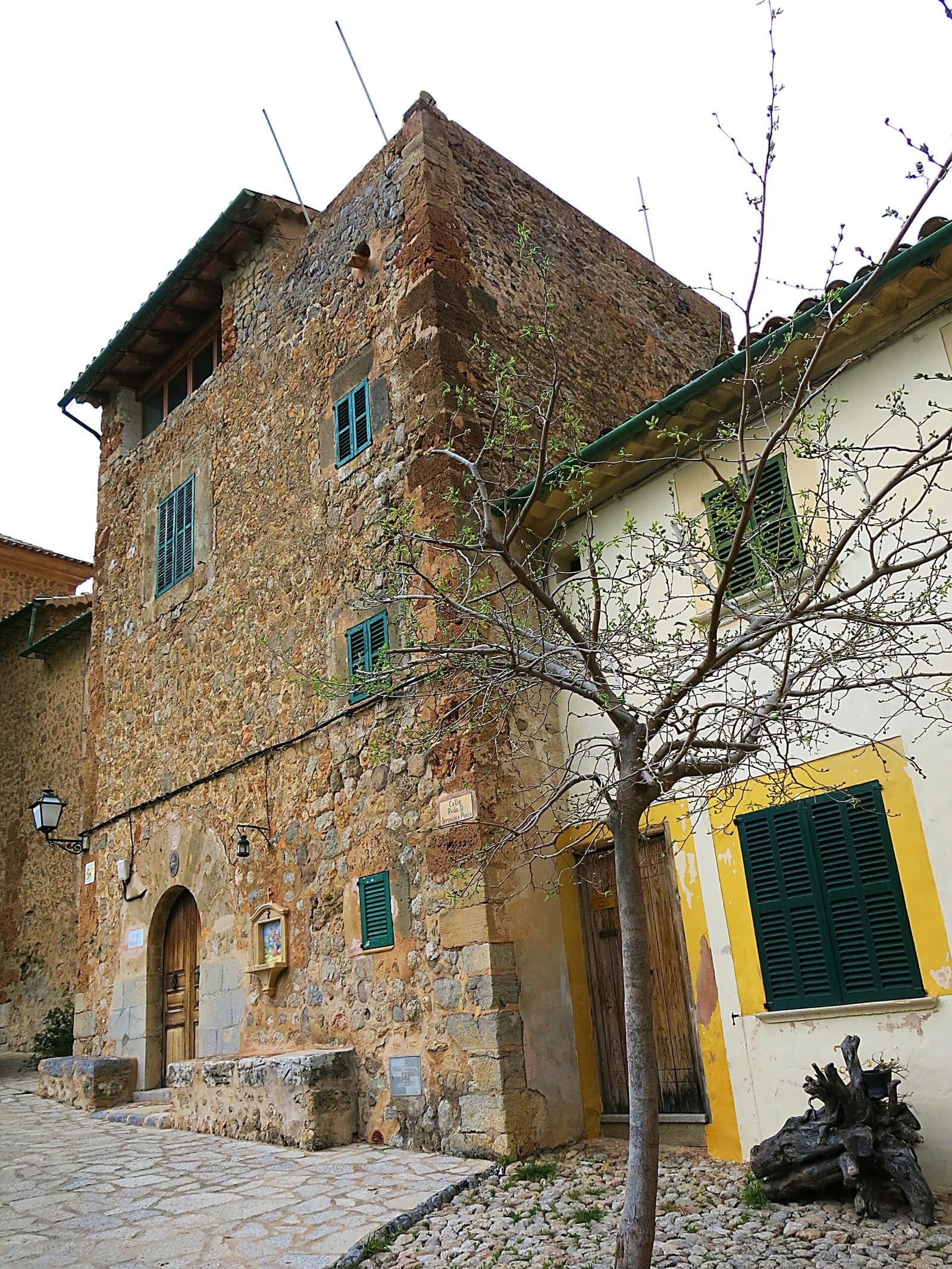

Among the stone houses of Deià, the Museu Arqueològic de Deià tells a story that reaches much further back than the village’s celebrated artistic tradition. The small archaeological museum focuses on Mallorca’s prehistory and displays finds from excavations in the region. Its most striking subject is the Myotragus balearicus, an ungulate once native only to the Balearic Islands, whose remains played an important role in research around Deià and Sóller.
The museum building itself makes a visit unusual: the collection is housed not in a sober exhibition hall but in an old mill dating from the 17th century. Here, the historic masonry and archaeological objects sit close together. Tools, pottery, animal bones and human remains offer insights into the island’s early ways of life, while the former mill recalls the much more recent agricultural Mallorca.
The museum is especially worthwhile for visitors who want to discover Deià as more than a backdrop of natural stone, mountains and artists’ biographies. The manageable collection does not require a long museum day, but it rewards close attention. Families with children interested in history will find tangible discoveries, archaeology enthusiasts can encounter the results of regional excavations, and for those interested in cultural history, the biography of founder William Waldren is reason enough to visit. The intimate nature of the building is important when planning: the Museu Arqueològic de Deià is not a large island museum with expansive halls, but a locally rooted collection that also serves as a research centre. It is precisely this close connection between excavation sites, a researcher’s biography and the village that gives it its distinctive character.
History and Significance
An American painter turned the caves and archaeological sites of northwestern Mallorca into his field of research: William H. Waldren, born in 1924 and deceased in 2003, combined artistic work with an increasingly intensive study of the prehistory of the Balearic Islands. His investigations took him to places including Son Ferrandell-Olesa and Muleta. This work led to the establishment of the museum in Deià in 1962.
William H. Waldren
Waldren was a painter, sculptor and archaeologist—an unusual combination that continues to shape the museum today. He originally came from the art world and increasingly turned his attention to archaeological questions in Mallorca. The museum’s founding was supported by a circle of local residents, artists and outside helpers; volunteers later also contributed to its work.
The exhibition is therefore not limited to an anonymous sequence of prehistoric objects, but also commemorates Waldren, his excavations and his travels. The founder’s artistic works also form part of the collection handed down through the years. The museum thus tells two intertwined stories: the very early settlement of the Balearic Islands and the modern search for its traces.
The Founding in 1962
The museum’s founding gave discoveries from the surrounding area a permanent home in the village. It was more than a private collection: under the name Museu Arqueològic i Centre d’Investigació de Deià, the institution also developed into a research centre that supported the scientific study of Balearic prehistory.
The significance of the excavation results gathered here extended beyond Deià. Finds from Muleta and Son Ferrandell-Olesa helped prompt international conferences on the prehistory of the western Mediterranean in 1980 and 1982. This scientific reach is remarkable for a small museum in a mountain village. It explains why the institution should not be judged solely by the size of its exhibition space.
Myotragus and the Island’s Early History
Waldren attracted particular attention through his research into the Myotragus balearicus. This animal lived exclusively on the Balearic Islands and is now extinct. The remains discovered at Muleta were associated with human traces and brought questions about the islands’ early settlement, their inhabitants’ living conditions and their relationship with wildlife into focus.
This subject clearly demonstrates the value of a regional museum. A bone fragment is not merely a zoological discovery; together with tools, pottery and human remains, it becomes part of a larger investigation: When did people arrive on the islands, how did they organise their lives, which animals did they know, and which rituals accompanied death? The Museu Arqueològic de Deià does not offer a simplified tourist narrative of origins, but preserves material traces through which such questions have been explored.
What to See
Visitors encounter history even before reaching the first display case. The museum occupies an old mill dating from the 17th century, whose sturdy, compact architecture provides a clear contrast to modern exhibition halls. Here, the collection does not feel separated from its origins, but remains in a setting that itself tells of Mallorca’s former everyday life.
The Old Mill
The historic mill building is an essential part of the visitor experience. Instead of walking through a large chronological presentation, visitors move through a building whose scale reflects the character of a local research collection. Different layers of time sit directly on top of one another: the structure dates from the early modern period, while the displayed finds reach back into the prehistory and early history of the Balearic Islands. The mill is therefore not the objects’ original setting, but it offers an evocative framework for the long history of human labour in Mallorca. Archaeological objects and rural architecture are not blended into a single period; it is precisely the distance between them that makes the place so appealing.
Finds from Muleta
Among the most important holdings are objects from Muleta near Sóller. The remains of the Myotragus balearicus recovered there are especially well known. Bones from this unusual island animal give the exhibition a theme that is immediately understandable even without prior archaeological knowledge: before its present-day cultural landscape emerged, Mallorca had wildlife that developed independently in the isolation of the islands.
The Muleta finds are also connected with discussions about the earliest human traces in Mallorca. In the museum, they can be viewed not merely as individual bones but as part of Waldren’s research history. Here, the spectacular nature of an individual object is less important than the question of what its discovery site reveals about the island’s history.
Son Ferrandell-Olesa
Another focus is the finds from Son Ferrandell-Olesa. This excavation complex is one of the sites where Waldren obtained crucial results from his work. The objects recovered there help trace economic and social developments during the settlement of the Balearic Islands. Tools and pottery are among the displayed finds from regional excavations and, together with other discoveries, form material traces of periods without written records.
Human and Animal Remains
Alongside tools and pottery, the collection includes animal bones and human remains from regional archaeological contexts. They provide two different perspectives: animal finds help researchers investigate the environment, diet and the relationship between people and their natural surroundings, while human remains raise questions about burial practices and how early communities treated their dead.
The museum therefore addresses subjects that extend far beyond a simple display of old objects. The exhibits represent life stories that can be reconstructed only indirectly. Visitors who take time to understand the connections will discover questions of diet, settlement patterns, social order and ritual behind small fragments. This is precisely the museum’s strength: it shows how historical knowledge emerges from scattered material traces.
Waldren as Researcher and Artist
The founder remains present throughout the exhibition. It commemorates Waldren, his excavations and his travels, while this section is complemented by Waldren’s artistic works. He therefore appears not merely as a name on a foundation plaque, but as someone who crossed the boundaries between studio and excavation site.
This combination suits Deià, which attracted many writers, painters and other creative figures during the 20th century. In the museum, however, the familiar image of the artists’ village takes a surprising turn: creative curiosity is directed not only towards the landscape and the present, but deep into the island’s past.
Visiting the Museum
It is best to begin a tour without expecting a large regional archaeological museum. The Museu Arqueològic de Deià is small, focused and shaped by a personal story. Visitors who simply look quickly for a principal object will appreciate its character less than those who connect the excavation sites, labels and William Waldren’s biography.
Check Access in Advance
As no reliable current opening hours or admission details are recorded, access should be checked before travelling. This is particularly important if the museum is the main reason for visiting Deià or if a group wishes to tour the building. This preparation helps prevent visitors from arriving only to find themselves standing outside the mill.
At the same time, a confirmed museum visit fits well into a longer walk through the village. The collection is compact enough to combine with the lanes, the church or another cultural site in Deià, without the archaeological museum having to become a casual stop between other activities.
Allow Time for Small Objects
It is difficult to recommend a single fixed visit duration. Because of the museum’s manageable size, the walk through the rooms itself is short, so visitors who want only an initial impression will need correspondingly less time. The tour becomes much more rewarding when the connections between Muleta, Son Ferrandell-Olesa, the Myotragus and Waldren’s research are explored.
Visitors with prior archaeological knowledge may spend longer with individual groups of finds. For families, the extinct island animal can instead serve as a common thread: its bones can prompt questions about which animals once lived in Mallorca and how archaeologists derive knowledge from remains. As the collection is not extensive, the visit also remains manageable for children.
A Quiet Tour Rather Than a Major Exhibition
The museum thrives on intimacy. The historic mill, the regional finds and the personal story of its founding create an intimate setting in which the institution focuses on material from its excavation sites and the research that developed from it.
This scale is particularly refreshing in Deià. Outside are the steep lanes and the landscape of the Serra de Tramuntana; inside, attention turns to pottery fragments, tools and bones. The transition from the expansive mountain scenery to small material traces makes the museum visit especially memorable.
Avoiding Busy Periods
As continuous access cannot be assumed, a confirmed opportunity to visit is more important than a general recommendation for a particular time of day. Those with flexibility can arrange their village walk around museum access and plan the rest of their time accordingly. Deià’s roads and parking areas quickly become congested during busy periods, so arriving in the village early may be more pleasant regardless of the museum.
Getting There and Parking
The final kilometres lead into the Serra de Tramuntana. Deià lies on the Ma-10, the winding road through northwestern Mallorca. The stated driving distances and journey times apply as far as Deià, not directly to the entrance of the Museu Arqueològic de Deià. Within the village, the final section follows the compact street network and continues on foot through the built-up area.
From Palma Airport
The road distance from Palma Airport to Deià is 32 kilometres. The drive takes around 48 minutes and follows the Ma-20, then the Ma-1110 and finally the Ma-10. The journey time may vary depending on traffic and conditions along the winding sections, but it provides a useful guide for travelling as far as the village.
The historic layout of the village determines the final section. It is therefore advisable to leave the vehicle in a permitted area in Deià and continue to the mill on foot rather than looking for a space directly beside the museum in the narrow lanes.
From Central Palma
The road distance from central Palma to Deià is 27 kilometres. The drive takes around 52 minutes and follows the Ma-1110 and Ma-10. Although the route is shorter than the journey from the airport, it takes longer because of the road layout. Beyond Valldemossa, the route continues through the mountains towards Deià.
The Ma-10 runs through the village and is the principal point of orientation for arriving visitors. From the main road area, the route leads into the village. The museum is reached via Carrer Teix; the exact walking route depends on where a legal parking space is found.
Parking in Deià
Parking is limited in Deià, and many areas within the village are regulated. The narrow roads and hillside location leave little space. On particularly busy days, finding a parking space may take longer than expected. Road markings and local signs should be followed carefully; blue lines indicate regulated areas.
For a museum visit, it is generally more practical to park once and connect several destinations in the village on foot. Visitors who arrive in Deià early usually have better conditions for a relaxed walk through the village.
By Bus
Deià can also be reached by public bus. Several stops are located in the village and around Es Clot, from where the route to the museum continues on foot. This option avoids the search for parking, but the hillside location and winding paths still require sturdy footwear. Checking the current timetable before travelling is recommended, particularly if museum access has been confirmed only for a limited time window.
Bus lines to Museu Arqueològic de Deià at a glance
| Line | Route | Departures/day | First | Last |
|---|---|---|---|---|
| 203 | Valldemossa / Deià | 261 | 06:25 | 22:50 |
From the official GTFS feeds (TIB/SFM), no real-time data. The figures cover all stops in the town; weekend and holiday services differ — check with the operator before travelling.
Getting there by bus
Deià 1 (18002) · 0.1 km as the crow flies
- 203Valldemossa / Deià · Daily
Deià 2 (18010) · 0.1 km as the crow flies
- 203Valldemossa / Deià · Daily
Es Clot 1 (18011) · 0.5 km as the crow flies
- 203Valldemossa / Deià · Daily
Es Clot 2 (18001) · 0.6 km as the crow flies
- 203Valldemossa / Deià · Daily
S'Empeltada 1 (18003) · 0.6 km as the crow flies
- 203Valldemossa / Deià · Daily
S'Empeltada 2 (18004) · 0.6 km as the crow flies
- 203Valldemossa / Deià · Daily
Sa Foradada (18009) · 1.5 km as the crow flies
- 203Valldemossa / Deià · Daily
Llucalcari 1 (18005) · 1.8 km as the crow flies
- 203Valldemossa / Deià · Daily
Llucalcari 2 (18006) · 1.8 km as the crow flies
- 203Valldemossa / Deià · Daily
Timetable data: official GTFS feeds (TIB/EMT), no real-time — check with the operator before travelling.
Nearby Attractions
After viewing the small finds inside the mill, Deià itself feels almost like a second exhibition—this time in the open air. Natural-stone houses rise in tiers along the hillside, paths climb between the Ma-10 and the higher historic village centre, and beyond the village the landscape of the Serra de Tramuntana opens up. The museum is therefore best experienced as part of a cultural walk.
Historic Deià
A worthwhile destination is the parish church of Sant Joan Baptista on the hill. The paved climb passes Stations of the Cross; at the top are also the small cemetery and parish museum. The cemetery is associated with Robert Graves, among others, and his grave is located there. From the elevated area, the village’s position between mountains and coast becomes particularly clear.
The uphill walk and museum visit reveal two different sides of Deià. The archaeological museum reaches back into prehistory, while the church, traditional houses and cultural landscape tell the story of later centuries. Because of the gradients, more time should be allowed for the walk than the short distances on a map might suggest.
In the Footsteps of Robert Graves
The Casa de Robert Graves is devoted to the writer who lived in Deià from 1929 and helped shape the village’s international reputation. It makes a particularly interesting complement to the Museu Arqueològic de Deià because both institutions demonstrate the village’s exceptional appeal to newcomers. Waldren arrived as an artist and became an influential archaeologist; Graves found a place here for his literary work.
The two museums nevertheless have clearly distinct profiles. One leads through a personal living and working environment of the 20th century, while the other focuses on archaeological excavations and the earliest periods of the island’s history. Visiting both creates an unusually broad historical perspective.
Cala Deià and Camí des Clot
For a combination of culture and landscape, consider the route towards Cala Deià. Camí des Clot leads from the village through the surrounding countryside and down to the coast. The cove should not, however, be treated as a quick addition to an already full museum itinerary, because the difference in elevation and return journey require sufficient time and suitable footwear.
Visitors who prefer to focus on the museum and historic village centre can save the coastal walk for a separate outing. This leaves enough time to experience the exhibition without squeezing it between a search for parking and a hike.
Son Marroig and Miramar
Along the Ma-10, Son Marroig and Miramar are further sites of cultural and historical significance in the northwest. They can be included in a journey between Valldemossa and Deià without having to visit every stop on the same day. Son Marroig primarily commemorates Archduke Ludwig Salvator and therefore has a very different focus from the archaeological museum.
The place it belongs to
Deià in the place guidePractical Visitor Information
The most important preparation is not packing, but checking access. No consistently reliable opening hours or admission prices are recorded for the Museu Arqueològic de Deià. Anyone travelling specifically for the collection should check the current situation in advance and plan the rest of the day only afterwards.
Footwear for Walking Through the Village
Deià is a hillside village with steep, partly paved and winding paths. Comfortable, slip-resistant shoes are therefore advisable even if no hike is planned. This is particularly important when combining the museum visit with the climb to the church or a longer walk through the historic village centre.
Distances within the village appear short, but gradients and the street layout make walking more strenuous than a level urban stroll. Light luggage makes the visit easier, especially as the museum itself is housed in an old mill and does not have the spacious character of a modern exhibition building.
Visiting with Children
For children, the Myotragus balearicus provides the most accessible introduction. The extinct island animal turns abstract prehistory into a concrete question: What was Mallorca like before its present wildlife and cultural landscape developed? Tools, pottery and bones can also be viewed as clues in an archaeological investigation.
The visit works best when adults explain individual objects and ask children about where they were found and what materials they are made from. The compact size is an advantage because the tour remains manageable.
What the Museum Is Not
The Museu Arqueològic de Deià offers neither a complete overview of every period in Mallorca’s history nor a monumental collection of famous artworks. Its subjects are regional excavations, the prehistory of the Balearic Islands and William Waldren’s research. Visitors who understand this focus will not confuse small size with limited significance.
The building should not be regarded merely as a decorative shell either. The old mill is part of the museum’s identity without itself being a prehistoric monument. It connects two widely separated chapters of Mallorcan history: the early period reconstructed through archaeology and the later agricultural village world of Deià.
Local insider tips
Start with the Myotragus
The remains of the Myotragus balearicus provide the most accessible introduction to the collection. Starting with this extinct Balearic animal makes the Muleta finds and Waldren’s research understandable even without prior archaeological knowledge.
Distinguish the Museum from the Mill
Do not focus only on the display cases: the building is an old mill dating from the 17th century. The appealing contrast lies in the fact that the structure is considerably younger than the prehistoric finds it preserves today.
Compare the Excavation Sites
Look specifically for Muleta and Son Ferrandell-Olesa on the labels. These two groups of finds are the key to the collection and show how Waldren used regional excavations to develop broader questions about the settlement of the Balearic Islands.
Continue Through the Village
After the museum, the climb to the church and cemetery is worthwhile. Mallorca’s prehistory is followed by the more recent cultural history of Deià, while the higher part of the village also reveals its distinctive hillside setting.
Avoid the Search for Parking
Visitors who find a suitable bus connection can avoid the often difficult search for parking in Deià. From the stops in the village and near Es Clot, the journey continues on foot; sturdy shoes are advisable for the steep and partly paved paths.