
Sant Antoni Church in Sa Pobla: History and Festival Traditions
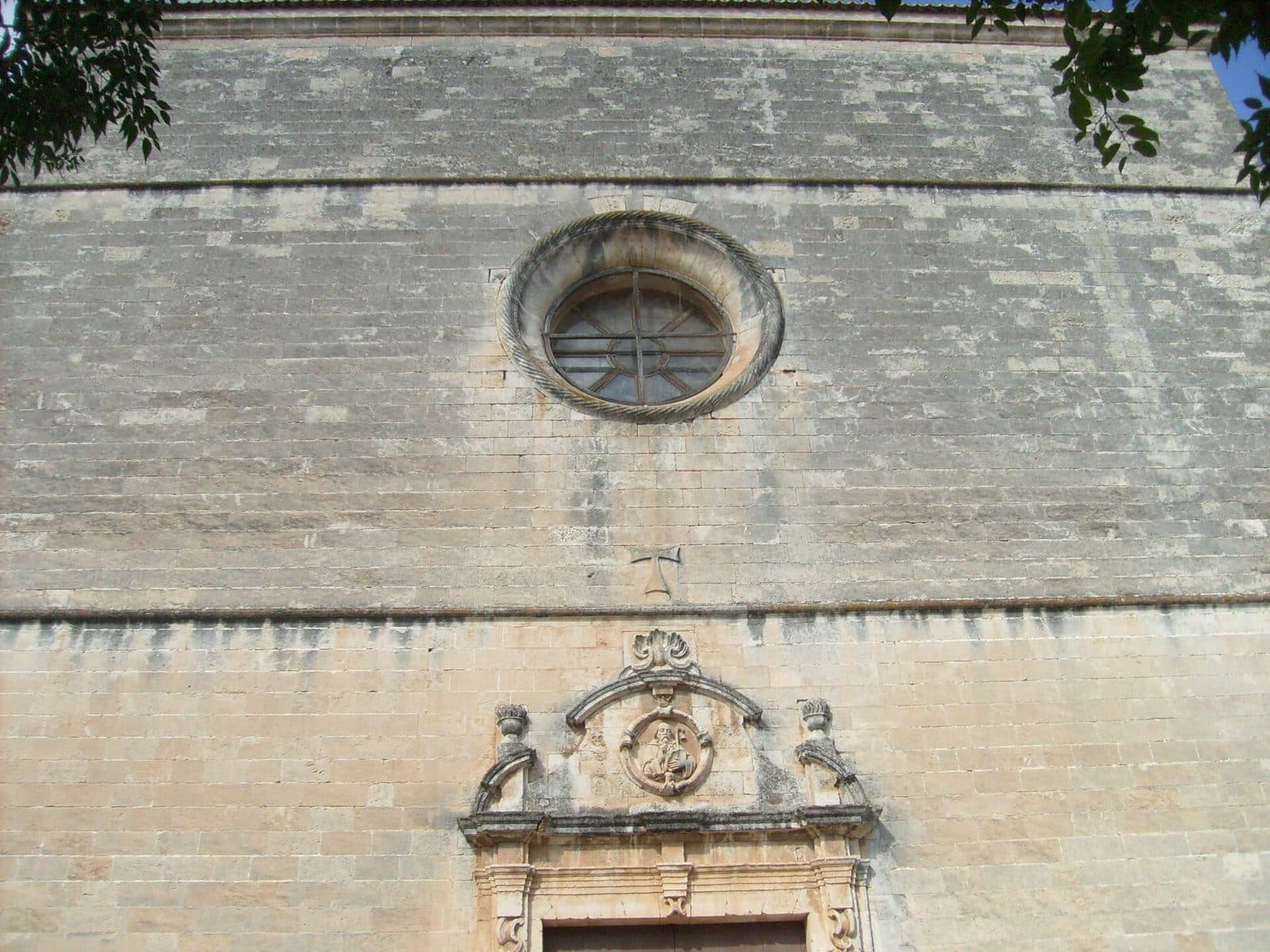

Sant Antoni is as much a part of Sa Pobla as the fields of the plain and the fires of the Mallorcan winter. Here, the name refers to the historic parish church of Sant Antoni Abat in northern Mallorca—not the place of the same name on Ibiza or any other sanctuary on the island. The church is one of the most important architectural landmarks in this agricultural town.
The appeal of a visit lies less in a long list of individual works of art than in the connection between the church, local history, and living tradition. The church was built over several centuries and bears the name of the saint whom Sa Pobla has especially revered since the Middle Ages: Anthony the Great, patron saint of animals and thus once also of the indispensable working animals in the fields.
In January, it becomes clear just how deep this connection runs. Around the festival of Sant Antoni, Sa Pobla is transformed into a place of fire, drums, improvised songs, and masked Dimonis. The celebration belongs to the entire town and should not be equated with the church building. Yet without the saint's religious significance, many of its images would be mere spectacle.
Sant Antoni is therefore especially worthwhile for travelers who want to experience northern Mallorca as more than just a landscape. Anyone interested in local history, religious customs, and the island's rural heritage will find here a concentrated introduction to the identity of Sa Pobla.
History and significance
The origins of Sa Pobla
The history of the church cannot be separated from the relocation of the town. The oldest traces of settlement in the present-day municipality lie in the area of Crestatx. Evidence from the Talayotic and Roman periods has been found there; even the name Crestatx is traced back to the Latin word “castra,” meaning camp. During the Islamic period, the area belonged to the district of Inca and was known by other names whose traces survive today in place names such as Talapi, sa Marjal, and el Rafal.
After the Christian conquest of Mallorca in 1229, the lands passed to Catalan knights. The decisive step toward the present-day Sa Pobla came with the decrees of Jaume II in 1300: the town was legally founded at its current location, while the older settlement near Crestatx declined in importance. Sant Antoni thus belongs to the new town center that developed in the late Middle Ages.
The parish church was built between the 14th and the 17th century. This long construction period means that it is not a building from a single historical moment, but a religious center that grew over generations. It accompanied Sa Pobla through social conflicts, crop failures, and periods of drought, as well as through the later economic rise of the agricultural community.
Sant Antoni Abat
The church's patron saint lived in the 3rd and 4th century. According to Christian tradition, Anthony the Great withdrew into the Egyptian desert to lead a life of prayer and asceticism. In accounts of his life, he is tempted by demons but resists them through his faith. This motif explains the contrast between Sant Antoni and the Dimonis that remains visible today.
In Mallorca, the saint is especially revered as the protector of animals and rural life. For an agricultural community such as Sa Pobla, this role was very tangible: animals provided labor, transport, and economic security, and their well-being was closely linked to harvests and livelihoods. Veneration of the saint combined religious hope with the immediate concerns of everyday rural life.
Sant Antoni therefore represents more than personal devotion. His name points to an order in which people, animals, farm work, and the cycle of the year depended on one another. The church preserves this religious focal point, while the festival translates these old ideas into public images, sounds, and rituals.
A celebration documented for centuries
Celebrations in honor of Sant Antoni are documented in Sa Pobla as early as 1365. The local tradition therefore reaches far back into the Middle Ages. Its roots lie in agricultural rituals that sought protection for livestock and crops. Later, church ceremonies became intertwined with folk theater, music, fire, and communal meals.
Today, the Dimonis, the fire sites known as Foguerons, animal blessings, and improvised Gloses are all familiar features of the festival. Friction drums, Mallorcan bagpipes, and sung verbal duels give it a distinctive sound. Sa Pobla is considered one of the places where this tradition is practiced with particular intensity.
This is crucial to understanding the church: Sant Antoni is not an isolated historic building whose significance lies only in its age. The church's name still refers to a central figure in the town's sense of identity. Religious veneration and the public festival are different expressions of the same inherited relationship.
What to see
The historic parish church
Your first impression should take in the building as a whole. Sant Antoni was not constructed in a short, uniform building campaign, but between the 14th and the 17th century. The church therefore represents several generations of people in Sa Pobla who shaped their religious center over a long period. This historical depth is precisely what distinguishes it from a monument built at a later date.
The church is described as one of Sa Pobla's defining architectural landmarks. Its value lies not only in individual visible elements, but also in its position within the historic town. Here, visitors can understand how closely the development of a rural Mallorcan community was connected to its parish church: the sacred building gave the new settlement center founded in the Middle Ages a spiritual focal point.
When viewing it, it is therefore worth resisting the temptation to look for a single architectural style. The documented construction period spans centuries during which building methods and religious needs changed. Sant Antoni should consequently be understood as a church that evolved over centuries.
The name Sant Antoni
The church's name is also a key to the imagery of the town. In Christian tradition, Sant Antoni Abat is the hermit who resists the temptations of demons. In Sa Pobla, he also became the protector of animals and rural life. Anyone who views the church with this knowledge will recognize a social history behind its dedication: it concerned the livelihood of a community whose daily life was shaped by farming and animal husbandry.
The Dimonis who appear in January are therefore not arbitrary figures of terror. They embody the temptations that the saint is said to have resisted in the desert. The loud, fiery street theater stands in striking contrast to the religious figure of the steadfast Anthony. The church and the festival make this story tangible in different ways.
Sant Antoni should not, however, be mistaken for a festival museum. The church is a religious building, while the fires, musical performances, and processions belong to the public spaces of Sa Pobla. Anyone wishing to explore the culture of masks and festivities in greater depth will find the Museu Can Planes a useful complement and an introduction to the world of the local Dimonis.
Visiting Sant Antoni
A quiet church visit
Outside the festival period, Sant Antoni is best explored as part of a walk through Sa Pobla. The focus is on the historic church building, its role developed over centuries, and its connection to the town's patron saint. Current opening hours and admission conditions should be checked before traveling, as no permanently reliable visiting hours or prices are recorded for Sant Antoni.
How much time to allow therefore depends on the access available at the time. Those who see the church simply as one stop on a walk through town can combine the visit with the historic center. Anyone who has previously learned about Sant Antoni Abat, Sa Pobla's agricultural history, and the festival tradition will recognize considerably more in the same building than during a quick photo stop.
Sant Antoni in January
Sa Pobla offers a completely different experience during the Sant Antoni celebrations. The main festival days traditionally fall on 16 and 17 January, although each year's program may also include events on additional days. Dimonis then roam the streets, fires burn in the squares, music fills the town, and Glosadors compete against one another with improvised verses.
The festival is not an ordinary tour of the church but a large-scale celebration involving the entire town. That is precisely why visitors should be clear about what they are looking for: the busiest period is unsuitable for a quiet look at the church. Those wishing to understand why Sant Antoni means far more to Sa Pobla than the name of a historic church will, however, experience the public and communal side of this veneration in January.
Fire, smoke, drums, and dense crowds fundamentally change the experience of a visit. The Dimonis represent the demons from the story of the saint's temptation, while the animal blessings recall his role as protector of livestock. The spectacle gains meaning when this religious dimension is also taken into account.
The best time to visit
Anyone wishing to avoid crowds should not schedule a visit during the main January festival days. Outside the major festival program, the church can more easily be included in a walk through the town. However, this does not indicate a fixed time of day when the interior will be open; current access should always be confirmed in advance.
Festival visitors, by contrast, should plan carefully. Sa Pobla attracts numerous guests for Sant Antoni, and events are spread across streets and squares. The church remains the religious reference point behind the name, while the most impressive public scenes take place throughout the town. It is worth consciously distinguishing between these two aspects instead of expecting an ordinary church visit.
Getting there and parking
From Palma Airport
From Palma Airport, the route initially follows the Ma-30 and then the Ma-13 to Sa Pobla. The road distance is 47 kilometers, and the journey takes around 37 minutes. These figures expressly apply only as far as Sa Pobla, not directly to the entrance of Sant Antoni.
For the final section, the specific destination within Sa Pobla should be entered into the navigation system. The Ma-13 provides the fast route through the island's interior; after leaving it, the local section begins, with junctions, residential streets, and access roads to the center.
From Palma
From the center of Palma, the route follows the Ma-13. The road distance to Sa Pobla is 44 kilometers, and around 42 minutes should be allowed for the journey. This information also ends in the town and does not include the search for parking or the final walk to the church.
By public transport
Sa Pobla has several suitable arrival points. The recorded stops include Ronda nord 1 and Ronda nord 2, as well as Estació Sa Pobla 1 and Estació Sa Pobla 2. These are bus stops in the surrounding area.
The most convenient connection on the day of travel depends on the current timetable. The return journey should be checked in advance, especially when events are taking place. The stop information can help when choosing an arrival point, but it does not replace up-to-date public transport information.
Bus lines to Sant Antoni at a glance
| Line | Route | Departures/day | First | Last |
|---|---|---|---|---|
| T2 | Palma - sa Pobla | 73 | 06:02 | 22:35 |
| 302 | Can Picafort - Palma | 57 | 00:05 | 23:45 |
| 315 | Sa Pobla - Badia d'Alcúdia | 42 | 00:15 | 23:25 |
| A32 | Can Picafort - Aeroport | 42 | 00:40 | 23:45 |
| 301 | Port de Pollença - Palma | 37 | 06:45 | 22:25 |
| 314 | Campanet / Búger | 12 | 07:51 | 19:40 |
From the official GTFS feeds (TIB/SFM), no real-time data. The figures cover all stops in the town; weekend and holiday services differ — check with the operator before travelling.
Getting there by bus
Ronda nord 2 (44010) · 0.6 km as the crow flies
- 301Port de Pollença - Palma · Daily
- 302Can Picafort - Palma · Daily
- 314Campanet / Búger · Daily
- A32Can Picafort - Aeroport · Daily
Ronda nord 1 (44011) · 0.7 km as the crow flies
- 301Port de Pollença - Palma · Daily
- 302Can Picafort - Palma · Daily
- A32Can Picafort - Aeroport · Daily
Estació Sa Pobla 1 (44013) · 0.8 km as the crow flies
- 315Sa Pobla - Badia d'Alcúdia · Daily
Estació Sa Pobla 2 (44012) · 0.8 km as the crow flies
- 315Sa Pobla - Badia d'Alcúdia · Daily
Sa Pobla Estació (219) · 0.8 km as the crow flies
- T2Palma - sa Pobla · Daily
Timetable data: official GTFS feeds (TIB/EMT), no real-time — check with the operator before travelling.
Nearby attractions
Sa Pobla
The church is best understood together with the town whose history it has accompanied. Sa Pobla was founded at its current location in 1300 and remained closely shaped by agriculture for a long time. The fertile plain, and potato cultivation in particular, formed the economy and identity of the community. The town therefore feels different from the coastal settlements of the north: the focus is not on a harbor and seafront promenade, but on fields, market life, and local traditions.
A walk through the historic center provides the right setting for Sant Antoni. Here, the church does not appear as an isolated monument removed from its context, but as part of a community that developed around it. During the January festival, these same streets and squares become a stage for fire, music, and Dimonis; outside those days, the structure of the town can be appreciated much more peacefully.
Museu Can Planes
Anyone wishing to explore the connection between the church and festival culture in greater depth can combine the visit with the Museu Can Planes. The museum is housed in a former stately residence and is devoted to modern and popular art. Part of the collection focuses on the Dimonis of Sa Pobla.
This combination is especially coherent because the two places reveal different sides of the same tradition. Sant Antoni represents the saint and the religious center, while Can Planes helps place the masked figures and popular imagery of the festival in context. A short church stop can thus become a compact cultural and historical walk.
Crestatx and s’Albufera
Crestatx reaches further back in time than the present town center. The municipality's early settlement roots lie in this area, where archaeological finds attest to activity during the Talayotic and Roman periods. After Sa Pobla was founded at its present location, the older settlement lost its former importance. This comparison helps explain why the medieval parish church was able to become the landmark of the new town.
Nature enthusiasts can also combine Sa Pobla with the Parc Natural de s’Albufera. The wetland is known for its birdlife and reveals a different side of northern Mallorca. The church, agricultural plain, and wetland should not be compressed into a single itinerary item; each destination calls for its own pace.
The place it belongs to
Sa Pobla in the place guidePractical visitor information
Do not confuse the church with the festival
The most common misunderstanding begins with the name itself. Here, Sant Antoni refers to the parish church in Sa Pobla and its patron saint. The famous fires, Dimonis, and musical performances are elements of the local January festival, not a permanent exhibition inside the church. Nor is this Sant Antoni de Portmany on Ibiza.
Visitors arriving outside January should therefore not expect fire performances or festival figures permanently on display. The significance of the church is then revealed through its history and place in the townscape. For a deeper exploration of the Dimonis, the Museu Can Planes is the more suitable complement.
Respect inside the church
Sant Antoni is a religious site. As no fixed visiting hours are recorded, current access should be checked in advance. This applies especially to travelers making a special journey to Sa Pobla for the church. A walk through the town and a visit to Can Planes offer worthwhile alternatives if the interior is not accessible.
Visiting with children
For families, the story of Sant Antoni and the Dimonis can offer an engaging introduction: according to tradition, the saint resists the demons and is also revered as the protector of animals. This makes the festival figures easier to explain than merely describing them as frightening masks.
During the major January festival days, the situation is more demanding. Fire, smoke, loud music, and large crowds are all part of the experience in Sa Pobla. Families should take this into account when planning and prepare children for the masked Dimonis. A quiet church visit outside the festival and the intense street celebration are two very different activities.
Local insider tips
Understand the Dimonis
The demons are not arbitrary carnival figures. They refer to the temptations that Sant Antoni is said to have resisted in the desert. With this background, the January festival becomes easier to understand.
Combine it with Can Planes
After visiting the church, the Museu Can Planes is especially worthwhile for its collection devoted to the world of the Dimonis. This allows the religious origins and popular festival culture to be viewed in two different places.
Choose peace or fire
For a quiet look at the church, avoid the main festival days in January. Those wishing to experience the living significance of the church's patron saint will instead find fire, music, and Dimonis throughout the town at that time.
Do not confuse it with Ibiza
When using navigation, always check that the location is Sa Pobla. Sant Antoni de Portmany is on Ibiza and is a completely different destination; many search results for the name also lead there instead of to the church in Mallorca.