
Sant Miquel in Llucmajor: A Church in Southern Mallorca
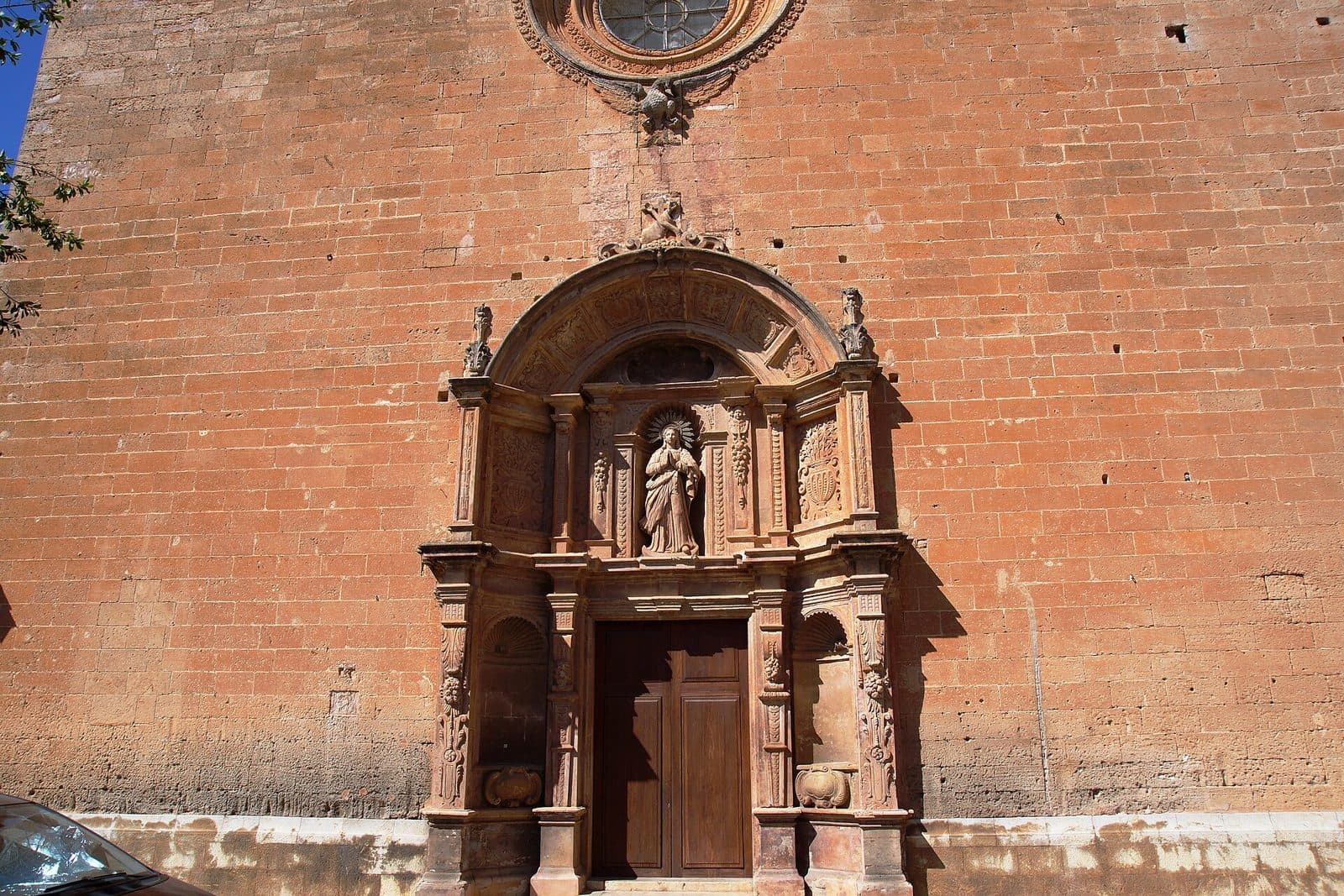
.jpg)
Sant Miquel is a church in Llucmajor, an established town in the south of the island that has retained a distinctly local character despite its proximity to Palma and the airport. Travelers looking for historic town centers and everyday Mallorcan culture will find it a suitable stop. Clear identification is important: this is the church of Sant Miquel in Llucmajor.
Sant Miquel is especially suitable for travelers who are already visiting Llucmajor or want to discover the town while traveling through southern Mallorca. The church’s appeal becomes most apparent in combination with the town’s streets, squares, and historic traces.
Llucmajor’s historical development extends far beyond the church and today’s town center. Talayotic sites in the municipality show that the area has been inhabited since prehistoric times. During the Roman era, the area formed part of the island’s agricultural network and was associated with the production of grain, oil, and wine. In the Middle Ages, the events of 1349 gave the town particular historical significance.
Over the following centuries, Llucmajor developed as an agricultural, commercial, and artisanal center. These different historical layers provide the setting for a visit to Sant Miquel: the church does not stand alone but belongs to a town whose development was shaped by religious life, agriculture, crafts, trade, and political change.
A visit requires some flexibility because no reliable general visiting hours or permanently applicable admission fee are listed. It is therefore advisable to check current access shortly before the trip and plan Sant Miquel as part of a walk through Llucmajor rather than as the sole purpose of a long journey.
Visiting the Church
Arriving at the Church
Sant Miquel is a church building, so visitors should enter quietly and discreetly. Conversations should be kept low, mobile phones set to silent, and religious areas treated with respect.
Even before entering, it is worth viewing the church as part of Llucmajor. Unlike an isolated monastery or a sanctuary on a mountain, Sant Miquel is best understood in relation to the town. The route does not lead into a remote landscape but into a town whose history was shaped by agriculture, crafts, trade, and Mallorca’s political upheavals.
A walk can therefore begin on the way to the church. The streets, squares, and public life of the town center show that Sant Miquel is part of a town that continues to be inhabited and used. This makes the visit different from an excursion to a remote historic site where the individual building alone is the main focus.
Time Needed and Visit Planning
Rather than planning down to the minute, it makes more sense to allow enough time for a walk through the town center. This ensures that the excursion remains worthwhile even if the door to Sant Miquel is closed when you arrive.
Because no reliably documented general opening hours are available for Sant Miquel, current access should be checked before departure. No permanently applicable admission fee is recorded either, so specific older details from travel portals do not provide a reliable basis for planning.
When planning, it is helpful to first determine the route to Llucmajor and then consider the route within the town. The stated distances and driving times from Palma and the airport end in Llucmajor. Additional time should therefore be allowed for the final section to the church and for a walk through the town center.
Quieter Times to Visit
There is no generally documented pattern regarding visitor numbers or particularly busy times of day at Sant Miquel.
Getting There and Parking
From Palma
The road distance from central Palma to Llucmajor is around 28 kilometers. The drive takes around 32 minutes and follows the Ma-19. These figures apply as far as Llucmajor, not to a specific parking space directly beside Sant Miquel. Within the town, the final section continues along local streets to the church.
The Ma-19 is the most direct connection between Palma and the south of the island. For navigation, Sant Miquel in Llucmajor should be selected as the actual destination. The addition of Llucmajor is therefore more important here than for many other attractions.
Visitors combining the church with a walk can regard the drive to Llucmajor as the first part of the journey and continue through the town on foot. This places Sant Miquel within the town’s historic and present-day setting rather than treating it only as the destination of a car journey.
From Palma Airport
The road distance from Palma Airport to Llucmajor is around 22 kilometers, and the drive takes around 21 minutes. This figure also ends in Llucmajor. The final section to the church is within the town and depends on the chosen approach and current traffic arrangements.
Because of the short connection, Sant Miquel can in principle be visited at the beginning or end of a stay, provided access to the church has been checked beforehand. Nevertheless, the attraction is not well suited to a tight schedule immediately before a flight because the stated 21 minutes describe only the drive to Llucmajor and include neither the final section to the church nor possible delays.
By Bus
Llucmajor has several central bus stops. These include stops named Llucmajor centre as well as stops in the western part of the town. From there, the route to the church continues on foot within the town. The most suitable service and stop depend on the point of departure and the current timetable.
The stops include Llucmajor centre 1 with the identifier 31057 and Llucmajor centre 2 with the identifier 31058. In the western part of town, there are also Llucmajor oest 1 with the identifier 31063 and Llucmajor oest 2 with the identifier 31062. The identifiers help distinguish between stops with similar names.
Both the outbound and return services should be checked before traveling. This is particularly important if Sant Miquel is combined with a longer walk or a meal in town. Since the church has no reliably documented general visiting hours, it is also advisable to plan an outing that remains worthwhile without seeing the interior. The bus journey can therefore be combined with a walk through the town center from the most suitable stop in Llucmajor to the church.
Bus lines to Sant Miquel at a glance
| Line | Route | Departures/day | First | Last |
|---|---|---|---|---|
| 501 | Manacor - Campos - Palma | 621 | 00:20 | 23:29 |
| 508 | Sa Ràpita - Palma | 150 | 06:43 | 22:42 |
| A51 | Campos - Aeroport | 114 | 00:03 | 23:07 |
| 431d | Algaida - Llucmajor | 24 | 08:50 | 17:50 |
From the official GTFS feeds (TIB/SFM), no real-time data. The figures cover all stops in the town; weekend and holiday services differ — check with the operator before travelling.
Getting there by bus
Llucmajor centre 1 (31057) · 0.5 km as the crow flies
- 431dAlgaida - Llucmajor · Mon-Fri
- 501Manacor - Campos - Palma · Daily
- 508Sa Ràpita - Palma · Daily
- A51Campos - Aeroport · Daily
Llucmajor centre 2 (31058) · 0.5 km as the crow flies
- 431dAlgaida - Llucmajor · Mon-Fri
- 501Manacor - Campos - Palma · Daily
- 508Sa Ràpita - Palma · Daily
- A51Campos - Aeroport · Daily
Llucmajor oest 1 (31063) · 0.7 km as the crow flies
- 431dAlgaida - Llucmajor · Mon-Fri
- 501Manacor - Campos - Palma · Daily
- 508Sa Ràpita - Palma · Daily
- A51Campos - Aeroport · Daily
Llucmajor oest 2 (31062) · 0.7 km as the crow flies
- 431dAlgaida - Llucmajor · Mon-Fri
- 501Manacor - Campos - Palma · Daily
- 508Sa Ràpita - Palma · Daily
- A51Campos - Aeroport · Daily
Llucmajor est 1 (31056) · 0.7 km as the crow flies
- 431dAlgaida - Llucmajor · Mon-Fri
- 501Manacor - Campos - Palma · Daily
- 508Sa Ràpita - Palma · Daily
- A51Campos - Aeroport · Daily
Llucmajor est 2 (31055) · 0.8 km as the crow flies
- 431dAlgaida - Llucmajor · Mon-Fri
- 501Manacor - Campos - Palma · Daily
- 508Sa Ràpita - Palma · Daily
- A51Campos - Aeroport · Daily
Timetable data: official GTFS feeds (TIB/EMT), no real-time — check with the operator before travelling.
Things to See Nearby
Llucmajor
Sant Miquel is best understood as part of Llucmajor. The town is not an open-air museum created specifically for visitors but a lively place with squares, shops, cafés, and a historically developed center. This everyday character in particular distinguishes a walk here from a visit to the municipality’s more tourist-oriented coastal resorts.
Llucmajor developed over a long period as an agricultural, artisanal, and commercial center. Traditional products from the surrounding area included almonds, figs, carob, and wine, while shoe production also shaped the town. This past explains why a walk should not be limited to a single monument. Sant Miquel is a religious element within an urban history that also tells of work, trade, and public life.
The municipality’s historical roots reach back to the Bronze Age. Talayotic sites show that organized communities lived here long before medieval Llucmajor. In Roman times, the area was integrated into the island’s agricultural production; grain, oil, and wine were among the products associated with this landscape.
This long development makes a walk through the town a valuable addition to the church visit. Sant Miquel belongs to Llucmajor’s religious history, while the public spaces and surrounding area reveal further economic, political, and prehistoric connections.
Remembering 1349
A particularly important date for Llucmajor is 1349. In the Battle of Llucmajor, the forces of Peter IV. of Aragón confronted King Jaume III. of Mallorca. Jaume III. was killed in battle, ending the independence of the Kingdom of Mallorca, which was reincorporated into the Crown of Aragón.
The memory of this turning point remains visible in the town today. A monument commemorates Jaume III., while a cross outside the center marks the place where the king is said to have fallen. These traces are not part of Sant Miquel itself, but they add historical depth to a visit to Llucmajor.
The battle is particularly important for understanding Llucmajor because its significance extends beyond local history. It changed the political position of the Kingdom of Mallorca and made the town the setting for a decisive event in the island’s history. The church, monument, and memorial cross serve different purposes and should not be regarded as historically equivalent.
Capocorb Vell
Those wishing to travel beyond the town center can combine the visit with Capocorb Vell. The Talayotic settlement demonstrates that the history of the present-day municipality reaches much further back than the Middle Ages. Its stone structures represent an organized community from Mallorca’s prehistoric past and provide a clear contrast to the Christian church in the town.
Sant Miquel and Capocorb Vell do not share a common architectural history. Instead, visiting both reveals two very different layers of the same municipality: a church building in the town and an archaeological site from Mallorca’s distant past. The respective access conditions should be checked separately for such an excursion.
Combining both destinations is particularly suitable for an excursion that explores more than a single era. Capocorb Vell points to the municipality’s prehistoric settlement, while Sant Miquel belongs to religious and urban Llucmajor. The memory of the Battle of 1349 adds the political history of the Middle Ages to this comparison.
The place it belongs to
Llucmajor in the place guidePractical Information for Your Visit
Clothing and Conduct
Sant Miquel is a place of worship. Even in warm weather, clothing should be appropriate for a religious site. No extensive equipment is needed for the visit, but comfortable shoes are useful when combining Sant Miquel with a walk through Llucmajor. The real added value lies precisely in this combination: the church, streets, and historical memorial sites of the town cannot be experienced from a car seat.
Discretion is appropriate not only inside the church. Its character should also be respected when taking photographs and spending time in areas used for religious purposes. Sant Miquel is not exclusively a tourist attraction but a place of worship within the town.
Visiting with Children
Sant Miquel can be visited with children as part of a varied walk through the town. Before entering, it helps to briefly explain that it is a religious space.
If the church is closed, there is no need to abandon the excursion. A walk through Llucmajor and an exploration of the Battle of 1349, or a later visit to Capocorb Vell, provide further points of interest for the day. Older children in particular can see how different eras remain visible within the area of a modern municipality.
The different stops can be clearly distinguished from one another: Sant Miquel represents the religious site, the memorials to Jaume III. point to medieval Llucmajor, and Capocorb Vell reaches much further back into the past. The excursion can therefore connect several historical themes without conflating them.
What to Expect from Your Visit
The most reliable approach is to keep the plan flexible: check access beforehand, allow enough time for a walk, and do not reduce the town to the church alone. This way, Sant Miquel remains a worthwhile destination even when the interior is not accessible.
Travelers arriving in Llucmajor with these expectations can focus their stay on the town as a whole. The church serves as a point of interest, while the streets, squares, memories of 1349, and the municipality’s more distant history reveal additional connections. The value of the excursion therefore does not depend solely on whether the interior can be entered.