
Tancat de sa Torre near Portocolom
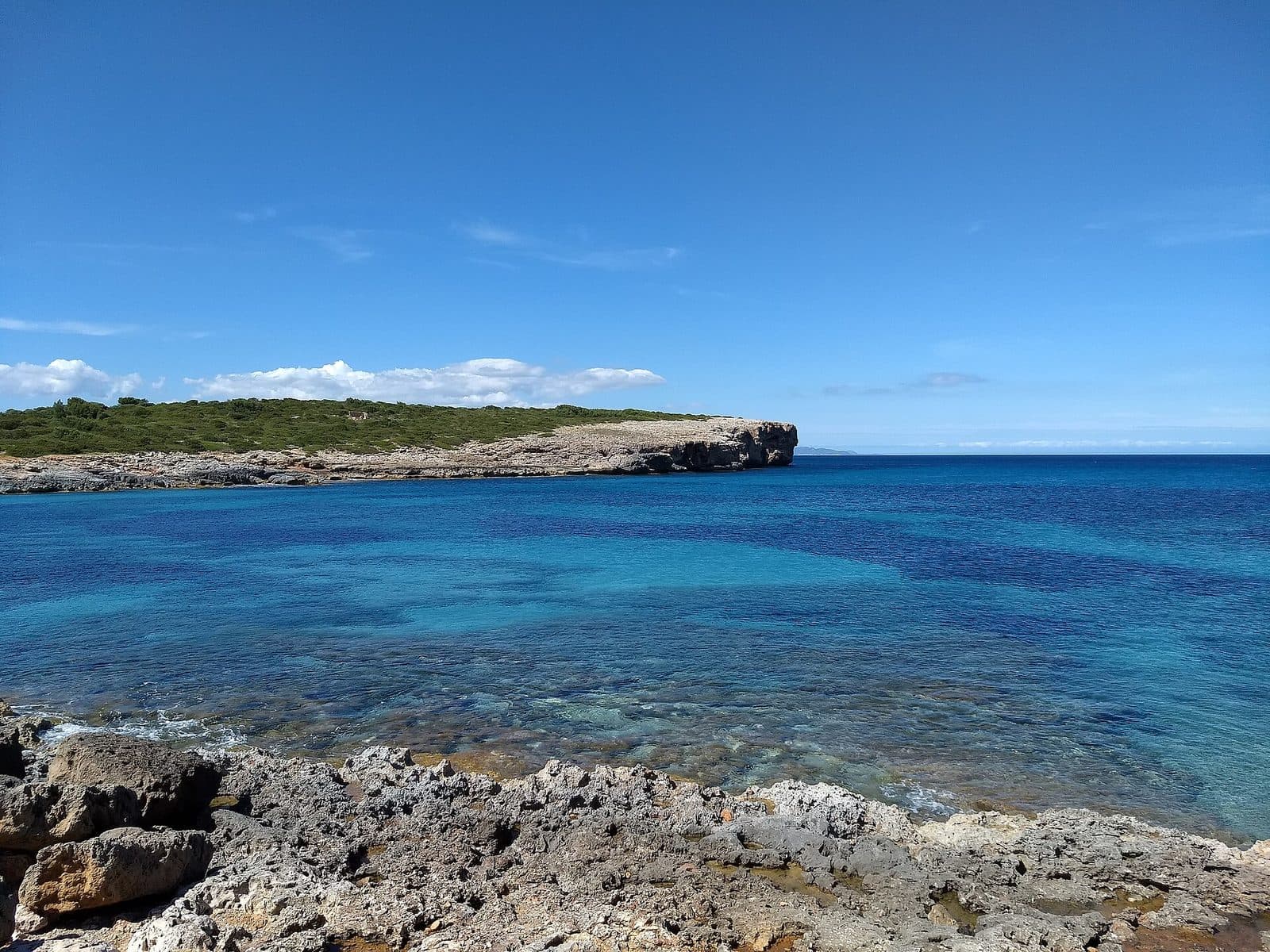

On the edge of Portocolom, Tancat de sa Torre reveals a side of Mallorca that cannot be explained by a single monument. The destination is a protected public estate: a piece of countryside whose value lies precisely in the fact that it has not been completely developed, staged or covered with recreational facilities. Anyone deliberately seeking the less conspicuous places between the harbour, residential streets and coast will find an interesting contrast to a classic beach visit here.
The area covers 56 hectares and has several conservation classifications. It is designated as an Àrea Natural d’Especial Interès and, at the same time, as an area with a particularly high level of protection. It also borders the European Natura 2000 network. These terms may initially sound technical, but they describe a very tangible idea: the focus here is not a single attraction, but the continuous landscape as a whole.
The name can be misleading, as Tancat de sa Torre on this page is neither a historic tower open to visitors nor a villa or garden. The nature area near Portocolom is also unrelated to similarly named places in Cala Ratjada, Canyamel, Sa Coma or southern Mallorca. Visitors should therefore not expect interiors, an exhibition or a viewing terrace, but a protected part of the surroundings of Portocolom.
A visit is especially suitable for travellers who want to add a landscape perspective to a harbour walk or a stay on the east coast. The nature area does not impress through the greatest possible number of attractions. Instead, it sharpens awareness of where the town ends, how quickly development recedes and why even apparently unspectacular open spaces on Mallorca’s coast are protected.
History and significance
The decisive turning point in the recent history of Tancat de sa Torre came in 2002. That year, the Spanish Ministry of the Environment purchased the 56-hectare estate. The area is public land whose significance lies not in tourist use, but in landscape conservation. The purchase is the most important documented historical event associated with the area and explains why it is now described as a public estate.
The purchase in 2002
A government land purchase may seem less spectacular than the history of a defensive tower or an archaeological excavation. For a nature area, however, it can be more decisive than any visible structure, because the acquisition made it possible to preserve the land as one continuous space. This continuity is particularly important near a coastal town: conservation does not work only at individual points, but extends across property boundaries, transition zones and neighbouring parts of the landscape.
The term “public estate” should not be confused with an urban park. It primarily describes ownership, not facilities such as paved circular paths, playgrounds, restaurants or a visitor centre. Nor does it automatically mean that every part of the land can be entered freely at all times. This distinction is important for visitors because it prevents false expectations and encourages respect for notices or temporary restrictions.
ANEI and AANP
Tancat de sa Torre is classified as an Àrea Natural d’Especial Interès, abbreviated to ANEI. Within this conservation framework, it also has the status of an Àrea d’Alt Nivell de Protecció, abbreviated to AANP. These abbreviations represent different levels of landscape protection. For visitors, the main point is that this is not merely an undeveloped reserve on the edge of town, but a natural area expressly recognised as worthy of protection.
The dual status draws attention to the area as a whole. What matters is not whether a particularly photogenic subject awaits at a specific spot. The land itself, its relative lack of fragmentation and its relationship with adjacent protected areas are what make it valuable. This also explains why a quiet, restrained visit suits the character of Tancat de sa Torre better than searching for a staged main attraction.
Bordering Natura 2000
The area borders the Natura 2000 network. It therefore does not stand in isolation, but adjoins a larger European system of protected habitats. The wording should be understood precisely: the available information describes Tancat de sa Torre as bordering the network, not as being designated in its entirety as a Natura 2000 site.
This position on the edge of the network is precisely what makes the estate interesting, as transition zones can be just as important for landscape conservation as the better-known core areas. Visitors will not find a hall of information panels or an exhibition explaining this. Instead, the area demonstrates that nature conservation is often organised through invisible boundaries. What appears on site to be a single landscape may legally consist of several levels of protection.
What to see
At first glance, visitors may look for the tower mentioned in the name. Yet the true focus of the visit is not hidden behind a door, nor does it rise above the surroundings as a museum building. Tancat de sa Torre is designated as a nature area and public estate. Its attraction is the preserved landscape itself—a tract of land that deliberately retains a different character from the neighbouring urban development.
The public estate
At 56 hectares, Tancat de sa Torre is large enough not to be perceived as a single viewpoint. Its scale becomes clearer when moving along the edge of the area and comparing it with the developed parts of Portocolom. Houses, roads and facilities are part of everyday town life, while the protected estate does not follow an urban layout. There is no central exhibit that summarises the visit in a few minutes.
For precisely this reason, it is worth looking beyond a supposed photo spot. The land tells its story through its extent: it was protected as a continuous property, not as a decorative island between buildings. Visitors who arrive with this expectation become more aware of property boundaries, transitions and changes in the landscape. Tancat de sa Torre is therefore more a place for observation than for ticking off a sight.
The protected landscape
The classifications as ANEI and AANP cannot be seen directly, but they shape everything that has not been built here. The value of the area is also reflected in its restrained use. Visitors should expect neither designed gardens nor reconstructed historic grounds. Nor is this a leisure park, an open-air museum or a botanical garden with a labelled collection.
This distinction does more than prevent disappointment; it helps visitors interpret the land correctly. At a building, the questions concern façades, rooms and construction phases. In a protected area, the focus is on space, openness, boundaries and the relationship with the surroundings. Tancat de sa Torre is therefore best appreciated by people who have time for subtle changes in the landscape and do not need a prescribed circular route.
The conservation boundaries
The transition to the neighbouring Natura 2000 network plays a special role. Such a legal boundary is not necessarily visible in the landscape as a sharp line, because the countryside continues across jurisdictions and conservation categories. This reveals an illuminating aspect of the site: nature areas function as interconnected neighbours, not as separate exhibition rooms.
Its classification as an area with a high fire risk is also important for understanding the land. It is not an additional attraction, but a clear indication of the area’s vulnerability. Drought, heat and fire hazards influence the management of many natural areas in Mallorca. Open flames, discarded cigarettes or any behaviour that could cause sparks are especially unacceptable here. Current warnings and closures always take priority over excursion plans.
Visiting Tancat de sa Torre
A visit is best approached not by asking about the one main highlight, but by having the right expectations. Tancat de sa Torre is a protected property near Portocolom, not a conventional visitor attraction. There is therefore no documented fixed itinerary, exhibition or prescribed amount of time to spend here. The length of a stay depends on whether the area is treated as a brief landscape detour or a peaceful part of a visit to Portocolom.
Before setting out
Reliable general opening hours and a current admission price have not been documented. Before visiting, it is therefore advisable to check which access points are currently usable and whether restrictions apply due to nature conservation, fire risk or other local conditions. The description as a public estate does not imply that it is open at all times or that every part of the land is freely accessible.
This is particularly relevant during the dry season. Tancat de sa Torre is listed as an area with a high risk of forest or vegetation fires, so notices on site should not be treated as optional recommendations. Where access is closed or an activity is prohibited, the visit must stop. The quality of a nature area also depends on visitors not entering sensitive land out of curiosity.
How long to stay and how to visit
Giving a precise number of minutes for this site would be misleading. Unlike a museum, there is no documented sequence of rooms, and unlike an officially described hiking route, there is no fixed circular trail. Anyone who merely wants an impression of the location can include Tancat de sa Torre in a stay in Portocolom. Those who observe the edges of the landscape more closely will need correspondingly more time and calm.
The best approach is restrained: use existing access points that are clearly permitted, respect boundaries and leave nothing behind. The area should not be treated as a shortcut, picnic site or vacant land open to unrestricted activities. Precisely because there is no tourist staging between visitors and the landscape, each person bears greater responsibility for their behaviour.
Quiet periods and visitor numbers
Reports about Carrer del Tancat de sa Torre describe the surroundings as particularly quiet at Easter and in winter. At the same time, they note that the road can sometimes be busy and parking spaces can fill quickly. This does not provide a reliably “empty” time of day. Anyone seeking peace and quiet is more likely to find it outside periods of high demand on the coast, but should assess the actual situation on arrival.
Visitor numbers are also not solely a matter of the nature area. Portocolom is a coastal town, and traffic or parking conditions may be influenced by beach visitors and general local activity. The key is to keep plans flexible and not resort to improvised parking on sensitive land along the edges.
Getting there and parking
The regional driving directions lead to Portocolom, not to a confirmed entrance to the protected area. This distinction is important: the available information does not provide a precise visitor address with a designated main entrance for Tancat de sa Torre. Within the town, Carrer del Tancat de sa Torre is the most obvious point of reference. The final section follows Portocolom’s local road network and should be checked against a current map.
From Palma Airport
The road distance from Palma Airport to Portocolom is 59 kilometres. The journey takes around 54 minutes and follows the Ma-19, then the Ma-5120 and the Ma-4010. The stated time expressly ends in Portocolom; the additional drive to a suitable point on Carrer del Tancat de sa Torre is not listed as a separate figure.
On the final section, finding the right location within town is more important than making rapid progress. Instead of looking for a monumental entrance or a tower visible from afar, visitors should use the street name and current access notices for guidance. A navigation destination does not replace checking whether the chosen access point is permitted.
From central Palma
The road distance from central Palma to Portocolom is 65 kilometres. The drive takes around 63 minutes and also follows the Ma-19, Ma-5120 and Ma-4010. The stated journey time applies as far as Portocolom, not to a specific car park beside the nature area.
When arriving, it is advisable to adjust speed and expectations to local traffic conditions early on. Visitors combining the trip with Portocolom do not need to force a parking space immediately beside the estate. If in doubt, a legal parking space in town followed by a carefully planned route is a better solution than parking on unpaved or ambiguously authorised land.
Parking and buses
On-street parking is described along Carrer del Tancat de sa Torre. This does not constitute confirmed evidence of an official visitor car park for the protected area. Reports also indicate that available spaces may fill quickly and that the road can be busy at certain times. Entrances, bends and the edges of the landscape must be kept clear.
Portocolom is served by several bus stops, including stops around Cristòfol Colom, Moll, Ronda Nadal Batle and Gravina. Which stop is most convenient for a particular access point depends on the current route and chosen starting point. Since no confirmed main entrance is documented, the remaining walking distance should be checked on a current map before departure.
Bus lines to Tancat de sa Torre at a glance
| Line | Route | Departures/day | First | Last |
|---|---|---|---|---|
| 428 | Cala d'Or - Portocristo | 88 | 09:38 | 21:43 |
| 512 | Portocolom - Felanitx | 85 | 06:42 | 23:15 |
From the official GTFS feeds (TIB/SFM), no real-time data. The figures cover all stops in the town; weekend and holiday services differ — check with the operator before travelling.
Getting there by bus
Cristòfol Colom (22041) · 1.0 km as the crow flies
- 428Cala d'Or - Portocristo · Daily
- 512Portocolom - Felanitx · Daily
Moll (22037) · 1.0 km as the crow flies
- 428Cala d'Or - Portocristo · Daily
- 512Portocolom - Felanitx · Daily
Ronda Nadal Batle (22035) · 1.1 km as the crow flies
- 428Cala d'Or - Portocristo · Daily
- 512Portocolom - Felanitx · Daily
Gravina (22036) · 1.5 km as the crow flies
- 428Cala d'Or - Portocristo · Daily
- 512Portocolom - Felanitx · Daily
Es Corso (22010) · 1.6 km as the crow flies
- 428Cala d'Or - Portocristo · Daily
- 512Portocolom - Felanitx · Daily
Timetable data: official GTFS feeds (TIB/EMT), no real-time — check with the operator before travelling.
Things to do nearby
After the quiet scale of the protected estate, Portocolom appears all the more vivid. This town on Mallorca’s east coast is defined primarily by its harbour. Boats, waterfront roads and the established settlement provide a direct contrast to land that has been protected from further alteration precisely because of its landscape function. This proximity makes Tancat de sa Torre an interesting addition to a walk around town.
Portocolom
Portocolom can be explored easily before or after visiting the nature area. Instead of heading to another distant attraction, visitors can include the harbour and the town’s layout in the same excursion. This also makes sense in terms of transport: the stated routes from Palma and the airport end in Portocolom, while the precise access to Tancat de sa Torre must be found within the town itself.
The change in perspective is the main benefit. At the harbour, the focus is on the use of the sheltered bay by fishing, leisure boats and everyday town life. At Tancat de sa Torre, the emphasis is on a landscape whose value comes from restraint and preservation. Both sides reveal something about the development of Mallorca’s east coast without requiring a long tour with many separate stops.
Coast and beach visits
Carrer del Tancat de sa Torre is also described as a starting area for access to the coast or a beach. This means a visit can generally be combined with time by the sea. Nevertheless, the nature area and beach should not be treated as the same place: conservation status, permitted paths and possible access points may differ even when they are close together.
Anyone combining both should keep beach activities and the nature visit organisationally separate. A day at the beach does not justify parking on protected land or entering areas that have not been opened to the public. Conversely, Tancat de sa Torre does not have to be treated as a long hike. It can be the quiet, scenic part of a day that continues later at the harbour or on the coast.
Felanitx and eastern Mallorca
Portocolom belongs to the municipality of Felanitx. Travellers already exploring eastern Mallorca can therefore combine it with the island’s interior. An extensive sightseeing programme is not necessary: simply moving between the coastal town, the protected estate and the roads towards Felanitx shows how quickly the landscape and settlement pattern change.
In such a combination, Tancat de sa Torre should not be reduced to a brief obligatory stop. It is better to give the area enough attention to understand its character and then explore Portocolom in its own right. This ensures that the nature area remains more than just a parking place between the harbour and beach.
The place it belongs to
Portocolom in the place guidePractical information for visitors
The most important preparation is having a realistic idea of the destination. Tancat de sa Torre is not a tower museum, a historic country estate with accessible interiors or a fully equipped urban park. Visitors should expect a protected landscape whose current accessibility and local rules must be checked before arrival. Tourist infrastructure within the estate has not been documented.
Take the fire risk seriously
The area is classified as a zone with a high fire risk. Open flames, smouldering cigarettes and any behaviour capable of creating sparks are therefore particularly dangerous. During warnings, closures or exceptional heat, protecting the area must always take priority.
The classification also explains why temporary restrictions may be imposed. A public estate is not a leisure area available at all times. Anyone encountering barriers, notices or closed sections on site should not look for an unofficial detour. Particularly around the edges of protected land, damage often results from many seemingly minor deviations.
Equipment and orientation
Paths suitable for pushchairs or wheelchairs have not been documented, so reliable accessibility information should be obtained locally or from the responsible authority.
Leave no trace
Everything brought into the area should be taken away again. This also applies to organic waste, which does not simply disappear harmlessly in a protected area. Plants, stones and other natural elements should remain where they are. It is also advisable to keep noise low and not use the estate as a setting for activities that go beyond a quiet visit to the landscape.
Anyone combining Tancat de sa Torre with the harbour or a beach can deliberately move breaks and waste disposal to suitable areas in Portocolom. This allows the public estate to remain what it was purchased and protected for: not a consumable excursion product, but a continuous natural area on the edge of a lively coastal town.