
Sa Cabaneta, Mallorca: Pottery, Church and Local Life near Palma

Places to stay in Sa Cabaneta
AdTo load the accommodation map by our partner Stay22, we need your consent for marketing cookies. Your consent applies to all marketing content on mallorca.com.
Sa Cabaneta lies inland, north of Palma, and belongs to that part of Mallorca where residential life, craftsmanship and the capital region merge. It is neither a classic mountain village nor a holiday resort. Its unmistakable theme is pottery: workshops, traditional vessel shapes and the Museu del Fang show that clay here is not merely a souvenir, but part of the local culture.
For visitors, Sa Cabaneta is especially worthwhile as a deliberately chosen stop. The church of Sant Marçal, the pottery museum and a still-active pottery tradition make for a small, clearly focused tour. Anyone expecting a long shopping street or a packed sightseeing programme is looking in the wrong place. Those who appreciate craftsmanship, everyday architecture and Mallorcan towns with little tourist staging will instead find an interesting contrast to Palma and the coastal resorts.
For people who live in Mallorca or are considering moving there, another characteristic is more important: Sa Cabaneta is part of the inhabited outskirts of the capital. Its proximity to the road network and the transport routes between Palma and the island’s interior makes the town fundamentally more practical as a residential base than many remote villages. At the same time, its character remains more village-like and spacious than the city.
A visit makes most sense when linked to a specific reason: the Museu del Fang, the purchase of functional pottery, the church of Sant Marçal or a meal in town. Sa Cabaneta is also well placed as a starting point for Marratxí, Pòrtol, Santa Maria del Camí and other destinations in the island’s interior.
History of Sa Cabaneta
Sant Marçal and the medieval beginnings
The early history of Sa Cabaneta can be understood primarily through the ecclesiastical centre of Sant Marçal. The first known church in Marratxí was built in the 13th century, after the conquest of Mallorca by Jaume I. At the time, it belonged to Santa Maria del Camí and was dedicated to Sancta Maria. This connection shows how closely the small settlements of the island’s interior were initially tied to older ecclesiastical centres.
This early record should not be taken to mean that the present church dates entirely from the Middle Ages. Sant Marçal remains an important landmark today, while the ecclesiastical centre and agriculture are among the town’s documented points of reference.
Clay as the basis of a local identity
The second defining strand is pottery. In the cultural image of Marratxí, Sa Cabaneta is particularly associated with ceramics. The objects made here were and still are not merely decorative, but include vessels for kitchens and households. One characteristic example is the greixonera, which is produced in both shallow and rounded forms.
This practical purpose explains why pottery here means more than decorative craftsmanship. The shapes emerged from everyday life and have remained visible through active workshops. The Museu del Fang gives this tradition a public home, while potteries such as L’Albelló continue it as a productive trade. Sa Cabaneta’s present identity is therefore based less on a single historical event than on the combination of ecclesiastical continuity, rural surroundings and artisanal knowledge.
A residential location near Palma
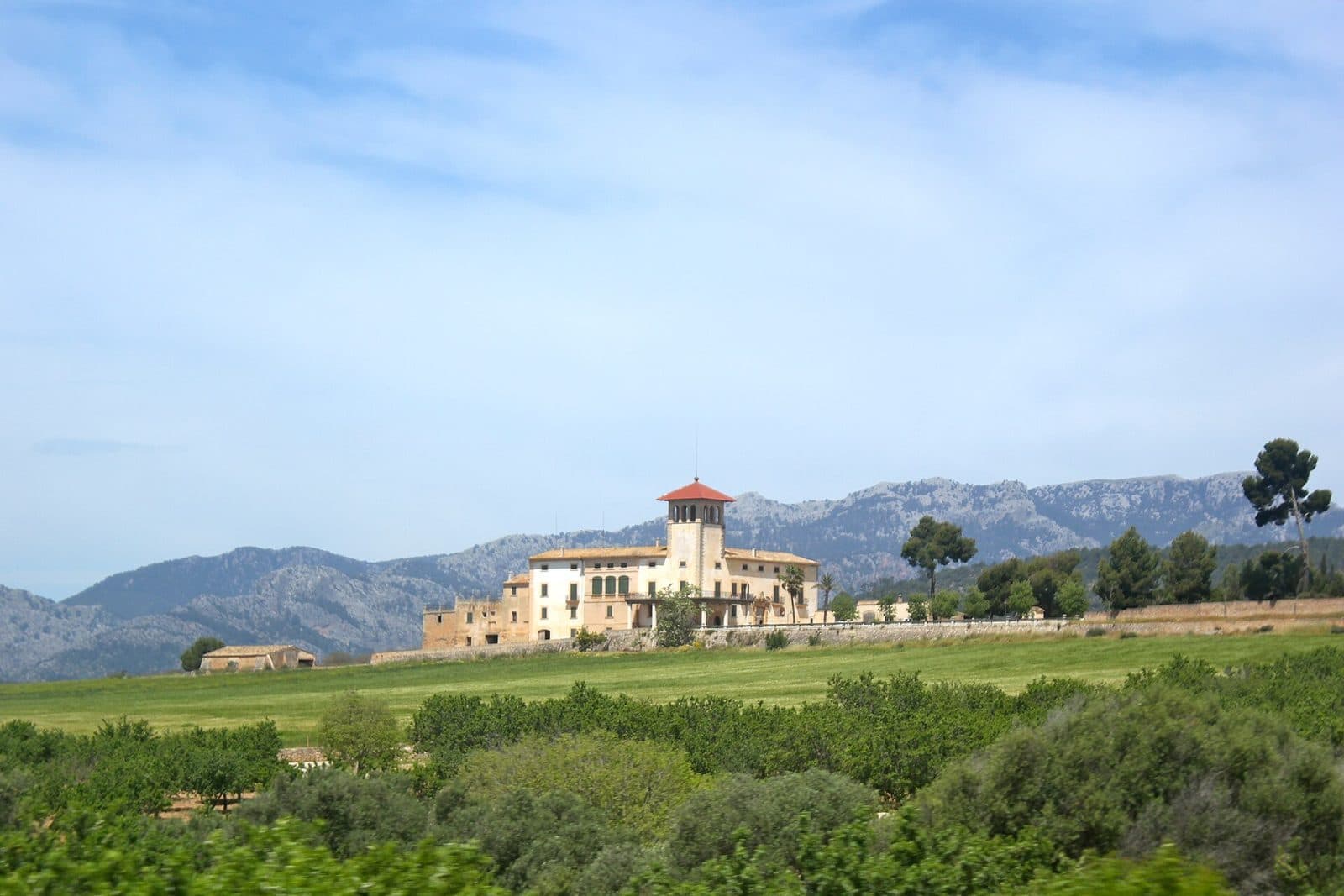
The landscape around Sa Cabaneta is considered part of the Son Caulelles valley. Almond, lemon and orange trees, patches of woodland and scattered houses with natural-stone walls characterise traditional descriptions of the surrounding area and connect the town with a cultivated landscape.
Today, Sa Cabaneta is also part of the more densely populated area north of Palma. The capital is easy to reach, and major transport routes are nearby. Sa Cabaneta is described as a residential location near Palma, while its links to craftsmanship remain visible. This combination can be clearly seen among the workshops, main road, church and spacious residential areas.
Sights in Sa Cabaneta
Museu del Fang de Marratxí
The Museu del Fang is the most important place for anyone wishing to understand why Marratxí, and Sa Cabaneta in particular, is associated with pottery. Its name refers directly to the material: fang means clay or earth in Catalan. The focus is on the pottery tradition, its vessel shapes and the knowledge of local potters.
A museum visit provides the necessary background for the workshops in town. Afterwards, a greixonera can be understood as a characteristic form of local pottery. Precisely because Sa Cabaneta is not a place with a long succession of monumental sights, the museum is especially important: it opens up a subject closely connected with everyday life, food and the artisanal development of the area.
Current opening hours should be checked before travelling, particularly if the museum is the main reason for the excursion. Without a museum visit, the pottery tradition remains visible in the shops and workshops, but the historical context is much more limited.
Església de Sant Marçal
The church of Sant Marçal is the historical and visual landmark of Sa Cabaneta. Its significance extends beyond the present building, as Marratxí has a documented ecclesiastical tradition dating back to the 13th century. The church therefore recalls the period after the conquest by Jaume I, when the ecclesiastical organisation of the island’s interior was restructured.
For visitors, Sant Marçal is interesting less because of a long list of individual artworks than because of its place within the townscape. The church, its forecourt and the streets leading to it convey a better impression of how Sa Cabaneta developed than the newer residential areas alone. During services and religious occasions, visitors should respect ongoing activities; a church of this kind is not merely a sightseeing attraction.
L’Albelló
L’Albelló is located at the entrance to the town and is one of the specifically documented places for pottery from Sa Cabaneta. The workshop or shop is particularly useful for visitors because it offers a chance to see the shapes that continue to define local pottery today. These include shallow and rounded greixoneres.
A visit is fundamentally different from ordinary souvenir shopping. The focus is on functional objects, materials, shapes and regional production. Combining the Museu del Fang with L’Albelló provides both the cultural and historical background and an impression of how the tradition continues today. Current business hours should be checked in advance, as workshops do not necessarily follow the continuous opening patterns of tourist shopping streets.
Townscape and the Son Caulelles valley
The transition between the older centre, main road, workshops and rural outskirts is worth seeing. The surrounding area contains rustic homes and country houses, natural-stone walls and areas planted with almond and lemon trees. The Son Caulelles valley provides the landscape setting for these surroundings.
This is not a dramatic mountain basin, but a gentler cultivated landscape between Palma and the island’s interior. This is important for understanding the town: Sa Cabaneta reveals itself through details and connections rather than through a single viewpoint. A slow walk is therefore more rewarding than simply driving through.
Sights in Sa Cabaneta
Food and Drink
Can Marçal
Can Marçal is known as a bar-restaurant on the main road through Sa Cabaneta and is one of the town’s best-known establishments by name. Its approach is classic and straightforward: the menu includes fish and meat dishes, with the shoulder of lamb receiving particular mention. The restaurant therefore suits a town whose food scene primarily serves everyday life rather than a tourist promenade.
For visitors, Can Marçal offers a sensible way to ensure that an excursion does not end with the museum and pottery shop. Its location on the main road makes it easy to find, while also conveying something of Sa Cabaneta’s actual rhythm. It is more a place for a regular meal than a staged panoramic terrace or nightlife destination. Anyone making a special journey should check the current opening days beforehand.
Clay greixonera
The pottery made in Sa Cabaneta includes greixoneres, which are produced in shallow or rounded forms. The Museu del Fang provides historical context for these vessels, while an active pottery shows how the tradition continues.
Anyone wishing to buy a greixonera should ask about its intended use. Decorative ceramics and tableware designed for the kitchen should not automatically be treated in the same way. Guidance from the workshop on use, cleaning and any necessary preparation of the clay is more important than general advice.
Mallorcan daily life instead of a restaurant strip
Sa Cabaneta is not a culinary excursion destination with bars and restaurants lined up one after another. Food here is part of ordinary local life. For some visitors, that is precisely the appeal: a meal is combined not with a beachfront promenade or an old-town stroll, but with a church, museum, workshop and a walk through an inhabited town.
Traditional baked goods and confectionery are also highlighted in Marratxí’s tourism offering as part of the local commercial culture. For specific choices, however, checking current information is advisable, as small bakeries and family-run businesses are more likely to change their opening hours and range than historic buildings. Anyone travelling solely for a particular product should confirm its availability beforehand.
Eating, drinking and staying in Sa Cabaneta
The best-rated businesses from our directory, ordered by Google rating — not by advertising.
Restaurants
Cafés and bakeries
Hotels and fincas
Shopping and Craftsmanship
Pottery from Sa Cabaneta
Pottery is the most obvious and characteristic souvenir from Sa Cabaneta. Unlike in many holiday resorts, the product’s connection with the town does not come from a souvenir trade created at a later date. Pottery belongs to Marratxí’s established commercial history, and Sa Cabaneta is one of its visible centres.
Traditional pottery and its shapes are of particular interest, including shallow and rounded greixoneres. The greixonera exemplifies this connection. Its regional significance is best understood by visiting the Museu del Fang before shopping. Afterwards, it is easier to distinguish consciously between traditional forms, modern variations and purely decorative pieces.
L’Albelló
L’Albelló is the shopping destination most clearly associated with pottery from Sa Cabaneta. The shop at the entrance to the town is noted for its selection and is therefore also suitable for visitors who are not planning an extensive shopping trip. Rather than a street full of souvenir shops, there is a specific destination devoted to craftsmanship.
When buying larger or delicate pieces, their later transportation should be considered. Clay is heavy and fragile, and traditional vessel shapes cannot always be packed conveniently in hand luggage. People living in Mallorca, by contrast, can look for practical cookware and serving dishes and receive direct advice on their use.
Marratxí’s pottery network
Sa Cabaneta does not stand alone in its connection with ceramics. The craft belongs to the cultural profile of the entire Marratxí area; active producers include Can Bernadí Nou, Terra Cuita and businesses specialising in siurelleria and gerreria.
This pottery network is interesting for a themed excursion. Sa Cabaneta, with the museum and L’Albelló, can serve as the starting point, while other workshops in the Marratxí area can be included. Shopping thus becomes a small exploration of the local craft landscape.
Activities and Excursions
Walks in the Son Caulelles valley
The surroundings of Sa Cabaneta are suitable for quiet walks through a cultivated landscape with patches of woodland, fruit trees, natural-stone walls and scattered development. The paths are not alpine in character and should not be confused with the marked mountain routes of the Serra de Tramuntana. Their appeal lies in the transition between village, residential area and rural Mallorca.
When planning, bear in mind that Sa Cabaneta is part of the more densely populated outskirts of the capital. Not every road is a quiet country lane, and traffic requires attention on routes without a comfortable verge. Walkers should therefore choose quiet side roads and respect private access routes.
Pòrtol and Marratxí
Sa Cabaneta is closely connected with Marratxí’s pottery tradition. Anyone interested in workshops and functional Mallorcan ceramics should not view the area as a collection of isolated sights. The museum, potteries and settlements together create the more complete picture.
Sa Rua also connects Pòrtol, Sa Cabaneta and Sant Marçal. This route shows how closely the individual town centres are linked culturally. Advance planning is advisable when exploring several workshops.
Santa Maria del Camí
Santa Maria del Camí is a natural additional destination in the island’s interior. The historical connection extends back to Marratxí’s early church, which was once assigned to Santa Maria del Camí. Today, the town is also a useful transport hub for the surrounding area and creates a transition from the capital region to central Mallorca.
Combining it with Sa Cabaneta works especially well when the day is not focused solely on monumental sights. Craftsmanship and local history in Sa Cabaneta can then be combined with Santa Maria. This creates a more varied excursion without artificially presenting Sa Cabaneta as a full-day sightseeing destination.
Palma and the Serra de Tramuntana
Because of its location north of Palma, Sa Cabaneta is suitable as a stop between the capital and the island’s interior. Palma is easy to reach, while Sa Cabaneta offers a contrasting focus on craftsmanship and residential life. Visitors travelling from Palma can therefore easily plan the town as a quiet morning or afternoon stop.
Routes towards the Serra de Tramuntana are also easy to reach from the area. Sa Cabaneta itself, however, is not part of the mountains. It makes more sense to combine the town with an onward journey to a clearly defined mountain destination than to expect a Tramuntana hike here. The same applies to a beach day: Sa Cabaneta is inland and has neither a coast nor a bathing cove; beaches require an onward journey.
Festivals and Events
Sa Rua de Marratxí
Sa Rua is the most important recurring festival specifically associated with Sa Cabaneta. The carnival parade usually passes through Pòrtol, Sa Cabaneta and Sant Marçal. Costumes, music, colour and communal celebration define its character. The event is regarded as the opening of Mallorca’s carnival festivities and therefore attracts attention beyond Marratxí as well.
For visitors, Sa Rua is a rare opportunity to experience Sa Cabaneta as more than a quiet residential and craft town. During the parade, the streets themselves become the event space, and the connection between the neighbouring town centres becomes more apparent than on ordinary days. Anyone visiting specifically for Rua should check the current route, starting time and traffic arrangements, as the procession changes normal access and parking conditions.
The date follows the carnival period and therefore does not fall on the same calendar day every year. More generous travel planning is advisable than for a normal museum visit. Road closures and large numbers of visitors can affect the final sections of the journey. At the same time, the shared route through Pòrtol, Sa Cabaneta and Sant Marçal is an essential part of the festival, not merely a logistical side effect.
Getting There and Around
By car
Sa Cabaneta lies north of Palma, close to the transport routes connecting the capital with Marratxí and the island’s interior. Travelling by car is particularly practical if you plan to visit potteries or neighbouring towns in addition to the church and museum. The points of interest are spread across several destinations, and Marratxí’s craft area covers several towns.
Within the town, the main road is the most important point of orientation. For the final section, it is better to navigate to the specific destination—such as Sant Marçal, Museu del Fang or L’Albelló—rather than merely entering the town’s name. This helps avoid ending up in a residential area. During events and at particularly busy times, access routes may change; signs and temporary closures then take priority.
By public transport
Sa Cabaneta can be reached via the transport network serving the Palma area. Nearby bus stops include Santa Maria Estació, Aparcament Son Gulla, IES Santa Maria and Es Caülls Estació. The specific destination within the town is decisive when planning the journey, as the final stage may require a connection or an additional walk depending on the service.
Without a car, a specifically planned visit works better than moving spontaneously between several workshops. The timetable, return journey and walking route should be checked together before setting out. For commuters, proximity to several transport options is an advantage, although a home within the town area is not automatically within walking distance of a suitable bus stop.
On foot and by bicycle
The church and local streets within the older part of town can be explored on foot. Once the Son Caulelles valley, more remote residential areas or additional pottery businesses are included, the distances become longer and more dependent on the road network. Pedestrians should be especially careful on sections without a wide verge.
Cycling is generally suitable for journeys through the flatter surroundings of Palma and Marratxí. Sa Cabaneta is not, however, a car-free cycling destination. Busy access roads and quieter side streets lie close together, making a route chosen in advance more important than the shortest line on the map. For purely recreational rides, side roads are more pleasant than the main routes.
Bus lines to Sa Cabaneta at a glance
| Line | Route | Departures/day | First | Last |
|---|---|---|---|---|
| T3 | Palma - Manacor | 154 | 06:23 | 23:23 |
| T2 | Palma - sa Pobla | 146 | 06:03 | 22:47 |
| T1 | Palma - Inca | 128 | 06:13 | 22:18 |
| 343d | Santa Eugènia - Santa Maria | 12 | 08:40 | 19:30 |
From the official GTFS feeds (TIB/SFM), no real-time data. The figures cover all stops in the town; weekend and holiday services differ — check with the operator before travelling.
Getting there by bus
Santa Maria Estació (211) · 1.2 km as the crow flies
- T1Palma - Inca · Mon-Fri
- T2Palma - sa Pobla · Daily
- T3Palma - Manacor · Daily
Aparcament Son Gulla (56003) · 1.4 km as the crow flies
- 343dSanta Eugènia - Santa Maria · Mon-Fri
IES Santa Maria (56002) · 1.7 km as the crow flies
- 343dSanta Eugènia - Santa Maria · Mon-Fri
Es Caülls Estació (210) · 2.9 km as the crow flies
- T1Palma - Inca · Mon-Fri
- T2Palma - sa Pobla · Daily
- T3Palma - Manacor · Daily
Timetable data: official GTFS feeds (TIB/EMT), no real-time — check with the operator before travelling.
Living in Sa Cabaneta
A residential town rather than a holiday resort
Sa Cabaneta is a residential town, not a coastal resort. The main road, neighbourhoods, craft businesses and routes to Palma shape the town, which nevertheless remains quieter than Palma.
For residents, this means a more local everyday atmosphere, but also fewer tourist services directly on the doorstep. Those who prefer an inhabited town with its own craft identity and a short connection to the capital region will find a different balance in Sa Cabaneta.
Commuting to Palma
The location north of Palma is one of Sa Cabaneta’s most important practical advantages. Major roads are easy to reach, and bus services operate in the surrounding area. The town can therefore serve commuters as a residential base outside the city without requiring the isolation of a mountain village.
Actual everyday practicality depends heavily on the precise location of the home. A house on the outskirts, a flat near the main road and a property towards Son Caulelles can differ significantly in terms of access to bus stops or main roads. Before moving, the usual route to Palma should be tested at personal commuting times. A general distance figure is less informative than the specific journey from the front door to the workplace.
Living in the centre and on the outskirts
The townscape combines more village-like streets with spacious residential areas and rural houses with natural-stone walls. Development becomes less dense towards the Son Caulelles valley, while the main road is closer to traffic and everyday routes. This creates different residential qualities: more peace, space and connection with the property on the outskirts, but shorter journeys and a greater awareness of traffic in more central locations.
Sa Cabaneta is therefore not suited to only one particular type of household. Working residents commuting to Palma may appreciate the connections; families and people living permanently in Mallorca will find a town without a pronounced holiday-development character. Anyone wishing to live entirely without a car must choose more carefully and check access to buses and daily errands for each specific address.
Local residents and newcomers
The town is described as locally oriented and residential, but it also lies within Palma’s immediate sphere of influence. This creates space for long-established families, craft businesses and people who live in Marratxí because the capital is easy to reach.
For newcomers, the pottery tradition is more than a decorative mark of identity. The museum, workshops, church and carnival parade provide specific points of access to local life. Anyone wishing to live here permanently will understand the town better through these institutions and events than through its proximity to Palma alone.
Practical Information for Your Visit
Plan your visit around a clear focus
Sa Cabaneta is best explored through a particular theme. For culture and craftsmanship, the Museu del Fang and L’Albelló form the strongest combination; Sant Marçal adds local history. As the museum, workshop and restaurants may follow different opening schedules, they should not be assumed to form a seamless programme without checking first.
A morning or afternoon is enough for a focused visit to the town centre and its main stops. Anyone including several potteries in the Marratxí area, Pòrtol or Santa Maria del Camí should turn it into a larger excursion. The town itself does not require a hectic sequence of sightseeing stops.
Orientation
The museum and workshop should determine the order of the day, as a closed craft business cannot simply be replaced by any other item on the itinerary. The names of the individual destinations are useful for orientation: the church, museum, main road and town entrance form the practical reference points.
Set the right expectations
Sa Cabaneta has no beach, harbour or large nightlife district. It is worth visiting for its pottery, Sant Marçal and insight into an inhabited part of the Palma area.
The most convincing option is to combine it with Pòrtol, Santa Maria del Camí or Palma. This leaves enough time to appreciate Sa Cabaneta’s distinctive character without expecting a full-day sightseeing programme from the town. Different conditions apply during Sa Rua: greater activity, altered traffic routes and an early arrival should then be anticipated.
Latest news from Marratxí
- Palma transport push: plan sought with three neighbours
- 27 Mallorca towns lack Alcover and La Balanguera
- Marratxí gets green light for 60 public homes
- Mallorca ceramics show: fire shapes Català Roig’s art