
Coll Bardolet in Valldemossa: Art Museum and Cultural Foundation
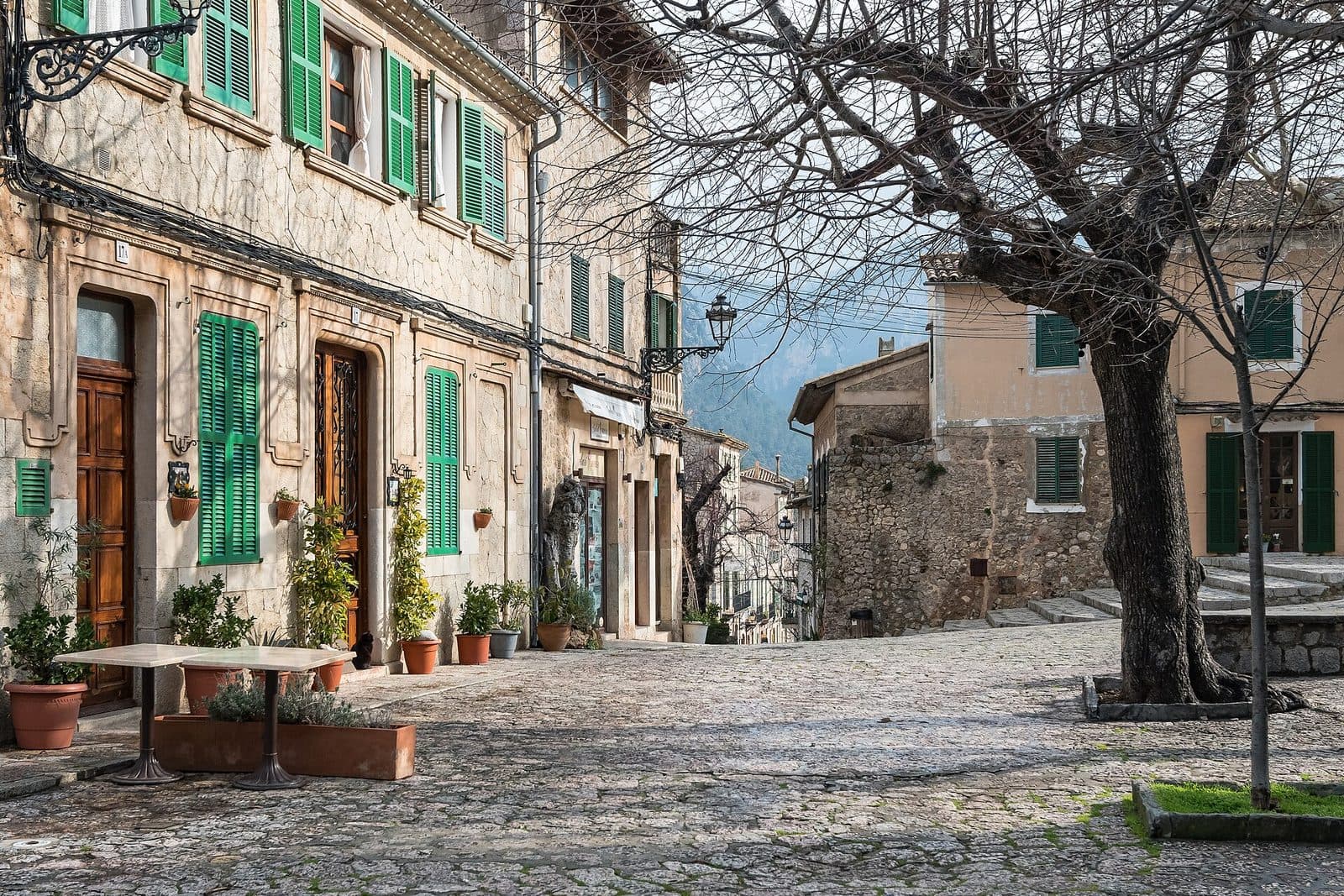

In the heart of Valldemossa, Coll Bardolet offers a different perspective on Mallorca. The museum of the Fundació Cultural Coll Bardolet is dedicated to an artist who focused not on the island's famous monuments but on its landscapes, flowers, people and folk dances. His paintings are colorful, full of movement and usually immediately accessible—even to visitors who rarely lose themselves in art exhibitions.
The tour leads through a renovated building in the town center. The permanent exhibition brings together Mallorcan landscapes, still lifes and the dance scenes for which Josep Coll Bardolet became particularly well known. The museum also presents temporary exhibitions by other artists and serves as a venue for lectures, concerts and other cultural events.
Coll Bardolet is especially worthwhile as a peaceful counterpoint to Valldemossa's heavily visited historic attractions. The museum is manageable in size, the works can be viewed up close, and its themes perfectly match the place outside its doors: many subjects emerged from Coll Bardolet's decades-long engagement with Mallorca and Valldemossa. Anyone expecting vast museum halls and an encyclopedic art collection has come to the wrong place. Those who want to understand how a Catalan painter distilled color, light and movement into a personal vision of the island will find a focused portrait of the artist—and, at the same time, a vibrant cultural venue for the village.
History and significance
The foundation began not with an anonymously assembled museum collection, but with the artist's express wish. Josep Coll i Bardolet wanted to leave part of his work and private collection to the community where he had lived for decades. This bequest led to the creation of the Fundació Cultural Coll Bardolet in January 2005.
Josep Coll i Bardolet
Coll Bardolet was born in 1912 in Campdevànol, Catalonia. After his family moved to Vic, he began drawing there, worked as a painter and decorator, and received artistic training. He later studied landscape painting in Olot; further stages of his education and life took him to France and Brussels. Mallorca eventually became his new home.
The artist lived in Valldemossa from 1944 onward. This long connection is crucial to understanding the museum: for him, the island was not merely a temporary travel destination, but a living environment and recurring subject. Landscapes, architecture, flowers and Mallorcan folk dances run through an extensive body of work encompassing watercolors, etchings, oil paintings and gouaches. His style is often classified as Impressionist; its most characteristic qualities are its luminous colors and interest in movement.
Valldemossa honored this connection in 1987 by naming Coll Bardolet an adopted son of the municipality. Three years later, he received the Creu de Sant Jordi from the Catalan government. When he died in Valldemossa in 2007, part of his work remained permanently linked to the town through the foundation. Other works went to institutions including the museum of the Santuari de Lluc, but the house in Valldemossa remains the center for exploring his relationship with the island.
Founding the foundation
Established in 2005, the foundation pursues two interconnected goals: it preserves, exhibits and interprets Coll Bardolet's visual art while also promoting culture in different forms. The building is therefore more than a monographic museum. Alongside the permanent exhibition, its program includes temporary exhibitions, concerts, lectures, screenings and other events.
The foundation's governing body includes representatives of the Government of the Balearic Islands, the municipality of Valldemossa and the Island Council of Mallorca, as well as the artist's relatives and friends. This composition reflects the character of the institution: Coll Bardolet is simultaneously a personal legacy, a municipal place of remembrance and a public cultural institution.
A painted vision of Mallorca
Bardolet's significance rests not only on individual subjects, but also on the influence his work had on visual perceptions of Mallorca. In particular, the dancers in traditional clothing hardly seem to stand still in his paintings. Billowing fabrics, raised arms and swirling skirts become areas of color and paths of movement. Alongside them are landscapes and views of Valldemossa in which familiar places appear through the eyes of a longtime resident.
The museum therefore preserves more than the work of a painter. It also shows how Mallorca was artistically perceived and portrayed over the course of the past century: not with documentary sobriety, but as a colorful, rhythmic and often joyful experience.
What to see
The arrangement of the rooms immediately reveals that Coll Bardolet fulfills two purposes. One floor is permanently dedicated to the artist, another is reserved for changing perspectives, while the ground floor is used for events. There is also a screening room and a patio with an amphitheater. The visit therefore combines focused contemplation of art with the character of a small cultural center.
The permanent exhibition
The heart of the museum is on the first floor: the permanent exhibition of paintings by Josep Coll Bardolet. It provides insight into the themes to which he returned again and again. Mallorca appears as both a landscape and a lived environment, not merely a holiday backdrop. Views of the island are displayed alongside still lifes, floral compositions and scenes of traditional dance.
The manageable presentation is one of the museum's strengths. Instead of moving through an overwhelming quantity of works, visitors can compare the application of paint, lines and recurring subjects more closely. This is especially valuable for those previously unfamiliar with Coll Bardolet. Within a compact tour, it becomes clear how differently the artist treated movement and stillness: here, figures whirl through the pictorial space; there, blossoms, vessels or landscape forms capture a quieter moment.
Mallorcan landscapes
The landscape paintings combine Coll Bardolet's training as a landscape artist with his long familiarity with Mallorca. His work includes natural scenery as well as architectural views and specific places, including subjects from Valldemossa and the surrounding area. After a walk through the village, comparing the painted place with its present-day appearance is particularly rewarding.
No one should expect topographical accuracy like that of a map. The paintings are shaped by color, atmosphere and artistic selection. Coll Bardolet distills a landscape rather than inventorying it in full. This also makes the collection interesting for visitors who know Mallorca well: familiar forms are rearranged through the artist's gaze.
Folk dances and movement
The depictions of Mallorcan folk dances are the most distinctive works. Coll Bardolet was less interested in a frozen display of traditional dress than in the moment of movement. Skirts swing, arms carry the rhythm onward, and headscarves and loose trousers become part of the composition. The figures derive their expression not only from faces, but also from posture, fabric and color.
Approaching the paintings slowly reveals how the direction of movement is constructed. Lines travel across several figures, while areas of color repeat or contrast with one another. At first glance, the subject appears light and spontaneous; a closer look reveals a carefully organized pictorial structure. These dance scenes explain especially clearly why Coll Bardolet became known and popular in Mallorca as a painter of folk life.
Floral compositions and still lifes
Floral paintings and still lifes provide a quieter counterpoint, although the colors are rarely restrained here either. Blossoms become dense compositions, while vessels and other objects give the paintings stability. Comparing these works with the dance scenes is worthwhile: in both groups, Coll Bardolet uses rhythmic repetition, but in the still lifes movement arises from shapes and accents of color rather than human figures.
These works prevent the artist from being reduced to a single popular subject. They demonstrate his interest in everyday objects and in the compositional effect of plants. Together with the landscapes, they create a broader picture of his work.
Temporary exhibition galleries
The second floor is devoted to temporary exhibitions. Coll Bardolet himself is not necessarily the focus there; the foundation also presents work by other artists, particularly artists from the Balearic Islands, as well as photography and other artistic projects. The specific content changes with the foundation's program, so a return visit may offer an entirely different complement to the permanent exhibition.
This rotation keeps the museum open to contemporary art. The foundation does not treat Coll Bardolet's legacy as a closed chapter of the past, but places it within an ongoing cultural program. It is therefore worth checking the current exhibition schedule before visiting.
Ground floor, screening room and patio
The ground floor hosts lectures, concerts and special cultural events. A dedicated screening room expands the venue's possibilities. The patio with its amphitheater is used for open-air events and makes it clear that the foundation was not designed solely for quiet tours through picture galleries.
These areas depend on the current program and are not experienced in the same way during every museum visit. Anyone coming specifically for a concert, opening or lecture will encounter Coll Bardolet as an event venue; during a regular tour, the art collection remains the main focus.
Visiting Coll Bardolet
The museum's most pleasant quality is its focus. Coll Bardolet requires neither half a day nor any preparation in art history. The tour can be planned as an attraction in its own right, but it works equally well as a cultural break during a walk through Valldemossa.
Suggested route through the museum
It makes sense to begin by viewing the permanent exhibition carefully and not to treat the temporary exhibition as a mere appendix. On the first floor, visitors discover the artist's lifelong themes and style; on the second floor, the perspective shifts to other positions. Whether the ground floor, screening room or patio is also in use depends on the current cultural program.
The dance paintings make a good starting point because their movement and color have an immediate impact. Afterward, the landscapes, still lifes and floral compositions are easier to read as parts of the same body of work. Anyone who has already explored Valldemossa on foot will pause more often at the local views and landscape subjects. Conversely, a museum visit can sharpen the eye for a subsequent walk through the village.
How much time should you allow?
The museum is considered small and can be visited relatively quickly. Even so, specifying a fixed visit duration would make little sense: it depends on how closely the works are viewed, which temporary exhibition is running and whether an event is taking place. A compact tour is sufficient for a brief overview; art enthusiasts should allow more flexibility to compare subjects and painting techniques.
Precisely because the collection is manageable, it is worth resisting the urge to simply check off one picture after another. A few minutes in front of a dance scene or landscape reveal more than a quick walk through every room. Visitors with limited time in Valldemossa can still gain a coherent portrait of the artist without having to reorganize their entire day in the village.
Crowds and the best time to visit
Valldemossa is one of Mallorca's best-known excursion destinations. The museum itself, however, offers a quieter and more intimate experience than the village's major historic attractions. In its compact rooms, a group arriving all at once is naturally more noticeable than in a large gallery. Visitors with flexible schedules can first walk around the village and enter the museum when the entrance area appears quiet.
It is not possible to derive a universally best time of day from this. Coordinating the visit with your personal plans in the village and with possible foundation events is more important. Concerts, lectures or exhibition openings change the character of the experience and may provide a reason to visit at a specific time.
Opening hours, admission and current program
Opening hours and admission conditions should be checked before visiting, as they may change. This is especially important if Coll Bardolet is the main reason for traveling to Valldemossa. It is also worth checking the current temporary exhibition and announced cultural events. A short museum tour may then become a visit featuring a concert, lecture or special exhibition.
Information accompanying the works may be primarily in Catalan and Spanish. Visitors who do not read these languages can nevertheless understand the exhibition through its subjects, techniques and compositions. For a deeper engagement, it is helpful to become familiar beforehand with Coll Bardolet's life and his connection to Valldemossa.
Getting there and parking
The journey does not end at a freestanding museum outside the village, but in the center of Valldemossa. This is crucial for planning: the stated road distances and driving times take you as far as Valldemossa. The final stretch to the foundation is covered on foot through the compact village center.
From Palma Airport
The drive from Palma Airport to Valldemossa covers 25 road kilometers and takes around 30 minutes. The route initially follows the Ma-20 and then the Ma-1110. On the final section, the road approaches the Serra de Tramuntana; bends and bicycle traffic may require an attentive, appropriately adjusted speed.
After arriving in Valldemossa, continue on foot from your chosen parking area. The foundation is located in the village center and can easily be included in a walk through the central lanes. Planning should therefore account not only for driving time, but also for finding parking and walking to the museum.
From central Palma
It is 19 road kilometers from central Palma to Valldemossa. The drive via the Ma-1110 takes around 35 minutes. The fact that the shorter route can take slightly longer than the airport route is due to the different starting point within the road network and to city traffic.
This information also applies only as far as Valldemossa, not directly to the museum door. In the historic, densely built village center, it is more practical to leave the car in a designated parking area and walk to Coll Bardolet rather than planning to drive directly to the entrance.
Parking in Valldemossa
Valldemossa has designated parking areas. Particularly on busy days, allow some patience when looking for a space. Streets outside the center may be steeply inclined; this should be taken into account when parking the vehicle and during the subsequent walk. The museum itself is not a destination that requires a separate drive through every narrow street in the village.
The most practical approach is to plan for the village as a whole. Leave the vehicle parked during the museum visit, the walk and any further sightseeing. This avoids changing parking spaces several times, and the route to Coll Bardolet becomes part of the village tour.
By bus
For arrival by public transport, the Valldemossa 1 and Valldemossa 2 stops provide the main points of reference. From there, continue on foot through the village. The Ermita de la Trinitat 2 stop is also in the wider area, but it is not the most obvious reference point for visiting a museum in the village center.
As timetables may vary by season or on particular days of the week, current connections should be checked before departure. The advantage of traveling by bus is that it eliminates both the search for parking and driving along the more winding approach road. Once in Valldemossa, the visit can continue entirely on foot.
Bus lines to Coll Bardolet at a glance
| Line | Route | Departures/day | First | Last |
|---|---|---|---|---|
| 203 | Valldemossa / Deià | 152 | 06:47 | 22:34 |
From the official GTFS feeds (TIB/SFM), no real-time data. The figures cover all stops in the town; weekend and holiday services differ — check with the operator before travelling.
Getting there by bus
Valldemossa 1 (63002) · 0.2 km as the crow flies
- 203Valldemossa / Deià · Daily
Valldemossa 2 (63001) · 0.2 km as the crow flies
- 203Valldemossa / Deià · Daily
Ermita de la Trinitat 2 (63011) · 1.8 km as the crow flies
- 203Valldemossa / Deià · Daily
Ermita de la Trinitat 1 (63003) · 2.1 km as the crow flies
- 203Valldemossa / Deià · Daily
Timetable data: official GTFS feeds (TIB/EMT), no real-time — check with the operator before travelling.
Things to see nearby
Outside the museum doors, the world of the paintings continues in a different form. Valldemossa lies in northwestern Mallorca in the Serra de Tramuntana and is characterized by stone houses, narrow lanes and plant-covered façades. Coll Bardolet lived here from 1944 onward; some views of the village and its surroundings found their way into his work.
Valldemossa after the museum visit
A walk through Valldemossa is the most natural continuation of the museum tour. After viewing the landscapes and architectural scenes inside, visitors become more aware of the façades, roofs, plants and the village's tiered position in the mountains. The appeal does not lie in locating every painted subject exactly, but in comparing Coll Bardolet's selection and sense of color with the village as it appears today.
The village's compact layout makes it possible to include Coll Bardolet in a longer walk without any additional transfer. Cafés, small shops and green lanes are located in the same village as its well-known historic attractions. The museum is therefore suitable both as the beginning of a day in Valldemossa and as a peaceful conclusion.
Charterhouse and King Sancho's Palace
The Charterhouse of Valldemossa and King Sancho's Palace form the village's historic focal point. The Charterhouse is particularly famous for Frédéric Chopin and George Sand, who spent the winter of 1838/39 in Valldemossa. A visit there tells a different story from Coll Bardolet: monastic life, architecture, music and literary history take center stage.
Combining the two places nevertheless makes sense. While the Charterhouse reveals Valldemossa's international fame and layers of history, the foundation presents the perspective of an artist who made his home here for decades. A successful day in the village needs no more elaborate program; these two perspectives alone create a strong contrast.
Sant Bartomeu church and village lanes
The Sant Bartomeu church can be incorporated into a walk through the lanes. Around it, terracotta pots, flowers and sand-colored house walls reveal the everyday side of Valldemossa that fits well with Coll Bardolet's interest in flowers, architecture and familiar island subjects.
It is advisable not to follow only the main routes between the parking areas, Charterhouse and center. The village also reveals itself through slower observations of doorways, plants and small squares. Coll Bardolet does not provide a walking route, but he does offer visual preparation: after the exhibition, color and rhythm are more readily perceived as part of the village scene.
Culture instead of rushing between sights
Coll Bardolet works best when the museum is not treated as another compulsory stop between as many attractions as possible. The foundation offers an opportunity to discover Valldemossa through a longtime resident. A leisurely tour of the exhibition, a break in the village and then one of the larger historic attractions make a fitting combination.
Visitors who check the current events program can also combine their stay with a temporary exhibition, lecture or concert. Valldemossa is then experienced not merely as a historic excursion village, but as a place where art continues to be exhibited and cultural events are still organized.
The place it belongs to
Valldemossa in the place guidePractical visitor information
Coll Bardolet is not a large museum with endless galleries. That is precisely its practical appeal: the foundation can be visited without complicated day planning, although it rewards careful attention if the differences between groups of works are to become visible.
What to expect from the museum
The focus is a monographic permanent exhibition. Visitors should therefore not expect a comprehensive history of Mallorcan art or a collection of world-famous masters from different periods. The tour concentrates on Coll Bardolet's landscapes, still lifes, floral compositions and folk dances. The temporary exhibition broadens this focus, but its content depends on the current program.
Nor is every part of the building always included in the regular museum tour. The ground floor, screening room and patio are used primarily for cultural activities. Anyone wishing to experience the patio as an event venue or attend a concert should look specifically for a suitable date.
Visiting with children
For families, the manageable size can be an advantage. The dance paintings in particular offer easily recognizable movement, vivid colors and figures that can be discussed without any prior knowledge of art history. Flowers and landscapes also lend themselves to simple observation games: Which colors recur, where are the dancers moving, and what distinguishes a quiet still life from a dance scene?
However, visitors should not expect a children's or interactive museum. The available sources do not document permanently installed play areas or special family facilities. Any workshops or educational activities depend on the foundation's current cultural program and should be checked in advance.
Language and artwork labels
Some information may be provided mainly in Catalan and Spanish. This has only a limited effect on immediate access to the paintings, but it may matter for biographical and art-historical explanations. Brief preparation on the artist's life makes it easier to understand the context: born in Catalonia, trained in places including Vic and Olot, and based in Valldemossa from 1944 onward.
Anyone wishing to understand more should look for recurring themes rather than trying to translate every label in full. Landscape, dance, flowers and still life form a clear common thread. The techniques used—including watercolor, oil, gouache and etching—also help visitors perceive differences between individual works.
Clothing and walking around the village
No special clothing is required for the museum itself. The more important consideration is the subsequent walk through Valldemossa. Comfortable shoes are useful on sloping streets and during a longer tour of the village. Anyone parking farther away should regard the walk as part of the visit and not calculate only the time spent in the exhibition rooms.
In summer, the main strain is less likely to occur indoors than during the village walk and the route from the parking area. A museum visit can then provide a sheltered break between walks through Valldemossa. In changeable weather, the foundation is also a useful addition without committing the entire excursion to a lengthy indoor visit.
Local insider tips
Start with the dance paintings
The folk dances reveal Coll Bardolet's treatment of movement especially clearly. First look at the skirts, arms and recurring areas of color; afterward, the quieter still lifes and floral paintings also become easier to understand.
Do not skip the second floor
The painter's permanent exhibition is on the first floor, but the second is reserved for temporary exhibitions. The current program may give the visit a completely different perspective on art from the Balearic Islands or contemporary art.
Check the cultural program in advance
Coll Bardolet is more than a collection of paintings. Lectures, concerts and other events take place on the ground floor, in the screening room and in the patio. The right date can turn a museum tour into a cultural evening.
See the paintings before walking through the village
Visitors who first view the landscapes and local scenes will notice Valldemossa's façades, plants and mountain setting more consciously afterward. The museum and the walk thus tell two versions of the same place.
Follow the movement instead of counting subjects
In Coll Bardolet's dancers, the essential quality lies not only in traditional dress and color. Let your eyes follow the lines across several figures: swirling fabrics and raised arms give the entire composition its rhythm.