
Frederic Chopin Museum in Valldemossa Charterhouse
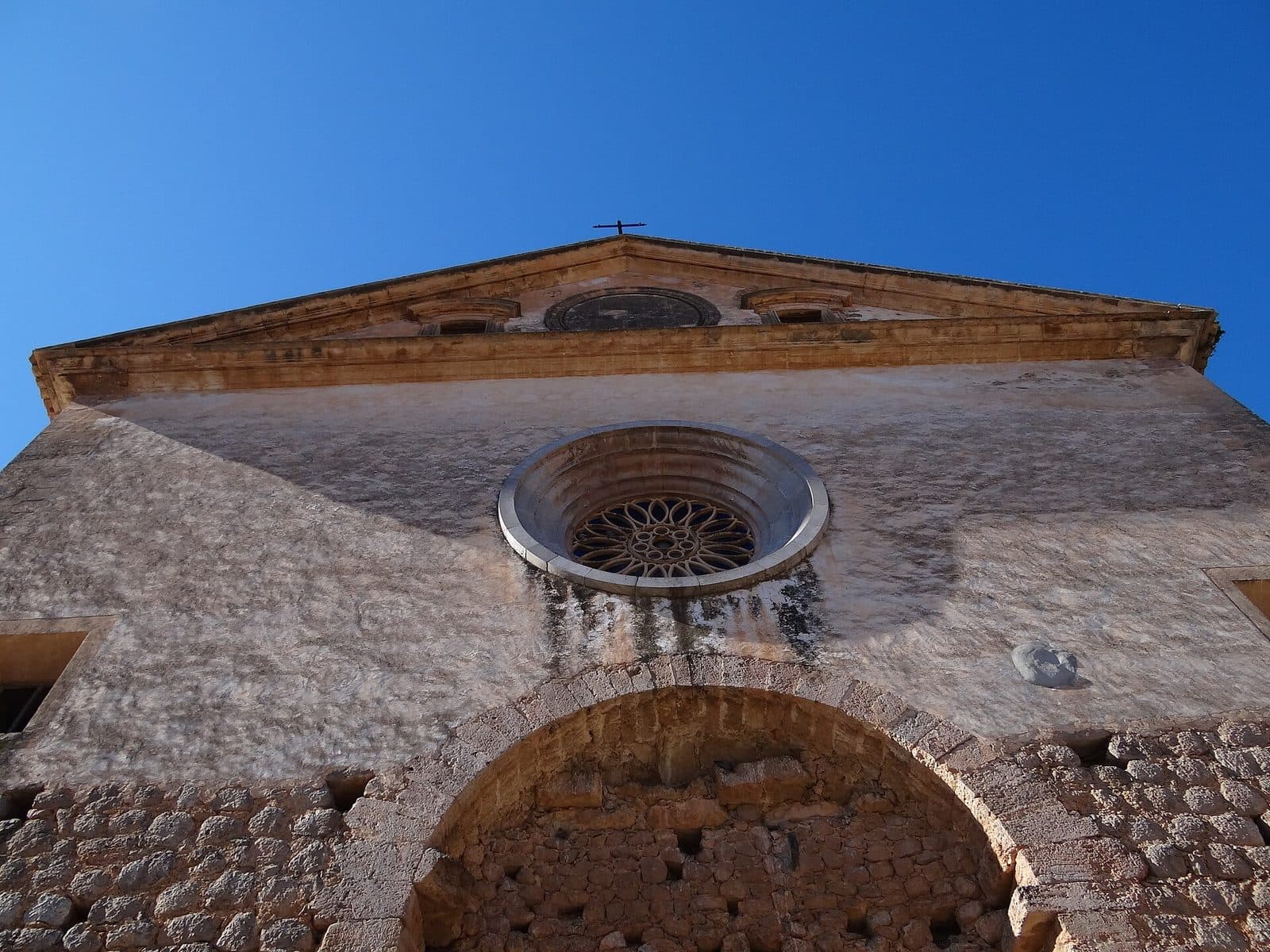
.jpg)
Behind a plain door in Valldemossa Charterhouse, the famous Mallorca winter becomes a remarkably personal story. The Frederic Chopin Museum is located in former Carthusian cell No. 4, where the Polish composer and French writer George Sand lived during their stay in the winter of 1838/1839. Rather than a large biographical exhibition, this is a compact historic site: small rooms, original documents, musical artifacts, and a Pleyel piano.
It is precisely this intimacy that makes the visit worthwhile. The museum tells not only of inspiration, but also of illness, cold, damp, and logistical difficulties. Chopin's time in Valldemossa was not a carefree retreat into Mediterranean light. The hoped-for mild winter proved wet and taxing, his health deteriorated—and yet he worked on important compositions.
Anyone who enjoys experiencing music history where it happened will find one of Mallorca's most evocative museums here. Readers of George Sand's travel account A Winter in Mallorca will also discover many tangible connections. Even without an interest in classical music, the cell remains worth seeing as a record of an unusual artistic life: two prominent outsiders, Sand's children, a delayed piano, and a former monastery provide the material for a story that continues to shape Valldemossa's image today.
It is important to arrive with the right expectations. This is not a sprawling music museum, but a private, focused collection in the confined rooms of a former Carthusian cell. Its strength lies in the original objects and the connection between those objects, the residence, and the documented episode.
History and Significance
The story begins with a hope that went unfulfilled: George Sand and Frédéric Chopin traveled to Mallorca in 1838, expecting the southern climate to offer respite. Sand was accompanied by her children Maurice and Solange. Her son's health had also played a part in planning the trip; in Chopin's case, a persistent cough was the main concern. At the same time, the journey offered distance from social life in Paris and time for literary and musical work.
Arrival in Mallorca
After traveling via Barcelona, the group reached Mallorca in November 1838. At first, they stayed in Palma and the surrounding area. During an excursion to Valldemossa, they discovered the village at the foot of the Serra de Tramuntana. The former Carthusian monastery offered rooms for rent and the seclusion that Sand and Chopin had been seeking.
On 15 December 1838, they moved into the Charterhouse. The accommodation now designated No. 4 did not consist of a single austere room, but of three small rooms and a terrace with a small garden. Valldemossa remained their home until 11 February 1839. The word “cell” should therefore not be understood as a prison cell: it refers to the self-contained living and working quarters of a Carthusian monk.
A Difficult Winter
The romantic image of the ailing composer writing masterpieces undisturbed in the sunny south bears little resemblance to the documented circumstances. The winter was cold and rainy, the rooms were damp, and Chopin's health deteriorated. At first, he had to work on a small rented instrument because the Pleyel piano intended for him was not available in time. Transporting the instrument became a story in its own right.
George Sand cared for the ill composer, organized daily life, and later recorded the experience in literature. Her book A Winter in Mallorca made the journey famous far beyond the circle of music lovers. It is not a neutral local chronicle, but the pointed perspective of a writer who perceived both the island's beauty and its difficulties.
Music from Valldemossa
Despite illness and adverse working conditions, Chopin remained productive. His Préludes op. 28 are particularly associated with the stay, and he also worked on other compositions in Mallorca. The cell's significance therefore lies not merely in the fact that a famous musician slept here. It was genuinely a place of work.
A temporarily rented home thus became a place of remembrance. The museum does not simply preserve a reconstructed living environment; it connects the setting with contracts, bills, letters, scores, and the instrument that makes Chopin's difficult stay especially vivid.
From Charterhouse to Museum
The Charterhouse itself was founded at the beginning of the 14th century. Former cells are privately owned. The Chopin cell is also operated as an independent collection within the historic complex. The current identification of No. 4 as the artists' accommodation is based in part on a reproduction of a painting by Sand's son Maurice, which depicts the rooms they occupied at the time.
The Pleyel piano remained in Mallorca after Chopin's departure. He sold it to the family of the banker Canut in Palma; it has been displayed in the cell since 1932. This continuous connection with the island distinguishes the museum from memorial rooms that were furnished much later with period-style furniture.
What to See
At the entrance to cell No. 4, the scale changes. The large rooms and ecclesiastical sections of the Charterhouse recede, and the story is concentrated within a small sequence of former living quarters. The exhibition does not rely on monumental architecture. It shows how an internationally renowned composer and an equally famous writer lived and worked for several winter weeks in a self-contained Carthusian residence.
Cell No. 4
The historic accommodation consists of three small rooms. Their confined dimensions help visitors understand the practical conditions of the stay: space had to be found not only for Chopin and Sand, but also for Sand's children and the everyday life of a traveling family. The museum uses the rooms to display mementos, portraits, and documents without completely obscuring the character of the former monastic residence.
The rooms should be viewed less as a fully reconstructed home than as a historic exhibition site. What matters is their connection to the actual setting. Windows, doors, and the sequence of rooms convey how closely living, caregiving, writing, and composing took place alongside one another. Anyone previously familiar only with the phrase “Chopin's cell” will leave with a much more tangible picture.
The Pleyel Piano
The centerpiece of the collection is the Pleyel piano with serial number 6668. It was brought from Paris to Mallorca and used by Chopin during his stay. Its delayed arrival exemplifies the difficulties of the journey: until the instrument became available, the composer had to work on a smaller rented piano.
The Pleyel is more than a decorative piece of furniture with a famous former owner. It connects the room directly with Chopin's work. After the winter, the composer sold the instrument in Mallorca to the Canut family. The fact that it remained on the island and has been displayed in the cell since 1932 gives it a traceable provenance. It is not a similar piano acquired at a later date, but the instrument associated with Chopin's time in Valldemossa.
When viewing it, it is worth paying attention not only to the keyboard and case. The plain surroundings of the instrument reveal a great deal about Chopin's working life. Music was created here not in an elegant Parisian salon, but amid the conditions of a damp winter in a former monastery.
Letters, Scores, and First Editions
Around the piano, the collection displays musical autographs, scores, first editions, and letters. These exhibits go beyond the familiar image of the ailing genius.
The documents are best explored slowly. Even visitors unable to read every handwritten passage can recognize the differences between personal correspondence, musical manuscripts, and printed editions. Together, they trace the path from an idea at the piano to a published work. For pianists and those interested in music history, this section is the true heart of the exhibition.
Contracts and Bills
A particularly vivid part of the collection consists of everyday documents. The original rental agreements and payment records from Chopin and Sand's stay have been preserved. These include medical bills and records of the cost of transporting the piano from France to Mallorca. A letter concerning the sale of the Pleyel piano to the banker Canut also forms part of this documentary collection.
At first, these papers may seem less impressive than the instrument. In fact, they describe the stay with particular precision. Illness appears as a medical bill, the accommodation as a contract, and the long-awaited piano as transport costs. The famous artists' journey thus becomes a series of very tangible decisions and problems. Visitors who move too quickly through the rooms may easily overlook the very exhibits that make the winter feel most authentic.
George Sand and Maurice
In the exhibition, George Sand is more than merely the composer's companion. Portraits, personal mementos, and editions of her Mallorca book point to her own work. She organized the stay, cared for Chopin, and later transformed the experience into literature. Her account played a significant role in establishing Valldemossa as a place associated with artists in the European imagination.
Maurice Sand is also important to the museum's history. The reproduction of an image he created of the accommodation occupied at the time helped identify the present-day cell No. 4. A seemingly minor family record thus became a key piece of evidence for locating this place of remembrance.
Terrace and Small Garden
The cell includes a terrace with a small garden.
For Chopin and Sand, Mallorca was both a scenic discovery and a disappointment of their hopes for a comfortable winter.
Visiting the Museum
The museum consists of a compact sequence of rooms whose exhibits are closely connected to the location. It makes sense to first experience the cell as a residence and only then read the individual documents. This allows the piano, contracts, and letters to remain parts of a coherent story rather than isolated collection pieces.
Take Your Time
The three small rooms can be crossed quickly, but rushing would not do the museum justice. The written records in particular demand attention: the rental agreement, medical bills, transport receipts, and sales letter often explain the winter more clearly than decorative objects. Visitors with an interest in Chopin's music, George Sand's literature, and original historical documents will spend the most time here. The size of the cell does not dictate a fixed length of visit.
The museum opens daily at 10:00 and regular visits are possible until 17:30. Because operating details may change, it is still advisable to check current information before traveling.
Admission and the Charterhouse
Admission is charged for the Chopin Museum. A reliable price is not included in the available visitor information and should therefore be checked locally. The collection in cell No. 4 is operated as an independent museum within the Charterhouse complex. Anyone wishing to see additional areas of the Charterhouse should therefore check carefully when buying tickets to determine which rooms each ticket includes.
This distinction is more important for planning than it may initially appear. The Chopin Museum focuses on Chopin and Sand's stay, while the rest of the Charterhouse presents the broader history of the monastery and the village. The two visits combine well, but they should not be understood as one and the same exhibition.
Who Will Enjoy the Cell
The collection is especially rewarding for visitors who know Chopin's music or have read Sand's A Winter in Mallorca. Pianists can see an instrument demonstrably connected to the stay, while literature enthusiasts encounter the material side of Sand's travel account. The visit also works without prior knowledge, provided there is an interest in personal historic places.
Getting There
The journey leads to Valldemossa at the foot of the Serra de Tramuntana; the museum is located in the historic Charterhouse. For navigation, first head to Valldemossa and then to the Charterhouse area in the village center.
From Palma Airport
The road distance from Palma Airport to Valldemossa is 25 kilometers. The journey takes around 30 minutes, initially following the Ma-20 and then the Ma-1110. These details apply specifically to Valldemossa. The museum is located in the Charterhouse there, in cell No. 4.
From Central Palma
From central Palma, the road distance to Valldemossa is 19 kilometers. The journey via the Ma-1110 takes around 35 minutes. Here too, the measured route ends in the village, not directly at the museum door.
The Ma-1110 is the direct route from Palma to Valldemossa.
By Bus
For travel by public transportation, the Valldemossa 1 and Valldemossa 2 stops serve as useful reference points. The Ermita de la Trinitat 2 stop is also located within the recorded surrounding area.
Because timetables may change, the specific connection should be checked on the day of the visit.
Bus lines to Frederic Chopin at a glance
| Line | Route | Departures/day | First | Last |
|---|---|---|---|---|
| 203 | Valldemossa / Deià | 152 | 06:47 | 22:34 |
From the official GTFS feeds (TIB/SFM), no real-time data. The figures cover all stops in the town; weekend and holiday services differ — check with the operator before travelling.
Getting there by bus
Valldemossa 1 (63002) · 0.2 km as the crow flies
- 203Valldemossa / Deià · Daily
Valldemossa 2 (63001) · 0.2 km as the crow flies
- 203Valldemossa / Deià · Daily
Ermita de la Trinitat 2 (63011) · 1.9 km as the crow flies
- 203Valldemossa / Deià · Daily
Ermita de la Trinitat 1 (63003) · 2.1 km as the crow flies
- 203Valldemossa / Deià · Daily
Timetable data: official GTFS feeds (TIB/EMT), no real-time — check with the operator before travelling.
Nearby Attractions
The story does not end outside the Charterhouse. The famous winter of Chopin and Sand continues to shape Valldemossa's cultural identity today. The village lies in northwestern Mallorca at the foot of the Serra de Tramuntana. Its stone streets and compact buildings provide a setting for the museum visit that an exhibition elsewhere could never recreate.
Valldemossa
After visiting the cell, it is worth exploring the historic village center. This makes it clear that Chopin and Sand did not live on an isolated country estate, but in a former monastery that continues to define the village. Via Blanquerna forms a livelier thoroughfare with shops and cafés, while historic Valldemossa is visible around the Charterhouse.
A walk through the village also helps place George Sand's perspective in context. Her Mallorca book grew out of a specific travel experience, not a later artistic legend. Among the village streets, the Charterhouse, and the surrounding Tramuntana, it is possible to understand her admiration for the landscape alongside her frustration with the living conditions of the time.
The Rest of the Charterhouse
The Chopin Museum occupies only cell No. 4, which is associated with the artists. Other parts of the Real Cartuja present the monastery's past and the complex's later uses. Anyone visiting both should keep the exhibitions conceptually separate: one tells the intimate story of a brief artistic stay, while the other provides the broader historical context of the former Carthusian monastery.
This combination makes for a well-rounded cultural day in Valldemossa. The cell explains why the name Chopin is inseparably linked to the village; the rest of the Charterhouse shows the historic setting in which the episode took place. When buying tickets, check which areas are included in each one.
Serra de Tramuntana
Valldemossa lies at the foot of the Serra de Tramuntana. The landscape was an essential part of Mallorca's appeal to Sand and Chopin, even though the winter itself was by no means mild or carefree.
Other destinations in the western Tramuntana are suitable for continuing a trip through the region. Anyone wishing to explore Chopin's story more deeply should first remain in Valldemossa and combine the cell, Charterhouse, and village walk.
Ermita de la Trinitat 2 Bus Stop
The Ermita de la Trinitat 2 bus stop is recorded in the surrounding area.
This clear distinction preserves the character of the visit: the museum focuses on a precisely located winter, a specific instrument, and preserved documents. The wider Tramuntana provides the scenic setting, but it cannot replace the concentrated encounter with the original objects in the cell.
The place it belongs to
Valldemossa in the place guidePractical Visitor Information
The most important misconception concerns the museum's size. Despite the name Frederic Chopin, Valldemossa does not contain a comprehensive museum covering the composer's entire life. The main focus is his stay in Mallorca with George Sand—and it is presented at the historic location itself. The character of the cell lies in its small collection at the historic setting.
The Right Pace
The rooms are small, and the significance of many exhibits lies in the details. A slow look at the rental agreement, medical bills, and piano documents is more rewarding than a quick photograph of the Pleyel. It is particularly helpful to move from space to object: first notice the confined accommodation, then view the instrument, and finally read the documents that make the transport, illness, and departure tangible.
Because the exhibition is compact, it can easily be incorporated into a longer stay in Valldemossa. How long it actually holds a visitor's attention depends greatly on their interest in music, literature, and historical documents. An artificially fixed minimum duration would be less useful than the recommendation not to rush past the Pleyel and the original papers.
Clothing and Footwear
No special equipment is required for the museum rooms. Anyone wishing to see the terrace and small garden should also consider the weather. The story of the stay itself is a reminder that Valldemossa can be cool, wet, and damp in winter.
Photography and Consideration
Binding photography rules should be checked at the entrance. Regardless of the rules, the small rooms require consideration: anyone standing for an extended time in front of the piano or a display case should allow others a clear view. Large bags and bulky luggage are poorly suited to an exhibition in three small rooms.
The strongest impression comes, in any case, from imagining that after its difficult journey, this instrument was actually played in these very rooms.
Local insider tips
Check the Pleyel's Serial Number
The famous instrument is not merely “an old piano”: it is Chopin's Pleyel with serial number 6668. The piano remained in Mallorca after the winter and has been displayed in the cell since 1932.
Don't Overlook the Bills
The rental agreement, medical bills, and piano transport receipts may look unassuming, but they describe the difficult winter with remarkable clarity. They turn the artists' legend into a tangible account of daily life.
Step onto the Terrace
After the three small rooms, the terrace and its small garden open up the view. The contrast between the confined accommodation and the Tramuntana landscape highlights the contradictory nature of the experience.
Look for Maurice Sand's Image
The reproduction of a painting by George Sand's son Maurice is more than a family memento: its depiction of the accommodation helped identify the present-day cell No. 4 as the artists' residence.
Compare Tickets Carefully
Chopin's cell is operated as an independent museum within the Charterhouse complex. Anyone who also wants to see the other areas of the Real Cartuja should check which rooms are included when buying tickets.