
Creu de Randa – the historic cross in Randa village
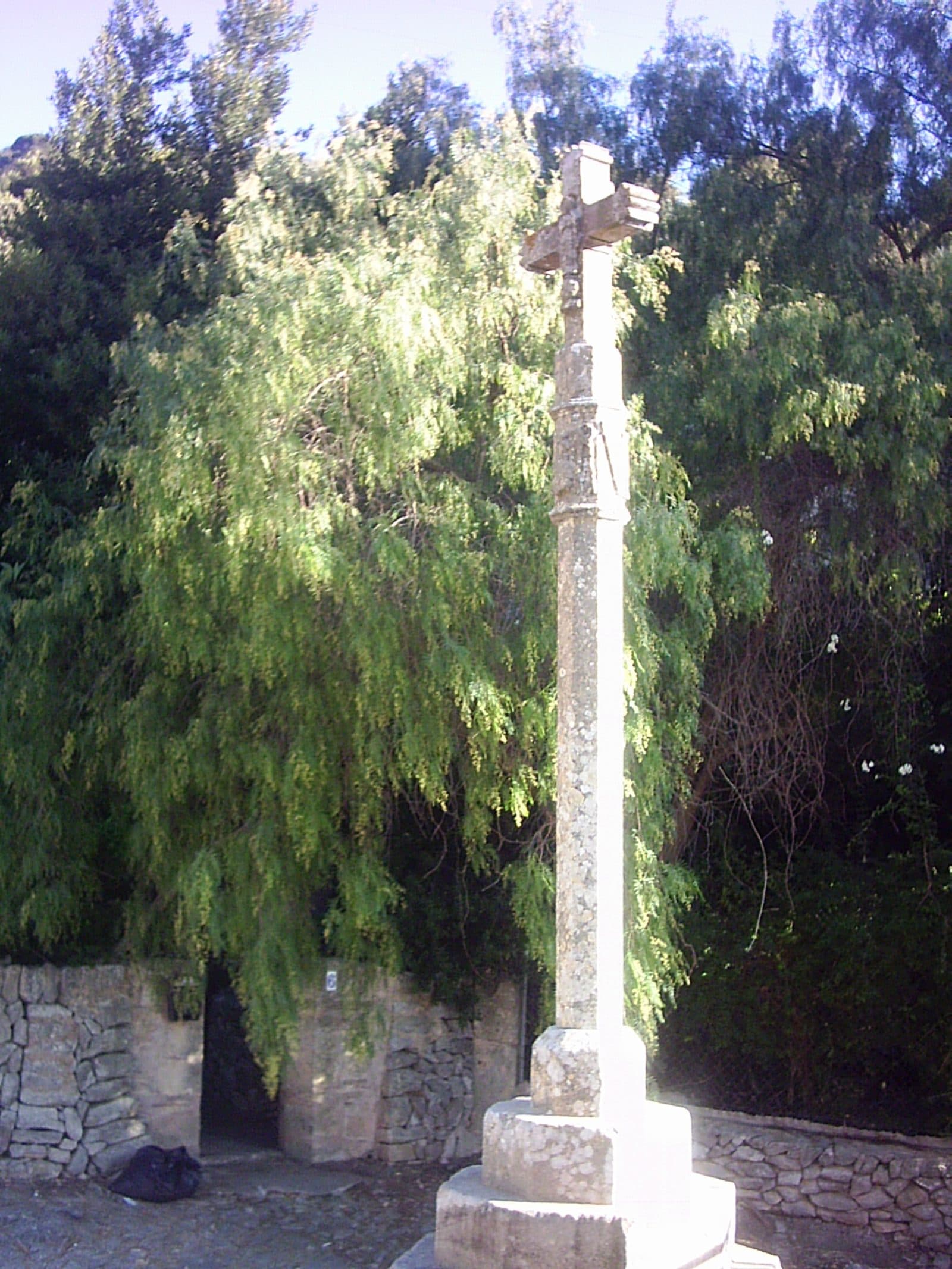

Between the village well, old houses and the path up to Puig de Randa stands a monument that is easy to overlook: the Creu de Randa. The historic cross was erected in 1846 and is considered a landmark of the small village of Randa, which belongs to the municipality of Algaida. It is neither a monastery on the mountain nor a viewpoint, but a monument in its own right within the village.
It is precisely this modesty that makes a visit interesting. The Creu de Randa is best understood not as a spectacular standalone structure, but as part of a village ensemble that has evolved over time. The well and an old water channel are close by; beyond the village streets, the route later continues toward the widely visible monastery mountain. Anyone who pauses here briefly can see several layers of local history within a small area.
The cross is especially worthwhile for travelers who want to discover Mallorca’s interior through more than its large churches and monasteries. It is a rewarding stop on a walk through Randa, a good starting point for a hike and a quiet counterpart to the better-known sanctuaries on Puig de Randa. Its value lies in looking closely and understanding its connection with the village.
History and significance
The date 1846 provides an important point of reference: the Creu de Randa does not date from the Middle Ages or from the early history of the mountain’s hermitages. It was created considerably later. This is significant because Randa is often described almost exclusively through Ramon Llull, its pilgrimage tradition and the sanctuaries of Puig de Randa. The cross, by contrast, belongs to the more recent historic character of the village at the foot of the mountain.
The Creu de Randa from 1846
With its erection in 1846, the Creu de Randa became part of the village’s public landscape. Today it is considered a landmark of Randa. This role is based less on monumental size than on its recognizability and its location within the everyday village setting. The cross stands where paths, water supply and buildings converge—not secluded within a separate complex.
The Creu de Randa is encountered without first passing through a church doorway. It stands outdoors and is noticed while walking through the village. Its historic character is therefore also evident in its relationship with the streets, houses and neighboring well.
A landmark of the village
The Creu de Randa represents Randa itself. The historic cross is found down in the village and belongs to the inhabited side of a place that is otherwise often seen merely as the starting point for a drive up the mountain.
As a landmark, the Creu de Randa draws attention back to village life. The cross is a reminder that Randa has a historic center of its own. This is where its significance today lies: it gives the village a distinctive symbol and preserves a piece of local identity from the 19th century.
What to see
The strongest impression comes not from a long series of individual details, but from the way the Creu de Randa stands alongside the old water supply. Together, the cross, well, channel and village street form the actual sight. Anyone who merely takes a photo and immediately drives on misses this connection.
The Creu de Randa
The cross itself is the focal point of the short walk. Its historical classification as a monument from 1846 and its role as a landmark make it a fixed point of reference in the village. Attention can be directed toward its position within the street and its surroundings.
It is worth stepping back a little. From close up, the individual monument is in the foreground; from a distance, it becomes clear how naturally it belongs to the village scene. The Creu de Randa is a historic symbol in the open air.
Carrer de sa Font
Carrer de sa Font is an integral part of the visit. Its name already refers to the spring or well. The route through the village leads to the area where the Creu de Randa meets the historic elements of the water supply. This gives the monument a vivid setting: religious symbolism did not stand apart from everyday life here, but occupied a place where water was channeled into the village.
The street also conveys the scale of Randa. Instead of broad access roads and large forecourts, short routes and village buildings define the scene. The cross is therefore best discovered on foot. This leaves time to appreciate its location without attention already being drawn to the road up the mountain.
Well and water channel
Next to the cross is the well, whose water is connected to the mountainside by an old channel. The channel carries fresh water from a spring down into the village and onward to the old washhouse. Parts of this watercourse are open. The traditional water system is described as being of Muslim origin, pointing to a much older layer of local infrastructure than the cross from 1846.
This is where the visit becomes particularly vivid. The water follows the slope from the mountain to the village, while the road climbs in the opposite direction. The Creu de Randa stands at this transition between settlement and mountainside. As a result, the monument does not appear isolated, but occupies a place where landscape and everyday life have long been connected.
The old washhouse
The water channel does not end without a recognizable purpose: it supplied the old washhouse in the village. This allows the historic surroundings of the Creu de Randa to be understood as a connected functional space. The spring, channel and washhouse tell the story of Randa’s water supply, while the cross reflects the religious and symbolic shaping of public space.
The washhouse should not be misunderstood as part of the cross. It is a separate stop in the village that usefully extends the walk. Together, the two places reveal more about Randa than an isolated look at the monument: they show a small village where practical infrastructure and religious symbols once stood close together.
Visiting the Creu de Randa
The visit is best begun as a short walk through Randa. From the area around the parish church, the route follows Calle de la Iglesia to Carrer de sa Font. The Creu de Randa and the well are located there. You can then view the course of the water channel and, depending on the chosen route, include the old washhouse.
A short stop that rewards a closer look
The place reveals more of its character once the immediate surroundings are included. A photo stop then becomes a short walk through local history: first the monument from 1846, followed by the well and channel, and finally Randa’s streets and old houses.
Anyone wishing to appreciate the monument properly should not simply check it off between arriving and continuing the journey, but park and explore the small village center on foot.
Getting there and parking
The stated distances and driving times extend only to Algaida, not directly to the Creu de Randa. From there, the route continues to the village of Randa to the south. The final section follows country roads toward the distinctive Puig de Randa; within the village, the cross stands by Carrer de sa Font.
From Palma
The road distance from the center of Palma to Algaida is 31 kilometers. The journey takes around 38 minutes and follows the Ma-15. From Algaida, continue by following the signs to Randa. If you want to visit the Creu de Randa first, do not immediately take the mountain road to Santuari de Cura once you reach the village.
This distinction prevents a common mix-up: navigation destinations bearing the name Randa often lead to the mountain or one of the sanctuaries. The historic cross, however, stands down in the village. The parish church, Calle de la Iglesia and then Carrer de sa Font serve as useful landmarks.
From Palma Airport
The road distance from Palma Airport to Algaida is 28 kilometers. The journey takes around 31 minutes and follows the Ma-5010. The route then continues to Randa. The final section is more rural than the approach to Algaida and leads toward the village at the foot of Puig de Randa.
Travelers arriving from the direction of the airport who then want to continue up the mountain should plan the order deliberately: first park in the village and see the Creu de Randa, then begin the drive or hike to Puig de Randa. Otherwise, the small monument is easily passed by.
Parking in Randa
A public parking area is located in Randa directly on the Ma-5017, just a short walk from the village church. In addition to spaces for cars, it has charging facilities for electric vehicles and designated areas for bicycles and motorcycles. Another route description identifies the parking area opposite the parish church as a suitable starting point.
From there, the walking route follows Calle de la Iglesia to Carrer de sa Font. This is more practical than looking for somewhere to leave a vehicle in the narrower village streets directly beside the cross. At the same time, the visit begins along the way: the transition from the church and village street to the well area makes the monument’s location easier to understand.
By bus
The relevant stop is called Randa and has the identifier 4019. From the stop, the historic cross is reached on foot within the village. As timetables can change, it is advisable to check the current service before departure, especially the return journey.
For a subsequent trip to Puig de Randa, keep in mind that the sanctuaries lie above the village. The bus stop serves Randa, not automatically the sites at the summit. Anyone wishing to visit only the Creu de Randa, the well and the village center can remain in the village.
Bus lines to Creu de Randa at a glance
| Line | Route | Departures/day | First | Last |
|---|---|---|---|---|
| 431d | Algaida - Llucmajor | 8 | 08:55 | 17:35 |
From the official GTFS feeds (TIB/SFM), no real-time data. The figures cover all stops in the town; weekend and holiday services differ — check with the operator before travelling.
Getting there by bus
Randa (4019) · 0.2 km as the crow flies
- 431dAlgaida - Llucmajor · Mon-Fri
Timetable data: official GTFS feeds (TIB/EMT), no real-time — check with the operator before travelling.
Places to visit nearby
Randa belongs to the municipality of Algaida and lies on Mallorca’s central plain, the Pla de Mallorca. The village is characterized by old houses, a parish church and its position below Puig de Randa. Precisely because the village is small, the cross, well, channel and village center can be easily combined without complicated routes.
Randa
A walk through Randa provides the right setting for the Creu de Randa. In addition to the cross, sights include the village center, the parish church of the Immaculate Conception, the well, the historic water system and the old washhouse. These stops are not separate, self-contained attractions; they are discovered through the village streets.
Those who stop for refreshments afterward will also find traditional Mallorcan cuisine in the village. The visit can therefore be developed into a peaceful stop in the island’s interior without artificially turning the cross itself into an hours-long sightseeing program.
Algaida
Algaida is a good choice as the next larger town for a walk through the island’s interior. Its appearance is shaped by earth-colored houses, narrow streets, a traditional square and old windmills. The final section of the journey to Randa also begins here.
Combining Algaida with the Creu de Randa reveals two different scales of the Pla de Mallorca: the livelier municipal center on one side and the small village at the foot of the monastery mountain on the other. This keeps the visit varied without requiring long journeys between the stops.
The place it belongs to
Algaida in the place guidePractical information for your visit
The Creu de Randa is not a monastery, mountain summit or viewpoint. Anyone searching for the name should therefore make sure the destination is within the village. Santuari de Cura is located at the top of Puig de Randa; the Creu de Randa stands by Carrer de sa Font in the village. This clear distinction avoids unnecessary detours.
Routes
Visiting the cross involves walking through the village streets. A hike up Puig de Randa leaves the built-up village area and includes steeper climbs.
Anyone traveling by bicycle should expect other cyclists and motorized traffic on the mountain road. For the Creu de Randa itself, it makes more sense to leave the bicycle or car at the public parking area and explore the village center slowly.
Visiting with children
The well, water channel and view up toward the mountain are close together within the village. Parts of the channel are open, and the stops are located in the street environment.
An additional hike up the mountain leaves the built-up village area and includes steeper climbs.
The interplay is what makes the place worth seeing: a cross from 1846, the well with its older water system, the washhouse and, above them, the mountain that continues to shape Randa’s history and routes today. Looking closely is more rewarding here than following a packed sightseeing schedule.