
Ermita de Betlem – Mallorca’s Peaceful Seaside Hermitage
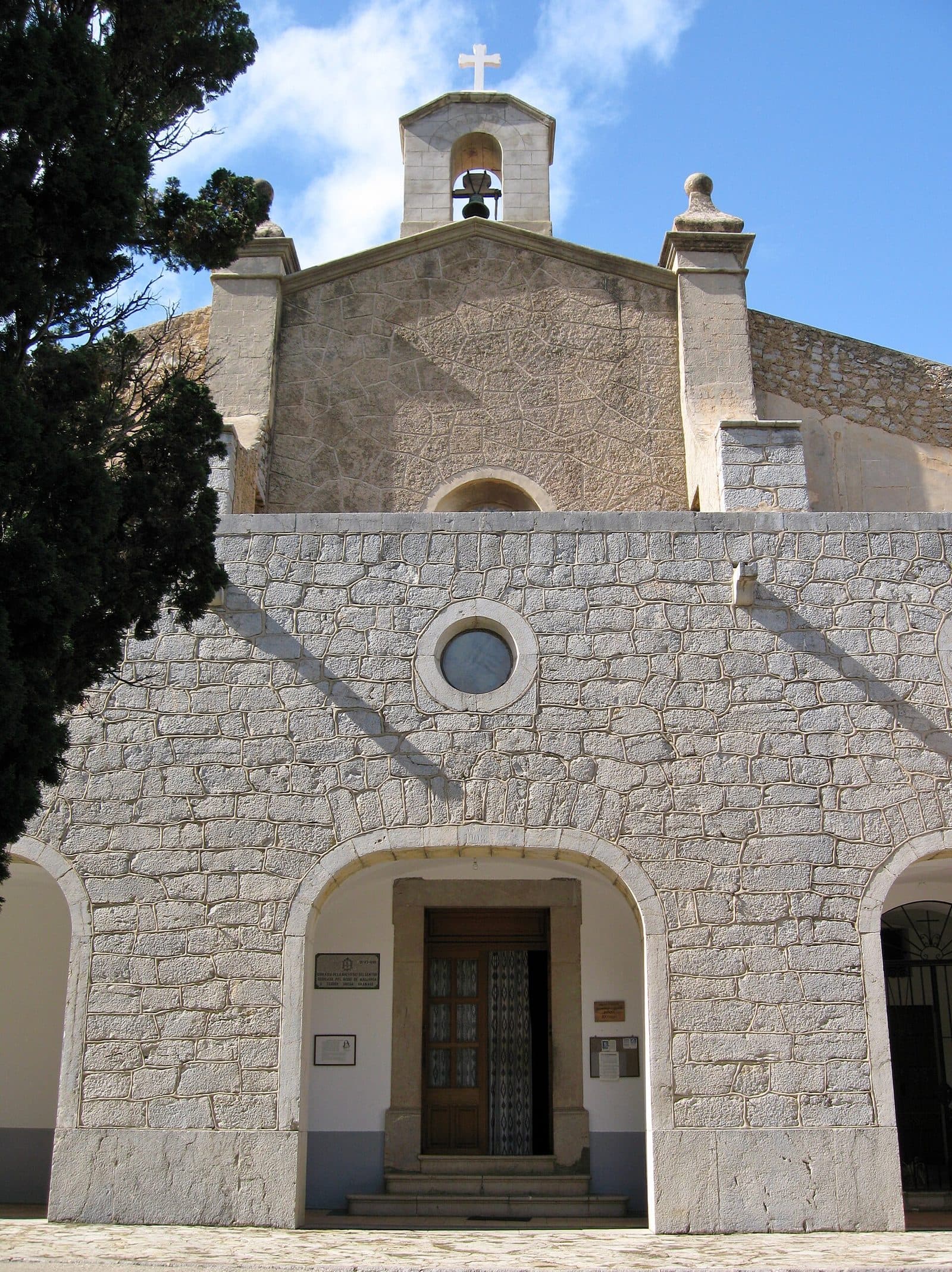

High above the northeast coast, amid the barren heights of the Serres de Llevant, the Ermita de Betlem feels like a deliberately chosen counterpoint to Mallorca’s busier side. A cypress avenue leads to the former hermitage, whose simple façade conceals a surprisingly richly decorated chapel. At the same time, the landscape opens toward the Bay of Alcúdia.
Here, the journey is part of the experience. Those arriving by car from Artà follow a narrow road through the mountains. From the coastal settlement of Betlem, an old path leads uphill on foot. Both options make it easy to understand why hermits chose this remote place for their secluded lives.
A visit is especially worthwhile for those who appreciate sacred architecture, peaceful historic sites and scenic landscapes. Do not expect large exhibitions or a tourist-oriented tour. Its appeal comes from the combination of the chapel, former monastery buildings, cypresses, spring and mountain scenery.
Those who only explore the complex can keep their visit relatively short. As a hiking destination, with a break at the spring and time to enjoy the views, the Ermita can fill a good part of the day. This flexibility is precisely what makes it such an unusually versatile destination in northeastern Mallorca.
History and significance
It began not with the foundation of a prestigious monastery but with a search for seclusion. On 29 July 1805, hermits from the communities of Sant Honorat near Randa and the Trinitat near Valldemossa founded the Ermita de Betlem. The land had been donated to them. They built on the remains of the old Binialgorfa estate, where a watchtower and an oil mill had previously stood, among other structures.
The foundation in 1805
The location, at an elevation of about 280 metres, was suitable for a secluded religious life but challenging for construction and supplies. The hermitage was established far from the town of Artà in a dry, rocky mountain landscape. Even reaching it required effort, and daily life remained closely tied to the use of the surrounding land. Agriculture and livestock farming helped the residents support themselves, supplemented by donations.
The name refers to Bethlehem. However, the small community’s religious mission was not intended for public display. Only a few hermits lived here at any one time. Their daily routine combined prayer, communal meals and physical labour—a way of life whose traces remain visible in the chapel, cells, working areas and cultivated land around the complex.
Chapel and figure of Christ
The chapel that defines the site today was built during this early monastic period. Among its important furnishings is a figure of Christ presented to the hermits on the occasion of the sacred site’s consecration. This helped keep the connection between the Ermita and Artà alive: the figure is especially revered there, and on 1 May a traditional pilgrimage leads from Artà to the monastery chapel.
This pilgrimage shows that, despite its remote location, the Ermita was never completely isolated from its surroundings. It was both a retreat for a small community and a religious focal point for the local population. The peaceful place in the mountains and the communal pilgrimage are therefore equally important parts of its history.
The departure of the last hermits
For more than two centuries, the complex remained home to a small number of members of the religious order. Because of their age, the last hermits moved to the Santíssima Trinitat hermitage near Valldemossa. No successors were found. The Ermita de Betlem is no longer an inhabited monastery.
Their departure changed the character of the place but did not erase its religious significance. The chapel, the pilgrimage tradition and the documented use of the complex keep the memory of the hermits’ lives alive. Today, the Ermita is visited primarily as a historic, cultural and spiritual site—not as a monastery with an active community.
What to see
The first powerful impression comes before you even reach the chapel door. A long avenue lined with tall cypresses draws the eye straight toward the church. This approach, approximately 150 metres long, feels like a transition: the open mountain landscape recedes as the evenly planted trees gather the path and direct it toward the chapel.
The cypress avenue
At the Ermita, the cypresses form a clear sightline. Between the dark trunks, only parts of the façade and entrance initially appear. With every step, the chapel moves more prominently into view.
The avenue offers one of the best positions for photographs: not directly in front of the façade, but several steps back, where the rows of trees, path and chapel can all be captured together.
The neoclassical chapel
The chapel has a cruciform floor plan and a neoclassical design. Its exterior remains relatively restrained. Decorative details are concentrated around features such as the entrance portal, which is accented with painted tiles. This contrast between simple mountain architecture and colourful details is worth examining closely before entering.
Inside, the decoration becomes considerably richer. A marble altar forms the liturgical focal point, while frescoes cover the ceiling. The paintings draw the eye upward and transform the impression of the space: the chapel, which looks rather austere from outside, becomes a colourful sacred interior. Its dimensions remain modest, but that makes it possible to view the altar, ceiling paintings and figures without much distance.
Figure of Christ and statue of Mary
Among the works of art, the figure of Christ donated for the consecration holds particular significance. It is not only a furnishing from the Ermita’s early history but also the focus of a tradition of veneration from Artà that continues today. Anyone visiting on 1 May will therefore experience the site differently from those arriving on an ordinary quiet day.
The chapel also contains a statue of Mary. Together with the altar, frescoes and painted tiles, it shows that the chapel was not designed without ornament despite the austere lives of its residents. The hermits sought personal simplicity but treated the liturgical space as the especially distinguished centre of their community.
The former monastery buildings
The few surviving buildings of the former monastery stand around the chapel. They are reminders that the Ermita consisted of more than a church. This was a place where people lived, ate and worked. Parts of the complex occupy the area of the old watchtower and former estate, on whose ruins the community established its home.
Not every part of the buildings is accessible as a museum interior. Instead, the value lies in the ensemble: the chapel, simple outbuildings, walls and paths create an image of a small community focused on self-sufficiency. Anyone expecting a completely restored monastery with a cloister, exhibition rooms and a signposted tour would misunderstand the character of the place.
Sa Font and the Marian shrine
Below or shortly before the Ermita lies the Sa Font spring, also known as Font de s’Ermita. It supplied the hermits with water and was used to irrigate their fields. Beside it is an artificial rock grotto containing a Marian shrine whose design recalls Lourdes.
For hikers arriving from Betlem, the spring is a natural stopping point before the final section to the hermitage. A stone table provides a place to rest. However, the water should not be treated as a reliable drinking-water supply without checking it first; hikers should carry enough of their own water.
Views of the Bay of Alcúdia
The Ermita stands in the Massís d’Artà, part of the Serres de Llevant. Wide views toward the Bay of Alcúdia open from the surroundings of the complex and along the access route. The sea lies far below, while rocky ridges frame the site on the inland side.
Those arriving by car from Artà will find a viewpoint for a stop approximately one kilometre before the end of the road. On the walking route from Betlem, the panorama unfolds gradually: as the path gains elevation, the coast and bay become increasingly prominent. The view is therefore not a single image but something that accompanies the approach to the Ermita.
Visiting the Ermita
A typical visit begins quietly. After the mountain drive or climb, the cypress avenue leads to the chapel; a slow walk around the surviving buildings is then worthwhile. Inside, the marble altar and ceiling frescoes are the first features to draw the eye. Afterwards, the smaller details around the portal and the religious figures usually become more noticeable.
Walking around the complex
The chapel and the immediately adjoining ensemble do not require a lengthy museum visit. There is neither an extensive exhibition nor a prescribed route with numerous stops. Nevertheless, anyone who looks closely at the architecture and art should not get out only for a quick photograph. The avenue, portal, ceiling paintings and views reveal their full effect only when experienced at an unhurried pace.
Combining the visit with Sa Font requires more time. The spring and Marian shrine are not in the chapel’s central interior but beside a path in the surrounding area. They are a natural part of the visit, particularly when arriving on foot. Those coming by car can also add this detour, but should wear sturdy footwear.
Visit length and hike
Exploring the small complex itself is manageable and can be planned as a short cultural stop. A fixed number of minutes would be of little help: those who see only the chapel and avenue will stay considerably less time than visitors who examine the artworks, walk to the spring and enjoy the views.
The route from Betlem turns the chapel visit into a hiking excursion in its own right. Breaks at the spring, photo stops and time spent at the Ermita must be added to the walking time.
Peace and visitor numbers
Its isolation does not guarantee solitude at all times. The Ermita is a well-known excursion and hiking destination, so several visitors may gather at the chapel at once, especially in good weather. There is no reliably deserted time of day. Those with flexible schedules can avoid the usual excursion periods and allow enough time for a group to move on.
A special situation applies on 1 May, when the traditional pilgrimage leads from Artà to the Ermita. This is an interesting day for those who want to experience religious tradition and communal pilgrimage. However, it is less suitable for a quiet, individual visit.
Current access conditions for the chapel should be checked before travelling. As the hermitage is no longer inhabited, access to the interior in particular should not be assumed without obtaining up-to-date information.
Getting there and parking
For the Ermita de Betlem, one distinction is essential: the measured road routes from Palma and the airport lead to the coastal settlement of Betlem, not directly uphill to the hermitage. From there, the journey continues on foot. Those wishing to drive all the way to the Ermita must instead approach from Artà via the Ma-3333 mountain road.
From Palma Airport to Betlem
The road distance from Palma Airport to Betlem is 73 kilometres. The drive takes around 65 minutes and follows the Ma-15, then the Ma-3322 and Ma-3331. These details end in Betlem. From the coastal side, visitors must follow the uphill hiking trail to the Ermita; the driving time should therefore not be confused with the total journey time to the chapel.
Anyone wishing to drive directly to the complex instead must plan a route toward Artà and the Ma-3333. There is no direct road for cars from the coastal settlement of Betlem up to the chapel.
From central Palma to Betlem
From central Palma, the road distance to Betlem is 75 kilometres. The drive takes around 71 minutes and also follows the Ma-15, Ma-3322 and Ma-3331. Again, the distance and driving time refer specifically to the settlement of Betlem. The climb on foot begins there.
The coastal route is especially suitable when the hike is intended to form the main part of the excursion. Parking options in Betlem are limited. It therefore makes sense to look for a suitable place to leave the car near the entrance to the settlement or at the designated trailhead rather than continuing far into the narrower residential streets.
Driving via Artà
From Artà, the approximately nine-kilometre Ma-3333 leads to the Ermita. The road climbs through the Serres de Llevant in numerous bends, passes rural properties and becomes very narrow in its upper section. Oncoming traffic requires care; large vehicles and hurried driving are ill-suited to this route.
A viewpoint overlooking the Bay of Alcúdia lies approximately one kilometre before the destination. The road ends at the hermitage. The drive is scenic, but it should be viewed as part of the visit rather than as a quick side route. Anyone who finds winding mountain roads uncomfortable should plan suitable breaks.
Bus travel and arriving on foot
No bus stop has been recorded in the immediate vicinity of the Ermita. Betlem is also not a destination where visitors should assume there will be a direct public transport connection to the start of the hike without checking first. Current timetables and the return journey are particularly important when planning.
The well-known footpath begins on the Ma-3331 near Betlem and leads via the Cases de Betlem into the rocky mountain landscape. Trail markers, red dots and cairns indicate the route. Despite being relatively straightforward to follow, it remains a mountain hike rather than a paved walking path.
Nearby places
Down on the coast, a small settlement shares its name with the hermitage. Betlem marks the end of the Ma-3331, which follows the coast from Colònia de Sant Pere.
Betlem
Betlem is the practical starting point for the climb to the Ermita.
Colònia de Sant Pere
Colònia de Sant Pere lies west of Betlem and is the nearest larger coastal village for a break before or after the hike. The Ma-3331 connects the two places. Those who do not want to spend the entire excursion in the mountains can take in the view across the bay here and then follow the quieter coastal road to Betlem.
The order of activities is particularly important when combining them. A mountain hike should not begin only after a long stay on the beach in the midday heat. Conversely, after the descent, the coast provides a pleasant place to end the day without adding another demanding activity.
Artà and the Serres de Llevant
On the other side of the mountains lies Artà, the traditional starting point for driving to the Ermita via the Ma-3333. The town and the Ermita reveal two very different sides of the same region: one is an established settlement with streets and sacred buildings, while the other is a remote mountain hermitage.
The surrounding Serres de Llevant are both a hiking landscape and a protected natural area. Additional paths lead from the Ermita into the heights, including routes toward Puig de Ferrutx. However, such tours are not casual extensions of a walk around the chapel. They require separate route planning, sufficient water and a realistic assessment of the terrain and weather.
The place it belongs to
Betlem in the place guidePractical information for your visit
The Ermita’s peaceful appearance should not obscure the fact that it stands in a genuine mountain landscape. Even the paths between the chapel, viewpoints and spring can be uneven. Sturdy shoes are essential for the hike from Betlem; smooth casual footwear is not suitable for the rocky sections.
Water, sun and food
There is no refreshment stop along the route that can be reliably included in your plans. Water and food should therefore be carried from the outset. Sa Font is historically significant as a water source for the hermits, but it should not be treated as a guaranteed source of drinking water.
The vegetation provides shade in some sections, but large parts of the rocky landscape are exposed. Sun protection is therefore advisable even outside the height of summer. In intense heat, the climb quickly loses its leisurely character; an early start and generous water supplies then become more important than maintaining the tightest possible schedule.
Visiting with children
For families with older children who have hiking experience, the route from Betlem can be a rewarding excursion. The cypress avenue, spring, grotto and chapel provide clear intermediate goals, while the sea view changes with increasing elevation. Part of the appeal is that the destination is not an amusement park but a genuine historic retreat.
The route is not automatically suitable for young children. The path climbs steadily and crosses rocky ground. Adults should realistically assess fitness, sure-footedness, heat and their own ability to carry a child if necessary. Particular care is also required on the narrow access road via Artà.
What not to expect
The Ermita de Betlem is not a conventional museum. There is no extensive exhibition programme, no large cloister tour and no tourist-oriented experience. Food and drink services are also not central to the site. Anyone merely seeking a long list of spectacular individual objects will walk through the complex quickly.
What makes it worth seeing is the interaction of a few distinct elements: the cypress avenue, the neoclassical chapel, frescoes and marble altar, traces of the hermits’ former lives, Sa Font and the view across the bay. Respect for its sacred character, quiet conversation and appropriate clothing inside the chapel should be taken for granted—even though no monastic community lives here today.