
Sant Pere near Betlem: A Quiet Hermitage in Northeast Mallorca
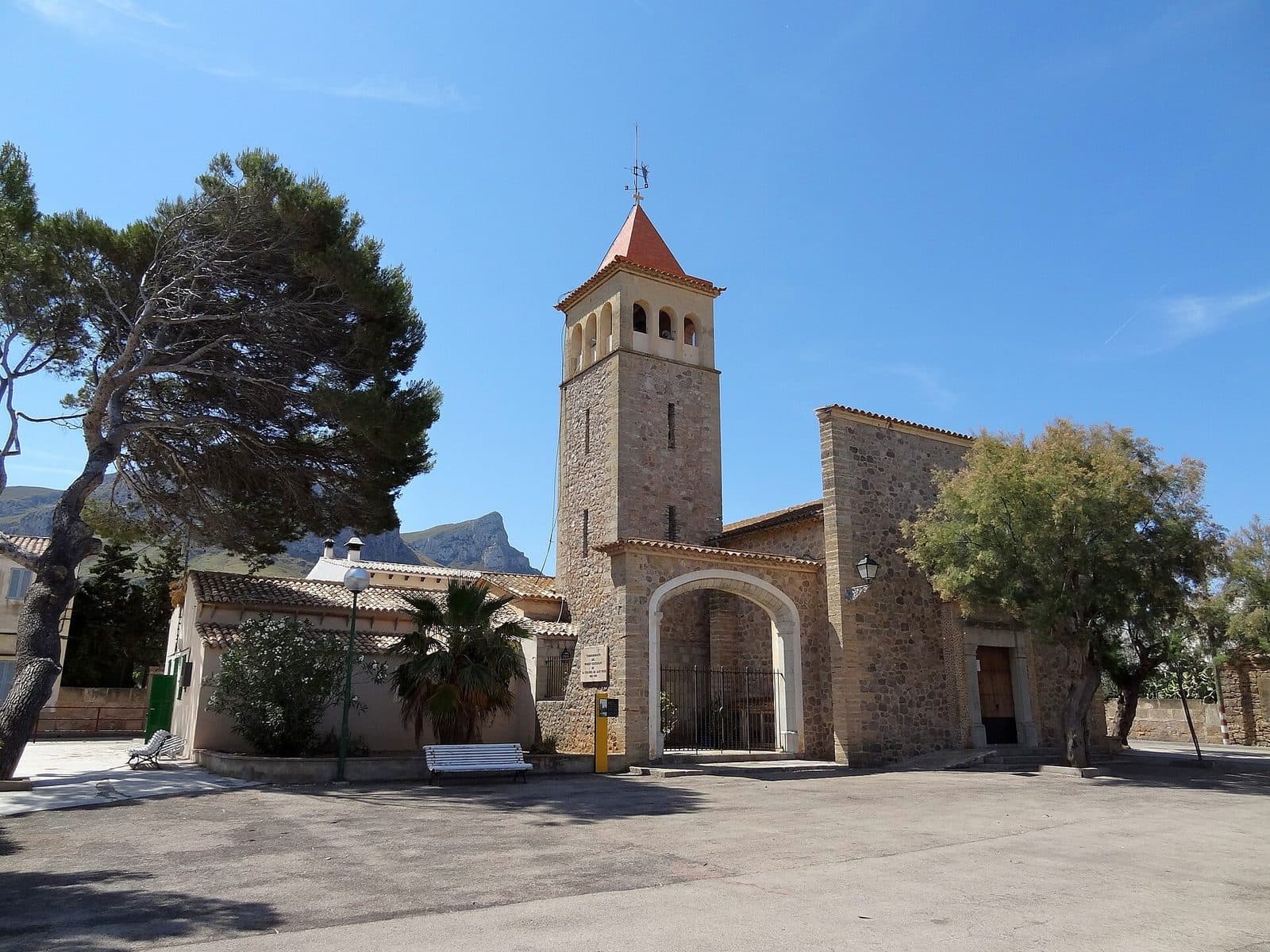

Those searching for Sant Pere near Betlem usually mean the religious monastic attraction above the remote coastal settlement in northeast Mallorca. For finding your way locally, the name Ermita de Betlem is particularly important. The hermitage is not located in the center of an established village but secluded in the Serres de Llevant, between mountainous countryside and the coast of the Bay of Alcúdia.
Its appeal lies in the combination of a religious site, peaceful surroundings, and a scenic approach. Even the journey from the inhabited coastal area changes the character of the excursion: houses and sea are left behind, the road climbs into the heights of the Artà Peninsula, and hiking trails to viewpoints and through the mountain landscape begin around the monastery.
Sant Pere is therefore particularly suitable for visitors looking for a peaceful alternative to Mallorca’s major churches, castles, and museums. The destination can be reached as a short detour, but it becomes much more rewarding when there is time for the surrounding area. Hikers can incorporate the hermitage into a route; those arriving by car experience a scenic mountain drive and a place where seclusion remains part of its essential meaning.
This is a secluded hermitage without typical tourist amenities such as beaches or hotels. The quality of the visit comes from the site’s historical purpose, its location, and the sense of peace it continues to convey today.
History and Significance
In 1805, hermits searched the mountains of the Artà Peninsula for a place of prayer and secluded living. This led to the creation of the Ermita de Betlem.
The Foundation in 1805
A retreat for hermits was established here. Although the Spanish word “ermita” can be translated as chapel or hermitage, in this case it means more than a single place of worship: it refers to a religious site whose identity arose from the secluded lives of its residents.
Anyone driving up the mountain road today can still appreciate this original idea. The distance from the coastal settlements, the surrounding heights, and the absence of an urban neighborhood create a clear transition. You do not happen upon the destination while passing through a town center; you seek it out deliberately. This is precisely what distinguishes the complex from many of Mallorca’s churches, which were built as the focal points of village squares.
Betlem and the Hermitage
The monastery also became a landmark for the surrounding area. The coastal settlement of Betlem takes its name from the hermitage above the coast. The historic religious site is therefore older than the present-day appearance of the loosely developed residential area, which consists mainly of homes and vacation properties.
This relationship is easy to recognize during a visit: below lies a small, quiet settlement at the end of the more heavily developed coastal zone, with the mountains rising behind it. Above stands the spiritual landmark that gave the area its name. Sant Pere is therefore not merely a single building but a key to understanding this remote corner of the municipality of Artà.
A Place of Retreat
The hermitage’s historical significance lies primarily in its original use. It was founded as a place for prayer and secluded living. Anyone judging the site solely by its size or furnishings will therefore miss what matters most.
This idea continues to shape the visitor experience today. The mountain landscape is not merely a backdrop for a photograph but part of the site itself. The road, paths, and distance convey the effort that secluded life here once required. Sant Pere therefore tells its story less through a sequence of spectacular construction phases than through the deliberate choice of its location.
What to See
The strongest impression comes from the interaction between the monastery complex and the landscape. The hermitage appears as the destination of a mountain drive, not as an isolated exhibit behind an urban façade. As you approach, the group of buildings moves into focus while views simultaneously open across the Serres de Llevant and toward the coast.
The Monastery Complex
Sant Pere should be viewed as a secluded monastic site. Its location is remote. Instead of a densely built-up setting, mountains, paths, and natural countryside directly surround the complex. This makes its original purpose as a hermitage understandable, even after only a brief look at its history.
A slow approach is recommended for exploring the site. First, it is worth viewing the complex as a whole: how it sits in the mountain landscape, how little secular development surrounds it, and how distinctly separated it is from the vacation homes on the coast. Only then do the religious and monastic parts of the buildings themselves come to the fore. Sant Pere is a hermitage in a secluded location.
This very seclusion makes the site easy to understand. The complex is therefore best interpreted through its location: as the built center of a life that deliberately sought distance.
The Mountain Landscape
Hiking trails begin around the hermitage, leading through the Serres de Llevant and to viewpoints. A visit therefore does not necessarily end at the buildings. Even a short stay outside the complex shows why this place seemed suitable for a community of hermits.
The surroundings open up broad views across the mountains and coastal landscape. Depending on where you stand, the monastery itself is not always the main focus; often it is the contrast between the nearby mountains and the more distant sea that defines the visit. The road upward already offers initial views, while walking makes the separation from the coastal development even more apparent.
Anyone wishing to take photographs should therefore not aim only straight at the building. Views showing Sant Pere together with the terrain are more meaningful. Only this sense of scale reveals how deliberately remote the hermitage was when it was founded. Even without a long hike, the character of the landscape can be appreciated if some time is set aside for the immediate surroundings.
Views of the Coast and Mountains
The elevated location connects two very different areas. On one side lies the mountainous Artà Peninsula, while on the other is the coastal zone around Betlem and the Bay of Alcúdia. The perspectives change repeatedly during the approach; near the hermitage, they become a broad overview of Mallorca’s northeastern landscape.
This view is not merely an incidental extra. It helps explain the site’s historical isolation. Modern roads and coastal settlements make the destination comparatively easy to reach, but the topography remains the same: slopes and open countryside separate the religious retreat from the inhabited areas.
In clear weather, it is worth taking time to look across the landscape rather than heading straight toward the entrance upon arrival. The panorama often explains Sant Pere more immediately than a historical text. It shows how far the hermitage lies from everyday life on the coast and how closely it is connected to the landscape at the same time.
The Paths Around Sant Pere
Several paths in the surrounding area make the hermitage a starting point or waypoint for hikes. The sources mention viewpoints and routes through the mountain landscape without describing the site as a fully developed recreational center.
For a first impression, exploring the immediate area on foot is sufficient. Those wishing to continue farther should treat Sant Pere not only as an attraction but as a mountain destination. The monastery’s tranquility continues along the paths; as the distance from the road and parking area increases, the landscape comes even more strongly to the fore.
Visiting Sant Pere
The visit really begins before arrival. The road climbs from the coastal region into the mountains, passes through an increasingly quiet landscape, and turns the drive into a deliberate transition. Those who stop only at the building, take a photograph, and immediately continue will see the destination but miss an essential part of its impact.
Arriving and Getting Oriented
There is a small parking area near the hermitage. From there, the initial view takes in the monastery complex and its immediate surroundings. A short orientation walk is worthwhile: first view the building in its landscape setting, then finish at a viewpoint or on a section of the surrounding paths.
The time required therefore depends less on a prescribed sightseeing route than on your own plans. For a simple impression of the complex and the view, the visit can remain manageable. Once a walk or hike is added, Sant Pere becomes the destination of a longer excursion. A fixed standard duration would hardly suit the character of the place.
Tranquility Instead of a Visitor Program
Sant Pere is considered a peaceful and secluded place.
Respect for its religious character should be a matter of course. Quiet conversations and restrained use of cameras and mobile phones are more appropriate than a quick, noisy group visit. The surroundings deserve the same consideration: paths and viewpoints are part of a sensitive mountain landscape, not merely scenery around a parking area.
Accessibility, Opening, and Admission
Confirmed opening hours and admission conditions have not been recorded. Because access to religious buildings can change at short notice, current information should be checked before traveling. This is especially important if seeing the interior is the main reason for the excursion.
The landscape remains an important part of the destination regardless of access. Nevertheless, no one should assume solely on the basis of older travel reports that every area can be entered at all times. Sant Pere is a hermitage in a secluded location.
Getting There and Parking
From Palma, the route crosses the eastern part of the island toward Artà and then continues to the coast. For the route information, it is essential to note that the measured distances and driving times apply only as far as Betlem. The final section up to the religious monastic attraction is additional and follows a scenic mountain road.
From Palma Airport
The road distance from Palma Airport to Betlem is 73 kilometers. The drive takes around 65 minutes and follows the Ma-15, Ma-3322, and Ma-3331. This time ends in the coastal settlement of Betlem, not directly at the hermitage. Additional time should be allowed for the subsequent drive into the mountains.
The route initially follows well-developed main roads into the eastern part of the island. The final road to the hermitage is scenic.
From Central Palma
From central Palma, the road distance to Betlem is 75 kilometers. The drive takes around 71 minutes and likewise follows the Ma-15, Ma-3322, and Ma-3331. Here too, the distance and driving time explicitly refer to Betlem on the coast. The onward journey to Sant Pere is not included.
The long approach makes the site less suitable for a fleeting detour from Palma. It makes more sense to combine it with Betlem or a hike on the Artà Peninsula. This way, the drive itself becomes part of a day in the northeast rather than simply the outward and return journey to a single attraction.
The Final Section to the Hermitage
Above the coastal settlement, a scenic mountain road leads to the Ermita.
There is only a small parking area near Sant Pere. Space may therefore be limited when several visitors arrive at the same time. Cars should be parked so that access, turning areas, and paths remain clear.
By Bus and on Foot
The recorded bus stops are in Colònia de Sant Pere and Montferrutx, within the coastal zone. They do not provide direct transport to the hermitage. Anyone using public transportation must therefore plan the remaining journey separately and should not underestimate the distance and elevation difference between the coast and the mountain destination.
For a hiking connection, the route, weather, drinking water, and return journey should be clarified in advance. The remote location that makes Sant Pere appealing also means visitors cannot expect the frequency of services and infrastructure available at an urban attraction.
Bus lines to Sant Pere at a glance
| Line | Route | Departures/day | First | Last |
|---|---|---|---|---|
| 421 | Colònia de Sant Pere - Artà | 48 | 07:30 | 19:55 |
From the official GTFS feeds (TIB/SFM), no real-time data. The figures cover all stops in the town; weekend and holiday services differ — check with the operator before travelling.
Getting there by bus
Colònia de Sant Pere (6003) · 0.3 km as the crow flies
- 421Colònia de Sant Pere - Artà · Daily
Montferrutx 2 (6009) · 0.7 km as the crow flies
- 421Colònia de Sant Pere - Artà · Daily
Montferrutx 1 (6004) · 0.7 km as the crow flies
- 421Colònia de Sant Pere - Artà · Daily
Timetable data: official GTFS feeds (TIB/EMT), no real-time — check with the operator before travelling.
Nearby Places
Down on the coast lies Betlem, a loosely developed settlement of homes and vacation properties. It marks the transition between the developed coast and the mountain landscape of the Artà Peninsula. Large hotel complexes and a dense town center do not define its appearance; instead, short paths lead to the rocky coastline, while hiking trails begin behind the houses and climb into the heights.
Betlem
Betlem is a suitable peaceful conclusion after the mountain drive. The coast consists of rocky and partly stony sections with small places to swim. The settlement is not a classic vacation resort with a broad range of entertainment. That is precisely why it pairs well with Sant Pere: both destinations derive their appeal from their peripheral location and closeness to the landscape.
Those with enough time can combine the monastery visit with a walk along the coast. After the view from the mountains, the perspective there changes completely. The sea is now immediately in front of you, while the heights behind the settlement indicate where the hermitage lies hidden.
Coastal Paths and Prehistoric Traces
Paths around Betlem run along the coast and toward Es Caló. The Dolmen de s’Aigua Dolça, a prehistoric burial site, can also be incorporated into an excursion through this landscape. Neither destination should be misunderstood as a quick addition to the monastery visit; both require their own time and suitable preparation.
For a full excursion day, however, they create a coherent sequence: religious history in the mountains, a quiet coastal settlement, and paths through a largely natural corner of Mallorca. Those choosing only part of this should combine Sant Pere with a coastal section rather than driving from one destination to the next in rapid succession.
The place it belongs to
Betlem in the place guidePractical Information for Your Visit
The seclusion is Sant Pere’s greatest strength and also the most important practical consideration. Visitors should not expect the services of a major attraction at the hermitage. The sources describe neither hotels nor beaches nor typical tourist facilities directly beside the monastery. Any necessary water and personal provisions should therefore be obtained before the mountain drive.
Footwear and Paths
Hikes should not be started spontaneously merely because a visible path looks inviting. The route, return journey, and available daylight should be clarified beforehand. The hermitage is a useful landmark but no substitute for a prepared route.
Visiting with Children
The appeal comes from the mountain drive, the monastery, and an age-appropriate walk.
Close supervision is advisable on paths, at viewpoints, and near the road. For a longer hike, the route, heat, and return journey should be adapted to the children’s experience. A short monastery visit can be combined with a later stay on the coast near Betlem.
What Defines Sant Pere
Sant Pere is worth visiting for its history as a hermitage, its deliberate seclusion, and its mountain and coastal landscape.
With these expectations, the visit becomes especially rewarding. The complex does not need to appear spectacular. Its impact develops along the way, through its distance from the coast, and in the knowledge that people chose this place in 1805 precisely because it was far removed from ordinary daily life.
Local insider tips
Search Using the Right Name
For finding your way locally, the name “Ermita de Betlem” is more helpful than Sant Pere. It guides navigation to the hermitage in the mountains rather than to one of the other places or beaches on Mallorca that have Sant Pere in their name.
Show the Monastery in Its Landscape
The most meaningful view captures not only the building but also the surrounding heights. Only with the mountain landscape in the picture does it become clear why the hermits chose this secluded place for prayer and retreat.
Do Not Turn Back at the Parking Area
Paths around the hermitage lead to viewpoints and through the Serres de Llevant. Even a short, prepared walk conveys more of Sant Pere’s character than simply driving there for a photo stop.
Combine Mountains and Coast
After the visit, it is worth heading down to Betlem. From the quiet coast, you can look back toward the heights, while at the hermitage above, the sea and bay previously formed part of the panorama.
Allow for the Mountain Road
The stated driving times end in Betlem. The onward drive to the hermitage is additional. Those planning the excursion without time pressure can enjoy the changing views.