
Sant Gaietà in Palma: Baroque Church and Light Art
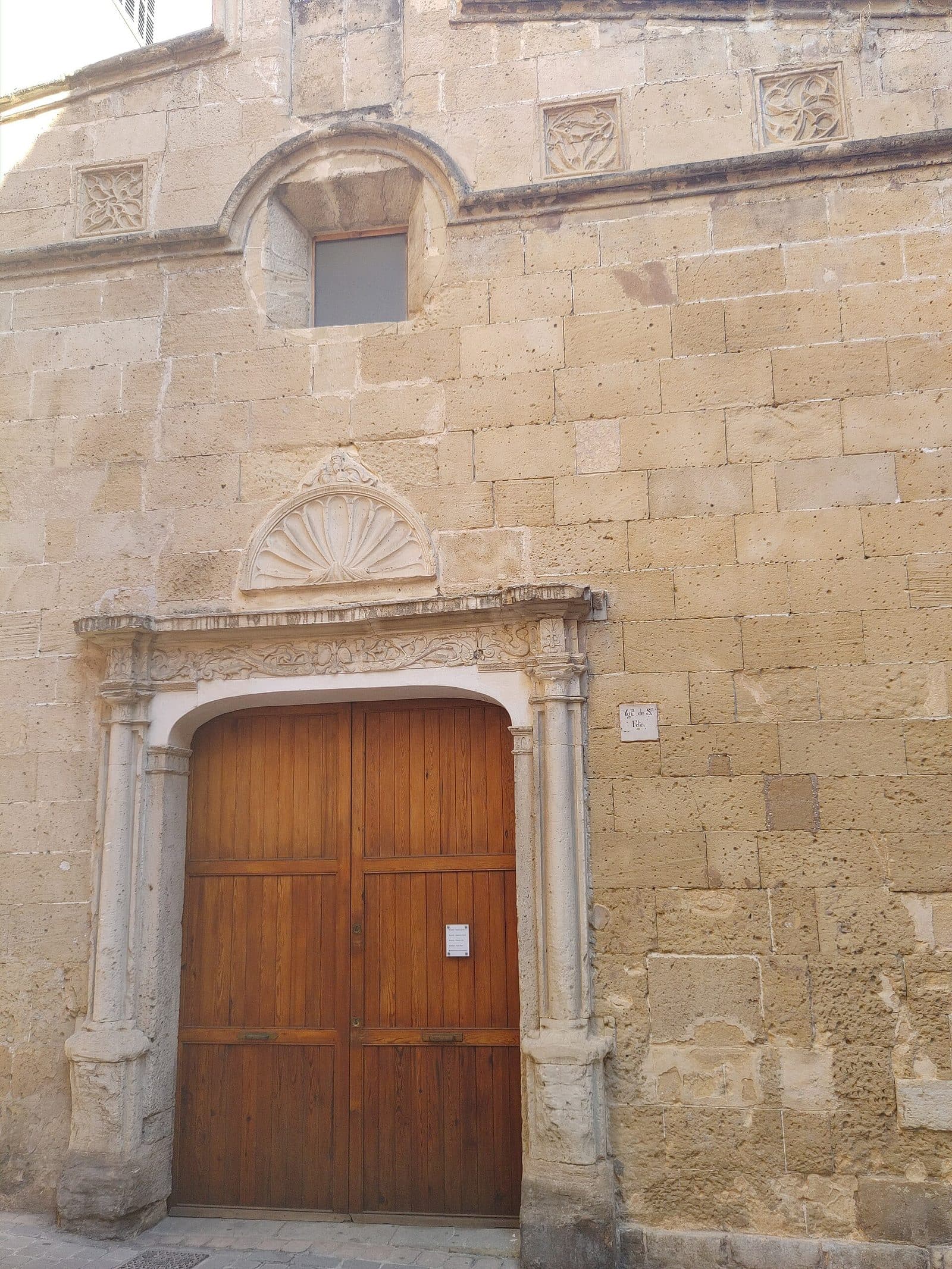

In the heart of Palma, the name Sant Gaietà conceals a church that can easily be confused with another building bearing the same name. This guide refers exclusively to the Església de Sant Gaietà, also known as the Church of the Sacred Hearts. It stands on Carrer Sant Gaietà, parallel to Passeig des Born, and belongs to the Roman Catholic Diocese of Mallorca.
The appeal of the site lies in the interplay between a historic church interior and contemporary staging. The Baroque building with Neoclassical influences forms part of Palma’s rich sacred landscape. At the same time, its interior serves in 2026 as the setting for “Elements,” a production of video mapping, light, music, and digital imagery created specifically for the architecture. Sant Gaietà therefore appeals not only to visitors interested in church art. Those who already know Palma and want to experience a familiar urban space in an unusual way will also find a distinctive perspective here. During a performance, the eye moves less from exhibit to exhibit than across the walls and ceiling: the architecture itself becomes the projection surface.
Sant Gaietà nevertheless remains a sacred building rather than an ordinary event venue. This tension is precisely what makes a visit interesting: the history of religious orders, Baroque design, and digital imagery converge in a space originally created for worship and contemplation.
History and significance
The Jesuit initiative
The story began with a Jesuit building project. Work on the church started at their initiative, long before it became known by its present name. Sant Gaietà is therefore one of Palma’s sacred buildings whose identity is shaped not only by its construction period but also by the succession of religious communities that used it.
The sources consulted provide no reliable details about the architects or the exact date when early construction began. The decisive role of the Jesuit order is, however, documented.
The Theatines and the name Sant Gaietà
In 1770, the church passed into the hands of the Theatines. They dedicated it to Saint Cajetan, known in Mallorcan as Sant Gaietà. This change of religious order explains why the name commonly used today does not derive directly from the Jesuit foundation period.
The name became so firmly established in the cityscape that both the church and the street commemorate it. Anyone asking for San Cayetano in Palma will encounter the Spanish form of the name; Sant Gaietà is the Catalan or Mallorcan form. The current designation as the Church of the Sacred Hearts exists alongside it without displacing the popular name.
From religious-order church to today’s sacred space
Sant Gaietà continues to be listed as a church of the Roman, or Latin, rite. Ecclesiastically, it belongs to the Diocese of Mallorca and the Palma 1 area. The historic interior is therefore not regarded merely as a monument but remains defined by its religious affiliation.
Another layer was added in 1903, when Faust Morell created the small tempietto inside, now one of the church’s specifically highlighted furnishings. In 2026, the immersive production “Elements” gave the church another new interpretation—not through structural alterations, but through light, music, and moving projections temporarily cast across the historic architecture.
What to see
The Baroque church interior
Its stylistic classification alone shows that Sant Gaietà cannot be reduced to the restrained effect of a purely Neoclassical building. The church is Baroque in design but displays clear Neoclassical influences. Movement and theatricality thus meet more orderly, restrained forms. This contrast gives the interior its distinctive character.
During a visit, it is worth first taking in the space as a whole without rushing. The principal attraction is not a collection of separate works of art but the architecture itself. During a regular visit, the spatial axes and sacred furnishings guide the eye; during the light production, color, music, and projection take over this role. The walls and ceiling then appear not as a neutral backdrop but as parts of a continuous visual narrative.
Sant Gaietà is not a place whose impact depends solely on monumental dimensions. Instead, its effect comes from the closeness between the viewer and the church interior, allowing details to connect directly with the architectural whole. A brief glance reveals the style; staying longer shows how strongly perception depends on lighting and use.
Faust Morell’s tempietto
The most clearly identified historic furnishing is the small tempietto created by Faust Morell in 1903. Its description as a small temple already indicates that it is an independent architectural statement within the larger church interior. In a sense, it is a building within a building.
This detail deserves particular attention because it reveals a later artistic layer. A long span of time separates the church’s underlying Baroque character from this work dating from the beginning of the modern century. Sant Gaietà therefore appears not as an unchanged document of a single era, but as a space that continued to evolve throughout its use.
During a light performance, the initial impression may be dominated by the moving imagery. The tempietto should therefore also be viewed consciously as a real and permanent object: the projections disappear when the production ends, while Faust Morell’s work remains. This contrast between material furnishings and fleeting light is one of the most fascinating aspects of the interior.
“Elements”: earth, water, fire, and air
The production documented in 2026, “Elements – the heartbeat of life,” lasts 25 minutes. It was not conceived as an interchangeable film presentation but was tailored to the interior architecture of Sant Gaietà. Video mapping, digital art, music, and moving light interact with the existing surfaces and forms. The imagery is therefore not simply placed in front of the space but follows its structure.
The production explores the four classical elements of earth, water, fire, and air. Each phase changes the perception of the church in a different way. Projections move across the architectural surfaces while music and sound connect the sequence. Some passages are described as intense, others as almost hypnotic. A characteristic feature is how the eye is repeatedly drawn upward, bringing the ceiling more strongly into focus than during an ordinary church visit.
The production does not, however, turn Sant Gaietà into an abstract digital space. Its distinctive quality lies precisely in the fact that the historic architecture remains recognizable and is newly emphasized by the imagery. Edges and surfaces determine how the projections unfold. The result is not competition between architecture and technology, but a temporary dialogue.
Ramon Llull as the fifth element
Beyond the four forces of nature, “Elements” incorporates Ramon Llull. The Palma-born philosopher, theologian, writer, and mystic appears as a symbolic fifth element associated with light and words. This gives the show a distinctly Mallorcan connection that extends beyond a general portrayal of natural phenomena.
Llull is not merely a historical footnote. His inclusion links the sensory dimension of the projections with the island’s intellectual heritage. Earth, water, fire, and air describe the visible world; light and words open a second level of meaning. This suits a church interior whose architecture already aims for more than mere functionality.
Visitors to the production should therefore look beyond the spectacular changes in color. Its conceptual structure is equally important: the four classical elements provide the framework, while Ramon Llull contributes the local and spiritual emphasis. Only together do they form the complete narrative.
Visiting Sant Gaietà
Distinguishing a church visit from a performance
Before planning, it is important to clarify what kind of visit is intended. Sant Gaietà is both a historic sacred space and the setting for an immersive production with scheduled performance times. Attending “Elements” is therefore not the same as spontaneously entering an open church. It follows a fixed sequence and lasts 25 minutes.
Reliable general opening hours and admission conditions for the church are not currently available. Production dates may also change. Before heading to Carrer Sant Gaietà, it is therefore advisable to check current access and, where relevant, the availability of a performance. Outdated times are particularly inconvenient here, as a locked door or the start of a production already in progress could prevent the visit altogether.
Settling in before the performance
For “Elements,” visitors are advised to arrive ten minutes before it begins. This is useful for more than organizational reasons: a video-mapping production unfolds as a continuous sequence, so entering late would mean missing the dramatic opening and part of the projections. Arriving early also leaves a little time to appreciate the physical church interior before light and music transform its appearance.
During the performance, attention is directed strongly toward the walls and ceiling. A seat with an unobstructed view of the space is therefore more important than proximity to any individual furnishing. If possible, it is worth taking a brief moment afterward to refocus on the solid architecture. This reveals which contours actually belong to the building and which were created only by light.
How much time to allow
The production itself takes 25 minutes. Visitors should also allow for the recommended arrival time and for viewing the church interior. Those coming to Sant Gaietà solely for the performance can easily incorporate it into a walk through Palma. Anyone who also wants to examine the tempietto and the Baroque spatial effect carefully should avoid scheduling another tightly timed appointment immediately afterward.
No reliable information is available about typical peak periods. The best strategy for avoiding unnecessary waiting is therefore not to rely on a supposedly quiet time of day, but to prepare well: check the schedule, arrive punctually, and leave some flexibility between activities in Palma. On a winter or rainy day, the production, which takes place entirely indoors, is an obvious alternative to a long outdoor walk.
Getting there and parking
From the airport to Palma
The road route from Palma Airport follows the Ma-19 into the capital. Palma is 11 road kilometers away, and the drive takes around 20 minutes. These figures expressly refer to the journey as far as Palma, not directly to the entrance of Sant Gaietà.
The final section passes through the dense street network of the center. The church is on Carrer Sant Gaietà, which runs parallel to Passeig des Born. The old town and adjacent areas contain pedestrian zones, one-way streets, and access restrictions. Pay particular attention to signs marked ACIRE: these areas may not be entered without the appropriate authorization and are sometimes monitored by cameras.
Parking outside the narrow streets
Instead of looking for a parking space directly beside the church, a public garage on the edge of the historic center is usually the less stressful option. The underground garage at Passeig de Mallorca is a useful reference point, with entrances accessible via Carrer de l’Institut Balear and at Plaça de la Porta de Santa Catalina. From there, continue through the center on foot.
Alternatively, Palma has park-and-ride facilities outside the center, with buses or metro services continuing into the city. This option avoids the narrow streets and restricted-access areas around the old town. It is particularly practical for a longer city visit rather than driving directly to Sant Gaietà as an isolated destination.
Taking the bus to the center
Several recorded stops are located at Plaça de Joan Carles I, some with the additional designation “Catedral.” This central area is a suitable starting point for the final walk. From there, head toward Passeig des Born and then to the parallel Carrer Sant Gaietà.
The best route depends on the starting point within Palma. Because timetables and routes can change, check the specific connection on the day of the visit. For local orientation, the name Plaça de Joan Carles I and its proximity to Passeig des Born are more useful than any individual stop number.
Bus lines to Sant Gaietà at a glance
| Line | Route | Departures/day | First | Last |
|---|---|---|---|---|
| 35 | Aquàrium - Pl. Reina | Catedral | 8 | 07:10 | 13:50 |
| 3 | Pont d'Inca / Joan Carles I | 6 | 07:37 | 09:46 |
| 25 | s'Arenal - Pl. Reina | Catedral | 6 | 09:35 | 12:41 |
| A1 | Aeroport - Palma Centre | 6 | 04:30 | 07:45 |
| 20 | Portopí - Son Espases | 4 | 07:17 | 07:31 |
| 1 | Portopí - Sindicat | 2 | 08:09 | 08:10 |
From the official GTFS feeds (TIB/SFM), no real-time data. The figures cover all stops in the town; weekend and holiday services differ — check with the operator before travelling.
Getting there by bus
985-pl. de Joan Carles I · 0.1 km as the crow flies
- CCCircular Centre Ciutat · 08:00–08:00 · Daily
1048-pl. de Joan Carles I · 0.1 km as the crow flies
- 25s'Arenal - Pl. Reina | Catedral · 06:36–21:01 · Daily
- 35Aquàrium - Pl. Reina | Catedral · 06:21–22:41 · Daily
53-pl. de Joan Carles I - Catedral · 0.1 km as the crow flies
- 4Ses Illetes - Pl. Columnes · 08:00–08:00 · Daily
- 7Son Gotleu - Son Serra - Sa Vileta / Son Vida · 08:00–08:00 · Daily
- 20Portopí - Son Espases · 06:06–22:40 · Daily
105-pl. de Joan Carles I - Catedral · 0.1 km as the crow flies
- 3Pont d'Inca / Joan Carles I · 08:00–08:00 · Daily
- 4Ses Illetes - Pl. Columnes · 08:00–08:00 · Daily
- 7Son Gotleu - Son Serra - Sa Vileta / Son Vida · 08:00–08:00 · Daily
- 20Portopí - Son Espases · 06:06–22:40 · Daily
986-pl. de la Reina - Catedral · 0.2 km as the crow flies
- 35Aquàrium - Pl. Reina | Catedral · 06:21–22:41 · Daily
- CCCircular Centre Ciutat · 08:00–08:00 · Daily
7-pl. de la Reina - Catedral · 0.2 km as the crow flies
- 35Aquàrium - Pl. Reina | Catedral · 06:21–22:41 · Daily
453-pl. de la Reina - Catedral · 0.2 km as the crow flies
- 25s'Arenal - Pl. Reina | Catedral · 06:36–21:01 · Daily
54-Jaume III · 0.2 km as the crow flies
- 4Ses Illetes - Pl. Columnes · 08:00–08:00 · Daily
- 7Son Gotleu - Son Serra - Sa Vileta / Son Vida · 08:00–08:00 · Daily
- 20Portopí - Son Espases · 06:06–22:40 · Daily
104-Jaume III · 0.2 km as the crow flies
- 3Pont d'Inca / Joan Carles I · 08:00–08:00 · Daily
- 4Ses Illetes - Pl. Columnes · 08:00–08:00 · Daily
- 7Son Gotleu - Son Serra - Sa Vileta / Son Vida · 08:00–08:00 · Daily
- 20Portopí - Son Espases · 06:06–22:40 · Daily
- CCCircular Centre Ciutat · 08:00–08:00 · Daily
52-pl. del Mercat · 0.3 km as the crow flies
- 4Ses Illetes - Pl. Columnes · 08:00–08:00 · Daily
- 7Son Gotleu - Son Serra - Sa Vileta / Son Vida · 08:00–08:00 · Daily
- 20Portopí - Son Espases · 06:06–22:40 · Daily
- 35Aquàrium - Pl. Reina | Catedral · 06:21–22:41 · Daily
106-pl. del Mercat · 0.4 km as the crow flies
- 3Pont d'Inca / Joan Carles I · 08:00–08:00 · Daily
- 4Ses Illetes - Pl. Columnes · 08:00–08:00 · Daily
- 7Son Gotleu - Son Serra - Sa Vileta / Son Vida · 08:00–08:00 · Daily
- 20Portopí - Son Espases · 06:06–22:40 · Daily
20-passeig Mallorca - Jaume III · 0.4 km as the crow flies
- 1Portopí - Sindicat · 08:00–08:00 · Daily
- A1Aeroport - Palma Centre · 08:00–08:00 · Daily
- N4Pl. Progrés - Pont d'Inca · 08:00–08:00 · Daily
Timetable data: official GTFS feeds (TIB/EMT), no real-time — check with the operator before travelling.
Nearby attractions
Passeig des Born and the old town
Only a few steps through the city separate quiet Carrer Sant Gaietà from Passeig des Born. The church can therefore be incorporated into a walk through the center without a detour. The contrast is striking: outside, shops, cafés, and the everyday flow of the city set the pace; inside, attention turns to Baroque forms, sacred furnishings, and—during “Elements”—light and movement.
When planning, it is best not to treat Sant Gaietà as an isolated stop. Its central location makes it ideal for a route in which the church provides a focused indoor interlude between longer walks through Palma. Since the immersive performance lasts only 25 minutes, there is still ample time to explore the old town before or afterward.
Palma’s historic churches
Sant Gaietà stands in a city center with several historic churches. Sant Nicolau, the La Concepció monastery, Sant Jaume, and Santa Creu are among the nearby religious buildings that can be incorporated into the same walk. Comparing them reveals the variety of Palma’s sacred spaces without requiring an extensive visit to every one.
The Cathedral of Mallorca provides the monumental counterpoint. By comparison, Sant Gaietà feels more intimate, with its impact focused more strongly on the interior and its present-day use. Visiting both is not an exercise in seeing a smaller version of the same theme, but an opportunity to experience two very different scales of church architecture in Palma.
Cultural activities for rainy days
Because the main experience takes place indoors, Sant Gaietà combines well with museums, galleries, or other churches in the center. “Elements” in particular offers a clearly defined activity that does not depend on the weather. Its central location also means that combining several indoor attractions does not require long journeys across the city.
A distinction should be made between churches that are normally accessible and scheduled attractions. A walk can remain flexible, whereas the immersive production requires checking the program in advance. The best approach is to use the fixed performance time as the anchor for the day and arrange the remaining stops around it.
The place it belongs to
Palma in the place guidePractical information for your visit
Respecting the sacred space
Although video mapping and music can temporarily create the impression of a cultural event, Sant Gaietà remains a church. Quiet behavior and respect for the character of the site are therefore appropriate. Outside a production, visitors should not automatically assume that every area is open to tourists or that photography is permitted without restriction.
The church is not a conventional museum with a long sequence of labeled rooms. Anyone expecting extensive exhibition texts, a large collection, or a tour through numerous monastic spaces would be overlooking its actual character. The focus is on the unified church interior, Faust Morell’s tempietto, and, when scheduled, the temporary light production.
Clothing and comfort
No special walking equipment is required for Sant Gaietà. Comfortable shoes are nevertheless useful because the visit will almost always form part of a longer walk through central Palma. Carrer Sant Gaietà and the area around Passeig des Born are best explored on foot, while a car is better left at the edge of the historic center.
During “Elements,” the eye frequently moves upward. Anyone who experiences discomfort from sitting for extended periods or looking toward the ceiling should choose a seat that provides a broad view without requiring pronounced head movement. The performance lasts 25 minutes and follows a fixed dramatic sequence rather than a conventional museum route.
Visiting with children
One documented visit reports that even a two-year-old child responded positively to the light, music, and moving imagery. This is a useful personal account, but it is not a guarantee for every child. Darker moments, powerful sound, and intense projections may affect children very differently depending on their age and sensitivity.
The manageable length of the production is particularly helpful for families. At the same time, arriving late or leaving early may disrupt the sequence. Arriving punctually, choosing a suitable seat, and briefly explaining that the performance takes place inside a church can make the visit easier.
Current information over spontaneity
The most important practical advice is simple: check access in advance. No reliable general opening hours or admission details are currently recorded for Sant Gaietà, while “Elements” is tied to scheduled performances. A spontaneous discovery during a city walk may work out, but it should not be treated as a guaranteed visit.
Anyone coming specifically for the light production should schedule it first and plan the rest of the walk around it. Those primarily interested in the architecture and tempietto should check whether and how the church is accessible on their chosen day. This helps ensure that Sant Gaietà becomes a highlight of the city walk rather than a locked door.
Local insider tips
Look before the projections begin
Take in the church interior before “Elements” begins. After the projections, it will be easier to distinguish which edges and surfaces belong to the physical architecture and which effects were created entirely by light.
Don’t overlook the tempietto
Amid the moving imagery, it is easy to miss the most important permanent individual feature: the small tempietto created by Faust Morell in 1903. It represents a later layer of design within the Baroque church.
Look up
The video mapping is tailored to the interior architecture of Sant Gaietà and repeatedly directs the eye toward the ceiling. A seat with an unobstructed view of the entire space is therefore more useful than being very close to one detail.
Combine it with other rainy-day sights
Sant Gaietà works well as a scheduled indoor stop on a rainy day. Other churches, museums, and galleries around Passeig des Born and the old town can be combined with it without requiring another journey.
Leave the car outside the center
Do not drive all the way to the church door: central Palma has narrow one-way streets, pedestrian areas, and ACIRE access restrictions. A garage at Passeig de Mallorca or a park-and-ride facility saves the trouble of searching for a space.