
l'Hospitalet near Porreres – a quiet religious site in Mallorca
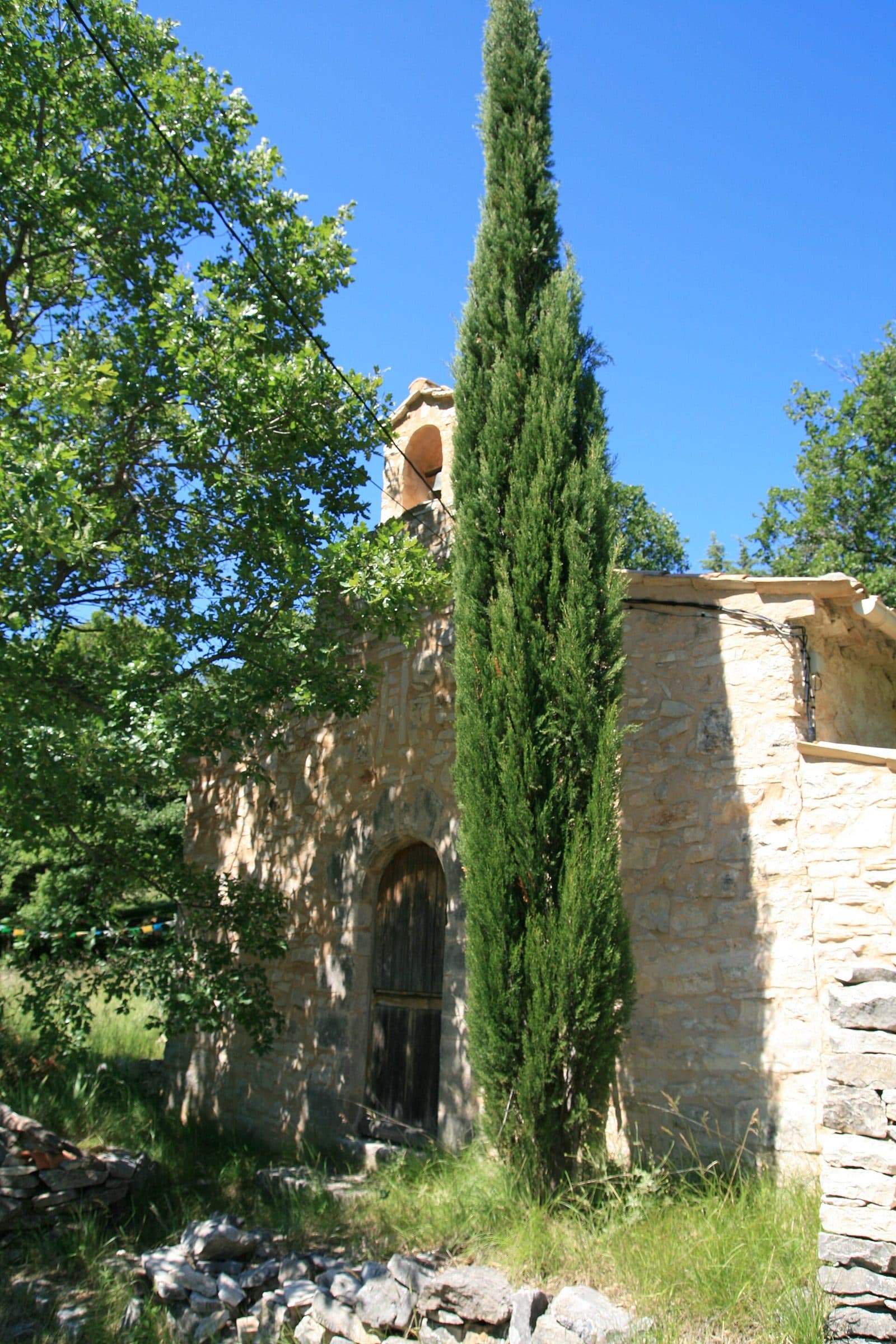
_2010_07.jpg)
Among the better-known churches and monasteries of Porreres, l'Hospitalet is easy to overlook. That is precisely what gives this religious site its appeal. Travelers who consciously seek out architecture in Mallorca's interior will find a good reason here to explore Porreres more closely.
In German-language travel guides, l'Hospitalet occasionally appears as Iglesia de l'Hospitalet. The attraction belongs to the ecclesiastical and monastic heritage of Porreres and should not be confused with similarly named places on Mallorca.
A visit is particularly worthwhile for travelers seeking church architecture, local history, and places away from the heavily visited coastal routes. l'Hospitalet can easily be incorporated into a walk or short cultural tour through Porreres. Several layers come together in the town: religious buildings, streets shaped by traditional Mallorcan architecture, and an agricultural setting whose reputation is closely associated with wine and apricots.
As a standalone attraction, l'Hospitalet does not call for any staged expectations. Its value lies instead in the wider context. Those who visit the religious building first and then walk through Porreres will recognize that its religious sites do not stand in isolation but form part of a town that has developed over time. This context in particular makes the detour worthwhile for anyone interested in cultural history.
Visiting l'Hospitalet
The crucial details are Porreres and church or monastery.
Access to l'Hospitalet
As no reliable general visiting hours are available, current access should be checked before traveling. This is especially important if you are planning not only to view the exterior but also to enter the church area. No permanently valid admission price is listed either. You should therefore assume neither free access nor paid admission until you have obtained up-to-date information.
The visit can still be planned effectively. Anyone including l'Hospitalet as part of a stay in Porreres remains flexible if the interior is not accessible at the desired time. The religious building can then still serve as a stop on a walk through town rather than becoming the sole purpose of a longer journey. This approach suits the character of the destination better than a tightly scheduled individual appointment.
How much time to allow
A fixed visiting duration would be of little help because it depends largely on whether the interior is accessible and whether l'Hospitalet is visited alone or together with the town. Simply viewing the building naturally takes less time than completing a cultural tour of Porreres. Anyone also interested in the other churches, traditional houses, and agricultural surroundings should not treat l'Hospitalet as a quick photo stop.
A sensible sequence is to confirm current access first and then leave enough time for Porreres. This prevents an awkward gap if access changes at short notice. It also leaves time to place the religious building in the context of the municipality's other religious sites.
Time of day and crowds
No reliable peak period has been identified for l'Hospitalet. The choice of time should therefore be based on confirmed access and your planned walk through Porreres rather than on supposedly fixed visitor patterns. Anyone wishing to combine the site with cafés, streets, and other attractions should plan the day so that enough time remains afterward for a stay in the center.
Getting there and parking
The stated road distances and driving times lead to Porreres, not directly to the entrance of l'Hospitalet. This is important when planning the route: the final navigation to the attraction only begins once you reach the town. The destination should therefore be entered as Porreres together with the full name l'Hospitalet or Iglesia de l'Hospitalet. Searching only for “Hospitalet” creates a considerable risk of confusion.
From Palma Airport
The road distance from Palma Airport to Porreres is 36 kilometers. The drive takes around 32 minutes and follows the Ma-5020. This information ends in Porreres; for the final section to l'Hospitalet, you should also use up-to-date local navigation. It is worth briefly checking the destination name before setting off.
The route works well as a detour on the way to the center or southeast of the island. Anyone arriving immediately after a flight should not rely solely on the estimated arrival time, however, but should first check whether access is actually possible at that time. Porreres itself will then remain a worthwhile alternative if only an exterior visit is possible.
From central Palma
The road distance from central Palma to Porreres is 40 kilometers. The drive takes around 41 minutes and follows the Ma-15 and then the Ma-5030. These figures also apply expressly only as far as Porreres. Within the town and along the final section to l'Hospitalet, the onward journey depends on current local traffic arrangements.
For a day trip from Palma, it is best not to visit l'Hospitalet in isolation. The journey becomes considerably more worthwhile when combined with a walk through Porreres and another cultural stop. This way, the excursion still feels complete even if access to the religious building changes at short notice.
Parking and bus travel
No specific parking area directly beside l'Hospitalet is listed as confirmed visitor information. Vehicles should therefore only be left in clearly permitted areas in Porreres or along the locally signposted access route. Particularly in established parts of town, it makes more sense to follow signs and walk the final section than to force what appears to be direct vehicle access.
Porreres is served by bus stops within the town. Which one is most convenient for reaching l'Hospitalet depends on the selected route and the exact walking distance. Before traveling, you should therefore check not only the connection to Porreres but also the final section to the attraction. Do not assume that there is a bus stop directly by the entrance.
Bus lines to l'Hospitalet at a glance
| Line | Route | Departures/day | First | Last |
|---|---|---|---|---|
| 403 | Campos - Algaida - Palma | 96 | 06:23 | 22:12 |
| 417 | Porreres - Manacor - Son Carrió | 48 | 07:10 | 21:55 |
| 514 | Cala d'Or - Felanitx - Porreres | 48 | 07:15 | 20:07 |
From the official GTFS feeds (TIB/SFM), no real-time data. The figures cover all stops in the town; weekend and holiday services differ — check with the operator before travelling.
Getting there by bus
N'Hereveta 1 (43008) · 0.2 km as the crow flies
- 403Campos - Algaida - Palma · Daily
N'Hereveta 2 (43009) · 0.2 km as the crow flies
- 403Campos - Algaida - Palma · Daily
Ronda d'Alcassor 1 (43013) · 0.7 km as the crow flies
- 417Porreres - Manacor - Son Carrió · Daily
- 514Cala d'Or - Felanitx - Porreres · Daily
Ronda d'Alcassor 2 (43004) · 0.7 km as the crow flies
- 417Porreres - Manacor - Son Carrió · Daily
- 514Cala d'Or - Felanitx - Porreres · Daily
Ronda de l'Estació 2 (43007) · 0.8 km as the crow flies
- 403Campos - Algaida - Palma · Daily
- 417Porreres - Manacor - Son Carrió · Daily
- 514Cala d'Or - Felanitx - Porreres · Daily
Ronda de l'Estació 1 (43006) · 0.8 km as the crow flies
- 403Campos - Algaida - Palma · Daily
- 417Porreres - Manacor - Son Carrió · Daily
- 514Cala d'Or - Felanitx - Porreres · Daily
Timetable data: official GTFS feeds (TIB/EMT), no real-time — check with the operator before travelling.
Nearby attractions
Porreres reveals a side of Mallorca that is easy to miss on the coast. Sandstone-colored houses, traditional architecture, and an agricultural landscape shape its character. The town is particularly associated with winegrowing and apricots; the fruit is also traditionally dried on Mallorca. This gives a visit to l'Hospitalet a setting that extends beyond the individual building.
Anyone walking through Porreres after the visit will not encounter a mere collection of monuments. The churches and historic buildings stand within an inhabited town whose daily life continues to be shaped by agriculture, local shops, cafés, and festivals. This close relationship between religious heritage and ordinary town life distinguishes the visit from an isolated monument with no connection to its surroundings.
Nostra Senyora de la Consolació
The parish church Nostra Senyora de la Consolació is one of Porreres' major ecclesiastical landmarks. Together with l'Hospitalet, it demonstrates that the town's religious landscape is not limited to a single place of worship. During a walk, it is enough to view both stops as different parts of the same local church history without equating l'Hospitalet with the parish church.
This combination is particularly suitable for visitors who want not only to photograph individual façades but also to understand the role of church buildings in the townscape. Between the stops, attention almost automatically shifts to the traditional construction of the houses and lanes. Two church visits thus become a compact architectural cross-section of Porreres.
Sant Felip Neri
The church or convent of Sant Felip Neri is also counted among the cultural attractions of Porreres. Combined with l'Hospitalet and the parish church, it creates a compact religious route. Its appeal lies less in large-scale exhibition effects than in the variety of religious sites within the same municipality.
The same planning principle applies here: the buildings should not automatically be regarded as museums that are accessible at all times. A walk through town is still worthwhile because their locations and relationship with the surrounding streets already convey an impression of the religious character of Porreres. Anyone wishing to see the interiors should check access to each one separately.
Santuari de Monti-Sion
South of Porreres, Santuari de Monti-Sion is a distinctly different type of religious site. The sanctuary is associated with a former theological school and occupies an elevated position outside the town center. It makes a suitable addition to l'Hospitalet but should not be confused with it: Monti-Sion is the prominently situated scenic destination, while l'Hospitalet is the more understated ecclesiastical stop near Porreres.
Combining both places provides two different perspectives on the municipality's religious landscape. A walk through Porreres including l'Hospitalet is a good starting point; Monti-Sion can then follow as a separate part of the itinerary. Current information about access to the sanctuary and the approach road should be checked separately.
Porreres as a wine and apricot town
After visiting the churches, it is worth shifting attention from architecture to present-day town life. Porreres is known for wine and apricots, and agriculture is more than just a backdrop. It shapes the municipality's reputation and explains why the town does not feel like a museum despite its cultural buildings. Time in a café or a look at local produce therefore provides a fitting conclusion.
In summer, the apricot is even celebrated with its own fair. Anyone visiting Porreres during an event will experience a livelier town than on ordinary days. For a visit to l'Hospitalet, this primarily means not planning the day solely around the religious building but also taking current events in town into account.
The place it belongs to
Porreres in the place guidePractical information for your visit
l'Hospitalet near Porreres belongs to the church and monastery category.
What l'Hospitalet is not
Even within Porreres, making a clear distinction is useful. l'Hospitalet is neither the parish church Nostra Senyora de la Consolació nor Sant Felip Neri nor Santuari de Monti-Sion outside the town. All can form part of a cultural itinerary, but they remain separate destinations. This distinction prevents false expectations regarding size, location, and how the visit unfolds.
Preparation instead of surprises
Three points are crucial before traveling: clearly identifying the correct location, checking current access, and planning the final section of the route in Porreres. This already avoids the most common difficulties. Anyone who also selects an alternative stop in town will remain flexible even if the interior is closed.
Special equipment is not the central concern when planning a cultural visit to the town. A reliable map section and enough time to combine l'Hospitalet with Porreres are more important than simply driving to the site. The religious building reveals its value less as an isolated photo subject than as part of a series of religious and traditional buildings in Mallorca's interior.