
Mirador de la Victòria – Views over the Bay of Pollença
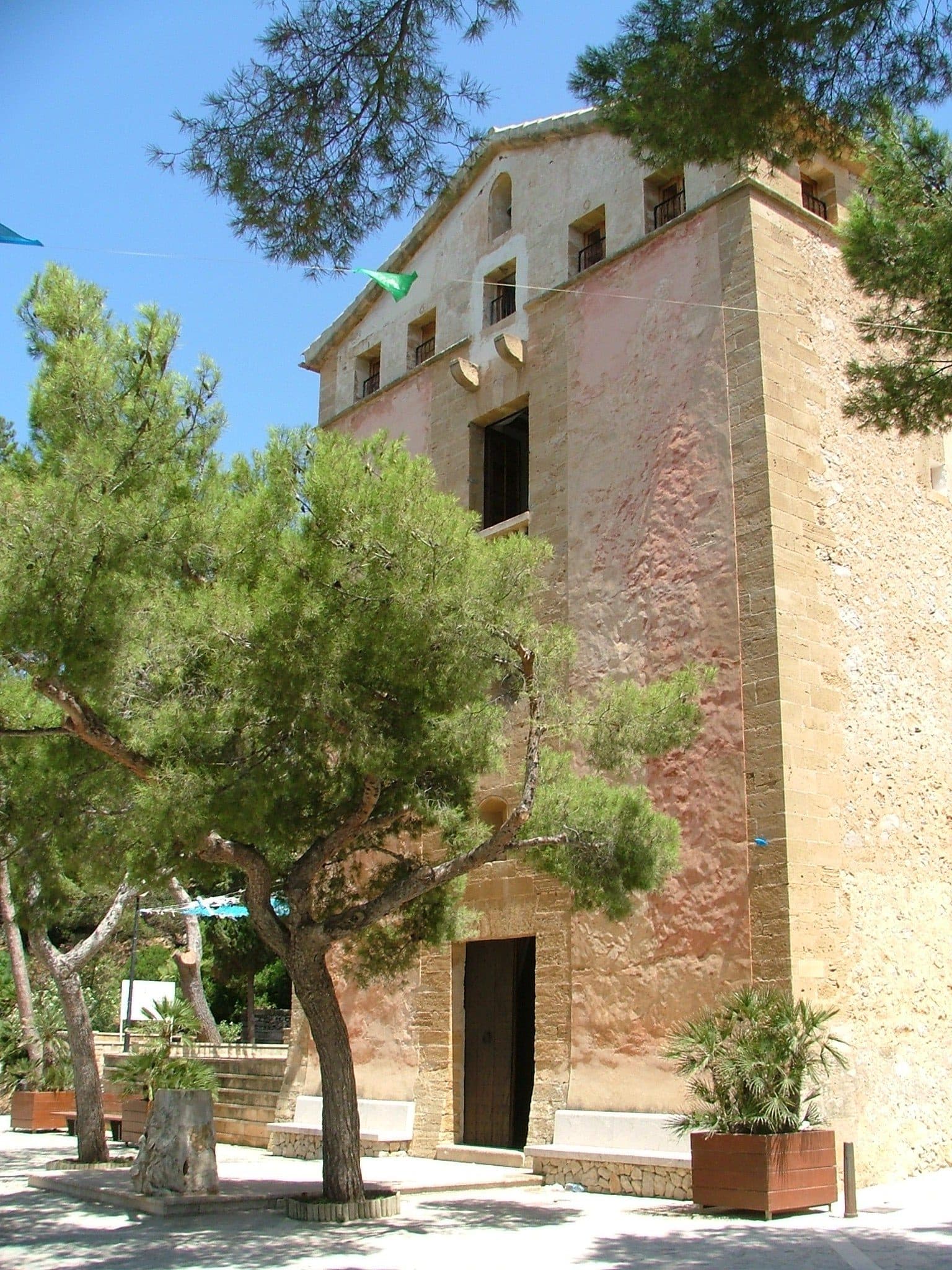

Leaving the densely developed coast of Port d’Alcúdia behind and driving onto the La Victòria peninsula brings a rapid change of perspective. Between wooded slopes, the Mirador de la Victòria opens up views across the Bay of Pollença toward the Serra de Tramuntana. The water lies far below, while the mountains beyond the bay form a long, distinctive horizon.
The viewpoint is neither a monumental structure nor a conventional attraction with a fixed visitor route. Its appeal lies in its location: high above the bay, in a landscape of rugged terrain and Mediterranean pine forest. This contrast is precisely what makes the stop worthwhile. Just a few kilometres earlier, the scenery is dominated by the harbour, roads and beachfront hotels; higher up, attention shifts almost entirely to the coast, sea and mountains.
The Mirador works both as a destination in its own right for a short scenic stop and as the starting point for a longer stay on La Victòria. Nearby are the Ermita de la Victòria and access points for hiking trails toward Ses Tres Creus, Penya des Migdia and Talaia d’Alcúdia. However, these places should not be confused with the Mirador itself: the hermitage is a historic building, while the Talaia is a more distant hiking destination—the Mirador is the easily accessible viewpoint in the area where these routes begin.
The site is especially interesting for travellers who want to discover northern Mallorca beyond its beaches. Landscape photographers will find a broad, layered subject, families can combine the viewpoint with an excursion to the Ermita, and hikers can gain a vivid first impression of the rugged peninsula before setting out.
What to See
From the first glance, it is clear that no single object takes centre stage here. The real experience comes from several layers of landscape: the wooded slope in the foreground, the sweeping bay below and the mountains on the opposite side. Rather than a completely enclosed panorama, the Mirador primarily presents the expansive northern coastal scenery around the Bay of Pollença.
The Bay of Pollença
The most striking subject is the Bahía de Pollença. From this elevated position, it appears not as a narrow strip of coastline but as a vast expanse of sea framed by land. Depending on visibility, the coastal areas opposite stand out clearly or merge into the bright horizon. The elevation also changes the sense of scale: boats and settlements become less prominent, while the shape of the bay becomes easier to appreciate.
It is worth doing more than simply facing the water directly. Even small changes of position alter the way the pines, rocky slopes and coastline frame the view. Photographers can therefore find more than a single standard composition. Sometimes the open water dominates; elsewhere, vegetation forms a darker foreground behind which the bay appears noticeably brighter.
The view also reveals the geographical position of La Victòria. The peninsula extends between the coastal areas of northern Mallorca and has a far more rugged relief than the flat beach zones around Port d’Alcúdia. From the Mirador, this transition becomes visible without requiring a long hike first.
The Serra de Tramuntana
Across the bay, the Serra de Tramuntana draws the eye. The mountain range is not merely background decoration but the landscape counterpoint to the peninsula. The nearby wooded terrain and the more distant mountain ridges create an unusually deep, layered panorama.
The viewpoint is not part of the Tramuntana mountain range. It lies on La Victòria near Alcúdia and looks across toward the Serra de Tramuntana. This distinction matters because the panorama can easily create the impression that you are already in the heart of Mallorca’s great western mountain range. In fact, the Mirador presents the Tramuntana from the opposite side of the water—and that is precisely what makes the view so clear and expansive.
In clear conditions, the contours of the mountains stand out sharply. In hazier weather, the range appears more subdued as the water and sky blend more closely together. The Mirador is therefore not a viewpoint that only works beneath a perfectly blue sky. Different light and visibility conditions transform the scene rather than completely diminishing it.
The Landscape of La Victòria
The characteristic landscape of the public natural area of La Victòria begins directly around the viewpoint. Mediterranean pine forests cover uneven and sometimes steep terrain. The area feels far more secluded than its proximity to Alcúdia and Port d’Alcúdia would suggest. The landscape has not been smoothed into a park; its character comes precisely from its slopes, wooded sections and rocky ridges.
This setting prevents the Mirador from feeling like an isolated roadside platform. Instead, it serves as an easily accessible gateway to a much larger landscape. Those who stay only briefly experience the view. Those who remain longer can already make out, among the surrounding heights, the lines of the paths leading toward Talaia d’Alcúdia or Penya des Migdia.
It is important to distinguish between the different places: the spectacular summit panoramas from Talaia d’Alcúdia and Penya des Migdia belong to separate hikes. They are not part of the immediate Mirador visit and should not be regarded as features of the viewpoint. The Mirador offers the more accessible view across the bay; the higher destinations require additional walking and, depending on the route, considerably greater sure-footedness.
The Ermita as a Landmark
Just a short distance away, the Ermita de la Victòria shapes the surrounding scene. The fortified-looking hermitage is a separate historical and architectural attraction, but it also serves as an important landmark for visitors to the Mirador. Several well-known routes across the peninsula begin in its vicinity.
The name La Victòria links the viewpoint, hermitage, natural area and various routes, although they are not the same attraction. Anyone who only wants to visit the Mirador therefore does not need to tour the Ermita or climb to the Talaia. Conversely, many hikers use the viewpoint for an initial impression of the landscape before continuing into the terrain.
Visiting the Viewpoint
A visit usually begins not with a long walk but with a winding approach through the landscape of La Victòria. As soon as the trees open up, the drive itself becomes a scenic experience. There is no prescribed route at the Mirador: arrive, take in the view across the bay, walk a few steps to find different perspectives and decide whether the excursion ends here or continues toward the Ermita and hiking trails.
A Short Scenic Stop
The Mirador can be visited as a straightforward scenic stop without an extensive programme. Since there is neither an exhibition route nor a series of interiors to explore, the length of the stay depends on personal interest. A quick photography stop can be just as worthwhile as a longer break spent quietly studying the coastline and mountain silhouette.
With a tight itinerary, it is particularly important not to confuse the viewpoint with Talaia d’Alcúdia. The Mirador is the more accessible destination near the Ermita. The Talaia lies farther into the terrain and is reached on a hike. Anyone who sees both names on maps or in route descriptions should therefore check which location is actually intended.
Current access conditions should be checked before travelling. No reliable fixed opening hours or current admission price have been recorded for the viewpoint. The same distinction applies to facilities in the neighbouring area: free access to the landscape view and the operating hours of a restaurant or religious site are not the same thing.
Visiting with Fewer Crowds
La Victòria is also well known among local residents as a destination for weekend outings and family gatherings. Those who want to experience the view in greater peace should therefore choose a weekday rather than typical weekend excursion times. Complete solitude should not be expected, however, because the area is also the starting point for several popular hikes.
Visitor numbers do not depend on the Mirador alone. Hikers heading to Talaia d’Alcúdia and Penya des Migdia, as well as visitors to the Ermita, use the same departure area. As a result, the viewpoint itself may feel quiet while the access road and surrounding area are busier.
There is no universally ideal choice of daylight. Clear visibility matters more for the distant contours of the Tramuntana than a particular time of day. Photographers should also remember that the appearance of the bay changes significantly with the direction of the light, cloud cover and haze. An overcast sky may reduce long-distance visibility but can make the wooded slopes stand out more strongly.
From the Mirador onto the Hiking Trails
The surroundings make it tempting to turn a scenic stop into a spontaneous hike. Several routes lead from the Ermita through pine forests and across the rugged terrain of La Victòria. Well-known destinations include Ses Tres Creus, Talaia d’Alcúdia and Penya des Migdia, which is also called Penya Roja or Penya Rotja.
These extensions have different requirements from a visit to the Mirador. In particular, the detour to Penya des Migdia is described as a route requiring sturdy footwear, sure-footedness and a head for heights. A short stop at the viewpoint should therefore not turn unprepared into a more demanding hike. Those who want to hike should plan their route and equipment carefully; those who only want the panorama can remain in the easily accessible area.
Getting There and Parking
The regional distance and journey-time information initially leads to Port d’Alcúdia, not directly to the Mirador. From Palma Airport, the road distance is 60 kilometres; the drive takes around 47 minutes via Ma-30, Ma-13 and Ma-3460. From central Palma, the 57-kilometre road journey to Port d’Alcúdia follows Ma-13 and Ma-3460 and takes around 51 minutes.
From Port d’Alcúdia to La Victòria
From Port d’Alcúdia, the final section leaves the harbour and beach area behind and continues onto the La Victòria peninsula. The access road climbs toward the Ermita and is described as a narrow road with hairpin bends. It therefore differs considerably from the faster main-road journey along Ma-13. Curves, oncoming traffic and the road’s position in the landscape require more attention on this section than the comparatively short remaining distance might suggest.
The Ermita de la Victòria serves as the main landmark, with the viewpoint and access points to the hiking trails located in its immediate vicinity. Navigation destinations should be read carefully: similar names are also used for Restaurant Mirador de la Victoria, the Ermita, the natural area and hiking routes to the Talaia. A simple visit to the viewpoint does not involve driving to a summit.
Parking Near the Starting Area
A car park near the Ermita is described as the starting point for hikes on La Victòria. It therefore also provides a useful reference point when visiting the Mirador. No guaranteed number of available spaces has been documented. Since the area is used at weekends by both day-trippers and hikers, it is sensible not to assume that unlimited parking will be available.
Before setting out from the car park, visitors should decide whether they plan to see only the viewpoint or also complete a hike. A visit to the Mirador remains manageable; for Penya des Migdia or Talaia d’Alcúdia, however, the actual route only begins here. This distinction prevents a short sightseeing stop from accidentally being planned as a complete mountain hike.
Arriving Without a Car
No bus stop has been recorded in the immediate vicinity of Mirador de la Victòria. A direct bus journey to the viewpoint should therefore not be assumed. Public transport connections to Port d’Alcúdia also do not automatically cover the final section up to La Victòria. Anyone travelling without a car must plan this section separately and check current local transport options.
The same applies to the return journey: the Mirador is not located along a frequently served sequence of town stops but in the elevated natural landscape of the peninsula. Especially after a longer hike, the return trip should therefore be arranged before setting out.
Nearby Attractions
The Mirador feels far removed from the atmosphere of a holiday resort, even though Port d’Alcúdia is the associated town. Down by the sea, the harbour, promenade and long beach dominate the scenery; on La Victòria, buildings and open coastline quickly give way to pine forest, slopes and rocky terrain. This contrast can be experienced particularly well on a single excursion.
Port d’Alcúdia
Port d’Alcúdia works well both as the starting point and the conclusion of a visit. Those driving up from the harbour can combine the scenic stop with a coastal walk or time at the beach. The Mirador itself remains the tranquil counterpart: it presents the bay from above, while the harbour area offers an experience directly at sea level.
For planning the day, it is useful to distinguish between Port d’Alcúdia and Alcúdia’s old town. The harbour is the destination named in the driving information. The historic old town is not directly beside the Mirador but can be added to the excursion as a separate stop. However, an extensive old-town visit and a hike on La Victòria create two different priorities for the day.
Ermita de la Victòria
The neighbouring Ermita is the most obvious addition to the visit. The fortress-like religious building, with its preserved defensive elements, recalls uncertain periods in the history of the coast. However, it is not part of the viewpoint. Visitors wishing to combine architecture and landscape should view the two attractions in succession rather than blending their features together.
The Ermita is also the well-known starting area for routes across the peninsula. Very different visitors therefore meet here: people on short excursions, guests visiting the hermitage and hikers heading to more distant destinations. This range of uses explains why the surrounding area can sometimes be busier than the Mirador itself.
Ses Tres Creus and Talaia d’Alcúdia
Ses Tres Creus lies on one of the ascending routes and provides an additional viewpoint above the starting area. Talaia d’Alcúdia leads even farther into the characteristic landscape of the peninsula. Both destinations are part of a hike rather than a short visit to the Mirador.
Visitors with limited time should stay with the Mirador and the Ermita. Those who want to continue the panorama from a greater elevation can plan a route to the Talaia. The terrain of La Victòria is rugged and wooded, so a hike should be treated as a separate undertaking rather than a casual extension of a photography stop.
Penya des Migdia
Penya des Migdia, also called Penya Roja or Penya Rotja, offers views toward Cap de Formentor and Cap des Pinar. However, the detour is considered more demanding than a visit to the Mirador. Sure-footedness, a head for heights and sturdy footwear are explicitly recommended.
The Penya is therefore a suitable extension for experienced hikers but not a necessary addition to the viewpoint. Mirador de la Victòria is worthwhile even without completing this route. Families, travellers with limited time and visitors without hiking equipment can already enjoy expansive views across the Bay of Pollença from the area around the Ermita.
The place it belongs to
Port d'Alcúdia in the place guidePractical Visitor Information
The Mirador rewards visitors who arrive with clear expectations: the main attraction here is the landscape. There is no documented museum circuit, no sequence of furnished rooms and no sightseeing programme to complete. Those who come for the view will find the value of the place in exactly that. Anyone seeking a historic building can also focus on the neighbouring Ermita.
Clothing and Footwear
A short stop at the Mirador does not require the same equipment as a mountain hike. However, the requirements change as soon as the visit extends beyond the immediate viewpoint. The trails on La Victòria cross rugged terrain; sturdy footwear, sure-footedness and a head for heights are explicitly recommended for the detour to Penya des Migdia.
Spontaneous hikes in unsuitable footwear are therefore not a good continuation of a viewpoint stop. A trail may initially appear harmless but can later become steeper and more exposed. The decision about the route should be made at the starting point, not after heading deep into the terrain.
Visiting with Children
For families with children, the Mirador is best suited to a short scenic stop. The drive brings the family to the elevated area without requiring a complete summit hike before the landscape view can be enjoyed. Combining the stop with the Ermita can also be clearly distinguished, in terms of difficulty, from the longer hikes.
For routes continuing farther, the children’s individual experience must be considered. Penya des Migdia in particular is not a casual family destination because of the requirements for sure-footedness and a head for heights. The Mirador itself and the peninsula’s more demanding viewpoints should not be treated as equivalent when planning the visit.
Finding Your Way
Similar names can easily cause misunderstandings. Mirador de la Victòria, Restaurant Mirador de la Victoria, Ermita de la Victòria, the La Victòria natural area and Talaia d’Alcúdia may appear close together on maps and in descriptions. Nevertheless, they refer to different destinations.
For the viewpoint, the area around the Ermita is the key landmark. When selecting a route, visitors should also check whether it only leads to the Mirador or continues toward the Talaia or Penya des Migdia. This prevents a planned short stop from unexpectedly becoming a hike with entirely different requirements.
What Not to Expect
The Mirador is not a fully developed visitor complex. The experience depends on the landscape, visibility and personal observation. In hazy conditions, the Serra de Tramuntana may appear less clearly; when visitor traffic is heavier, the starting area feels livelier. Both factors change the impression but do not fundamentally diminish the appeal of the view across the bay.
Nearby dining facilities should likewise not be confused with the viewpoint. A restaurant’s operating hours say nothing about current access conditions at the Mirador. Since no reliable fixed opening hours or admission information have been recorded for the viewpoint, it is advisable to check current conditions before travelling—especially if the visit is to be combined with other facilities around the Ermita.
Local insider tips
Change Your Viewing Angle
Do not look only straight across the bay: walking a few steps along the viewing area significantly changes the foreground of pines and slopes. This creates differently framed views of the Bay of Pollença and the Tramuntana.
Choose a Weekday
La Victòria is a popular destination among local residents for weekend outings and family gatherings. Those who want a quieter experience at the viewpoint should plan their stop for a weekday.
Distinguish the Mirador from the Summits
The Mirador is the easily accessible scenic stop. Talaia d’Alcúdia and Penya des Migdia are separate hiking destinations. Sturdy footwear, sure-footedness and a head for heights are recommended for the Penya.
Check Map Names Carefully
The viewpoint, restaurant, Ermita and natural area have similar names. The area around the Ermita de la Victòria serves as the landmark for the Mirador, while a route to the Talaia continues farther into the terrain.
See the Bay from Two Levels
Combine the Mirador with Port d’Alcúdia: from above, you can appreciate the shape of the Bay of Pollença, while below you experience the harbour and coast at sea level. The change of perspective makes the excursion especially vivid.